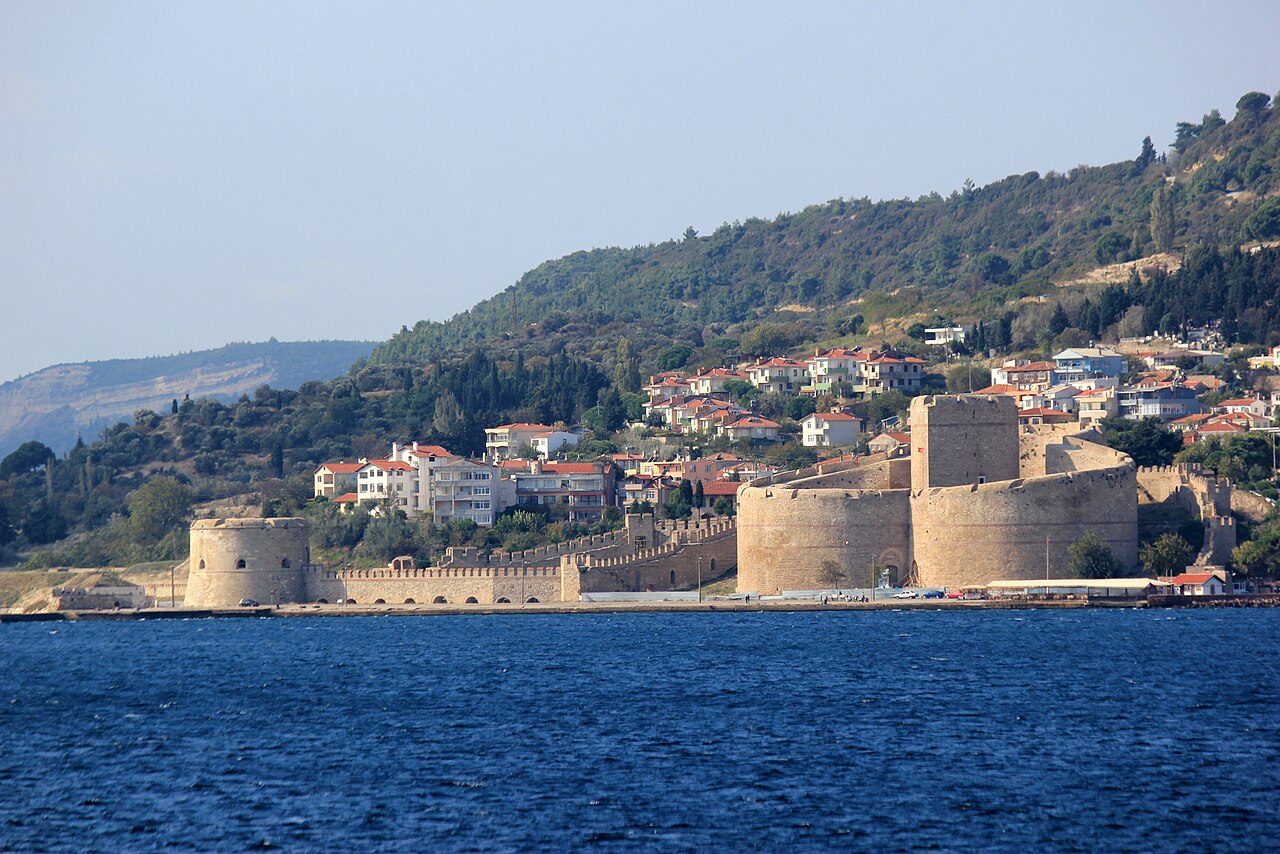
Atikhisar Castle
Atikhisar Castle, locally known as Atikhisar Kalesi or Gavurhisar Kalesi, is a historically significant Byzantine hill fortress situated south of the village of Kayadere in the province of Çanakkale, Turkey. Perched atop a naturally elevated 40-meter-high bedrock, it dominates the Sarıçay valley and overlooks the strategic road connecting Çanakkale and Çan, highlighting its military importance in controlling ancient transit routes and protecting valuable resources such as the nearby mines in the valley.
The castle's origins are closely tied to the Late Byzantine period, with architectural features and masonry styles dating primarily to the 12th century. However, archaeological evidence reveals a much longer human presence at the site. Ceramic fragments uncovered in and around the castle span from the 6th century BC through to the 10th century AD, indicating continuous occupation and suggesting that the fortress was built atop an earlier fortification, possibly dating back to the Late Antique era.
Historical context and strategic significance
The location of Atikhisar Castle within the ancient region of Troas positioned it as a key defensive and administrative stronghold during the Byzantine era. The fortress oversaw important transit routes through the Sarıçay valley, which was a corridor for both military and commercial traffic. This strategic placement allowed the castle to monitor and control movement between the coast and interior Anatolia, as well as to safeguard the local mining operations that were economically vital to the region.
The fortress is historically linked to the territory of Cremaste in the lands of Abydos, a region known for its ancient settlements and continuous habitation since the 6th century BCE. Although direct historical records about the castle's rulers or specific military engagements are scarce, its robust stone construction and commanding position reflect its enduring military and administrative role throughout the High Medieval period.
Architectural features and layout
Fortification design
Atikhisar Castle's layout conforms closely to the natural contours of the bedrock on which it stands. The fortress was constructed with two concentric defensive walls that followed the irregular shape of the rocky outcrop, enhancing its natural defensive advantages. Significant portions of these walls remain, including several towers and bastions that once reinforced the castle's defenses.
Rock-cut elements and water management
The summit of the bedrock was deliberately flattened to create a usable platform for the castle's main structures. Notably, there are remains of two rock-cut cisterns carved directly into the stone, which would have collected and stored rainwater, crucial for sustaining the garrison during sieges or dry periods. These cisterns exemplify the practical engineering solutions employed by Byzantine builders to adapt to the challenging terrain.
Construction materials and techniques
The walls and towers are constructed from robust stone masonry typical of the Byzantine military architecture. The use of local stone not only provided strength but also allowed the fortress to blend harmoniously with the surrounding landscape. Surface surveys have also uncovered small blocks of carved stone and ceramic fragments, which hint at the presence of additional structures or buildings within the castle precinct, though no elaborate decorative elements have been identified.
Preservation, recent events, and archaeological efforts
Today, Atikhisar Castle survives mostly as a ruin, with its stone walls and foundations still visible amidst the natural vegetation. The site benefits from its location within a protected natural area near the Atikhisar Reservoir, which has helped preserve its remains over the centuries.
Despite this protection, the castle and its surrounding landscape suffered damage from a forest fire in August 2023, which affected parts of the site fabric and nearby forested areas. Nevertheless, the stone constructions have endured, continuing to convey the fortress's historical significance.
Academic interest in Atikhisar Castle has increased in recent years, with surveys and documentation led by Çanakkale Onsekiz Mart University aiming to record its architectural features and surface finds. These efforts are part of a broader initiative to formally register the site as an archaeological protected area, ensuring its conservation and facilitating future research into its historical and cultural legacy.
Visitor experience and accessibility
Atikhisar Castle is currently freely accessible to visitors, offering an evocative glimpse into Byzantine military architecture set within a scenic natural environment. The castle's elevated position provides panoramic views of the Sarıçay valley and the surrounding countryside, making it a rewarding destination for history enthusiasts and hikers alike.
Visitors can explore the remaining walls, towers, and rock-cut cisterns, experiencing firsthand the strategic ingenuity of its builders. The nearby Atikhisar Reservoir adds to the area's natural beauty, complementing the historical ambiance of the site. While the ruins are largely unrestored, their authentic state offers a tangible connection to the past.
Due to its relatively remote location and minimal tourist infrastructure, visitors are advised to prepare accordingly and respect the site's preservation status. The castle remains a hidden gem within the Çanakkale province, well worth exploring for those interested in Byzantine history and medieval fortifications.
Frequently asked questions (FAQ)
- How do I get to Atikhisar Castle?
- Atikhisar Castle is located south of Kayadere village in Çanakkale province, Turkey, near the D210 road. Visitors can reach the site by car or local transport, followed by a short hike up the hill where the castle stands.
- What is the historical significance of Atikhisar Castle?
- Atikhisar Castle served as a strategic Byzantine fortress controlling key transit routes and protecting ancient mines in the Sarıçay valley. Its continuous occupation from the 6th century BC to the Byzantine period highlights its long-term regional importance.
- Can I explore the ruins of Atikhisar Castle?
- Yes, the castle ruins are freely accessible and offer visitors the chance to explore defensive walls, towers, and rock-cut cisterns. The site provides panoramic views and a sense of Byzantine military architecture in a natural setting.
- When is the best time to visit Atikhisar Castle?
- The best time to visit is during spring and autumn when the weather is mild and the natural surroundings are particularly scenic. Summer can be hot, so visitors should bring water and sun protection.
- Is Atikhisar Castle protected or undergoing restoration?
- The castle is located within a protected natural area near the Atikhisar Reservoir. While it is not currently undergoing restoration, efforts are underway to register it as an archaeological protected site to ensure its preservation.
Information
Loading map...
Visitor reviews
No reviews yet. Been here? Write the first review and help other travelers!
Write the first reviewVisited this castle? Share your experience
Your review helps other travelers and adds first-hand knowledge to our encyclopedia.