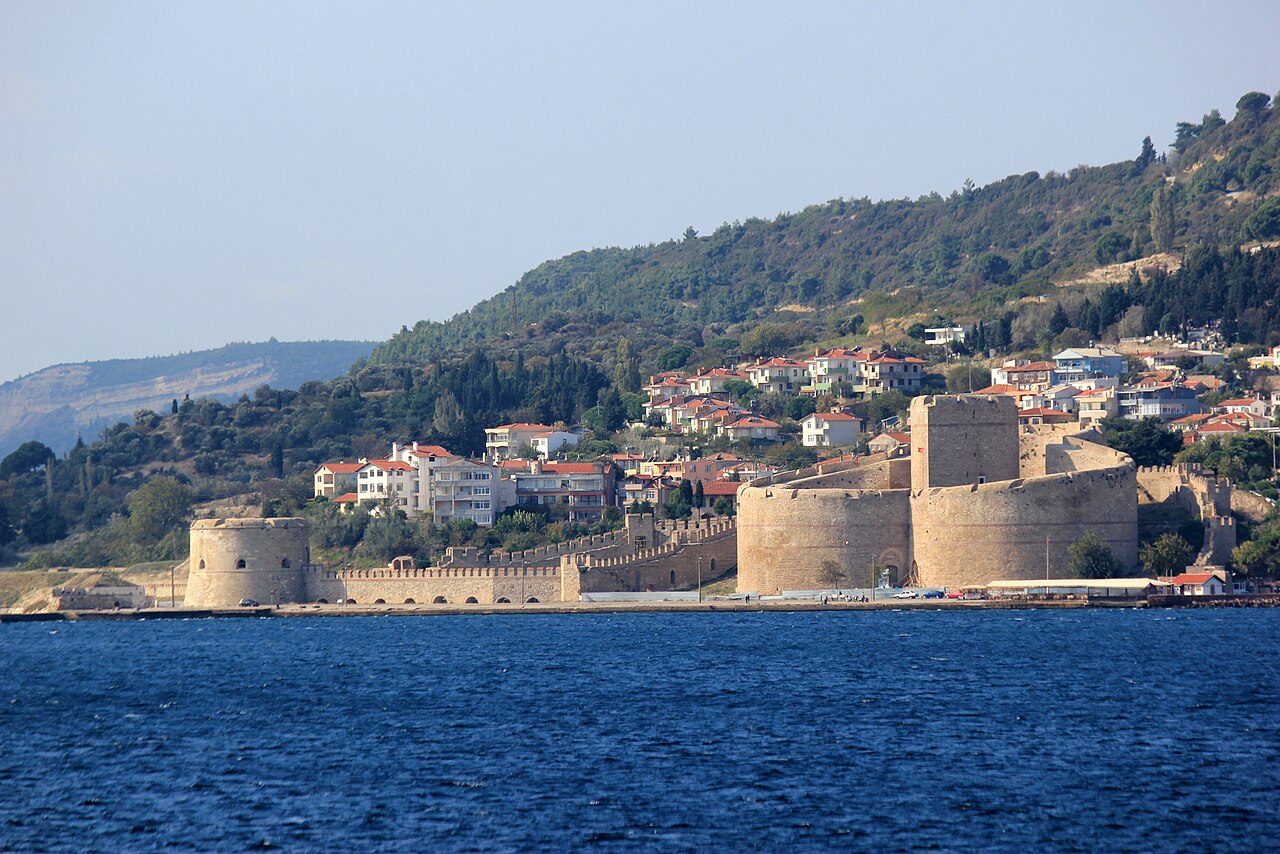
Çimenlik Castle
Çimenlik Castle, also known locally as Çimenlik Kalesi or Kale-i Sultaniye, is a historically significant fortress situated on the Asian shore of the Dardanelles Strait in the city of Çanakkale, Turkey. The castle's strategic location at the narrowest point of the strait has made it a critical military installation throughout Ottoman history, controlling naval access between the Aegean Sea and the Sea of Marmara.
The origins of Çimenlik Castle trace back to the mid-15th century during the reign of Sultan Mehmed II, also known as Mehmed the Conqueror. In 1452, as he prepared for the siege of Byzantine Constantinople, Mehmed II recognized the vital importance of controlling the Dardanelles to prevent European powers from reinforcing the city by sea. To secure this maritime chokepoint, he commissioned the construction of two castles: Çimenlik on the Asian side and Kilitbahir Castle on the European side. These fortifications were analogous in function to the earlier Rumelihisarı and Anadoluhisarı castles guarding the Bosphorus Strait, designed to block naval passage and protect Ottoman interests.
Historical records vary slightly on the precise date of Çimenlik's initial construction. While some sources place it around 1452, others suggest it was built shortly after the 1453 conquest of Constantinople, possibly around 1463, to prevent any attempts by European forces to retake the city. Regardless, its establishment marked a significant step in Ottoman coastal defense strategy.
Architectural design and fortifications
Çimenlik Castle was originally constructed with a rectangular curtain wall fortified by nine towers surrounding a robust rectangular keep. This design provided a strong defensive perimeter against both naval and land-based attacks. The castle was equipped with approximately 30 cannons, reflecting the increasing importance of artillery in fortification design during the late medieval and early modern periods.
The castle's location near the mouth of the Sariçay river (also known as Çanakkale Stream) provided a natural defensive advantage and access to fresh water. The walls and towers were built from local stone, with thick masonry designed to withstand bombardment from enemy ships.
Modifications and restorations through the centuries
Çimenlik Castle underwent several significant modifications to adapt to evolving military technologies and threats. In 1551, during the reign of Sultan Suleiman the Magnificent, the fortress was strengthened to enhance its defensive capabilities amid ongoing conflicts with European powers.
During the Cretan War (1645-1669) against the Republic of Venice, the Ottomans again restored and reinforced the castle, ensuring it remained a formidable bastion controlling the Dardanelles.
The most extensive renovations occurred in the late 18th century under Sultan Selim III. Responding to advances in artillery and naval warfare, Selim III ordered the seaward walls of Çimenlik Castle to be largely rebuilt into modern artillery platforms and ammunition stores. These upgrades were designed following the advice of a French military engineer, reflecting the Ottoman Empire's efforts to incorporate European military innovations. This transformation marked Çimenlik as a modern coastal fortress capable of mounting heavy cannon fire against enemy ships attempting to pass through the strait.
Çimenlik Castle in the 20th century and wartime
During the Gallipoli Campaign of World War I, Çimenlik Castle played a defensive role against the Allied naval forces. It was subjected to bombardment by French and British battleships, including the HMS Queen Elizabeth. One notable incident involved a shell fired by the Queen Elizabeth striking the inner face of the castle's north curtain wall. Although the shell created a large hole, it did not explode and remains embedded in the wall, serving as a tangible reminder of the castle's wartime resilience.
Throughout the 20th century, Çimenlik Castle retained its military significance but gradually transitioned towards preservation and public education.
Current status and cultural significance
Today, Çimenlik Castle functions as the home of the Çanakkale Naval Museum, which showcases the maritime history of the region and the Ottoman navy. The museum offers visitors a chance to explore the castle's historic halls, artillery displays, and naval artifacts. Admission is available for a fee, making it an accessible cultural attraction for tourists and history enthusiasts.
While the castle's west, south, and east exterior walls are largely inaccessible due to their location within a restricted military area, the sections open to the public provide a comprehensive view of the fortress's strategic design and historical importance.
Architectural features accessible to visitors
Visitors can observe the massive curtain walls, the remains of the artillery platforms installed during Selim III's renovations, and the rectangular keep that once served as the command center. The embedded shell in the north wall is a unique artifact illustrating the castle's active role in 20th-century warfare.
Çimenlik Castle remains a key example of Ottoman military architecture adapting over centuries to meet the demands of changing warfare technologies and geopolitical challenges. Its preservation as a museum ensures that this heritage continues to educate future generations about the strategic importance of the Dardanelles and Ottoman naval power.
Frequently asked questions (FAQ)
- How do I get to Çimenlik Castle?
- Çimenlik Castle is located in Çanakkale, Turkey, near the Dardanelles Strait. You can reach the castle by taking a short walk from the city center or by using local transportation services. The site is well-signposted, making it easy for visitors to find.
- What is the historical significance of Çimenlik Castle?
- Çimenlik Castle was built in the 15th century as part of the Ottoman Empire's defense strategy against naval attacks. It played a crucial role during the Gallipoli Campaign in World War I, serving as a fortress to protect the Dardanelles. Today, it stands as a testament to the region's rich military history.
- When was Çimenlik Castle built?
- Çimenlik Castle was constructed in 1452, under the orders of Sultan Mehmed II, also known as Mehmed the Conqueror. The castle was strategically built to control the Dardanelles Strait and has undergone various renovations throughout its history. Its architectural features reflect the military needs of its time.
- Can I enter Çimenlik Castle?
- Yes, visitors can enter Çimenlik Castle and explore its fascinating architecture and historical exhibits. The castle features several sections that provide insights into its historical use and significance. Guided tours are also available for those who wish to learn more about its history.
- Why is Çimenlik Castle a popular tourist destination?
- Çimenlik Castle is popular due to its historical significance, stunning views of the Dardanelles, and well-preserved architecture. Visitors appreciate the opportunity to step back in time and experience a piece of Ottoman military history. Additionally, its proximity to other historical sites makes it a must-visit location for tourists.
- Is it possible to visit Çimenlik Castle year-round?
- Yes, Çimenlik Castle is open to visitors year-round, although hours may vary seasonally. It’s advisable to check the official website or local resources for the most current opening times. Visiting during the spring or fall can provide a more pleasant experience due to milder weather.
- What are the opening hours for Çimenlik Castle?
- Çimenlik Castle typically opens at 9 AM and closes at 7 PM during the summer months, while winter hours may vary. It’s best to verify the hours before your visit, as they can change depending on the season or special events. Make sure to plan your visit accordingly to fully enjoy the site.
- Are there any nearby attractions to Çimenlik Castle?
- Yes, nearby attractions include the famous Gallipoli Peninsula, the Çanakkale Martyrs' Memorial, and the ancient city of Troy. These sites offer rich historical and cultural experiences that complement your visit to Çimenlik Castle. Consider allocating extra time to explore these remarkable locations.
- What are the ticket prices for Çimenlik Castle?
- The ticket prices for Çimenlik Castle are quite affordable, making it accessible to a wide range of visitors. Discounts might be available for students and seniors, so it's a good idea to bring your identification. Check for any special promotions or family packages that might be offered during your visit.
Information
Address
Çimenlik Sk. 46, Turkey
Loading map...
Visitor reviews
No reviews yet. Been here? Write the first review and help other travelers!
Write the first reviewVisited this castle? Share your experience
Your review helps other travelers and adds first-hand knowledge to our encyclopedia.