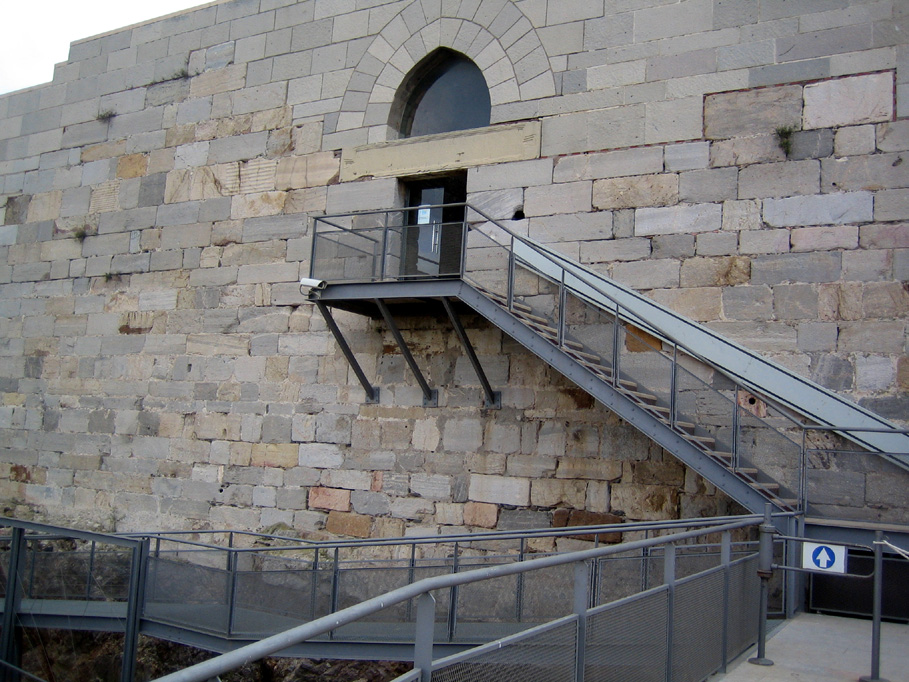
Atalaya Fort
Atalaya Fort, locally known as Castillo de la Atalaya, is a historic hilltop fortress perched 242 meters above sea level on a mountain overlooking the city of Cartagena in the Region of Murcia, Spain. This fortification holds significant military and architectural importance, reflecting Spain's coastal defense strategies during the 18th century. Its elevated position provided a commanding view of the surrounding plains and the natural harbor of Cartagena, a city with a rich history dating back to its founding in the 3rd century BC by the Carthaginian general Hasdrubal the Fair.
Cartagena has long been a crucial naval port for Spain, especially noted during the 16th century as one of the country's most important maritime hubs. The city's strategic value led to extensive fortifications in the 18th century, including the construction of numerous forts and batteries on the hills and mountains around its harbor. Today, Cartagena remains a key military port, hosting the Spanish Navy's submarine fleet and a large military shipyard.
The mountain on which Atalaya Fort stands was historically used as a lookout post since the Middle Ages. The name "Atalaya" itself derives from the Arabic word for "watch post," highlighting its long-standing role in surveillance and defense.
Construction and architectural design
The fort was constructed between 1766 and 1777 under the direction of the Croatian military engineer Mateo Wodopich, following designs by the Spanish military engineer Pedro Martín-Paredes Cermeño. It exemplifies the eclectic Neoclassical style characteristic of the Frenchified Spanish School of military architecture. The fortress features a distinctive isosceles trapezoidal layout with five bastions positioned at each corner and an additional bastion on the southern side for enhanced defense.
The fort's walls are surrounded by a wide moat with a counterscarp and fencing on all sides except the city-facing side, enhancing its defensive capabilities. The main gate, located at the central bastion on the southern side, led into a vestibule and was once accessed via a drawbridge, now lost. Inside, vaulted chambers served as living quarters for the garrison, while battlements on the first floor provided protection for artillery placements.
An internal cistern, or aljibe, collected water to sustain occupants during sieges. A spiral staircase, now missing, once connected the first floor to the rooftop terrace, facilitating access to elevated lookout and artillery positions. The robust masonry and bombproof construction techniques reflect the practical and stylistic elements of 18th-century military engineering.
Historical significance and military role
The strategic importance of the site predates the current fort, with a lookout post existing since the Late Middle Ages to guard against pirate raids and incursions linked to the Nasrid Kingdom of Granada. During the War of Spanish Succession in 1706, English forces briefly occupied Cartagena and built two forts on Atalaya hill, one of which laid the foundation for the modern fortress.
The completed Atalaya Fort was designed to guard the plains around Cartagena and prevent enemy landings at the nearby bay of La Algameca. It also protected key military installations such as the Military Arsenal and the Castle of Galeras on the adjacent hill to the south. Its elevated position and bombproof architecture made it a formidable stronghold.
In the Cantonal Revolution of 1873–1874, a significant anarchistic uprising against the First Spanish Republic, the fort was seized by cantonalist rebels. It was besieged by government forces and fell on January 10, 1874, marking the end of the rebellion. The fort earned the grim nickname "Castle of Death" during this period due to a secret surrender that precipitated the fall of Cartagena.
During the Spanish Civil War (1936–1939), the fortress was repurposed by the Military Information Service as a detention and interrogation center, later becoming part of a Francoist concentration complex after the conflict. Its military use continued until the 1960s when it was transferred from the Ministry of the Army to the Ministry of Finance and eventually to the Cartagena City Council.
Current condition and accessibility
After decades of military use, Atalaya Fort was abandoned and fell into ruin. Although declared a site of Cultural Interest in 1997, it has suffered from neglect and deterioration. In 2014, the castle was listed as an endangered cultural heritage site by the organization Hispania Nostra. Local groups have advocated for its preservation, but formal restoration efforts have yet to be realized.
The fort is currently freely accessible to visitors, though it cannot be reached by car. Access requires a roughly 30-minute walk along the old, deteriorated military road. Visitors can explore the remains of the fortress, including its bastions, moat, and vaulted chambers, while enjoying panoramic views of Cartagena and the surrounding landscape.
Visitors should exercise caution as the interior has been used as a hideout by vagrants, and some areas may be unsafe. Despite this, Atalaya Fort offers a unique glimpse into Spain's military history and 18th-century fortification architecture, making it a valuable destination for history enthusiasts and cultural tourists alike.
Frequently asked questions (FAQ)
- How do I get to Atalaya Fort?
- Atalaya Fort is accessible only by foot via an old military road. Visitors should prepare for a 30-minute walk from the nearest parking or city area.
- What is the historical significance of Atalaya Fort?
- Atalaya Fort played a key role in defending Cartagena during the 18th century and was involved in the Cantonal Revolution of 1873–74, as well as the Spanish Civil War.
- Is Atalaya Fort open to the public?
- Yes, the fort is freely accessible to visitors year-round, though there are no facilities or guided tours available on-site.
- What architectural style is Atalaya Fort built in?
- The fort is designed in the eclectic Neoclassical style, reflecting 18th-century military engineering influenced by the Frenchified Spanish School.
- Can I visit Atalaya Fort by car?
- No, vehicles cannot reach the fort directly. Visitors must walk approximately 30 minutes along a deteriorated military road to access the site.
Information
Current owner
Cartagena City Council
Website
Visit websiteAddress
Pasaje Cast. Atalaya 1, Spain
Sources & official resources
Verify the information above using these authoritative references.
Loading map...
Visitor reviews
No reviews yet. Been here? Write the first review and help other travelers!
Write the first reviewVisited this castle? Share your experience
Your review helps other travelers and adds first-hand knowledge to our encyclopedia.