Askerton Castle — United Kingdom castle

Askerton Castle

Askerton Castle: medieval fortified manor house in Cumbria
High Medieval (11th–13th c.)
Partially Preserved

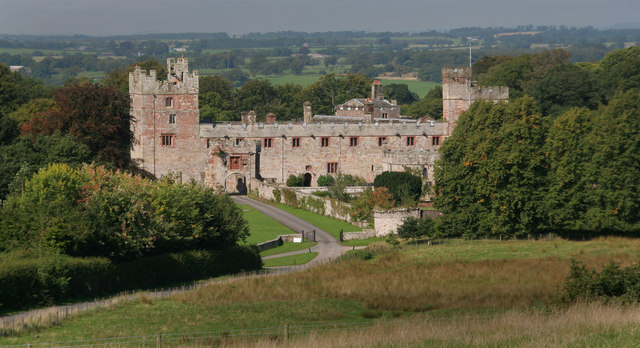
Askerton Castle is a medieval fortified manor house located in Cumbria, England. Built in the 13th century, it exemplifies the characteristics of a hill castle typical of the High Medieval period. This castle served as both a defensive stronghold and a residence, reflecting the dual purpose of many fortified manor houses of the era.

Historical context and significance

During the High Medieval period, the border regions of northern England, including Cumbria, were frequently contested territories. Castles like Askerton were constructed to provide security against raids and invasions, particularly during the turbulent times of Anglo-Scottish conflicts. The castle's location on elevated ground offered strategic advantages, providing clear views of the surrounding landscape and early warning of approaching threats.

Architectural features and layout

Askerton Castle was constructed primarily as a fortified manor house, combining residential comfort with defensive features. The typical layout would have included a stone keep or tower house as the central stronghold, surrounded by curtain walls and possibly a moat or natural defensive features such as steep slopes. The castle likely contained a great hall for communal gatherings, private chambers, service rooms, and storage areas.

The use of local stone in construction would have contributed to the castle's durability and integration with the natural environment. Defensive elements such as battlements, arrow slits, and a fortified gatehouse would have been incorporated to deter attackers and protect the inhabitants.

Defensive advantages of the hill castle type

As a hill castle, Askerton Castle utilized its elevated position to maximize defense. The height advantage allowed defenders to observe enemy movements from a distance and made direct assaults more difficult. The natural terrain could be enhanced with man-made fortifications to create a formidable barrier against invaders.

Role in regional history

Askerton Castle played a role in the border conflicts between England and Scotland, which were common throughout the medieval period. The castle's fortifications would have been essential during times of unrest, providing refuge for local nobility and their retainers.

Over time, as the political situation stabilized and the need for military defense decreased, many such castles transitioned into more comfortable residences or fell into disuse. The current condition of Askerton Castle reflects the passage of centuries and changing functions.

Current condition and preservation

Today, Askerton Castle stands as a partially preserved medieval structure. Its remains offer valuable insights into medieval architecture and the lifestyle of fortified manor houses. Preservation efforts focus on maintaining the integrity of the surviving walls and features, allowing visitors and researchers to appreciate its historical and architectural significance.

Visiting Askerton Castle

While specific visitor information may vary, Askerton Castle's location in Cumbria makes it accessible for those interested in medieval history and architecture. The site provides a tangible connection to the turbulent history of the Anglo-Scottish borderlands and the architectural heritage of fortified manor houses.

Nearby attractions

Visitors to Askerton Castle can also explore other historic sites in Cumbria, including Hadrian's Wall, Carlisle Castle, and the scenic landscapes of the Lake District, enriching their understanding of the region's past.

Frequently asked questions (FAQ)

When was Askerton Castle built?
Askerton Castle was built in the 13th century during the High Medieval period, reflecting typical fortified manor house architecture of that time.
What is the architectural style of Askerton Castle?
Askerton Castle is a fortified manor house typical of the High Medieval period, featuring defensive elements like curtain walls and battlements.
Where is Askerton Castle located?
Askerton Castle is located in Cumbria, England, on elevated ground characteristic of hill castles.
Can I visit Askerton Castle?
Askerton Castle is partially preserved and accessible for visitors interested in medieval architecture and history, though specific visitor information should be checked locally.
What defensive features does Askerton Castle have?
The castle includes typical medieval defensive features such as battlements, arrow slits, and a fortified gatehouse, enhanced by its strategic hilltop position.

Photo gallery

Askerton Castle
Click to view

Photo by Keith Salvesen•CC BY-SA 2.0

1 photo • Click any image to view in full screen

Information

Hill Castle

Loading map...

Visitor reviews

No reviews yet. Been here? Write the first review and help other travelers!

Write the first review

Visited this castle? Share your experience

Your review helps other travelers and adds first-hand knowledge to our encyclopedia.
Write a review

(5/5)

0/2000 characters

Your review will be visible after admin approval

Nearby castles

5.7 km
Bewcastle Castle — United Kingdom castle

Bewcastle Castle

Bewcastle, United Kingdom

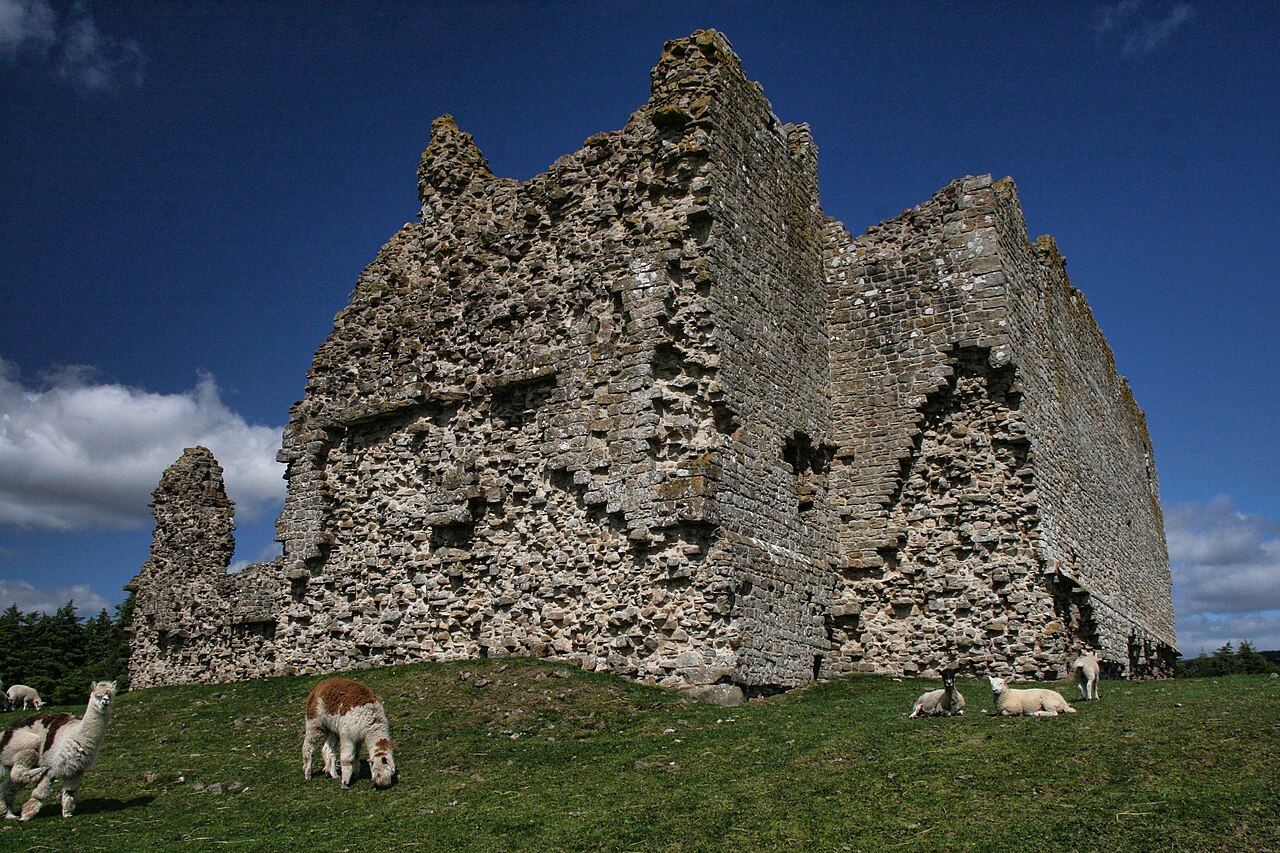
Bewcastle Castle stands as a remarkable testament to the layered history of northern England, located near the Scottish border in the parish of Bewcastle. This hill castle occupies a strategic elevated position approximately 152 meters above sea level, commanding views over the surrounding grasslands and hills. Its origins are deeply entwined with the Roman and Norman periods, reflecting centuries of military and architectural evolution. The site initially hosted the Roman fort known as Fanum Cocidi, an important defensive installation constructed to control the frontier region. The fort's layout included formidable ditches and earthworks, some of which were later incorporated into the medieval castle's defenses. Around 1092, the Normans established the first iteration of Bewcastle Castle, likely a timber and earthwork structure that cleverly utilized the existing Roman fortifications, especially the northern and eastern ditches. This early castle served as a frontier stronghold during a turbulent period marked by frequent Anglo-Scottish conflicts. The castle's initial Norman phase was short-lived; it was destroyed during the upheavals of 1173. However, the site regained prominence in the late 14th century when John de Strivelyn led a substantial rebuilding effort between 1361 and 1371. This reconstruction transformed Bewcastle into a formidable stone fortress. Notably, much of the stonework for this phase was quarried directly from the Roman fort, including the deliberate demolition of the fort’s northeastern corner to provide building materials. This reuse of Roman masonry is a striking example of medieval adaptation and resourcefulness. Architectural features and layout The most prominent surviving element of Bewcastle Castle is its 14th-century stone gatehouse, which remains remarkably intact. This gatehouse features a projecting internal garderobe turret, an unusual and well-preserved medieval toilet integrated into the defensive structure. The gatehouse would have served as the primary controlled entry point into the castle, combining functionality with defensive strength. Beyond the gatehouse, the castle's layout is primarily discernible through earthworks and partial masonry remains. The site was originally enclosed by a dry moat, parts of which align with the Roman ditches, underscoring the continuity of defensive strategies across centuries. The castle's walls and other fortifications, now largely lost, would have enclosed a courtyard and various domestic and military buildings, typical of a Norman frontier fortress. Historical significance and ownership Bewcastle Castle played a key role in the defense of the Anglo-Scottish borderlands throughout the medieval period. After its 14th-century reconstruction, the castle began to decline by the early 15th century. During the reign of King Edward IV, ownership passed to his brother, the Duke of Gloucester, who later became King Richard III. The Duke undertook significant restoration, likely including the addition of the gatehouse that endures today. From the late 15th century, the castle was held by the Musgrave family until the mid-17th century. The castle's decline culminated during the English Civil War, when in 1641, under orders from Oliver Cromwell, it was largely destroyed. Over subsequent centuries, much of the stone was removed and repurposed for local construction, leaving the castle in a ruinous state. The name and cultural context The name "Bewcastle" is steeped in antiquarian tradition, believed to derive partly from an Anglo-Saxon figure named Bueth, though this connection lacks firm historical evidence. A 1272 document refers to the site as "Bothecaster," combining the Old Norse word "búð" meaning "temporary building" with "castle," referencing the Roman fort. This etymology explains the unusual repetition in the name and highlights the site's complex cultural heritage involving Anglo-Saxon, Norse, and Norman influences. Present condition and landscape setting Today, Bewcastle Castle exists primarily as a ruin with its most significant surviving feature being the stone gatehouse. The surrounding landscape remains largely pastoral, with the grounds used for grazing sheep and llamas, maintaining a connection between the castle and its rural environment. The earthworks, moat remnants, and masonry fragments provide a tangible link to the site's extensive history, from its Roman beginnings through medieval fortification to its eventual decline. Visitors to the site can explore the atmospheric ruins and appreciate the enduring legacy of this Norman hill castle built upon an ancient Roman foundation. The castle's layered history, architectural features, and strategic location make it a significant monument in the context of northern England's border defenses.

High Medieval (11th–13th c.)
Details
6.7 km
Naworth Castle — United Kingdom castle

Naworth Castle

Brampton, United Kingdom

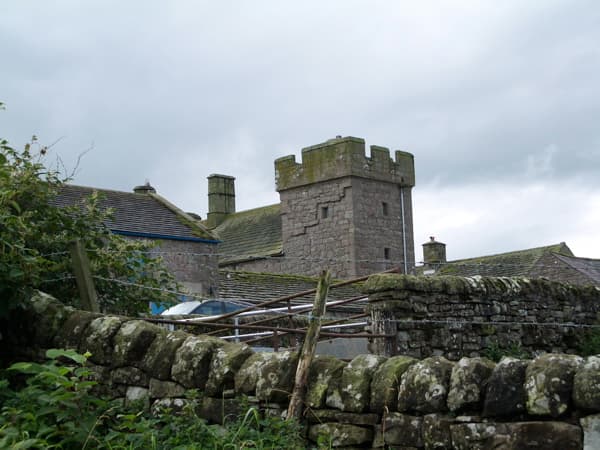
Naworth Castle is a historic hill castle located in Cumbria, England, near the market town of Brampton. Positioned strategically beside the A69 road that connects Newcastle upon Tyne to Carlisle, the castle overlooks the River Irthing and sits just within sight of the medieval Lanercost Priory. This proximity to the priory, where members of the Dacre and Howard families are buried or commemorated, highlights the castle's deep historical and familial connections in the region. The castle's origins trace back to the medieval period, serving as the ancestral seat of the Barons Dacre, and it remains the residence of their cognatic descendants, the Earls of Carlisle, who belong to the prominent Howard family. Historical significance and lineage Naworth Castle has a rich history as a fortified stronghold and noble residence. It was originally constructed in the 14th century during the late medieval period to serve as a defensive fortress against border conflicts and invasions, particularly during the turbulent times of the Anglo-Scottish wars. The castle was a key stronghold for the Dacre family, a powerful noble house deeply involved in the politics and military affairs of northern England. Throughout its history, Naworth Castle was renowned as an impregnable fortress where the Dacres retreated during times of trouble. Its fortifications and strategic location made it a formidable defensive site. The castle also played a role in the complex social and political landscape of the region, witnessing numerous sieges and military actions over the centuries. Architectural features and layout The castle is primarily constructed as a hill castle, taking advantage of its elevated position for defense and surveillance. Its architecture reflects the late medieval style with later additions and restorations that blend elements of Gothic and post-medieval influences. Naworth Castle features robust stone walls, battlements, and towers designed to repel attackers. The defensive walls enclose a central courtyard, with living quarters, a great hall, and ancillary buildings arranged within. The castle's gatehouse is a notable feature, historically serving as the primary point of entry and defense. Over the centuries, the castle was adapted to accommodate changing needs, including more comfortable residential spaces as the military threat diminished. Its interiors include period features such as large fireplaces, wood paneling, and heraldic decorations that reflect the status of its noble occupants. Relationship with surrounding landmarks Naworth Castle is situated opposite Lanercost Priory across the River Irthing. The priory, founded in the 12th century, was an important religious center and is closely linked to the castle through the families who held both estates. The Dacre and Howard families have memorials and burial sites both at the priory and at Carlisle Cathedral, underscoring their regional influence. The castle's location near major roads and waterways was strategic for controlling movement and trade in the area. Its proximity to Carlisle, a key city in the region, further enhanced its importance as a noble seat and defensive site. Preservation and current status Today, Naworth Castle is a Grade I listed building, recognized for its architectural and historical significance. It remains in private ownership by the Earls of Carlisle and is maintained as a residence and heritage site. While not generally open to the public, the castle can be viewed from nearby roads and footpaths, and it occasionally hosts private events and tours. The castle's well-preserved condition offers valuable insights into medieval fortification and noble life in northern England. Its enduring presence continues to symbolize the legacy of the families who shaped the region's history.

Late Medieval (14th–15th c.)
Details
7 km
Banna — United Kingdom castle

Banna

, United Kingdom

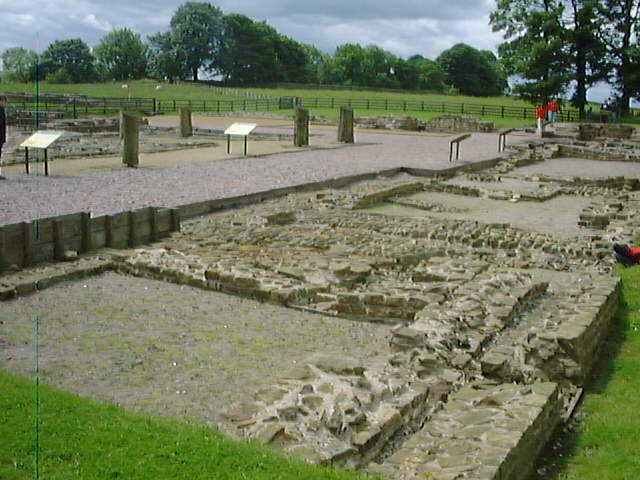
Birdoswald Roman Fort, originally known to the Romans as Banna, stands as one of the most significant military sites along Hadrian's Wall in northern England. Constructed in the 2nd century AD during the Roman occupation of Britain, Banna was one of the 16 forts strategically placed to guard the empire's northern frontier. The fort's location towards the western end of Hadrian's Wall made it a critical point for controlling movement and defending against incursions from northern tribes. Historical significance and Roman military architecture The fort was built as part of the Roman efforts to consolidate their presence in Britannia by creating a formidable defensive barrier. Birdoswald's design reflects typical Roman military architecture, featuring strong bastioned walls, defensive ditches, and internal buildings arranged around a central principia (headquarters). The fort's layout includes barracks, granaries, workshops, and a commander's house, illustrating the complex logistical and administrative functions it served. Unlike many Roman forts, Birdoswald is notable for its exceptional state of preservation, particularly its defensive walls and gateways. The fort's bastioned fortress characteristics are evident in the robust stone walls with projecting bastions designed to provide overlapping fields of fire against attackers. This architectural feature was crucial for the fort's defensive capabilities. Continuity and post-Roman use After the end of Roman rule in Britain in the early 5th century, Birdoswald was abandoned for a period. However, archaeological evidence shows that the site was reoccupied around the 13th century, reflecting its continued strategic or agricultural importance. During the medieval period and later, the site was adapted for use as farmland, which persisted until 1984. This long history of occupation and reuse adds layers of cultural significance to the site. Preservation and archaeological research Birdoswald Roman Fort is attached to the longest surviving stretch of Hadrian's Wall, making it one of the best-preserved forts along the entire frontier. The fort's preservation state allows visitors and researchers to gain valuable insights into Roman military life and frontier defense systems. Since the 1980s, extensive archaeological excavations have been conducted at Birdoswald, involving over 200 students by June 2023. These excavations have uncovered important artifacts and structural details that enhance understanding of Roman military strategy and daily life within the fort. Management of the site transitioned from Cumbria County Council, which oversaw it from 1984 until 2004, to English Heritage, which currently manages and maintains the fort. English Heritage has worked to preserve the site, facilitate public access, and promote educational programs to highlight the fort's historical and architectural importance. Architectural features and visitor experience Visitors to Birdoswald can explore the well-preserved stone walls and bastions, walk along the adjoining section of Hadrian's Wall, and view the remains of internal buildings such as the principia and barracks. The site includes interpretive displays that explain the fort's role in Roman Britain, its construction techniques, and its historical context. The fort's location in Cumbria offers scenic views and a tangible connection to the Roman Empire's northernmost frontier. Hadrian's Wall and the western frontier Birdoswald's position on the western end of Hadrian's Wall places it near the River Irthing, a natural defensive feature. The fort's design took advantage of the terrain, with its bastions allowing defenders to cover the approaches effectively. This strategic siting underscores the Roman military's sophisticated approach to frontier defense. Archaeological findings and ongoing research Excavations at Birdoswald have revealed artifacts such as Roman pottery, coins, military equipment, and building materials. These finds contribute to a detailed picture of life at the fort, including the presence of auxiliary troops and the logistical challenges of maintaining a remote military outpost. Ongoing research continues to refine the understanding of Roman military architecture and frontier policy. Access and visitor information Birdoswald Roman Fort is open to the public, with English Heritage providing facilities and information for visitors. The site offers walking trails along Hadrian's Wall and opportunities to explore the fort's remains. Educational programs and guided tours are available seasonally, enhancing visitor engagement with the site's history and architecture.

Early Medieval (5th–10th c.)
Details