Penrhyn Castle
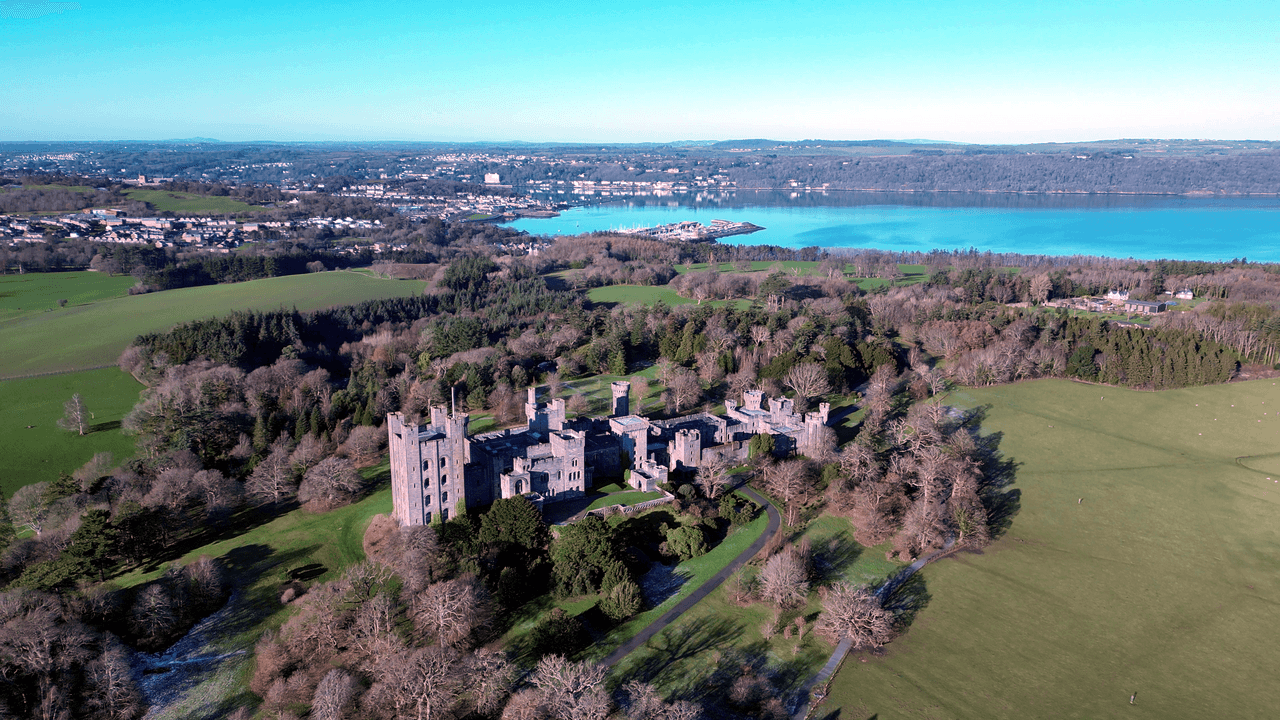
Penrhyn Castle stands as a magnificent example of a Neo-Norman or Romanesque Revival country house located near Bangor in North Wales. Its architectural grandeur and historical significance make it one of the most important country houses in Wales and a key heritage site in Britain. Originally founded as a medieval fortified manor by Gwilym ap Griffith in the early 15th century, the estate evolved over centuries to reflect the changing fortunes and ambitions of its owners, culminating in the imposing castle seen today, largely rebuilt in the early 19th century by architect Thomas Hopper.
The site was initially granted to Ednyfed Fychan, Seneschal to Llywelyn the Great, whose descendants established the early fortified manor house. In 1438, the manor received a licence to crenellate, allowing it to be fortified with battlements, marking its transition from a fortified home to a castle-like structure. The estate passed through the Griffith family before being acquired by the Pennant family, whose wealth derived from Jamaican sugar plantations worked by enslaved people and from the burgeoning slate quarrying industry in North Wales.
The neo-norman transformation and architectural features
Between 1820 and 1837, under the ownership of George Hay Dawkins-Pennant, the castle underwent a dramatic rebuilding by Thomas Hopper. Hopper designed the house as a vast Neo-Norman castle, incorporating elements of the earlier medieval and 18th-century buildings. The castle stretches approximately 440 feet along a north–south axis and covers over an acre, with around seventy roofs, making it one of Britain's largest castle-style country houses, second only to Windsor Castle.
The castle's layout is divided into three main sections: the southern donjon or keep, modeled after Hedingham Castle, contains the family apartments; the central block houses the state rooms; and the northern wing includes service areas and stables arranged around a courtyard. The imposing four-story square keep, about 62 feet wide and 124 feet high, features four corner turrets and is notable for housing the famous one-ton slate bed made for Queen Victoria during her 1859 visit.
Construction materials include local rubble masonry lined internally with brick and faced externally with finely worked limestone ashlar, notably Penmon limestone (also known as Anglesey marble). The masonry work is exceptionally fine, reflecting the high craftsmanship standards of the time. The castle's entrance is reached via a long drive leading to a gatehouse and a cour d’honneur before the central block. The gatehouse and several estate lodges are themselves separately listed buildings.
Interior design and notable rooms
Inside, the Grand Hall is a double-height space reminiscent of a church nave, featuring a triforium supported by compound columns and stained glass windows by Thomas Willement. The Grand Staircase rises the full height of the house, adorned with richly carved grey stone columns and illuminated by an octagonal lantern that bathes the space in natural light. The library is a large, opulent room divided by four plaster arches inspired by Norman architecture, furnished with slate furniture and bookcases shaped like ancient temples.
The Drawing Room, originally the medieval great hall, boasts vaulting and panelling in a lighter style, gilt mirrors (including one described as Britain's largest), and furniture designed by Hopper. The Ebony Room is paneled and furnished with ebony or ebonised wood, featuring a black and polished limestone fireplace and retaining original wall coverings and curtains dating from the late 17th to early 19th centuries.
Service areas and stables
The castle's extensive service areas include a butler’s pantry, servants’ hall, offices for the estate manager and housekeeper, kitchen with still room, pantry, pastry room, and multiple towers serving specialized functions such as ice storage, waste disposal, and housemaids’ quarters. The stables court accommodates up to 36 horses and includes a coach house, smithy tower, and dung tower, designed to resemble a fortress gatehouse.
Historical context and ownership
The Penrhyn estate's history is deeply intertwined with the economic and social history of Britain. Richard Pennant, 1st Baron Penrhyn, expanded the estate and slate industry in the late 18th century, using wealth derived from Jamaican sugar plantations that relied on enslaved labor. He was a vocal opponent of the abolition of slavery, and his investments helped develop the slate quarrying industry and infrastructure, including Port Penrhyn.
After Richard Pennant's death in 1808, the estate passed to his second cousin George Hay Dawkins-Pennant, who continued the slate industry development and maintained opposition to emancipation. The estate later passed by marriage to Edward Gordon Douglas, later Douglas-Pennant, 1st Baron Penrhyn of the second creation, and his descendants, who continued industrial and estate management. The castle itself was primarily a summer residence rather than a principal family home.
The estate was notable for its role in industrial relations history, particularly the Great Strike of 1900–1903 at Penrhyn Quarry, the longest industrial strike in British history. This strike highlighted tensions between quarry workers and the estate owners, who opposed trade unionism.
The penrhyn estate today and cultural significance
In 1951, the castle and 40,000 acres of the estate were transferred to the National Trust through the National Land Fund as payment for death duties. The Douglas-Pennant family retained ownership of the art collection and some estate lands. Since then, the National Trust has preserved and developed the property, including exhibitions that address the estate's complex legacy involving colonialism and slavery.
The castle is a Grade I listed building and is widely regarded as Thomas Hopper's masterpiece and one of the finest examples of Norman Revival architecture in Britain. Its art collection includes internationally significant works by Palma Vecchio and Canaletto. The surrounding 60 acres of Victorian-style gardens and woodland offer spectacular views of Snowdonia’s summits, the Great Orme, and Puffin Island.
The grounds feature a terraced walled garden with three levels, specimen trees, rhododendrons, and a large underground reservoir dating from the 1840s, possibly used for fire-fighting. Remnants of the medieval chapel have been preserved within the park, and numerous ancillary buildings such as lodges, walls, and estate houses are listed as Grade II or II* structures.
Until 2024, the Penrhyn Castle Railway Museum was housed in the stable block, displaying narrow-gauge industrial locomotives related to the Penrhyn Quarry Railway. The museum closed for redevelopment to focus on the estate’s industrial heritage.
Penrhyn Castle's rich architectural details, extensive history, and cultural significance make it a compelling destination for visitors interested in British history, architecture, and the complex legacies of industry and empire.
Frequently asked questions (FAQ)
- How do I get to Penrhyn Castle?
- Penrhyn Castle is located in Llandegai, just a few miles from Bangor in North Wales. You can reach the castle by car, with parking facilities available on-site, or by public transport via local bus services. The scenic surroundings make it a great destination for a day trip.
- What is the historical significance of Penrhyn Castle?
- Penrhyn Castle is a neo-Norman castle built in the 19th century, showcasing the wealth generated from the local slate quarrying industry. It is recognized as a symbol of the industrial heritage of North Wales and is set within beautiful gardens and parkland. The castle also houses an impressive collection of art and historical artifacts.
- When was Penrhyn Castle built?
- Construction of Penrhyn Castle began in 1820 and was completed in 1837, although various additions and restorations have occurred since then. Designed by architect Thomas Hopper, the castle reflects the grandeur of the Victorian era. It was built by the wealthy Williams family, who were significant figures in the slate trade.
- Can I take guided tours of Penrhyn Castle?
- Yes, guided tours are available at Penrhyn Castle, providing visitors with in-depth knowledge about its history and architecture. These tours are led by knowledgeable staff who can share fascinating stories about the castle's past. Check the website for tour schedules and availability during your visit.
- Why is the architecture of Penrhyn Castle unique?
- The architecture of Penrhyn Castle is notable for its neo-Norman style, which includes impressive towers, battlements, and decorative stonework. The design is influenced by medieval castles, yet it features 19th-century elements and luxurious interiors. The castle's aesthetic reflects the wealth and status of its original owners.
- Is it possible to explore the gardens at Penrhyn Castle?
- Yes, visitors are encouraged to explore the beautifully landscaped gardens surrounding Penrhyn Castle. The gardens feature a variety of plants, trees, and pathways that provide a serene setting for a leisurely stroll. Seasonal events and activities are often held in the gardens, enhancing the visitor experience.
- What are the opening hours for Penrhyn Castle?
- Penrhyn Castle is generally open to visitors from 10:00 AM to 5:00 PM, with extended hours during the summer months. It is advisable to check the official website for any seasonal changes or special event closures. Planning your visit around these hours will ensure you have ample time to explore the castle and its grounds.
- What are the ticket prices for visiting Penrhyn Castle?
- Ticket prices for Penrhyn Castle vary, with discounts available for children, students, and seniors. Family tickets are also offered at a reduced rate. It’s best to purchase tickets online in advance for convenience and to check for any special offers or events during your visit.
- When is the best time to visit Penrhyn Castle?
- The best time to visit Penrhyn Castle is during the spring and summer months when the gardens are in full bloom and outdoor activities are plentiful. However, autumn can also be a beautiful time to visit, with vibrant fall colors. Be sure to check the weather and any scheduled events to enhance your experience.
Photo gallery

Information
Website
Visit websiteSources & official resources
Verify the information above using these authoritative references.
Loading map...
Visitor reviews
No reviews yet. Been here? Write the first review and help other travelers!
Write the first reviewVisited this castle? Share your experience
Your review helps other travelers and adds first-hand knowledge to our encyclopedia.