Arraiolos Castle
Arraiolos Castle, known locally as Castelo de Arraiolos, stands prominently in the town of Arraiolos in the Alentejo Central region of Portugal. This late medieval hill castle is a remarkable example of a rare elliptical fortification, combining Romanesque and Gothic architectural influences. Its strategic location on a low hill, Monte de São Pedro, has been a site of human occupation since prehistoric times, with archaeological finds dating back to around 300 BCE.
The earliest documented plans for a castle at Arraiolos trace back to the early 13th century when King Afonso II granted the settlement to the Bishop of Évora in 1217, along with permission to build a castle. However, it was not until the reign of King Denis I that construction began in earnest. In 1305, a formal agreement was made to erect defensive walls, and by 1310, the castle was completed under the supervision of engineer Dom João Simão, funded by a royal budget of 2,000 pounds.
Architectural design and construction
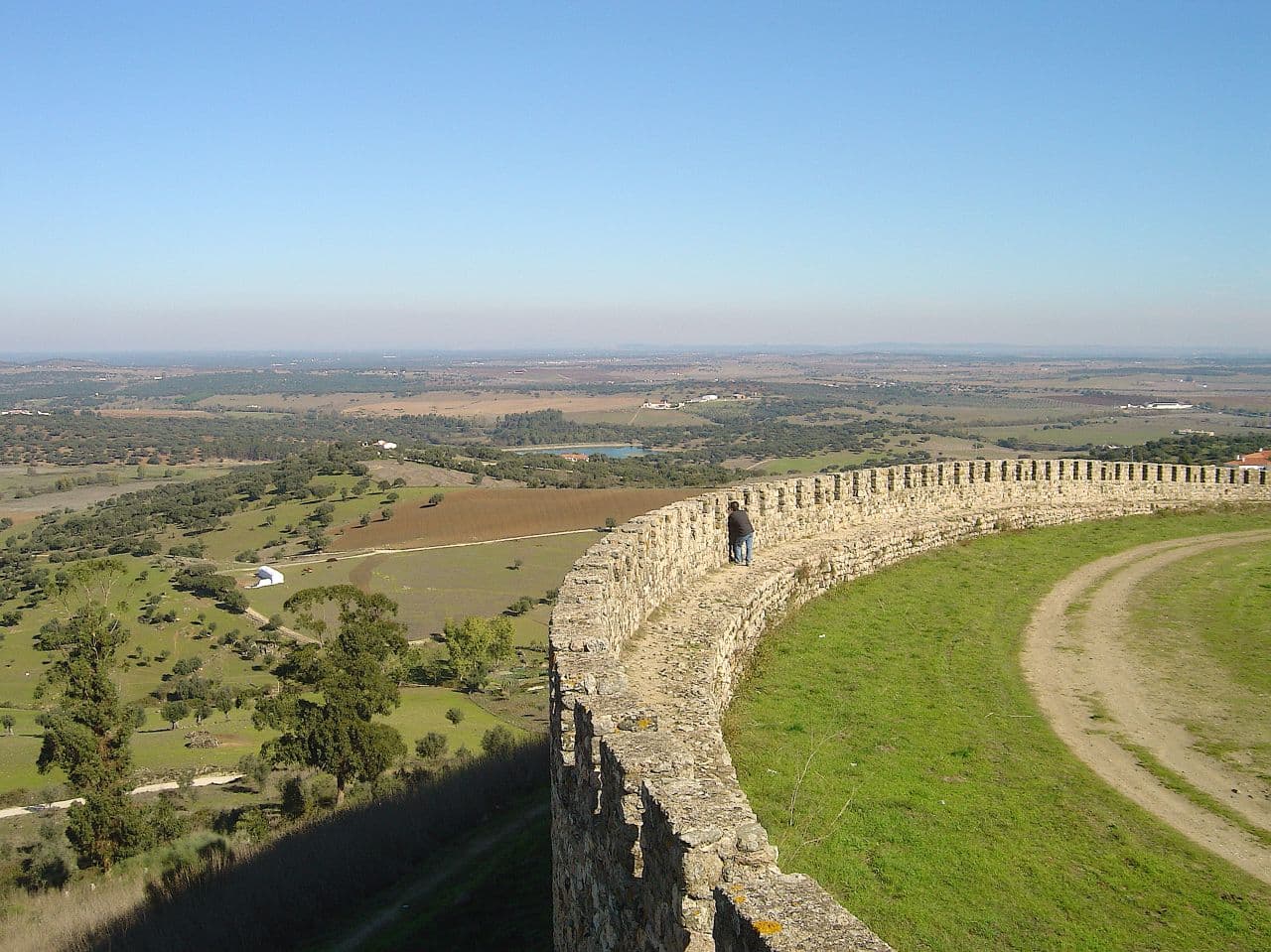
Arraiolos Castle is distinguished by its elliptical curtain wall, which encloses a compact area featuring two main gates and a central church, the Church of the Savior. The walls, approximately 207 brasses long, 3 brasses high, and 1 brass thick, were constructed to provide formidable defense, incorporating crenellations and battlements typical of the period.
Within the enclosure lies the Paço dos Alcaides, or Mayor's Palace, a square-built inner castle integrated into the southern section of the curtain wall. This structure includes a slender, tall keep tower rising four stories high, crowned by a walkway with battlements that offered defenders a commanding view of the surrounding landscape. The keep is connected to guard chambers and guest pavilions, underscoring the castle's dual military and residential functions.
Defensive features and gates
The castle's two main gates, Porta da Vila to the south and the Gothic Porta de Santarém to the northwest, were critical access points fortified by twin square towers, enhancing their defensive capabilities. The southern gate was originally part of a barbican, an outer defensive work, of which the Torre do Relógio (Clock Tower) remains a notable remnant, featuring a spire added during King Manuel I's reign in the late 15th to early 16th century.
Archaeological evidence suggests a now-sealed postern gate once existed on the eastern wall, indicating the complexity of the castle's defensive perimeter. The curtain walls have been well preserved, with some areas restored to stabilize the structure and allow visitors to appreciate the original medieval fortifications.
Historical significance and use
Despite its formidable defenses, the castle's exposed and windy hilltop location made it an uncomfortable residence. By the second half of the 14th century, the fortress began to decline in population. King Ferdinand I's 1371 attempt to revitalize the settlement by granting privileges failed to prevent depopulation.
Following the Portuguese crisis of 1383–1385, the castle gained renewed military importance when it was granted to Constable Nuno Álvares Pereira in 1387. As Count of Arraiolos, he used the castle as a base for military expeditions against Castile between 1385 and 1390, highlighting its strategic role in securing Portuguese independence.
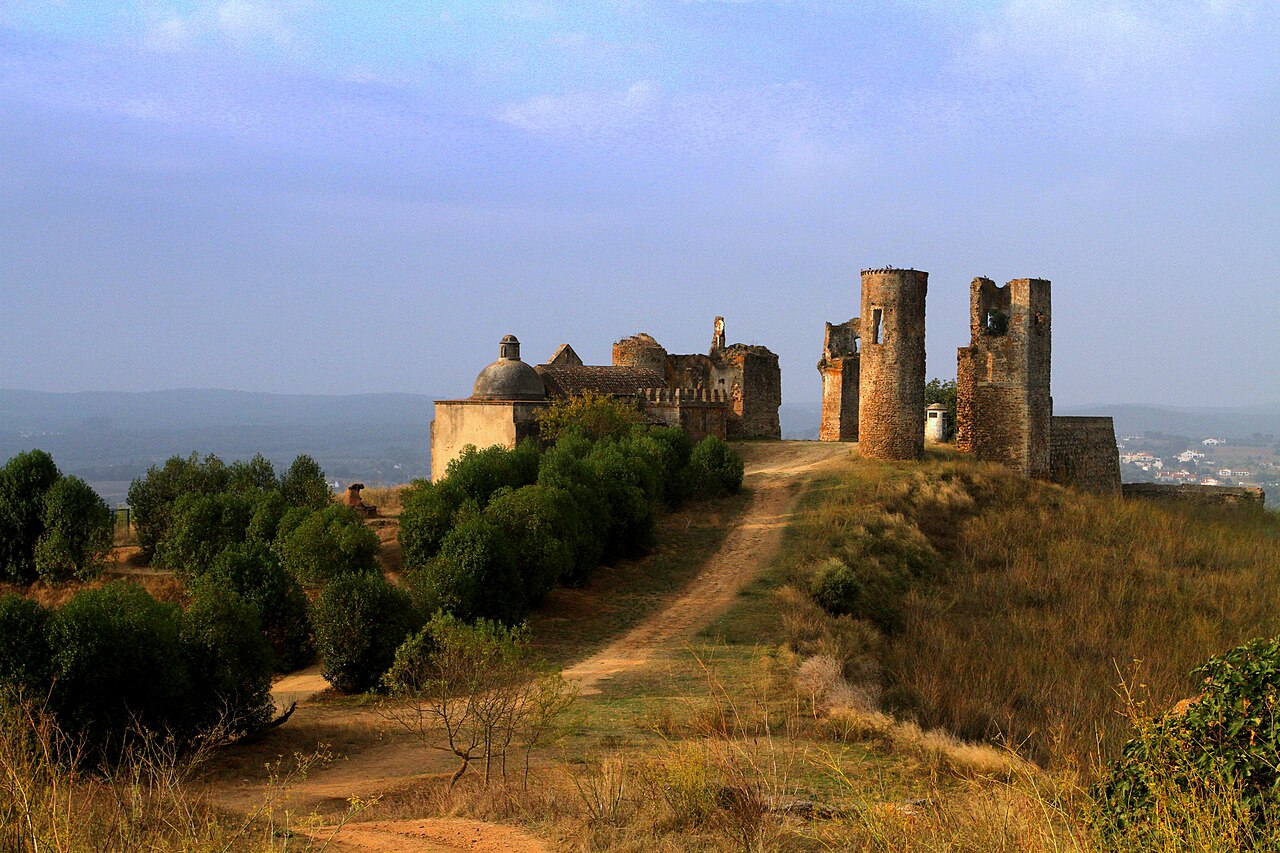
By the late 16th century, Arraiolos Castle was still inhabited and maintained security routines such as nightly gate closures. However, the early 17th century saw accelerated abandonment, with locals repurposing the castle's stone for other constructions and the courtyard used for livestock. By 1613, the castle was largely in ruins.
Restoration efforts during King John IV's reign after the 1640 Restoration of Portuguese independence were short-lived, as the castle was again reported in poor condition by 1655. The devastating 1755 Lisbon earthquake further damaged the already fragile ruins.
Changing roles and preservation
In the 19th century, the castle courtyard served as a burial ground during a cholera outbreak in 1833, marking a shift from military to civic use. Mid-20th century restoration initiatives by the General Directorate for Buildings and National Monuments between 1959 and 1963 helped stabilize the ruins, preserving this unique example of a circular-plan fortress.
Cultural heritage and visitor experience
Arraiolos Castle today stands as a significant cultural monument, attracting visitors interested in medieval military architecture and Portuguese history. Its well-preserved elliptical walls and imposing keep tower offer a tangible connection to the region's medieval past.
The castle is freely accessible to the public, providing an evocative experience of walking along ancient battlements and exploring the remains of the Paço dos Alcaides and the Church of the Savior. Local tradition speaks of a secret underground passage linking the castle to the nearby Convent of Nossa Senhora da Assunção, though this has not been archaeologically confirmed.
Visitors can appreciate the castle's strategic hilltop setting, which offers panoramic views of the surrounding Alentejo countryside. The site exemplifies the evolution of fortification design in medieval Portugal and reflects the historical challenges of maintaining a fortress in a harsh environment.
Architectural uniqueness
The elliptical shape of Arraiolos Castle is unusual among Portuguese castles, which more commonly feature rectangular or irregular layouts. This design likely reflects both the topography of Monte de São Pedro and innovative defensive concepts of the early 14th century.
The combination of military and residential architecture within the fortress, including the keep tower, curtain walls, gates, and church, provides valuable insights into the multifunctional nature of medieval castles as centers of power, defense, and community life.
Archaeological findings and historical context
Archaeological discoveries at the site, including prehistoric quartz tools and a copper axe, underscore the long history of human presence on Monte de São Pedro. These artifacts, preserved in the Museum of Évora, highlight the strategic importance of this location well before the medieval period.
The castle's construction during the reign of King Denis I aligns with a broader wave of fortification building across Portugal aimed at consolidating royal authority and protecting key settlements during the Late Medieval period.
Overall, Arraiolos Castle stands as a testament to medieval military engineering, royal ambition, and the historical complexities of settlement, defense, and decline in Portugal's Alentejo region.
Frequently asked questions (FAQ)
- How do I get to Arraiolos Castle?
- Arraiolos Castle is located in the town of Arraiolos in the Alentejo Central region of Portugal. It is accessible by car or local transport, with signage directing visitors to R. do Castelo where the castle stands.
- What is the best time to visit Arraiolos Castle?
- The best time to visit Arraiolos Castle is during spring and autumn when the weather is mild and comfortable for exploring the hilltop fortress and surrounding countryside.
- Can I explore the interior of Arraiolos Castle?
- Visitors can freely explore the castle grounds, including walking along the curtain walls and viewing the remains of the keep tower, Paço dos Alcaides, and the Church of the Savior within the enclosure.
- Is there an entrance fee to visit Arraiolos Castle?
- Arraiolos Castle is open to the public free of charge, making it an accessible historical site for all visitors.
- What architectural style is Arraiolos Castle built in?
- Arraiolos Castle features a combination of Romanesque and Gothic architectural styles, evident in its elliptical curtain walls, battlements, and the Gothic-style Porta de Santarém gate.
- Why is Arraiolos Castle historically significant?
- Arraiolos Castle is significant for its rare elliptical design, its role in the Portuguese struggles for independence, and its association with Constable Nuno Álvares Pereira during military campaigns against Castile in the late 14th century.
Photo gallery

Information
Address
R. do Castelo, Arraiolos, Portugal
Loading map...
Visitor reviews
No reviews yet. Been here? Write the first review and help other travelers!
Write the first reviewVisited this castle? Share your experience
Your review helps other travelers and adds first-hand knowledge to our encyclopedia.