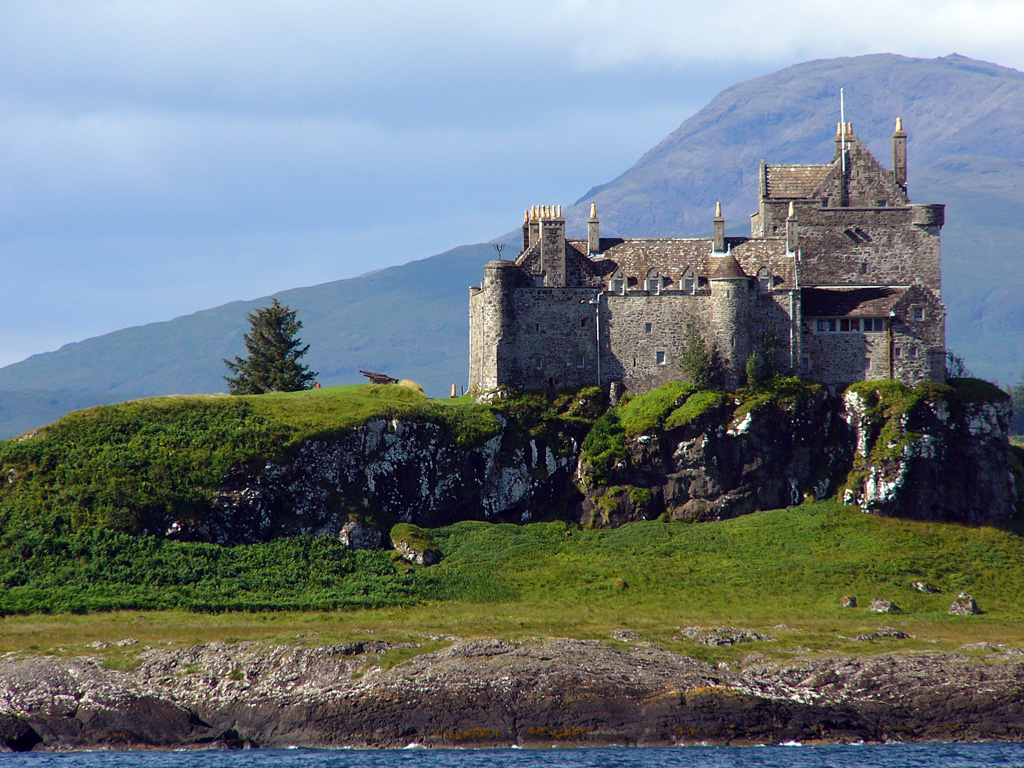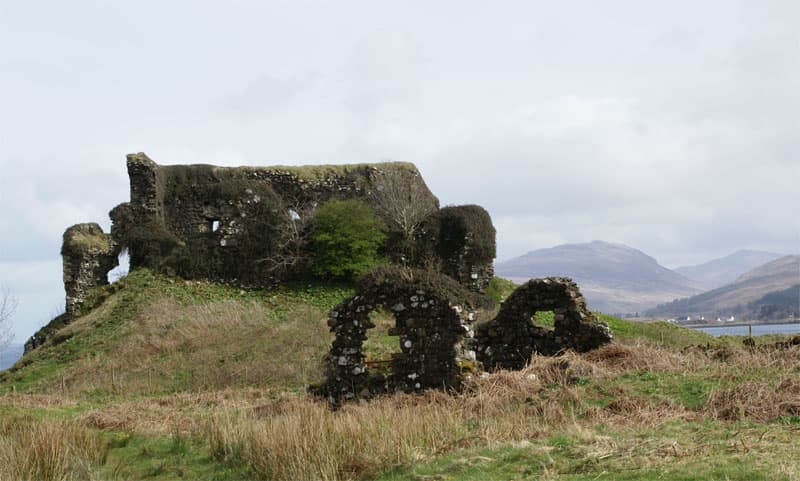
Aros Castle Ruins
Aros Castle, also known historically as Dounarwyse Castle, is a notable 13th-century medieval fortress located near Salen on the Isle of Mull in Scotland. Perched strategically overlooking the Sound of Mull, the castle's ruins today reflect a rich history tied to the powerful Lords of the Isles and the MacDougall Lords of Lorn. Though now a ruin, it remains a significant archaeological site that offers insight into High Medieval Scottish castle architecture and feudal power dynamics in the western Scottish isles.
Historical origins and significance
Aros Castle was likely constructed in the 13th century by one of the MacDougall Lords of Lorn, a prominent family who held extensive lands in western Scotland. The castle's position on the coast allowed it to control and monitor maritime traffic through the Sound of Mull, a vital waterway connecting the Inner Hebrides to the Scottish mainland.
The castle first appears in historical records in the late 14th century, during which time it was under the ownership of the Lords of the Isles, a semi-independent Gaelic lordship that wielded considerable influence over the western seaboard of Scotland. The castle served as a major stronghold for these lords, symbolizing their territorial power and maritime dominance.
Architectural features and layout
While much of Aros Castle lies in ruins today, archaeological evidence suggests it was originally a typical High Medieval stone castle featuring defensive walls and towers adapted to its coastal setting. The castle was built to command views over the surrounding landscape and sea approaches, with thick stone walls designed to withstand siege warfare common in the period.
The castle's layout likely included a central courtyard surrounded by residential buildings, a great hall, and defensive towers. The use of local stone and the castle's integration with the rocky coastal terrain demonstrate medieval builders' adaptation to natural features for defense.
Later history and decline
By the late 17th century, Aros Castle had lost much of its military importance. Records from 1688 describe it as "ruinous, old, useless and never of any strength," indicating significant deterioration. Despite this, it was briefly garrisoned by troops loyal to the Earl of Argyll in 1690, reflecting its lingering strategic value during the turbulent Jacobite era.
Throughout the 18th century, the surrounding lands were farmed by Campbell tacksmen, but there is no evidence that the castle itself was inhabited or maintained as a residence during this time. Its decline into ruin was typical of many medieval castles in Scotland that became obsolete with changes in military technology and political power structures.
Archaeological significance and preservation
Today, Aros Castle ruins are classified as an archaeological site and are protected as part of Scotland's cultural heritage. The ruins provide valuable information about medieval fortification techniques and the regional history of the Isle of Mull.
The site is accessible to visitors who can explore the remains and enjoy views of the Sound of Mull. Although much of the structure is lost, the ruins still convey the scale and strategic importance of the castle during its peak.
Visiting Aros Castle
Visitors to the Isle of Mull interested in medieval history and castle architecture often include Aros Castle ruins in their itinerary. The site offers a glimpse into the feudal past of the region and the maritime power of the Lords of the Isles.
While facilities are limited due to the castle's ruined state, its scenic location and historical context make it a compelling destination for those exploring Scotland's western isles.
Frequently asked questions (FAQ)
- How do I get to Aros Castle Ruins?
- Aros Castle Ruins is located in Salen on the Isle of Mull, United Kingdom. You can reach it by car or public transport from nearby towns, with local buses operating regularly. Parking is available near the site for visitors traveling by car.
- What is the historical significance of Aros Castle Ruins?
- Aros Castle was built in the late 13th century and served as a stronghold for the MacDougall clan. It played a crucial role in the region's history during the medieval period, reflecting the turbulent times and the power struggles in the area. Today, the ruins offer a glimpse into Scotland's rich heritage and the architectural styles of the era.
- When was Aros Castle constructed?
- Aros Castle was constructed around the late 1200s, making it one of the oldest structures on the Isle of Mull. The castle was strategically positioned to oversee the surrounding waters and protect the land from invaders. Its historical context adds to its allure for visitors interested in Scotland's medieval past.
- Can I explore Aros Castle Ruins freely?
- Yes, visitors can explore the Aros Castle Ruins at their own pace. While some areas may have restricted access for safety reasons, many parts of the ruins are open for exploration. It's advisable to wear sturdy footwear and be mindful of the uneven terrain.
- Why is Aros Castle a popular destination for tourists?
- Aros Castle Ruins is popular due to its rich history, stunning coastal views, and the serene landscape that surrounds it. Many visitors are drawn to the romantic ruins and the opportunity to learn about the local heritage. The combination of natural beauty and historical intrigue makes it a must-visit location on the Isle of Mull.
- Is it possible to visit Aros Castle Ruins year-round?
- Yes, Aros Castle Ruins can be visited year-round, although the best time to visit is during the spring and summer months when the weather is milder. Some paths may be less accessible during winter due to weather conditions. Always check local travel advice before planning your visit.
- What are the opening hours for Aros Castle Ruins?
- Aros Castle Ruins is generally open to visitors at all hours, as it is an outdoor site. However, it's recommended to visit during daylight hours for safety and to fully appreciate the views. Check local resources for any seasonal changes or specific events that may impact access.
- Are there any nearby attractions to visit?
- Yes, there are several attractions near Aros Castle Ruins, including the picturesque village of Salen and the scenic landscapes of the Isle of Mull. Visitors often explore local beaches, hiking trails, and other historical sites, making it easy to plan a full day of sightseeing. Don't forget to try some local cuisine at nearby eateries!
- What are the ticket prices for Aros Castle Ruins?
- Admission to Aros Castle Ruins is free, allowing all visitors to enjoy the historical site without any cost. Donations are appreciated to help maintain the site and its surrounding areas. Always check for any special events that may require a fee.
Photo gallery

Information
Loading map...
Visitor reviews
No reviews yet. Been here? Write the first review and help other travelers!
Write the first reviewVisited this castle? Share your experience
Your review helps other travelers and adds first-hand knowledge to our encyclopedia.