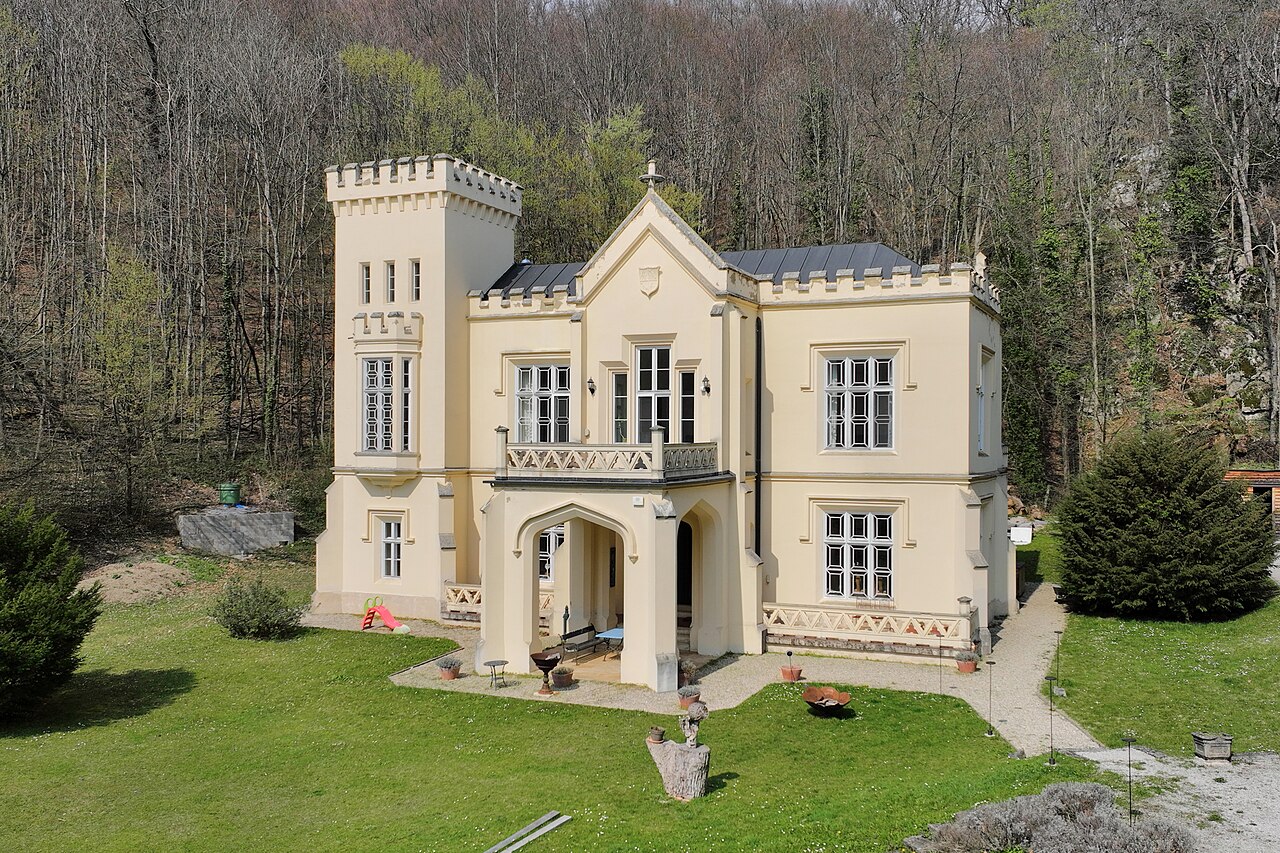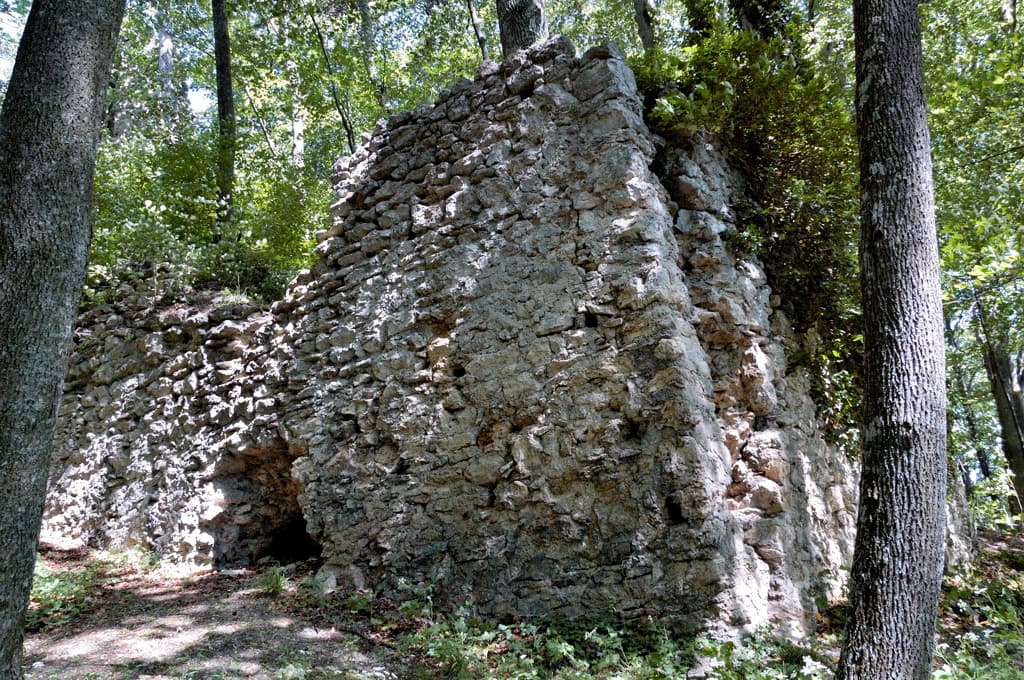
Arnstein Castle Ruins
Arnstein Castle ruins stand as a testament to medieval Austrian nobility's architectural and historical legacy near the municipality of Maria Raisenmarkt in Austria. Perched prominently on a rocky spur of Peilstein mountain, these ruins offer a striking glimpse into the region's feudal past and the strategic importance of hill castles in medieval times. The site combines natural geological features with human craftsmanship, reflecting centuries of history embedded in stone and legend.
Medieval origins and historical significance
The castle was first documented in 1170, founded by Wichard von Arnstein, a nobleman who held local fiefs and established the fortress as a seat of power for the Arnstein family. For several centuries, the family maintained control, underscoring the castle's role as a notable stronghold in the region. Throughout the high medieval period, Arnstein Castle served both as a defensive bastion and a noble residence, illustrating typical functions of hill castles in Austria during this era.
Ownership changed hands in 1329, reflecting the shifting political and social dynamics of the time. The castle's strategic location made it a valuable asset, but it likely suffered destruction during the First Siege of Vienna in 1529, when Ottoman forces advanced into the region. Unlike many castles that were rebuilt after such conflicts, Arnstein was abandoned and never restored, marking the beginning of its gradual decline into ruin.
In the 17th century, the property came under the ownership of the noble Wolzogen family before being sold to Emperor Ferdinand II. Later transitions included acquisition by the Sima family and eventually the Counts of Wimpffen in the 19th century. These successive owners highlight the castle's enduring importance as a landholding and symbol of aristocratic status, even as its physical structure deteriorated.
Architecture and remaining structures
The ruins of Arnstein Castle reveal characteristic features of a hill castle designed for both defense and habitation. Key preserved elements include fragments of a round defensive tower, which would have provided vantage points for surveillance and protection against attackers. The main entrance gate remains partially intact, illustrating medieval fortification techniques aimed at controlling access and enhancing security.
The palas, or main residential building, is another significant surviving structure. This hall served as the principal living quarters for the castle's inhabitants and would have been the center of daily life, hosting gatherings and administrative functions. The masonry visible in these ruins demonstrates typical medieval stone construction methods, with robust walls designed to withstand sieges and the test of time.
Vegetation has partially reclaimed the site, covering many stone surfaces and adding to the romantic atmosphere of the ruins. The castle's elevated position on Peilstein mountain not only provided strategic defense advantages but also integrated the site harmoniously with the surrounding natural landscape.
The arnsteinhöhle cave and natural surroundings
Beneath the castle lies the Arnsteinhöhle cave, extending approximately 128 meters. This cave was adapted for use as a stable, as evidenced by traces of masonry at its entrance, indicating the castle residents utilized natural formations to support their daily needs. This combination of natural and man-made features is a distinctive aspect of Arnstein Castle, enriching its historical and architectural narrative.
Surrounding the ruins are several other caves and notable rock formations, including the Arnsteinnadel, a striking natural pinnacle originally taller than its current height of 13 meters. This rock formation is protected as a natural monument, underscoring the area's geological significance alongside its cultural heritage. The careful removal of part of the pinnacle for safety reasons reflects ongoing efforts to preserve the site's natural and historical integrity.
Archaeological discoveries and local legends
Archaeological excavations at Arnstein Castle have uncovered human skeletal remains in the castle dungeon, confirming its historical use as a place of confinement or imprisonment. These findings provide tangible connections to the castle's past functions beyond defense and residence, highlighting the multifaceted roles such fortresses played in medieval society.
Additionally, prehistoric animal bones found in nearby caves suggest the site has been significant for human and natural history long before the castle's construction. These discoveries contribute to a deeper understanding of the region's continuous habitation and the interplay between natural environment and human activity.
Local traditions speak of a harsh Mistress of the castle, a figure intertwined with a legend that connects her punishment to the founding of the nearby Maria Raisenmarkt church. The community's reuse of stones from the castle ruins to build this church symbolizes a unique cultural link, embedding the castle's legacy into the spiritual life of the area. This practice of repurposing materials reflects common historical patterns where ruined castles became quarries for local construction, further integrating the site into the fabric of regional heritage.
Visiting arnstein castle ruins today
Today, the Arnstein Castle ruins offer visitors a compelling blend of history, architecture, and nature. The site's hill castle classification denotes its strategic mountainous location, providing panoramic views and a tangible sense of medieval fortification. Though the castle stands in a ruined state, the remaining structures and surrounding natural features make it a fascinating destination for history enthusiasts, archaeologists, and hikers alike.
Visitors can explore the rocky spur, observe the surviving defensive tower fragments, and imagine the daily life that once animated the palas. The proximity of the Arnsteinhöhle cave adds an adventurous element, inviting exploration of the natural landscape that supported the castle's inhabitants. The protected Arnsteinnadel rock formation nearby offers additional interest for those drawn to geological landmarks.
While there are no extensive visitor facilities, the site’s cultural and historical significance is well recognized, making it an enriching stop for those touring the Lower Austria region. The castle's integration into local legend and community history enhances its appeal, providing a multifaceted experience that combines medieval architecture, archaeology, and natural beauty.
Frequently asked questions (FAQ)
- When was Arnstein Castle originally built?
- Arnstein Castle was first recorded in 1170, founded by Wichard von Arnstein during the high medieval period.
- What remains can be seen at Arnstein Castle ruins?
- Visitors can see fragments of a round defensive tower, the main entrance gate, and the palas, which was the main residential building.
- Is Arnstein Castle accessible to visitors today?
- Yes, the ruins are accessible and offer a unique historical and natural experience, though visitor facilities are limited.
- What is the significance of the Arnsteinhöhle cave?
- The Arnsteinhöhle cave beneath the castle was adapted as a stable, showing how natural features were integrated into castle life.
- Are there any local legends associated with Arnstein Castle?
- Local tradition tells of a harsh Mistress of the castle linked to a legend about the founding of the nearby Maria Raisenmarkt church.
Photo gallery

Information
Loading map...
Visitor reviews
No reviews yet. Been here? Write the first review and help other travelers!
Write the first reviewVisited this castle? Share your experience
Your review helps other travelers and adds first-hand knowledge to our encyclopedia.