Arnóia Castle
The Castle of Arnóia stands as a significant medieval fortress located in the civil parish of Arnóia, within the municipality of Celorico de Basto, Braga district, Portugal. Constructed in the late 11th or early 12th century, this hill castle was strategically positioned to defend the nearby Monastery of São Bento de Arnóia, reflecting the military and religious priorities of the High Medieval period in northern Portugal. The castle's history is intertwined with the region's turbulent efforts to secure Christian domains against Moorish incursions, making it a notable example of medieval fortification in the Iberian Peninsula.
Historical significance and origins
The origins of Arnóia Castle trace back to the early medieval period, with construction attributed to Christian inhabitants during the 10th to 11th centuries. It served primarily as a defensive stronghold for the Monastery of São Bento de Arnóia, founded around the same era. An important historical figure associated with the castle is Múnio Muniz, the first known commander, whose tombstone inscription dated 1034 highlights his foundational role. The castle's military importance is further evidenced by 13th-century records, including the 1258 royal inquiries, which mandated local villagers to support the castle's upkeep by providing provisions and materials such as lime.
Political and noble associations
Throughout its history, Arnóia Castle witnessed significant political events, including loyalty disputes during the reign of King Dinis I in the late 13th century. The castle's governor, Martim Vasques da Cunha, famously chose to abandon the fortress honorably by lowering himself from a battlement rather than surrendering it. Subsequently, the crown leased the castle and its lands multiple times, reflecting its strategic and economic value. The Da Cunha family emerged as prominent lords of the region, with royal grants in the 15th century solidifying their control. The castle also maintained connections with the Coutinho family, notable regional nobility.
Architectural features and layout
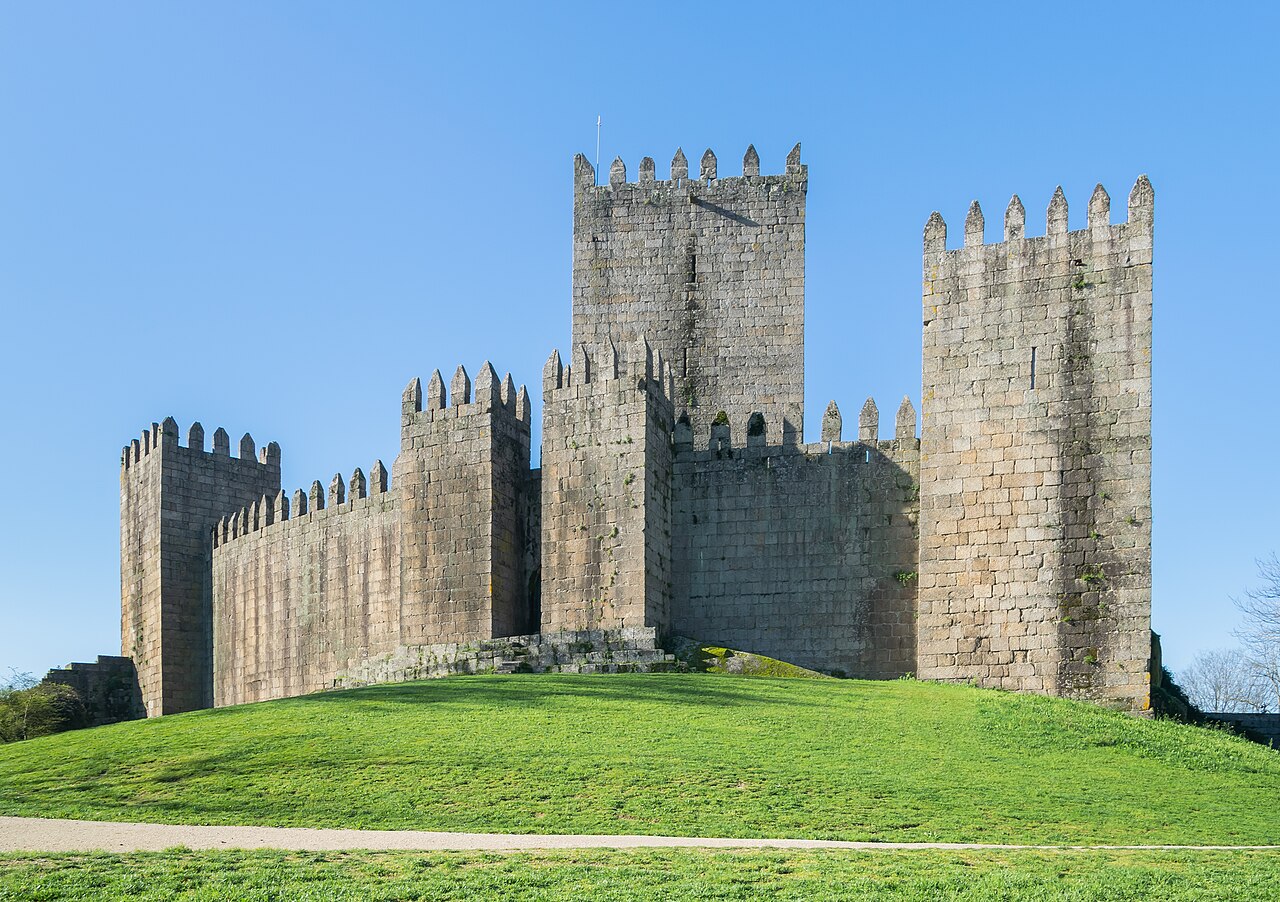
Arnóia Castle is characterized by its adaptation to the natural rocky promontory on which it stands, resulting in an irregular polygonal layout designed to maximize defense. The granite stone walls are robust, topped with battlements featuring crenellations that provided cover for defenders. Behind these walls runs an adarve, a walkway allowing patrols and surveillance.
The keep and defensive structures
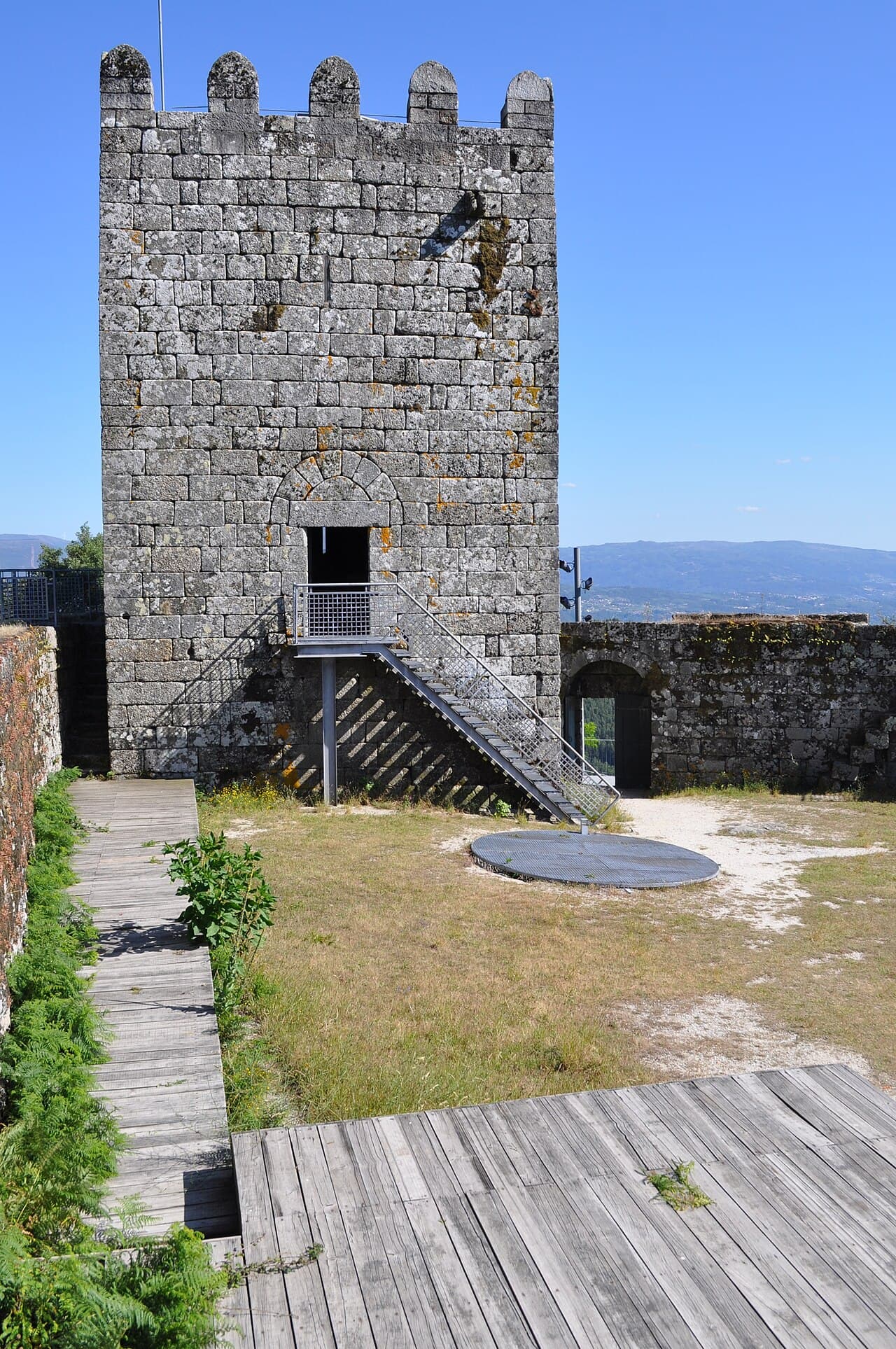
The castle's most prominent feature is its strong keep (donjon), located at the northern edge. This square-plan tower was built to reinforce the fortress's most vulnerable section. Its entrance is elevated about three meters above the courtyard floor, a defensive design to prevent easy access. Since the 1970s, an external staircase has facilitated visitor access. Internally, the keep comprises a basement and two upper floors with wooden flooring, connected by a spiral staircase leading to a roof covered by a four-pitched tiled structure and crowned with battlements.
Gateways, cistern, and external features
The main entrance on the southern side consists of a simple lintelled doorway accessed via a staircase, with the keep tower positioned nearby to provide direct defense. At the center of the courtyard lies the castle's cistern, a crucial feature for water storage during sieges or dry spells. Although details about its construction are limited, its central location underscores its importance.
Outside the castle, on the northern slope amid pine and oak woods, stand the old gallows and a pillory, restored in the 1960s. These structures reflect the site's judicial and administrative roles in the medieval and early modern periods.
Decline, restoration, and current condition
The castle experienced decline beginning in the early 18th century when King João V ordered the municipal seat's transfer from Arnóia to Freixieiro de Britelo, diminishing the castle's strategic and administrative importance. By 1717, the abandonment of the castle and the village of Basto had begun, with elites relocating to the new municipal center.
Recognizing its cultural and historical value, Arnóia Castle was declared a National Monument in 1946. Since then, extensive restoration efforts have been undertaken to preserve the remaining structures. Notable work includes the 20th-century reconstruction of the watchtower's rooftop and battlements, and restoration projects led by architect Francisco da Cunha Coutinho through 2019. These interventions have reinforced the castle's structural integrity, improved visitor access, and installed modern utilities such as water and electricity to support ongoing maintenance and security.
Current remains and visitor experience
Today, visitors to Arnóia Castle can explore its well-preserved defensive walls, the imposing keep, and the central courtyard with its cistern. The castle's layout and surviving features offer a vivid glimpse into medieval military architecture adapted to the rugged terrain. The restored watchtower and the external staircase to the keep enhance accessibility while maintaining historical authenticity.
The surrounding landscape, including the pine and oak woods and the historic gallows and pillory, enrich the visitor experience by illustrating the castle's broader role in regional governance and justice. Restoration work completed in 2015 improved the castle's pathways and structural elements, making it a significant cultural heritage site in northern Portugal.
Frequently asked questions (FAQ)
- How do I get to Arnóia Castle?
- Arnóia Castle is located in Celorico de Basto, Portugal, and can be reached by car or public transport from nearby cities. The nearest airport is Francisco Sá Carneiro Airport in Porto, approximately 90 kilometers away. Local buses and taxis can also provide access to the castle.
- What is the historical significance of Arnóia Castle?
- Arnóia Castle dates back to the medieval period and served as a strategic military fortification. It played a crucial role in the region's defense against invasions and has witnessed many historical events throughout its existence. The castle is a testament to Portugal's rich history and architectural heritage.
- When was Arnóia Castle built?
- Arnóia Castle was constructed in the late 12th century, during the period of the Reconquista. It has undergone several renovations and restorations over the centuries, which have helped preserve its historical structure. The castle's architecture reflects the military styles of the time.
- Can I visit Arnóia Castle with a guided tour?
- Yes, guided tours are available at Arnóia Castle, where visitors can learn about its history and architecture. These tours are offered in multiple languages and provide a deeper understanding of the castle's significance. It is advisable to check in advance for availability and to book your spot.
- Is Arnóia Castle accessible for individuals with mobility challenges?
- Arnóia Castle has some accessibility features; however, due to its historical nature, certain areas may be challenging to navigate for those with mobility issues. It is recommended to contact the castle administration beforehand to inquire about specific accommodations and pathways that are accessible.
- What are the opening hours of Arnóia Castle?
- Arnóia Castle is typically open to visitors from 9 AM to 6 PM, but hours may vary depending on the season and local holidays. It is best to check the official website or contact the castle directly for the most current opening hours before your visit. Planning ahead will ensure you have ample time to explore this historical site.
- What is the best time to visit Arnóia Castle?
- The best time to visit Arnóia Castle is during the spring and fall months when the weather is mild and pleasant for outdoor exploration. Summer can be hot, while winter may bring rain, so planning your visit during these transitional seasons allows for a comfortable experience. Additionally, these times may offer fewer crowds, enhancing your visit.
- Are there any nearby attractions to Arnóia Castle?
- Yes, there are several attractions near Arnóia Castle, including the natural beauty of the surrounding Serra da Cabreira mountains. Visitors can also explore the nearby town of Celorico de Basto, which offers charming local shops and restaurants. Additional historical sites and scenic trails are available for those looking to extend their visit.
- What are the ticket prices for Arnóia Castle?
- Ticket prices for Arnóia Castle are generally affordable, with discounts available for students and seniors. Children under a certain age may enter for free, making it an excellent family-friendly destination. For the most accurate and up-to-date pricing, it's recommended to check the official website before your visit.
Photo gallery

Information
Website
Visit websiteSources & official resources
Verify the information above using these authoritative references.
Loading map...
Visitor reviews
No reviews yet. Been here? Write the first review and help other travelers!
Write the first reviewVisited this castle? Share your experience
Your review helps other travelers and adds first-hand knowledge to our encyclopedia.