Guimaraes Castle
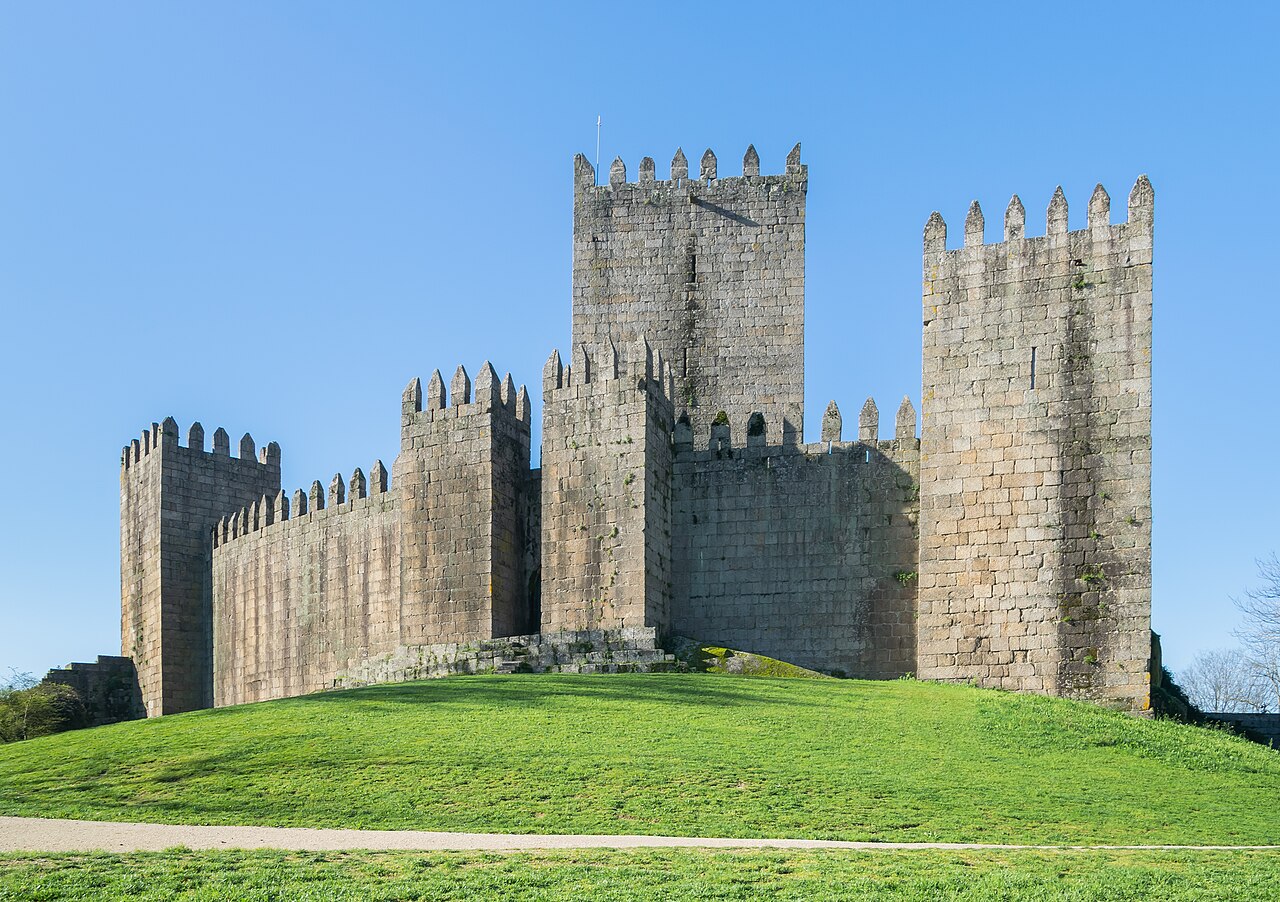
Guimaraes Castle stands as a monumental symbol of Portuguese history and medieval architecture, located in the northern city of Guimaraes, within the Braga region of Portugal. Constructed initially in the 10th century under the orders of Countess Mumadona Dias, the castle was designed to protect the monastery she founded from frequent raids by Moors and Norsemen. This fortress is widely recognized as the cradle of Portugal, due to its pivotal role in the formation of the Portuguese nation and its association with the first king, Afonso Henriques.
The castle’s strategic location atop a granite hill allowed it to dominate the surrounding landscape, serving both defensive and symbolic purposes. Its architecture reflects a blend of late Romanesque and early Gothic styles, with significant expansions and remodelings occurring from the 11th through the 14th centuries. The fortress features a distinctive pentagonal layout resembling a faceted shield, fortified by eight rectangular towers and encompassing a central keep, a military square, and multiple gates, including the notable Porta da Traição or "Gate of Treason."
Historical significance and early origins
The origins of Guimaraes Castle trace back to a document dated 968 AD, which refers to it as the Castle of São Mamede, newly constructed to defend the religious community of the monastery established by Mumadona Dias. The castle’s initial purpose was to safeguard the monastery and local inhabitants from external threats, particularly from Moorish incursions and Viking raids common in the region during the early medieval period.
In the late 11th and early 12th centuries, the castle became the residence of Count Henry of Burgundy and his wife Teresa, who were the parents of Afonso Henriques, born in the castle in 1111. Afonso Henriques later became the first king of Portugal after the decisive Battle of São Mamede in 1128, a conflict that marked the beginning of Portuguese independence from the Kingdom of León. The castle thus played a central role in the birth of the Portuguese nation and served as the official royal residence until around 1200.
Architectural evolution and medieval fortifications
12th to 14th centuries expansions
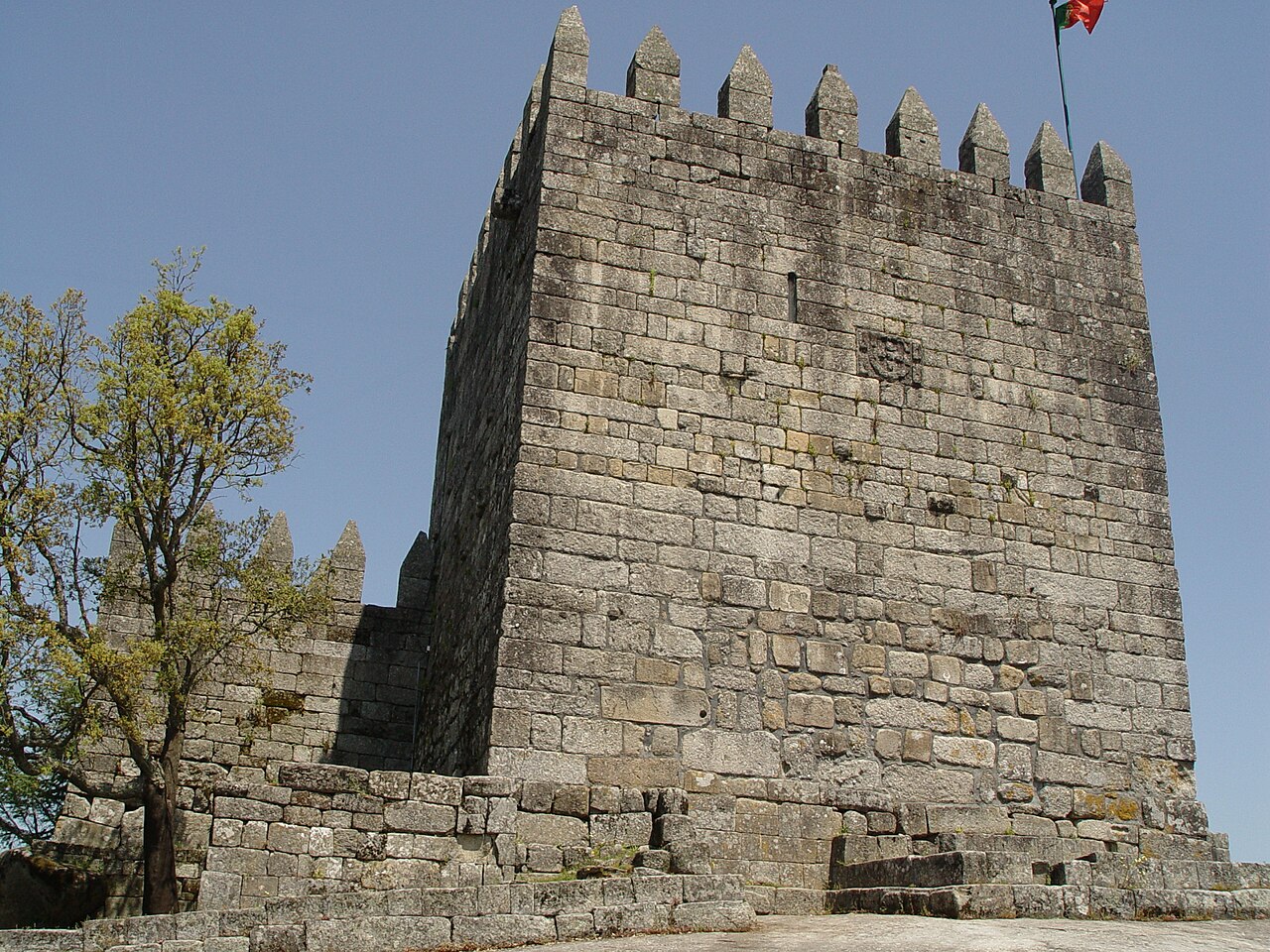
The castle underwent significant expansions and remodeling under the direction of Count Henry and later King Denis of Portugal in the late 13th and early 14th centuries. King Denis’s renovations included the construction of the imposing central keep or Torre de Menagem, which stands as a square tower with minimal openings, designed for strong defense. The keep is topped with pointed pentagonal battlements and features a continuous adarve (a wide walkway along the top of the walls) that enabled defenders to move swiftly and observe the surroundings.
The castle’s walls are built from finely cut granite ashlar masonry, a testament to the craftsmanship of the medieval masons. The fortress includes eight rectangular towers, with four flanking the main western gate and four surrounding the eastern "Gate of Treason." The walls contain a total of eight gates, enhancing both defense and access control. The northern section retains ruins of an older fortified enclosure called the alcáçova, which likely dates to the 14th century and features two floors with notable exterior windows and chimneys.
Defensive features and layout
The castle’s pentagonal design resembles a faceted shield, a shape that was influenced by French military architecture and adapted to local needs. The reduced central courtyard and difficult access points increased the castle’s defensibility against sieges. A wooden bridge connects the adarve to the main gate of the keep tower, facilitating internal movement during defensive operations.
Within the castle grounds, archaeological discoveries include a medieval well, underscoring the site’s long-term occupation and self-sufficiency during sieges. The castle was integrated with the medieval city walls of Guimaraes, which further enhanced the town’s defenses.
Later history and preservation
Following its military prominence in the Middle Ages, the castle’s role diminished with the advent of artillery and changes in warfare during the 15th century. It was repurposed as a municipal prison and royal storehouse, leading to gradual neglect and partial ruin by the 18th and 19th centuries. In 1836, proposals to demolish the castle to reuse its stone for paving were rejected, recognizing its historical importance.
Declared a national monument in 1910, Guimaraes Castle underwent restoration efforts beginning in 1937, culminating in a re-inauguration in 1940 to coincide with the 800th anniversary of the Portuguese nation. These restorations preserved the castle’s medieval character and ensured its survival as a cultural landmark.
Surrounding heritage and cultural significance
Adjacent to the castle stands the Palace of the Dukes of Bragança, a 15th-century medieval palace notable for its 39 distinctive brick chimneys influenced by Northern European styles. The palace served as a royal residence and later as an official residence during the 20th century. Its interiors feature an impressive banquet hall with a wooden ceiling and a rich collection of portraits, furniture, and decorative arts from the 17th and 18th centuries.
The nearby Romanesque Church of São Miguel do Castelo adds to the medieval atmosphere, while the old town of Guimaraes, with its well-preserved streets and historic buildings, is a UNESCO World Heritage site. Notable landmarks include the Gothic Church of São Francisco with its Renaissance cloister and the 14th-century Church of Nossa Senhora da Oliveira with its legendary Gothic shrine.
The city hosts an annual medieval festival each August, celebrating its rich history with art, costume, torchlight processions, and parades, drawing visitors eager to experience Portugal’s medieval heritage firsthand.
Archaeological discoveries and museums
Excavations at the castle and surrounding areas have revealed structures dating back to the 10th century, confirming the site’s continuous occupation. The Alberto Sampaio Museum, located in the Romanesque cloister of the Church of Nossa Senhora da Oliveira, houses religious art treasures, including a tunic worn by King João I at the Battle of Aljubarrota and a silver altarpiece.
The Martins Sarmento Museum exhibits artifacts from the Celtic settlement of Citania de Briteiros, an archaeological site near Guimaraes dating from 300 BC to 300 AD. Visitors can explore the ruins of stone huts and view collections of pottery, weapons, and jewelry that illuminate the region’s ancient past.
Visiting guimaraes castle today
Today, Guimaraes Castle is well preserved and open to the public, offering a compelling glimpse into Portugal’s medieval history and architecture. Visitors can explore the castle’s towers, walls, and keep, enjoying panoramic views of the city and surrounding landscape. The castle’s location within the historic center of Guimaraes makes it an essential stop for those interested in the origins of Portugal and medieval fortifications.
Nearby accommodations such as the Pousada Santa Marinha da Costa, a 12th-century monastery converted into a hotel with rococo facade, provide visitors with a unique historical experience. The city’s medieval streets, plazas, and museums complement a visit to the castle, making Guimaraes a rich cultural destination.
Frequently asked questions (FAQ)
- What is the historical significance of Guimaraes Castle?
- Guimaraes Castle is a symbol of Portuguese national identity and played a crucial role in the formation of Portugal as an independent nation. Built in the 10th century, it served as a fortress for the Counts of Portugal and is closely linked to the life of Afonso I, the first King of Portugal.
- When was Guimaraes Castle built?
- Guimaraes Castle was constructed in the 10th century, with significant modifications made in the following centuries. Its architecture reflects the evolution of military fortification techniques during the Middle Ages.
- What are the opening hours of Guimaraes Castle?
- Guimaraes Castle is typically open to visitors from 9:00 AM to 6:00 PM during the winter months and from 9:00 AM to 8:00 PM in the summer. It's advisable to check the official website for any seasonal changes or special closures.
- Can I purchase tickets online for Guimaraes Castle?
- Yes, tickets for Guimaraes Castle can be purchased online through the official website. This allows you to skip the lines and ensure your entry at your preferred time.
- Is it possible to access Guimaraes Castle with a wheelchair?
- Guimaraes Castle has some accessibility features, but due to its historical architecture, certain areas may be challenging for wheelchair users. It is recommended to contact the site in advance for specific accessibility information.
- What is the best time to visit Guimaraes Castle?
- The best time to visit Guimaraes Castle is during the spring and fall when the weather is mild, and fewer tourists are present. Visiting during these seasons allows you to enjoy the stunning scenery and the castle's historical ambiance without the summer crowds.
- What nearby attractions can I visit after Guimaraes Castle?
- After exploring Guimaraes Castle, you can visit the nearby Palace of the Dukes of Braganza and the historic center of Guimaraes, a UNESCO World Heritage site. Both locations offer rich cultural experiences and stunning architecture.
- How do I get to Guimaraes Castle?
- Guimaraes Castle is easily accessible by public transportation, with buses and trains connecting it to major cities like Porto. Once in Guimaraes, it is a short walk from the city center to the castle, making it convenient for visitors.
- What are the ticket prices for Guimaraes Castle?
- The ticket prices for Guimaraes Castle are generally affordable, with discounts available for students and seniors. Children under a certain age may enter for free, so be sure to check the latest pricing details on the official website before your visit.
Information
Website
Visit websiteSources & official resources
Verify the information above using these authoritative references.
Loading map...
Visitor reviews
No reviews yet. Been here? Write the first review and help other travelers!
Write the first reviewVisited this castle? Share your experience
Your review helps other travelers and adds first-hand knowledge to our encyclopedia.