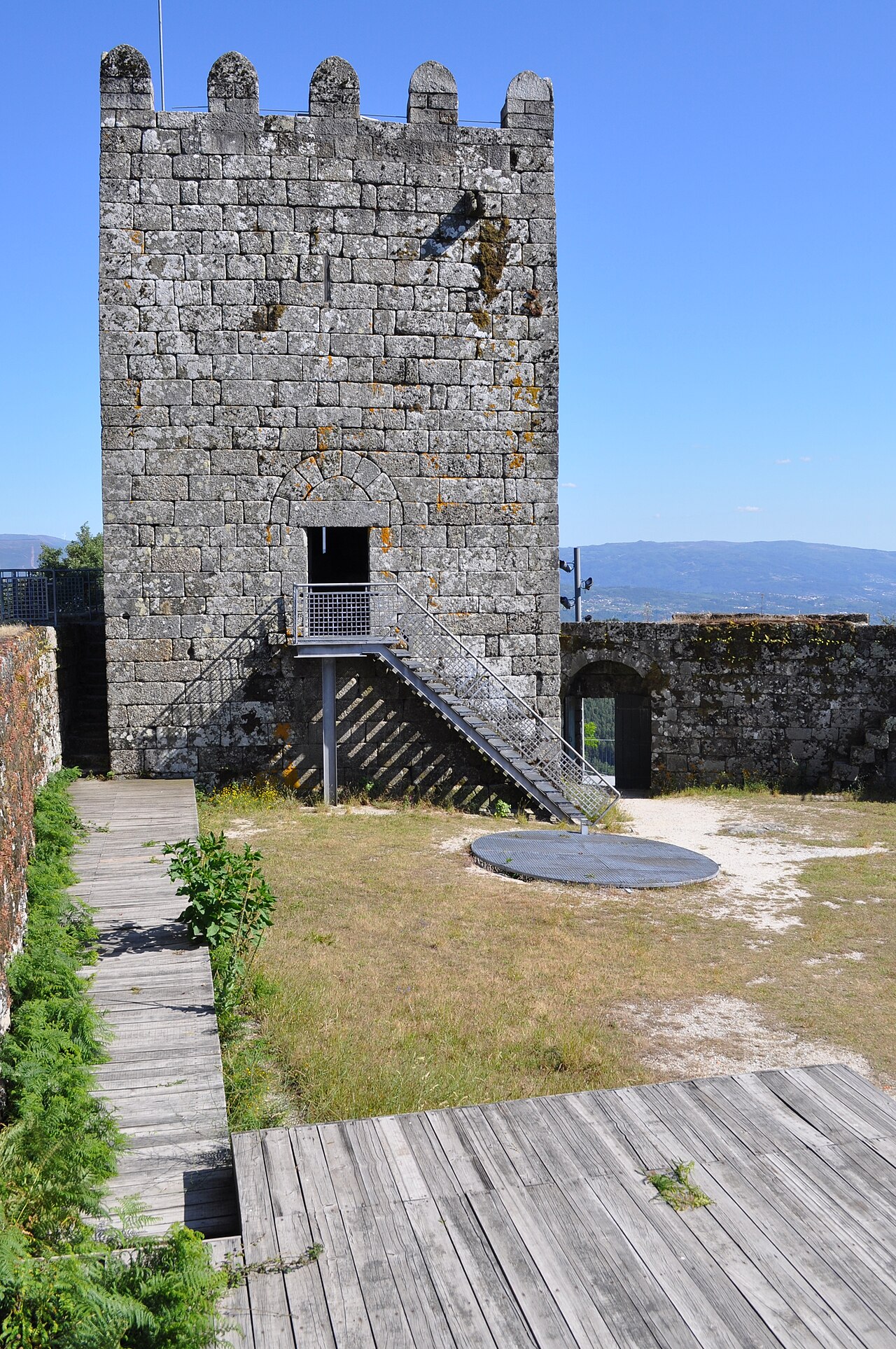
Quintela Tower
The Quintela Tower, locally known as Torre de Quintela, is a medieval fortified tower located in the rural hamlet of Quintela in the Douro region of Portugal. This tower is a significant example of military residential architecture from the 13th century, reflecting the strategic importance of the area during the reign of Afonso III of Portugal.
Historical context and origins
The exact date when construction began on the Quintela Tower remains uncertain, but records confirm that it was already under construction by 1258. The tower was commissioned by Alda Vasques, a local noble who established it as his fortified residence. This period in Portuguese history was marked by efforts to consolidate royal authority and secure borderlands, making fortified structures like Quintela Tower essential for defense and control.
After its initial ownership by Alda Vasques, the tower briefly came under the control of the Knights Templar, a military order known for their role in the Crusades and for managing strategic fortifications across Europe. Subsequently, the tower passed into the hands of the Counts of Vimioso, a noble family with significant influence in the region.
Strategic location and defensive role
Located in the foothills of the Serra do Marão mountain range, the Quintela Tower was positioned to guard an important regional route connecting the towns of Vila Real and Amarante. This route was vital for trade and military movements, particularly near the crossing of the Marinheira Stream. The tower's placement allowed for surveillance and control over this passage, contributing to regional security during the High to Late Medieval periods.
Architectural features and design
The tower exhibits a square plan and rises approximately 21 meters in height, characteristic of fortified residential towers of the era. Its defensive architecture includes merlons atop the battlements, providing cover for defenders. The tower has four narrow slit windows designed for archers to shoot while remaining protected, a common feature in medieval military architecture.
Notably, the tower features eight crenelated balconies, which are unusual for towers of this type and period, possibly serving both defensive and residential functions. The entrance is elevated above ground level, originally accessed by a removable wooden staircase, a typical defensive measure to prevent easy access by attackers.
The interior of the tower is not generally accessible to the public, and it appears that it has not been adapted for visitor entry, preserving its historical fabric but limiting direct exploration.
Preservation and current condition
Today, the Quintela Tower stands as a well-preserved monument of medieval military architecture, visible from the outside but not open for interior visits. Its preservation allows for the appreciation of its fortified features and historical significance in the context of Portuguese medieval fortifications.
The tower remains a prominent landmark in the Douro region, attracting interest from historians and enthusiasts of medieval architecture, though it lacks visitor facilities or interpretive centers.
Frequently asked questions (FAQ)
- What is the historical significance of Quintela Tower?
- Quintela Tower is a remarkable example of medieval architecture in Portugal, dating back to the 12th century. It served as a defensive structure during the Reconquista, symbolizing the strategic importance of the region in protecting against invasions.
- When was Quintela Tower built?
- Quintela Tower was constructed in the late 12th century, around the time when the Christian forces were reclaiming territory from the Moors. This period marked significant changes in the architectural styles and fortifications in the region.
- What are the opening hours for Quintela Tower?
- Quintela Tower is typically open to visitors from Tuesday to Sunday, from 10 AM to 5 PM. However, it's advisable to check the official website for any seasonal changes or special closures.
- Can I visit Quintela Tower year-round?
- Yes, visitors can enjoy tours of Quintela Tower throughout the year, but the best time to visit is during the spring and early fall when the weather is mild and conducive to exploring. Summer can be quite hot, so plan accordingly.
- Is it possible to access Quintela Tower for individuals with mobility issues?
- Unfortunately, Quintela Tower has limited accessibility for individuals with mobility challenges due to its historic structure and uneven terrain. Visitors are encouraged to contact the site in advance to inquire about specific accommodations.
- What are the ticket prices for visiting Quintela Tower?
- Tickets to Quintela Tower are generally affordable, with prices around €3 for adults and discounts available for students and seniors. Children under 12 can often enter for free, making it an accessible attraction for families.
- What nearby attractions should I visit after Quintela Tower?
- After visiting Quintela Tower, you can explore the picturesque village of Vila Marim and its surrounding landscapes. Additionally, the nearby Douro Valley offers stunning views and wine-tasting opportunities that complement your historical excursion.
- How do I get to Quintela Tower?
- Quintela Tower is easily accessible by car or public transport from major cities in Portugal. If you're driving, there are parking facilities nearby, and if using public transport, local buses connect Vila Marim to surrounding towns.
Information
Loading map...
Visitor reviews
No reviews yet. Been here? Write the first review and help other travelers!
Write the first reviewVisited this castle? Share your experience
Your review helps other travelers and adds first-hand knowledge to our encyclopedia.