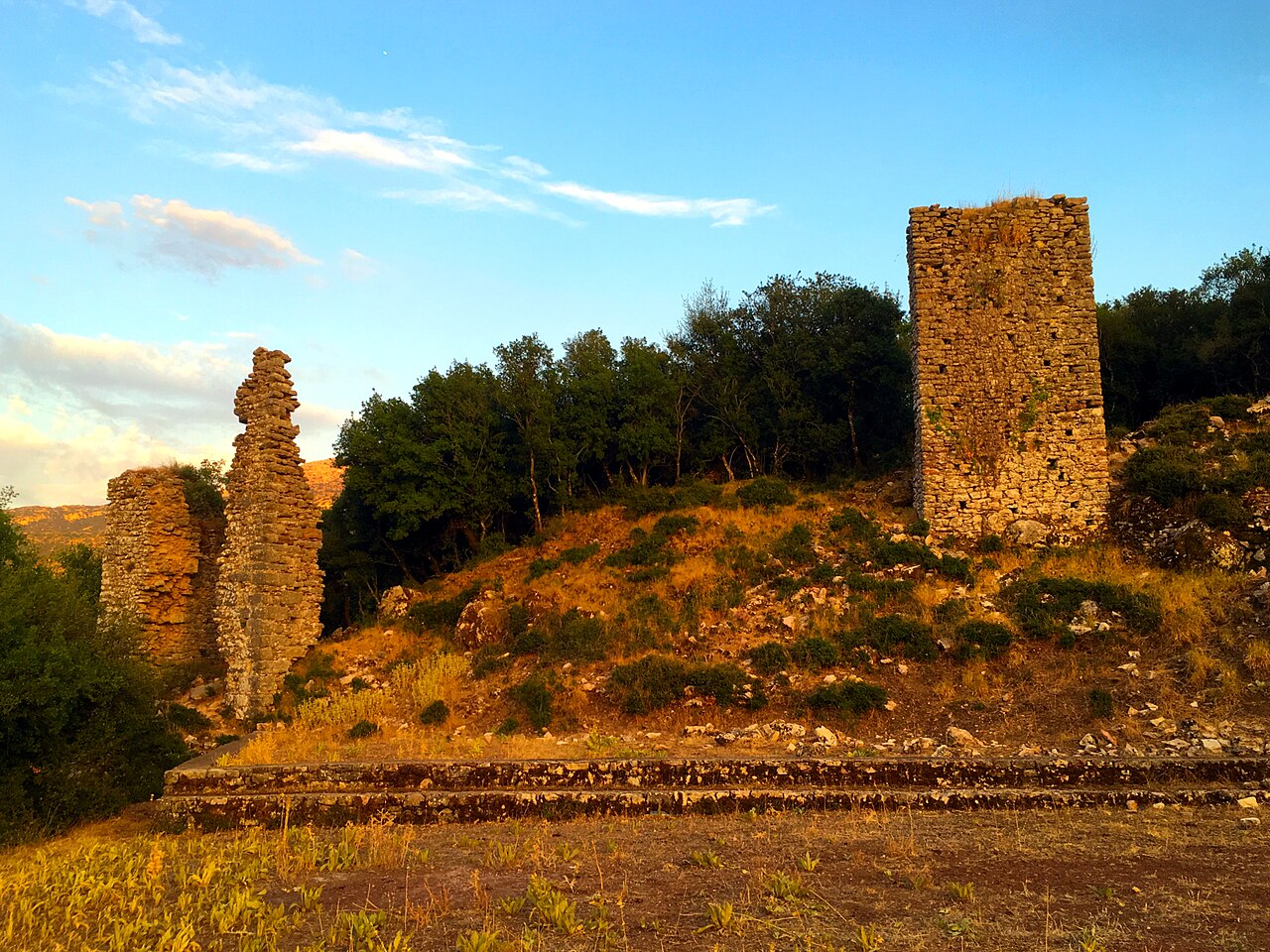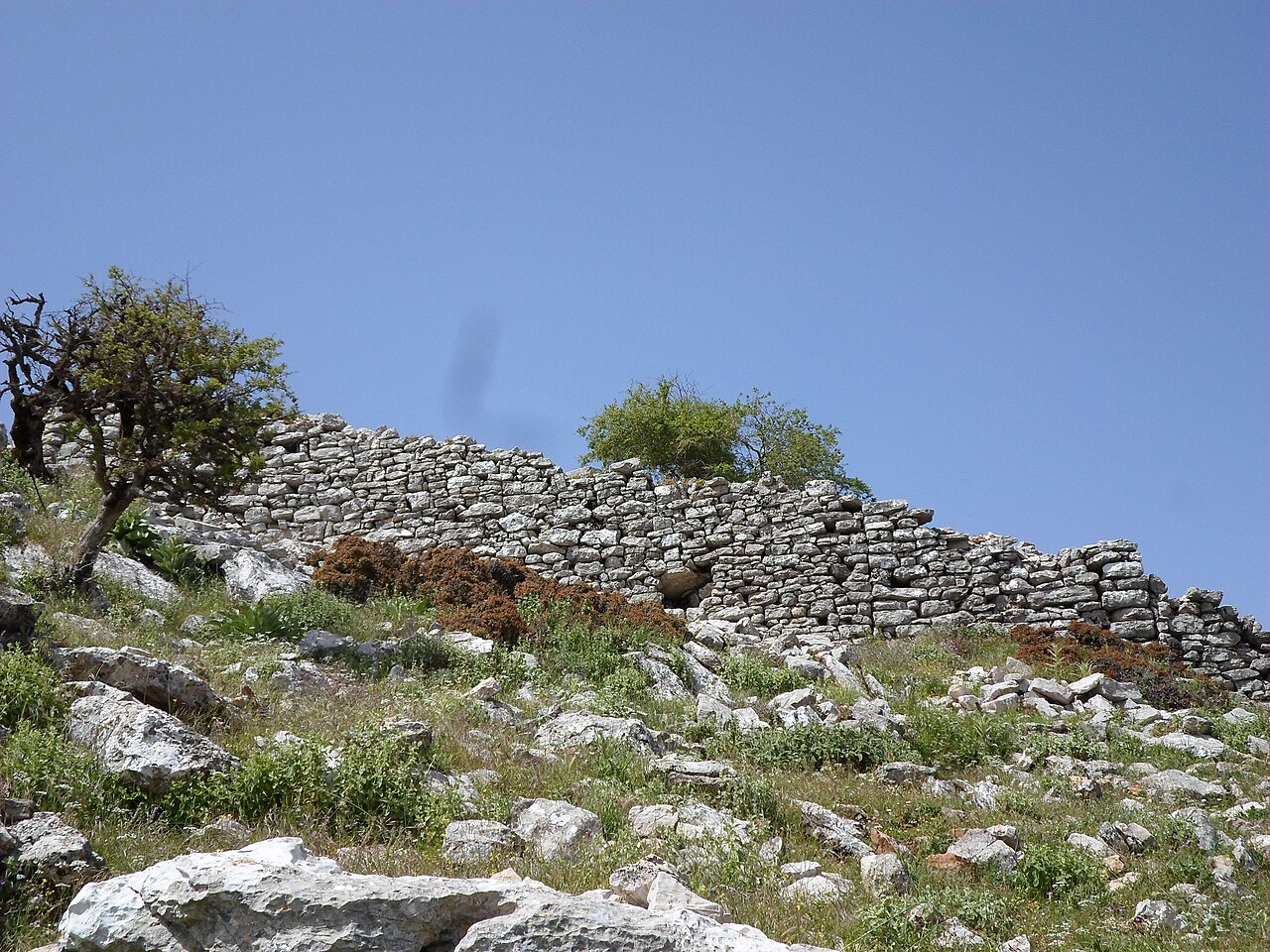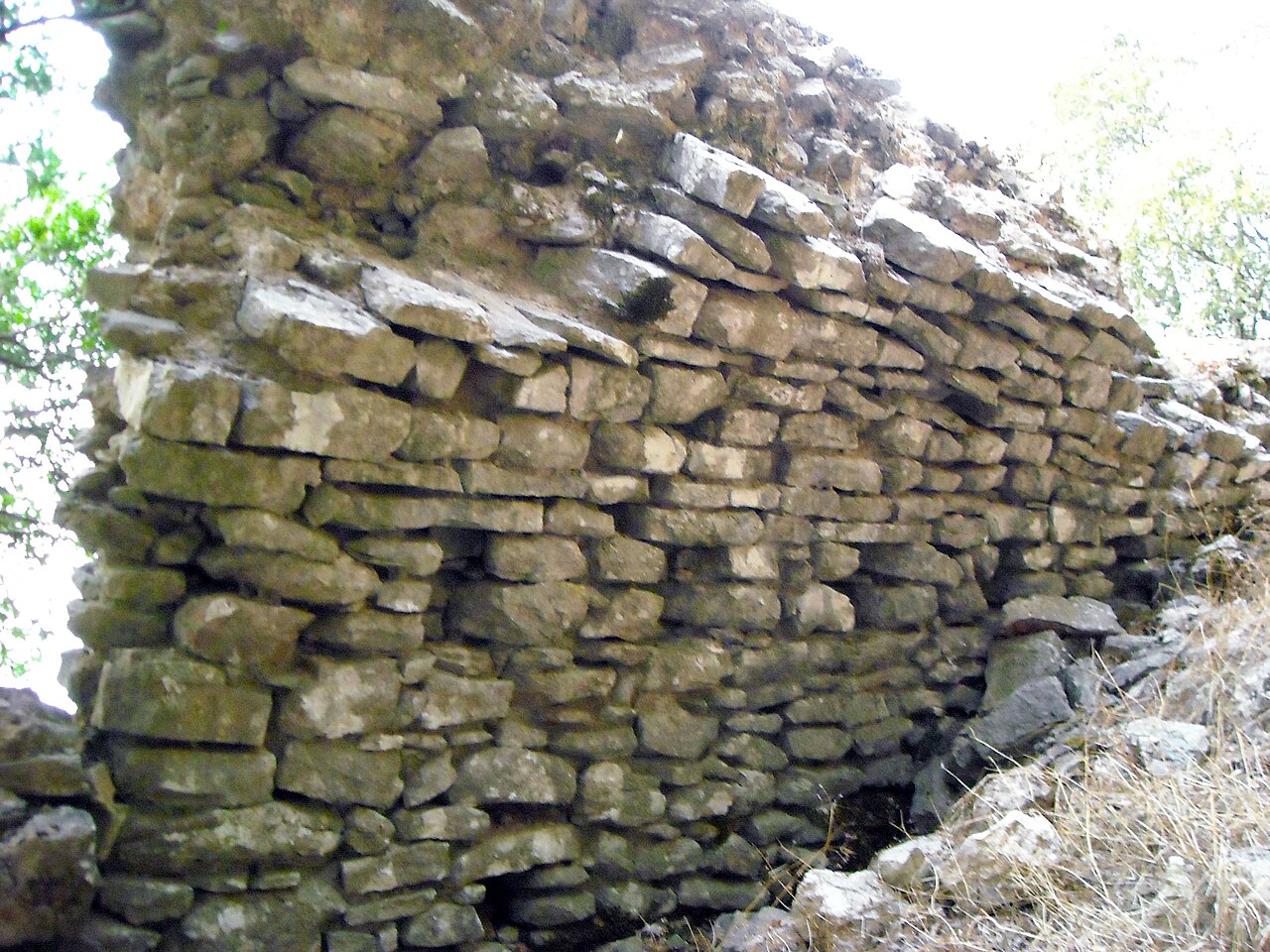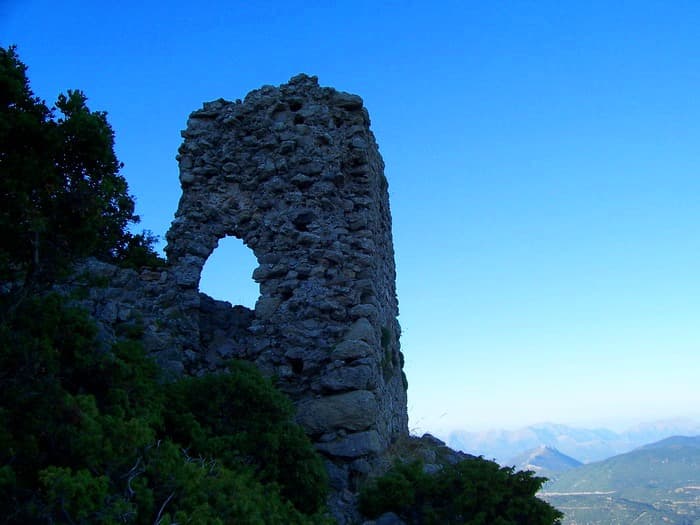
Argyrokastro castle
Argyrokastro castle, known in Greek as Αργυρόκαστρο meaning "silver castle," is a notable medieval fortress located in the mountainous region of Arcadia in the Peloponnese, Greece. Perched at an elevation of approximately 1,450 meters near the village of Magouliana, it commands sweeping views of the surrounding rugged landscape. The castle is also referred to as the Gortyniako dynamari (Γορτυνιακό δυναμάρι), translating to "Gortynian stronghold," reflecting its strategic importance in the historical territory of Gortynia.
The fortress was constructed during the period of Frankish rule in the Peloponnese, specifically under the authority of the Villehardouin dynasty, who governed the Principality of Achaea after the Fourth Crusade in the early 13th century. The castle functioned primarily as a summer retreat for the Villehardouins, illustrating its role not only as a military stronghold but also as a residence of leisure and governance.
Historical context and significance
The establishment of Argyrokastro castle must be understood within the broader framework of the Frankish conquest of the Peloponnese following the collapse of Byzantine control in the early 1200s. The Principality of Achaea was one of the most important Latin states in Greece during the High Medieval period, and fortifications like Argyrokastro were essential for consolidating Frankish power in the region.
Argyrokastro's location in Arcadia was strategically chosen for its defensibility and its oversight of vital mountain passes and local settlements. The castle helped secure the Frankish hold over the interior Peloponnese, an area known for its difficult terrain and pockets of resistance from remaining Byzantine loyalists and local Greek populations.
Architectural features and layout
As a hill castle, Argyrokastro is situated on a natural elevation, which enhances its defensive capabilities. The castle's design reflects typical Frankish military architecture of the 13th century, characterized by robust stone walls and a compact layout adapted to the mountainous terrain.
The fortress likely included a central keep or donjon, surrounded by curtain walls with battlements and towers at key points to provide overlapping fields of fire. The use of local stone materials ensured that the castle blended with its environment while providing substantial protection against siege warfare.
Within the walls, the castle would have contained residential quarters suitable for the Villehardouin family, as well as service buildings such as storerooms and possibly a chapel. The presence of cisterns or water storage facilities would have been critical given the castle's elevated location and the need for self-sufficiency during sieges or prolonged stays.
Defensive adaptations
The natural steep slopes surrounding the castle served as a formidable defense, reducing the number of vulnerable approaches. Additionally, the castle's walls were likely reinforced with towers at corners and gatehouses designed to control access tightly.
Role during the principality and later history
During the High Medieval period, Argyrokastro was an important administrative and military center for the Villehardouin dynasty. Its use as a summer retreat indicates that it was not purely a fortress but also a place of relative comfort and governance.
After the decline of the Principality of Achaea in the late 14th century, the castle's military importance diminished. Over subsequent centuries, it fell into partial ruin, although its remains still testify to its historical significance and robust construction.
Current condition and cultural importance
Today, Argyrokastro castle stands as a ruined hill castle in the Peloponnese, with substantial portions of its walls and structural elements still visible. Its elevated position and commanding views continue to attract visitors interested in medieval history and architecture.
The castle is an important cultural landmark within the region of Arcadia, symbolizing the complex history of Frankish rule in Greece and the architectural legacy they left behind. It also provides valuable insights into the military and residential architecture of the High Medieval period in the Peloponnese.
Visiting Argyrokastro castle
Visitors to Argyrokastro can explore the ruins and enjoy panoramic vistas of the surrounding mountainous landscape. The castle's remote location near Magouliana requires a hike or drive on mountain roads, making it a destination suited for those interested in history and outdoor adventure.
While the site is not extensively developed for tourism, its authenticity and historical ambiance offer a rewarding experience for visitors seeking to connect with the medieval past of the Peloponnese.
Frequently asked questions (FAQ)
- How do I get to Argyrokastro castle?
- Argyrokastro castle is located in the town of Argyrokastro in Greece, easily accessible by car or public transport from nearby cities. The castle is situated on a hill, providing stunning views of the surrounding area, and there are signs directing visitors from the town center.
- What is the historical significance of Argyrokastro castle?
- Argyrokastro castle, built in the 14th century, played a crucial role in the defense of the region during various conflicts, particularly against Ottoman invasions. It showcases the strategic military architecture of its time and has been a witness to the rich history of the area.
- When was Argyrokastro castle built?
- The construction of Argyrokastro castle began in the 14th century, with various renovations and expansions occurring over the centuries. Its architecture reflects the Byzantine and later Ottoman influences, making it a fascinating site for history enthusiasts.
- Can I take guided tours of Argyrokastro castle?
- Yes, guided tours are available at Argyrokastro castle, which provide deeper insights into its history and architecture. Visitors can enjoy informative narratives by knowledgeable guides who will enrich your experience of this historical site.
- Why is Argyrokastro castle a popular tourist destination?
- Argyrokastro castle is popular due to its impressive historical significance, well-preserved architecture, and breathtaking panoramic views of the surrounding landscape. It offers visitors a unique glimpse into Greece's past, making it a must-visit for history buffs and tourists alike.
- Is it possible to visit Argyrokastro castle year-round?
- Yes, Argyrokastro castle is open to visitors year-round, though accessibility may vary due to weather conditions. It's advisable to check local resources for any seasonal changes in opening hours or specific events before planning your visit.
- What are the opening hours for Argyrokastro castle?
- The opening hours for Argyrokastro castle typically vary by season, with extended hours during the summer months. Generally, the castle opens at 9 AM and closes at sunset, but it's best to confirm the current hours before your visit.
- What are the ticket prices for Argyrokastro castle?
- Ticket prices for Argyrokastro castle are generally quite affordable, with discounts available for students and seniors. Children under a certain age may enter for free, making it a budget-friendly option for families.
- What nearby attractions can I visit after Argyrokastro castle?
- After visiting Argyrokastro castle, you can explore the charming town of Argyrokastro, which offers traditional architecture and local markets. Additionally, the nearby city of Gjirokastër, a UNESCO World Heritage Site, is worth a visit for its own historical sites and cultural experiences.
Photo gallery

Information
Loading map...
Visitor reviews
No reviews yet. Been here? Write the first review and help other travelers!
Write the first reviewVisited this castle? Share your experience
Your review helps other travelers and adds first-hand knowledge to our encyclopedia.