Arechi Castle
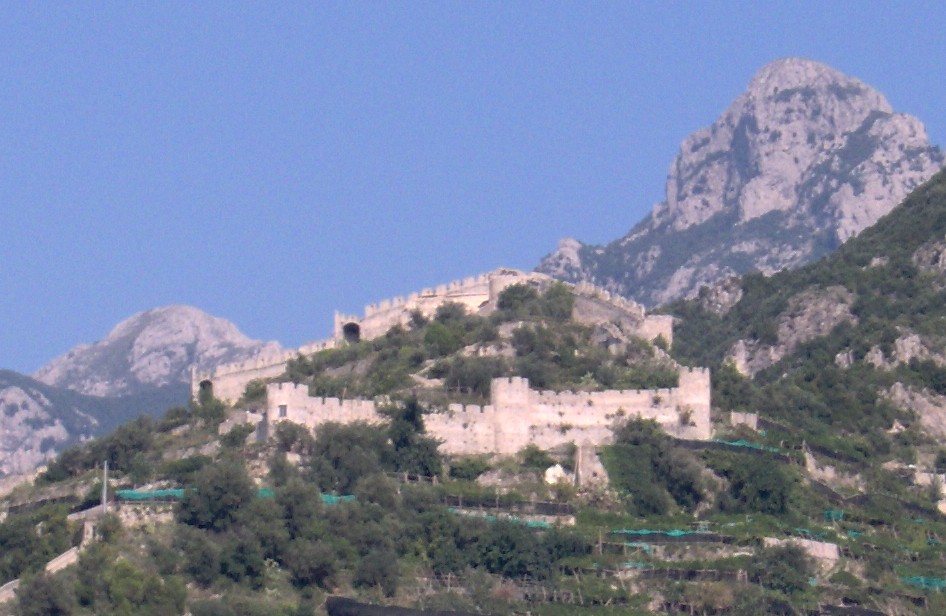
Arechi Castle stands prominently atop Monte Bonadies, overlooking the city of Salerno in the Campania region of southern Italy. This hill castle traces its origins to the Byzantine period in the 6th century AD, when the general Narses established a military camp during the Gothic War (535-554). The site itself reveals signs of human activity dating back to ancient times, with coins from the 3rd to 2nd century BC attesting to early settlement in the area. The castle’s strategic location on a hilltop nearly 300 meters above sea level allowed commanding views of the Gulf of Salerno and the surrounding coastline, making it a vital defensive stronghold throughout its history.
The early history and Lombard fortifications
The castle’s name derives from Arechi II, the Lombard duke of Benevento and prince of the Lombard nobility in the 8th century, who significantly fortified the site. After the fall of the Western Roman Empire, the fortress evolved from a Roman military camp into a permanent stronghold. Arechi II moved the capital of the Duchy of Benevento from Benevento to Salerno to strengthen control over the coastline and vital communication routes within Campania. Under his leadership, the castle was expanded and fortified extensively from the 8th to the 11th centuries, with the construction of robust walls descending from the hill to enclose the ancient city of Salernum, giving it a distinctive triangular shape when viewed from the sea.
Byzantine origins and Roman antecedents
Before Lombard control, the site was used by the Byzantines, who built the earliest parts of the ramparts using opus quadratum technique with large sandstone blocks. Roman historians such as Strabo and Tito Livio described military camps in the hills above Salerno, indicating the site's longstanding military importance. The fortress played a role during the Gothic War, serving as a defensive position against Ostrogothic and Byzantine forces.
Lombard expansion and city defenses
Arechi II’s fortification efforts included constructing extensive walls that enveloped the city, connecting the hilltop fortress to the sea. The castle’s position and the encompassing walls made it nearly impregnable during this period. The fortress included multiple hills above Salerno, such as the northern Bastille watchtower, which provided additional surveillance and defense. This defensive system reflected the strategic importance of Salerno as a capital and military hub in the Lombard duchy.
Norman conquest and medieval modifications
In 1077, the castle fell to the Normans after a prolonged siege led by Robert Guiscard. The castle’s defenders, including the last Lombard duke Gisulfo II, surrendered due to starvation during the blockade. The Normans subsequently reinforced the fortress by raising the walls and adding architectural features such as a southern loggia and the northern Bastiglia tower on a rocky spur to cover vulnerable approaches. These modifications enhanced the castle’s defensive capabilities and adapted it to evolving military needs.
Swabian and Angevin renovations
Under the Swabian ruler Frederick II in the 13th century, plans were made to repair the castle, although few visible changes from this period remain today. The subsequent Angevin dynasty undertook extensive renovations, including the construction of new buildings, water cisterns, and curtain walls equipped initially with arrow slits and later modified with gun ports to accommodate artillery. The Angevin period also saw the introduction of a bathhouse and a thermal system fed by the castle’s cisterns, indicating a shift towards residential comfort alongside military functionality. Documented repairs from 1274 and restorations completed by 1299 demonstrate the castle’s ongoing strategic and residential importance.
Aragonese expansion and later history
During the 15th century, under Aragonese rule, Arechi Castle expanded to its largest extent. Large buildings were constructed east of the main courtyard, reflecting the castle’s use as a noble residence rather than solely a military fortress. The discovery of high-quality ceramics and majolica pottery from this period suggests a residence of status and comfort. The castle played a significant role in the Aragonese defense of the Kingdom of Naples.
Decline and modern era uses
By the early modern era, the fortress had lost much of its military importance and transitioned into a summer retreat for the Sanseverino princes. The castle’s elevated and isolated location made access challenging until a connecting road was built, as noted by English traveler Thomas Hoby. In 1820, the castle was the site of a failed conspiracy by the secret society Carbonari, aiming to incite popular uprising. After Italian unification, the castle fell into disuse until the last private owners sold it to the Province of Salerno in 1960, initiating preservation and archaeological studies.
Architectural features and remains
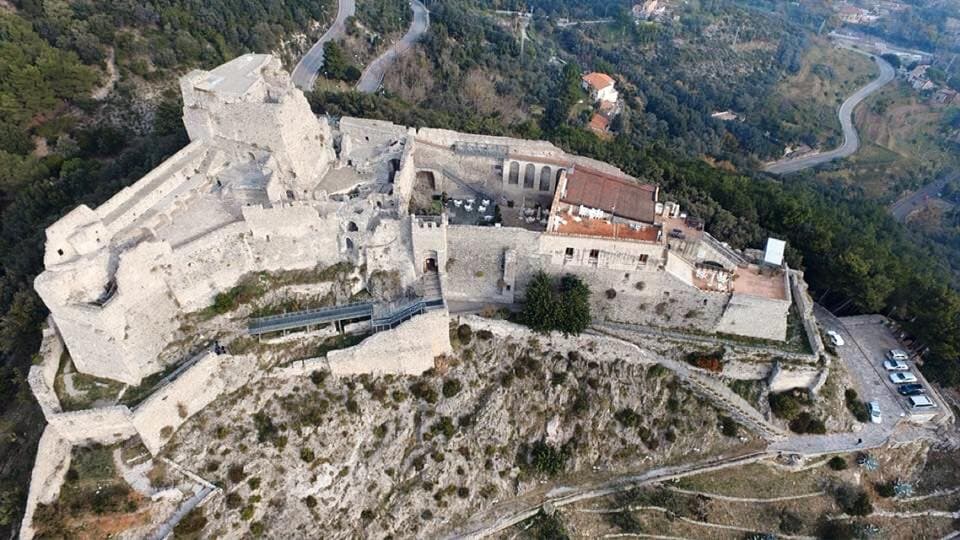
Arechi Castle’s layout is dominated by extensive defensive walls enclosing a large courtyard called the piazza d’Armi. The walls descend the slopes towards the city and sea, forming a protective circuit. The highest point features the turris maior, a rectangular main tower rising five or six floors high, which served as a lookout with commanding views of the port and land routes.
Byzantine and Lombard construction techniques
Significant sections of the fortress retain Byzantine opus quadratum walls made of large tuff blocks without mortar. Lombard expansions integrated these with walls extending to the sea, enclosing Salerno’s ancient urban area. The castle’s defenses were further enhanced by Norman additions such as the Bastiglia tower, featuring semicircular drum walls reinforced for cannon openings, a rare adaptation to early artillery.
Angevin and Aragonese architectural elements
The Angevin period contributed new buildings, water cisterns, and curtain walls with arrow slits converted to gun ports. Bathing facilities and a thermal system fed by cisterns highlight the castle’s residential evolution. Aragonese expansions included large buildings east of the courtyard, indicating noble habitation. Modern period rooms near the entrance reflect later use as a summer residence.
Restoration and visitor experience
Restoration efforts since the 1980s have focused on structural conservation and improving visitor access. The castle’s ditch floor has been paved, vaulted gun ports and fusilier rooms restored, and stone facing near the main tower repaired. An elevator installed inside a former cistern facilitates access for visitors with disabilities. The castle museum displays finds from archaeological excavations, including ceramics, glassware, metal objects, weapons, and coin hoards that trace the castle’s extensive history.
Archaeological discoveries and cultural significance
Excavations have uncovered nearly 400 ceramic fragments spanning from the 7th to the 15th centuries, featuring diverse styles such as red-band decorated ware, spiral patterns, lead-glazed tableware, early majolica, and graffito ceramics with vegetal and geometric motifs. Glass artifacts mainly date from the 12th to 15th centuries and include bottles, goblets, and ampoules, with notable pieces like a 13th-century colorless glass goblet decorated with polychrome enamel and applied beads.
Metal finds include everyday items like nails, locks, knives, and buckles, as well as horse fittings and weapons such as arrowheads, crossbow bolts, and lances from the 12th century onward. A gilded bronze spur from the early 1300s reflects the high status of some castle inhabitants. Coin hoards discovered during restoration reveal connections to Norman rulers and Italian mints, with silver deniers from Rouen, gold tari from Sicily issued by Norman kings Roger and Tancred, and mixed silver and copper coins dated between 1392 and 1534. Some coins show signs of re-striking, indicating historical metal shortages.
Arechi Castle also inspired cultural works such as the tragedy "Ricciarda" by poet Ugo Foscolo, written during a visit in 1812. Local folklore preserves tales of secret passages linking the castle to nearby watchtowers like Forte La Carnale, alongside ghost stories that contribute to its mystique. The castle remains a prominent symbol of Salerno’s medieval heritage and Lombard history, visible lit up at night from much of the city.
Frequently asked questions (FAQ)
- What is the historical significance of Arechi Castle?
- Arechi Castle, perched on a hill overlooking Salerno, dates back to the 8th century and played a crucial role in the defense of the region during the Middle Ages. Its strategic location allowed it to oversee important trade routes and protect the inhabitants from invasions. Today, it stands as a symbol of the rich history of Salerno and the Amalfi Coast.
- When was Arechi Castle built?
- Arechi Castle was constructed in the 8th century, primarily during the reign of the Lombards. The castle underwent various modifications and expansions over the centuries, reflecting the architectural styles and military needs of different eras. Its enduring structure showcases the ingenuity of medieval builders.
- What are the opening hours for Arechi Castle?
- Arechi Castle is typically open to visitors from 9:00 AM to 7:00 PM, but hours may vary seasonally. It's advisable to check the official website or contact the visitor center for the most up-to-date information before planning your visit. This ensures you can make the most of your time exploring the castle.
- Can I visit Arechi Castle with children?
- Yes, Arechi Castle is family-friendly and welcomes visitors of all ages. The castle offers plenty of space for children to explore and enjoy, along with educational insights into its history and architecture. Just make sure to supervise younger children on the castle walls and steep paths.
- Is it possible to take guided tours at Arechi Castle?
- Yes, guided tours are available at Arechi Castle, providing visitors with deeper insights into its history and architectural features. These tours are led by knowledgeable guides who can share fascinating stories and facts about the castle and its surroundings. It is recommended to book in advance, especially during peak tourist seasons.
- What is the best time to visit Arechi Castle?
- The best time to visit Arechi Castle is during the spring (April to June) and fall (September to October) when the weather is mild and the crowds are smaller. These seasons offer the most comfortable conditions for exploring the castle and enjoying the stunning views of Salerno and the surrounding coastline. Summer can be hot and crowded, while winter may bring less favorable weather.
- How much do tickets cost for Arechi Castle?
- Tickets to Arechi Castle are generally affordable, with prices around €5 for adults and reduced rates for children and seniors. There may be occasional discounts or free entry on special days, so it’s worth checking the official website for any promotions. This makes it an accessible destination for both locals and tourists.
- What nearby attractions can I visit while at Arechi Castle?
- While visiting Arechi Castle, you can also explore the historic center of Salerno, which is filled with charming streets, shops, and cafes. Additionally, the beautiful Salerno Cathedral and the stunning Lungomare promenade are just a short distance away. These attractions complement your castle experience and offer a taste of local culture.
- How do I get to Arechi Castle?
- Arechi Castle is easily accessible from the center of Salerno, either by foot or by public transport. A steep walk up the hill takes about 20-30 minutes, offering beautiful views along the way. Alternatively, local buses and taxis can provide convenient transportation options for those preferring a less strenuous journey.

Information
Website
Visit websiteSources & official resources
Verify the information above using these authoritative references.
Loading map...
Visitor reviews
No reviews yet. Been here? Write the first review and help other travelers!
Write the first reviewVisited this castle? Share your experience
Your review helps other travelers and adds first-hand knowledge to our encyclopedia.