Castle of San Nicola de Thoro Plano
The Castle of San Nicola de Thoro Plano stands prominently on the summit of a hill overlooking the districts of Accola and Carpineto in Maiori, Italy. This hill castle was more than a mere residence; it functioned as a formidable fortress, a protective bastion, and a vital refuge for the local population against frequent Longobard and pirate attacks during the turbulent early medieval period. The castle's origins date back to the mid-9th century, with construction believed to have commenced shortly after the death of Sicardo, the Longobard Duke of Benevento, around 840 AD. Sicardo's campaigns had devastated many settlements along the Amalfi Coast, prompting the need for robust defensive structures.
The castle was built around an existing three-aisle church dedicated to San Nicola de Thoro Plano, which gave the fortress its name. The term "Thoro Plano" refers to a small hill positioned adjacent to a taller elevation known as Thorus Clivius, where the districts of Campo and Paie lie. This strategic location allowed the castle to oversee and protect the surrounding valleys and settlements.
Medieval origins and early defensive role
Initially, the castle served as a crucial defensive refuge for the inhabitants of Maiori and nearby areas during a time of political instability and external threats. Following the death of Prince Sicard of Benevento, the region was vulnerable to raids, necessitating a secure stronghold. The castle was integrated into the Duchy of Amalfi's network of fortifications, playing a key role in regional defense and communication. Its elevated position made it an effective signal post, coordinating military responses and warning of impending attacks.
The longobard influence
The Longobards, a Germanic people who ruled parts of Italy from the 6th to the 8th centuries, left a significant imprint on the castle's early history. Although their political control waned by the 9th century, their legacy of fortification and military architecture influenced the design and function of the castle. The initial construction phase likely incorporated traditional Longobard defensive elements, emphasizing robust walls and strategic vantage points.
15th-century expansion under the piccolomini dukes
Between 1465 and 1468, the castle underwent extensive modifications commissioned by the Piccolomini family, who had been appointed governors of the Duchy of Amalfi by Ferdinando I of Aragon in 1461. This expansion transformed the fortress into a more formidable military installation, reflecting the evolving demands of late medieval warfare.
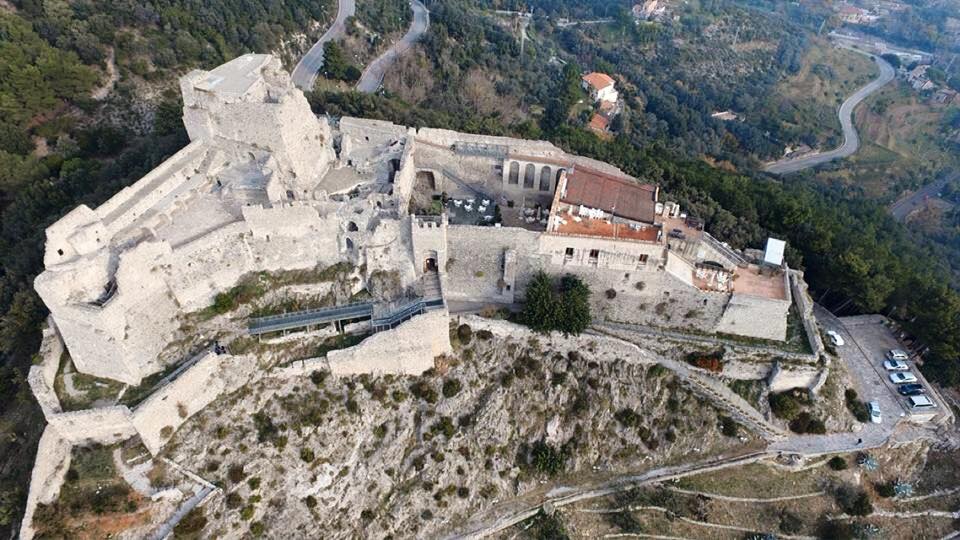
The Piccolomini enhancements included the construction of strong curtain walls forming a rectangular polygonal perimeter approximately 550 meters in length. These walls were reinforced with buttresses and featured narrow loopholes that allowed defenders to observe and repel attackers while remaining protected. Interspersed along the walls were nine round towers, each about eight meters high and five meters in diameter, providing overlapping fields of fire and improved surveillance capabilities.
Inside the fortified enclosure, the castle housed barracks for soldiers, cisterns for water storage, and provisions stores, ensuring the fortress could sustain a prolonged siege. The integration of these facilities highlights the castle's role as a self-sufficient military complex capable of protecting the local population during times of crisis.
Architectural features and military innovations
The 15th-century reconstruction incorporated advancements in military architecture suitable for the period's increasing use of artillery. The thick masonry walls and rounded towers were designed to better absorb cannon fire and prevent breaches. The embrasures or openings in the walls allowed for the deployment of firearms and crossbows, marking a shift from earlier defensive strategies relying solely on archery.
Religious and cultural transformations
In 1593, the castle's religious function changed significantly when the collegiate church of Saint Nicholas was suppressed and absorbed into the fortress complex. This transition marked a shift from a primarily military and religious site to a more secular and administrative role within the community.
By the early 19th century, the castle's military importance had diminished. The local population repurposed the castle's spaces for agricultural storage, reflecting changing social and economic conditions. Later in the 19th century, the castle found renewed cultural significance as it was converted into a museum showcasing local artisanal crafts and archaeological finds from the site, preserving the heritage of Maiori and its surroundings.
Structural remains and preservation
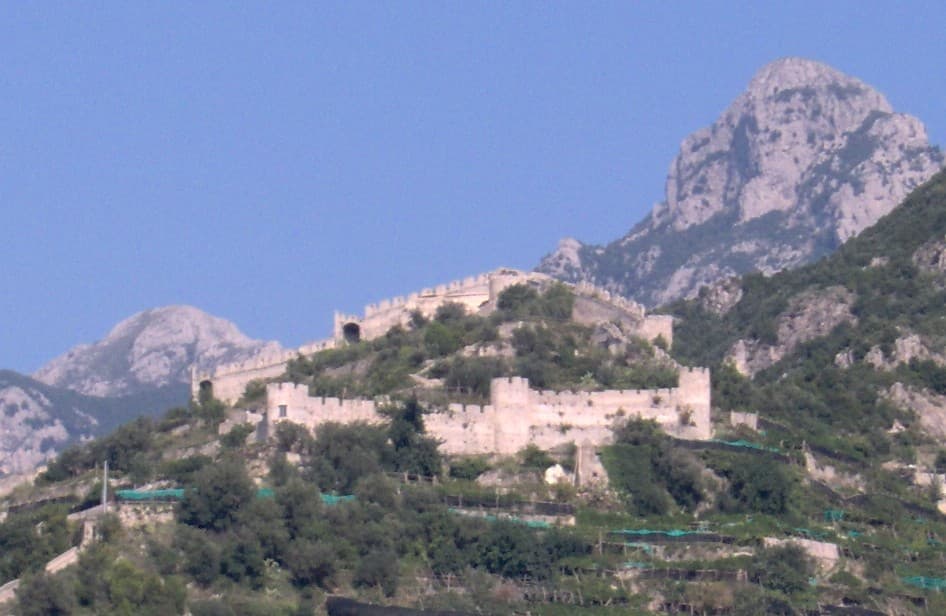
Today, the Castle of San Nicola de Thoro Plano retains much of its 15th-century form, with its polygonal walls and nine round towers still prominently visible. The defensive features such as embrasures, buttresses, and loopholes remain intact, offering insight into the military engineering of the late medieval period.
The castle's location provides commanding views over the neighborhoods of Arcola and Carpineto, maintaining its historic role as a lookout point. Across the valley on Torina hill stands another signaling castle dedicated to Saint Michael the Archangel, of which only one tower, known locally as Il Campanile, survives. This proximity enabled a network of visual communication across the region, enhancing the defensive capabilities of the Duchy of Amalfi.
Museum and cultural heritage
Within the castle grounds, a small museum operates, exhibiting ancient local artisanal products uncovered during archaeological excavations. This museum connects the fortress's rich history with the cultural traditions of Maiori, offering visitors a comprehensive understanding of the site’s historical and social significance.
The castle's preservation as a well-preserved example of a hill castle from the early medieval and late medieval periods makes it a valuable cultural and historical landmark in the Campania region of Italy.
Frequently asked questions (FAQ)
- When was the Castle of San Nicola de Thoro Plano originally built?
- The castle was originally constructed around 840 AD, shortly after the death of Sicardo, the Longobard Duke of Benevento.
- What defensive features does the castle have?
- The castle features a polygonal perimeter with strong curtain walls, nine round towers, embrasures, loopholes, and buttresses designed for defense against medieval and early artillery attacks.
- Can visitors explore the castle today?
- Yes, the castle is well-preserved and open to visitors, featuring a small museum showcasing local artisanal crafts and archaeological finds from the site.
- What was the role of the Piccolomini family in the castle's history?
- The Piccolomini family expanded and fortified the castle between 1465 and 1468, enhancing its military capabilities under the Duchy of Amalfi's governance.
- How did the castle function within the Duchy of Amalfi?
- It served as a key defensive refuge and communication post within the Duchy of Amalfi's network of fortifications, protecting the local population from raids and coordinating military responses.
Photo gallery

Information
Website
Visit websiteSources & official resources
Verify the information above using these authoritative references.
Loading map...
Visitor reviews
No reviews yet. Been here? Write the first review and help other travelers!
Write the first reviewVisited this castle? Share your experience
Your review helps other travelers and adds first-hand knowledge to our encyclopedia.