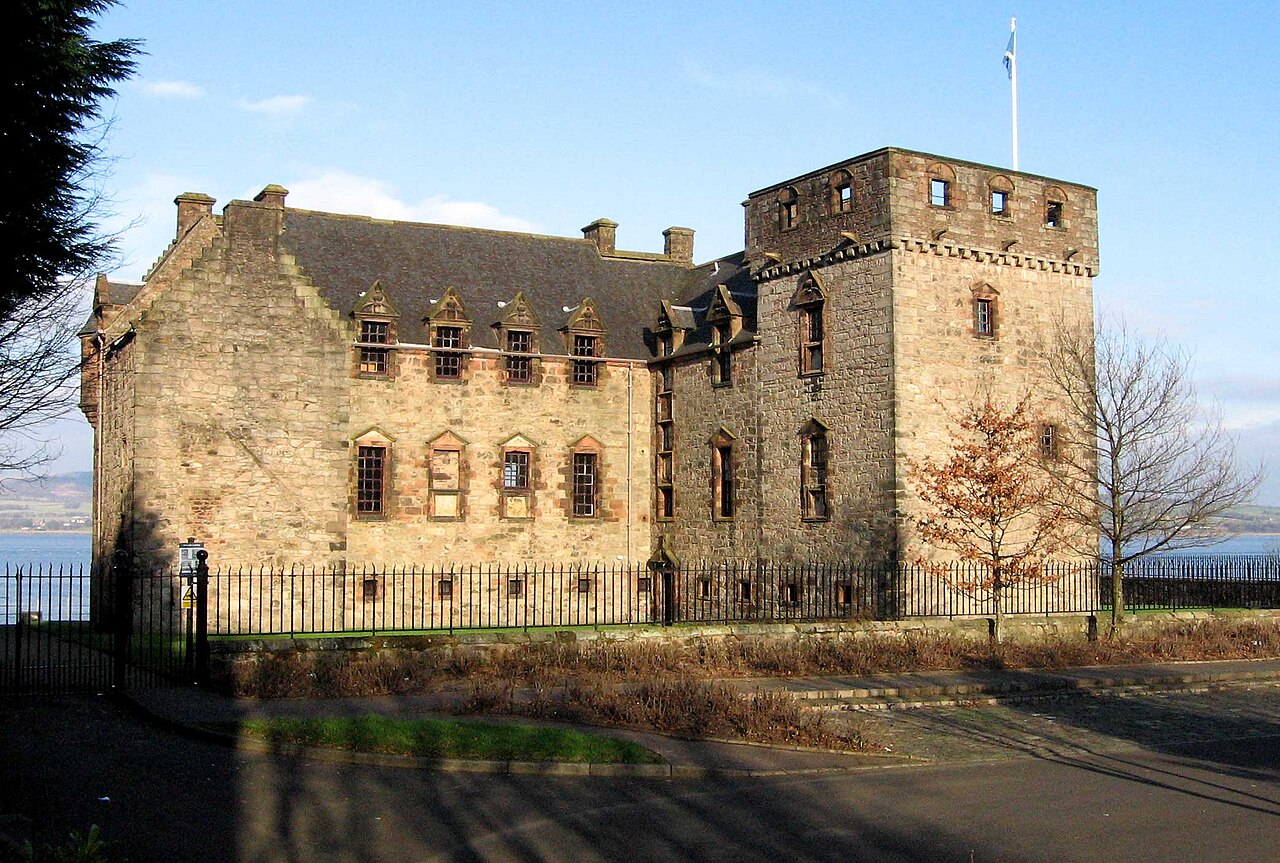
Ardgowan Castle stands as a notable example of a late medieval Scottish stronghold, located within the grounds of Ardgowan House near Inverkip in Scotland. The castle's history is closely intertwined with the turbulent political and military events of the early 14th century and the subsequent development of the Stewart family estates. Its strategic position near the Firth of Clyde made it significant during the medieval period.
Historical background and early significance
The area around Inverkip was a site of conflict during the Wars of Scottish Independence. In 1306, the nearby village of Inverkip was besieged by forces loyal to Robert the Bruce, commanded by Robert Boyd of Cunningham. This siege highlights the region's strategic importance in controlling access to the western seaboard of Scotland. Although the current castle structure dates from the late 15th century, the lands of Ardgowan had been of note since the early 15th century.
In 1403, King Robert III granted the lands of Ardgowan to his natural son, Sir John Stewart. This grant established the Stewart family's long-term connection with the estate. The castle itself was constructed in the 15th century, reflecting the architectural and defensive needs of the period.
Architectural features and castle design
Ardgowan Castle was built as a typical late medieval tower house, a common form of fortified residence in Scotland during this era. Tower houses combined defensive features with residential comfort, often comprising a tall, rectangular keep with thick stone walls, narrow windows, and battlements. The castle's design would have included a great hall, private chambers, and defensive elements such as a barmkin (a walled courtyard) to protect inhabitants and livestock.
The castle's location within the grounds of what later became Ardgowan House suggests it was integrated into the wider estate landscape. By the late 18th century, the castle had been superseded by more modern domestic architecture, reflecting changing tastes and the reduced need for fortified residences.
Transition to Ardgowan House and later history
In 1667, Archibald Stewart was created a baronet, further elevating the family's status. The 3rd Baronet married Helen Houston, heiress of the Shaws of Greenock, in 1730, consolidating wealth and estates. Their son, Sir John Shaw-Stewart, 4th Baronet, commissioned the construction of a new residence, Ardgowan House, designed by architect Hugh Cairncross. Construction began in 1797 and was completed around 1801.
Following the completion of Ardgowan House, the old castle was abandoned as a residence. Over time, it fell into ruin but was recognized for its historical value. In 1936, efforts were made to consolidate and repair the ruin, preserving it as a heritage site within the estate.
Current condition and cultural significance
Today, Ardgowan Castle remains a partially preserved ruin within the Ardgowan estate. Its stone walls and remnants of defensive features offer insights into Scottish late medieval architecture and the lifestyle of the landed gentry during that period. The castle is an important cultural landmark that illustrates the evolution of Scottish noble residences from fortified castles to elegant country houses.
The site attracts visitors interested in Scottish history, architecture, and genealogy related to the Stewart family. Its proximity to the modern Ardgowan House provides a tangible connection between medieval and post-medieval Scottish aristocratic life.
Frequently asked questions (FAQ)
- What is the history of Ardgowan Castle?
- Ardgowan Castle, located in Inverkip, dates back to the 15th century and is known for its beautiful architecture and rich history. Originally built as a stronghold for the Clan Montgomery, it has been a significant site in Scottish history, with various renovations reflecting different architectural styles over the centuries.
- When is the best time to visit Ardgowan Castle?
- The best time to visit Ardgowan Castle is during the spring and summer months when the weather is milder, and the gardens are in full bloom. This period also coincides with various events and guided tours that provide a deeper insight into the castle's history.
- Can I take a guided tour of Ardgowan Castle?
- Yes, guided tours of Ardgowan Castle are available and provide visitors with an in-depth understanding of its historical significance and architectural features. It is recommended to book in advance, especially during peak tourist season, to secure your spot.
- Is Ardgowan Castle accessible for visitors with mobility issues?
- Ardgowan Castle has made efforts to accommodate visitors with mobility challenges, though certain areas may have limited accessibility due to the historic nature of the site. It is advisable to check in advance for specific accessibility options and facilities available during your visit.
- What are the opening hours for Ardgowan Castle?
- Ardgowan Castle typically opens to the public from April to October, with hours varying by day. It is best to check the official website or contact the castle directly for the most current opening hours and any seasonal variations.
- Are there any ticket prices for visiting Ardgowan Castle?
- Yes, there is an admission fee to visit Ardgowan Castle, which helps maintain the property and its grounds. Ticket prices may vary based on age, group size, and whether you opt for a guided tour, so it’s recommended to check their official website for the latest pricing information.
- What nearby attractions can I visit while at Ardgowan Castle?
- While visiting Ardgowan Castle, you can explore other nearby attractions such as the stunning Inverkip village and the scenic coastline of the Firth of Clyde. Additionally, the town of Greenock offers various museums and parks that complement your castle experience.
Loading map...
Visitor reviews
No reviews yet. Been here? Write the first review and help other travelers!
Write the first reviewVisited this castle? Share your experience
Your review helps other travelers and adds first-hand knowledge to our encyclopedia.