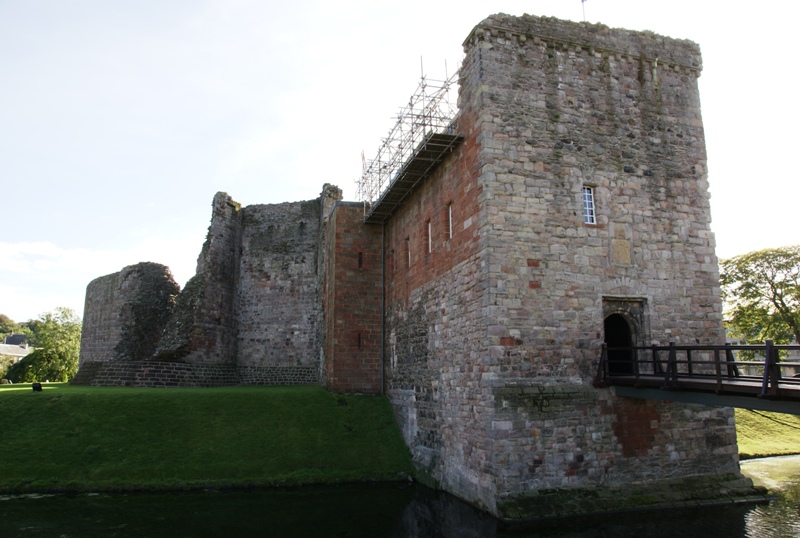
Castle Toward
Castle Toward stands as a significant historic estate located in Argyll and Bute, Scotland, within the United Kingdom. The current structure was constructed in 1820 to replace an earlier late medieval castle that had been the ancestral home of the Clan Lamont. This site reflects a layered history spanning from the medieval period through to the modern era, illustrating shifts in architectural style, ownership, and function over several centuries.
The original Toward Castle and its medieval heritage
The first Toward Castle dates back to the 15th century. It was a stronghold of the Clan Lamont, a prominent Scottish clan in the region. The castle underwent extensions during the 17th century, adapting to the defensive needs and domestic requirements of the time. However, the castle's strategic location also made it a target during the turbulent clan conflicts of the era. In 1646, the castle was attacked and subsequently abandoned following a siege by the rival Clan Campbell. The ruins of this medieval castle remain approximately 500 metres south-east of the later 19th-century building, providing tangible links to Scotland’s clan history and medieval fortifications.
The construction of the modern Castle Toward
In the early 19th century, the estate underwent a significant transformation. Kirkman Finlay, a former Lord Provost of Glasgow, purchased the Achavoulin estate in 1818 and renamed it Toward. He commissioned the construction of a new residence to replace the medieval ruins. The new Castle Toward was designed by the notable architect David Hamilton, a leading figure in Scottish architecture known for his work in the Gothic Revival style. Completed in 1820, the castle was built as a castellated country house, blending the romantic aesthetics of medieval castles with modern comforts suitable for a prominent family.
Architectural style and features
The castle exemplifies the castellated Gothic Revival style, characterized by battlemented parapets, pointed arch windows, and turrets that evoke medieval fortifications. This style was part of a broader 19th-century trend in Britain where aristocrats and wealthy industrialists embraced medieval motifs to express heritage and status. The design by David Hamilton skillfully incorporated these elements, creating a residence that was both picturesque and functional. The building’s layout includes a prominent tower and a series of interconnected wings, arranged around formal gardens and parkland.
Gardens and landscape design
In the 1880s, the estate's gardens were enhanced with the involvement of Edward La Trobe Bateman, a distinguished landscape artist and designer. Bateman’s work contributed to the refined landscaping of the grounds, integrating naturalistic planting schemes and formal garden elements that complemented the castle’s Gothic Revival architecture. The gardens and surrounding parkland remain an important aspect of the estate’s historic character.
Castle Toward during the 20th century
During the Second World War, Castle Toward was requisitioned by the Royal Navy and served as HMS Brontosaurus, a training base for amphibious operations. This military use marked a significant departure from its peacetime role as a private residence. After the war, the estate was sold to the Glasgow Corporation, which repurposed the castle as an outdoor education facility. It provided opportunities for youth education and outdoor activities for several decades until its closure in 2009.
Current status and heritage significance
Today, Castle Toward remains a notable example of early 19th-century Gothic Revival architecture in Scotland. While the original medieval castle lies in ruins nearby, the 1820 structure is well-preserved and reflects the social and architectural history of the region. Its layered past—from medieval clan stronghold to modern educational center—illustrates the evolving uses of Scottish castles across centuries. The estate’s architectural features, historical associations with the Clan Lamont, and its wartime role contribute to its cultural and heritage importance within Argyll and Bute.
Visiting Castle Toward
Though the castle was closed as an educational facility in 2009, its grounds and historic significance continue to attract interest from historians, architecture enthusiasts, and visitors to the region. The proximity of the medieval ruins offers additional context for understanding the estate’s long history. Preservation efforts focus on maintaining the castle’s structural integrity and its gardens, ensuring that Castle Toward remains a valuable cultural landmark.
Frequently asked questions (FAQ)
- When was Castle Toward originally built and by whom?
- The current Castle Toward was built in 1820 by Kirkman Finlay, a former Lord Provost of Glasgow, replacing a late medieval castle originally owned by Clan Lamont.
- What architectural style characterizes Castle Toward?
- Castle Toward is designed in the castellated Gothic Revival style, featuring battlements, turrets, and pointed arch windows typical of 19th-century romantic medieval revival architecture.
- What was Castle Toward's role during World War II?
- During World War II, Castle Toward served as HMS Brontosaurus, a Royal Navy training base for amphibious operations.
- Can visitors explore the original medieval Toward Castle ruins?
- Yes, the ruins of the original 15th-century Toward Castle lie about 500 metres south-east of the modern castle and can be visited to understand the site's medieval history.
- Who was involved in the garden design at Castle Toward?
- Edward La Trobe Bateman, a notable 19th-century landscape artist, contributed to the garden design at Castle Toward in the 1880s.
Information
Architect
David Hamilton
Current owner
Glasgow Corporation
Loading map...
Visitor reviews
No reviews yet. Been here? Write the first review and help other travelers!
Write the first reviewVisited this castle? Share your experience
Your review helps other travelers and adds first-hand knowledge to our encyclopedia.