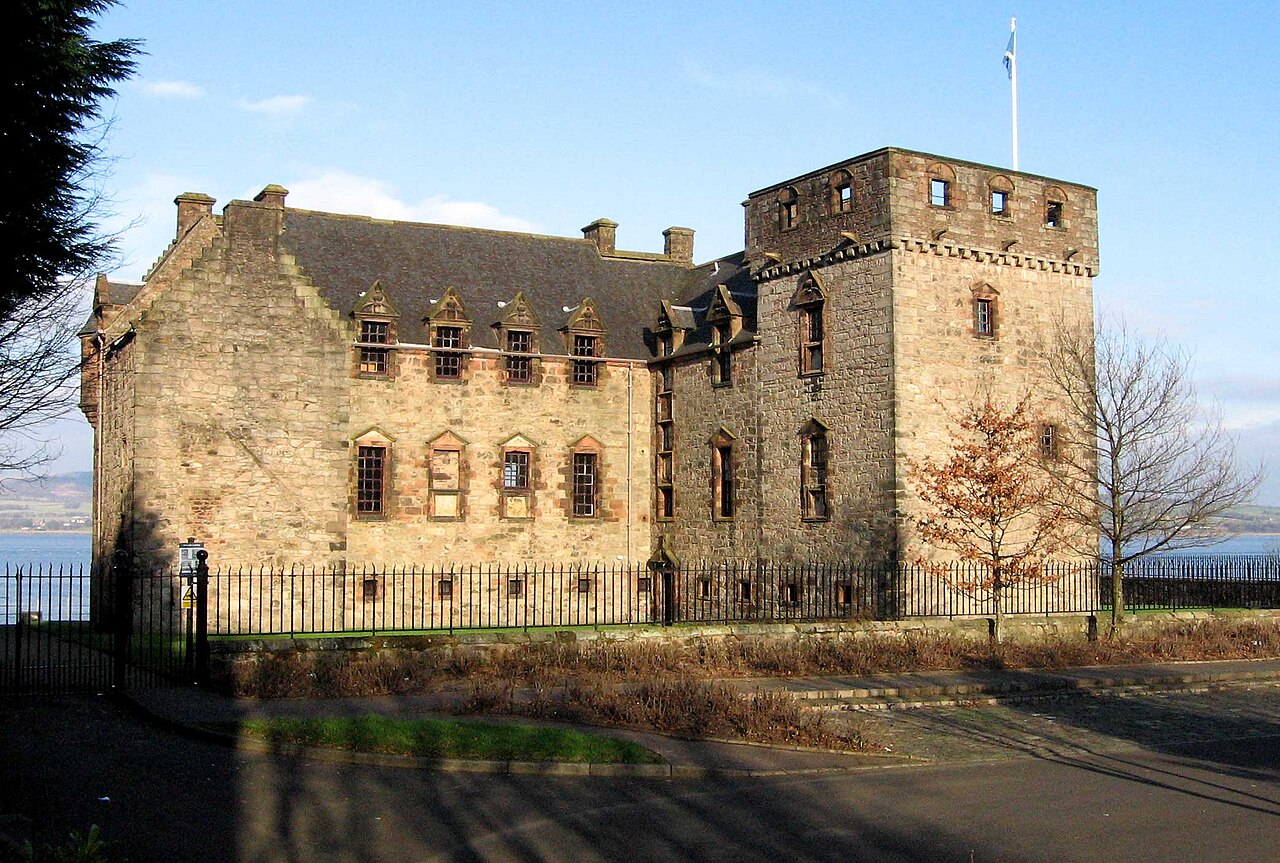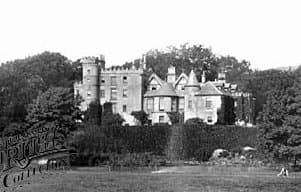
Ardencaple Castle Tower
Ardencaple Castle tower stands as the solitary remnant of a once expansive medieval fortress located near Helensburgh, in Argyll and Bute, Scotland. Perched dramatically on the edge of a plateau, the tower overlooks a flat expanse leading to the Firth of Clyde. This strategic vantage point offered commanding views over the surrounding landscape and waterways, crucial for defense and control during the castle's active years.
Historical origins and architectural evolution
The original Ardencaple Castle is believed to have been constructed in the 12th century, placing it within the high medieval period. This era was marked by the proliferation of stone castles across Scotland, reflecting the need for fortified residences amid feudal conflicts and territorial disputes. While the exact architectural details of the initial construction are largely lost, the castle would have likely featured typical hill castle characteristics, utilizing the natural elevation for defense.
Over the centuries, Ardencaple Castle underwent various modifications and expansions, adapting to changing military technologies and domestic needs. By the 19th century, parts of the original structure still remained, although the castle had lost much of its former prominence.
Demolition and preservation of the tower
In 1957, the majority of the castle was demolished by government authorities to facilitate the construction of naval housing for the nearby HMNB Clyde (Faslane Naval Base). This decision reflected post-war priorities and the strategic importance of the naval base during the Cold War era. Despite this extensive demolition, the solitary tower was preserved, likely due to its structural integrity and potential utility.
This remaining tower has since been repurposed as a navigational aid for shipping on the Firth of Clyde, earning the alternate name Ardencaple Castle Light. Its function as a lighthouse underscores the adaptive reuse of medieval structures in modern maritime contexts.
Architectural features of the surviving tower
The tower itself is a robust stone construction, characteristic of medieval military architecture. Its position on the plateau edge maximizes visibility over the waterway, essential for navigation. While detailed descriptions of its internal layout are scarce, the tower likely contained defensive elements such as narrow windows or arrow slits, thick walls, and battlements or crenellations at the top.
The tower's conversion into a lighthouse involved the installation of lighting equipment, integrating modern technology with the historic fabric. The juxtaposition of medieval stonework and contemporary navigational aids illustrates the layered history of the site.
Geographical and cultural context
Located approximately 1.6 kilometers from the town of Helensburgh, Ardencaple Castle tower occupies a prominent position within the Argyll and Bute region. The proximity to the Firth of Clyde made the castle a significant point for controlling maritime routes and local land access. The surrounding landscape, characterized by rolling hills and coastal plains, shaped the castle's strategic importance.
Today, the tower is recognized as a listed building, highlighting its cultural and historical significance within Scotland's heritage. It attracts interest from historians, architects, and visitors intrigued by medieval fortifications and coastal navigation history.
Visiting and accessibility
While the tower itself is a private navigational structure and not generally open to the public, its exterior can be viewed from nearby vantage points. The site offers scenic views of the Firth of Clyde and the surrounding countryside, making it a point of interest for walkers and history enthusiasts exploring the Helensburgh area.
Legacy and historical significance
Ardencaple Castle tower serves as a tangible link to Scotland's medieval past and the evolution of coastal defense. Its survival amid widespread demolition reflects changing priorities in heritage conservation and military infrastructure. The tower's dual role as a historic monument and functional lighthouse exemplifies the adaptive reuse of historic buildings in contemporary settings.
Frequently asked questions (FAQ)
- When was Ardencaple Castle originally built?
- Ardencaple Castle was originally constructed in the 12th century during the high medieval period, reflecting typical defensive architecture of that era.
- Can visitors enter Ardencaple Castle tower?
- The tower is primarily used as a navigational aid and is not open to the public. However, visitors can view the tower from nearby areas and enjoy scenic views of the Firth of Clyde.
- Why was most of Ardencaple Castle demolished?
- Most of the castle was demolished in 1957 to make way for naval housing associated with the nearby HMNB Clyde (Faslane Naval Base), reflecting post-war military needs.
- What is the architectural style of Ardencaple Castle tower?
- The tower exhibits characteristics of high medieval hill castle architecture, including robust stone construction and defensive features like thick walls and narrow windows.
- Where is Ardencaple Castle located?
- Ardencaple Castle is located about 1.6 kilometers from Helensburgh in Argyll and Bute, Scotland, overlooking the Firth of Clyde.
Photo gallery

Photo by Unknown authorUnknown author•Public domain
Information
Loading map...
Visitor reviews
No reviews yet. Been here? Write the first review and help other travelers!
Write the first reviewVisited this castle? Share your experience
Your review helps other travelers and adds first-hand knowledge to our encyclopedia.