Appleby Castle
Appleby Castle stands prominently in the historic market town of Appleby-in-Westmorland, in the county of Cumbria, United Kingdom. This Norman hill castle showcases a rich architectural and historical legacy spanning nearly a millennium. Founded in the early 12th century, it played a crucial role in the Norman consolidation of northern England and evolved through the medieval, early modern, and modern periods to become a significant heritage site.
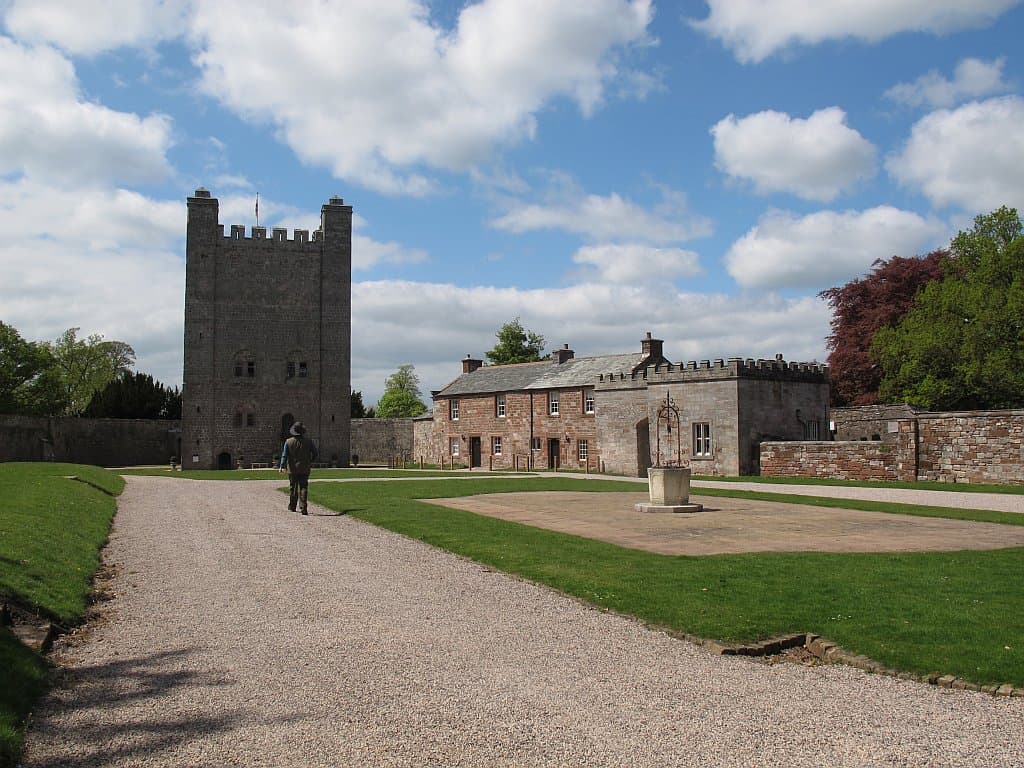
The castle’s origins date back to its founder, Ranulf le Meschin, the first Earl of Chester, who established the site as part of the Norman strategy to secure control over the turbulent northern territories. Construction began in the early 1100s, with the centerpiece being the imposing stone keep known as Caesar’s Tower, built around 1170. This massive four-storey tower rises approximately 80 feet (24 meters) and exemplifies Norman military architecture with its thick grey stone rubble and ashlar masonry. It served as the castle’s primary stronghold and symbol of feudal authority.
Medieval foundations and ownership transitions
Following its initial establishment, Appleby Castle experienced a series of significant historical events that shaped its development. During the Scottish invasion of the Eden Valley in 1174, the castle was under direct royal control but surrendered without resistance to the forces of King William the Lion. This event underscores the castle’s strategic importance on the Anglo-Scottish border.
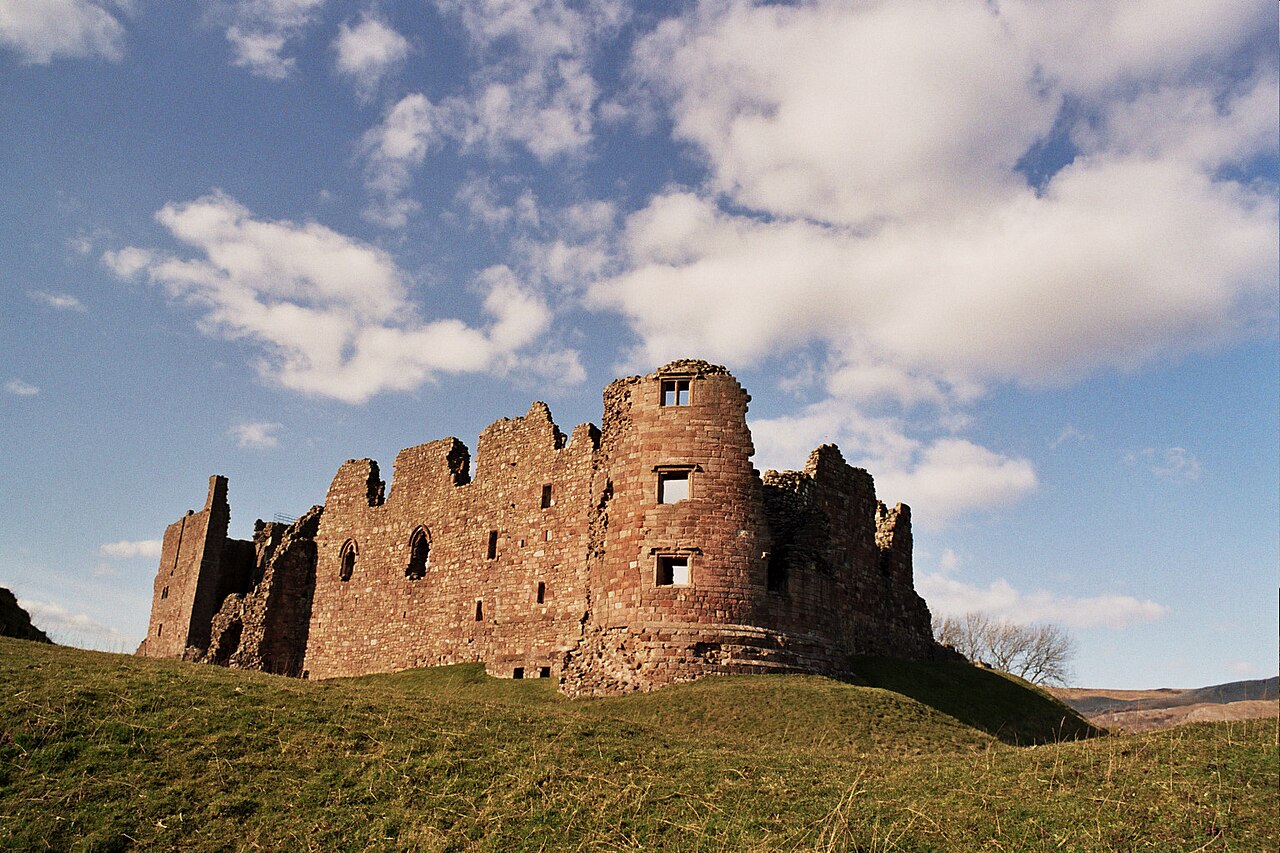
In 1203, King John granted the castle to Robert I de Vipont, initiating its status as a hereditary estate. The castle passed by marriage in 1264 to Roger de Clifford, whose family maintained ownership for nearly four centuries. The Clifford family were instrumental in expanding and restoring the castle, particularly during the 13th and 15th centuries. Notable additions include the north curtain wall and the distinctive semicircular round tower on the north wing, both dating from the 13th century, as well as the eastern section of the main house added in 1454.
Architectural features and defensive structures
Appleby Castle’s layout comprises two main wings arranged at right angles, enclosing a spacious courtyard fortified by robust curtain walls. The medieval core is dominated by Caesar’s Tower, a commanding Norman keep with four floors, constructed of durable grey stone rubble and finely cut ashlar blocks. Its height and solid construction illustrate the defensive priorities of the period.
The north wing features a remarkable semicircular tower projecting from the curtain wall, a typical 13th-century defensive design enhancing the castle’s flanking capabilities. On the east wing’s south end stands a large square tower that completes the fortified enclosure. These towers, combined with the curtain walls, form a secure courtyard typical of Norman fortifications.
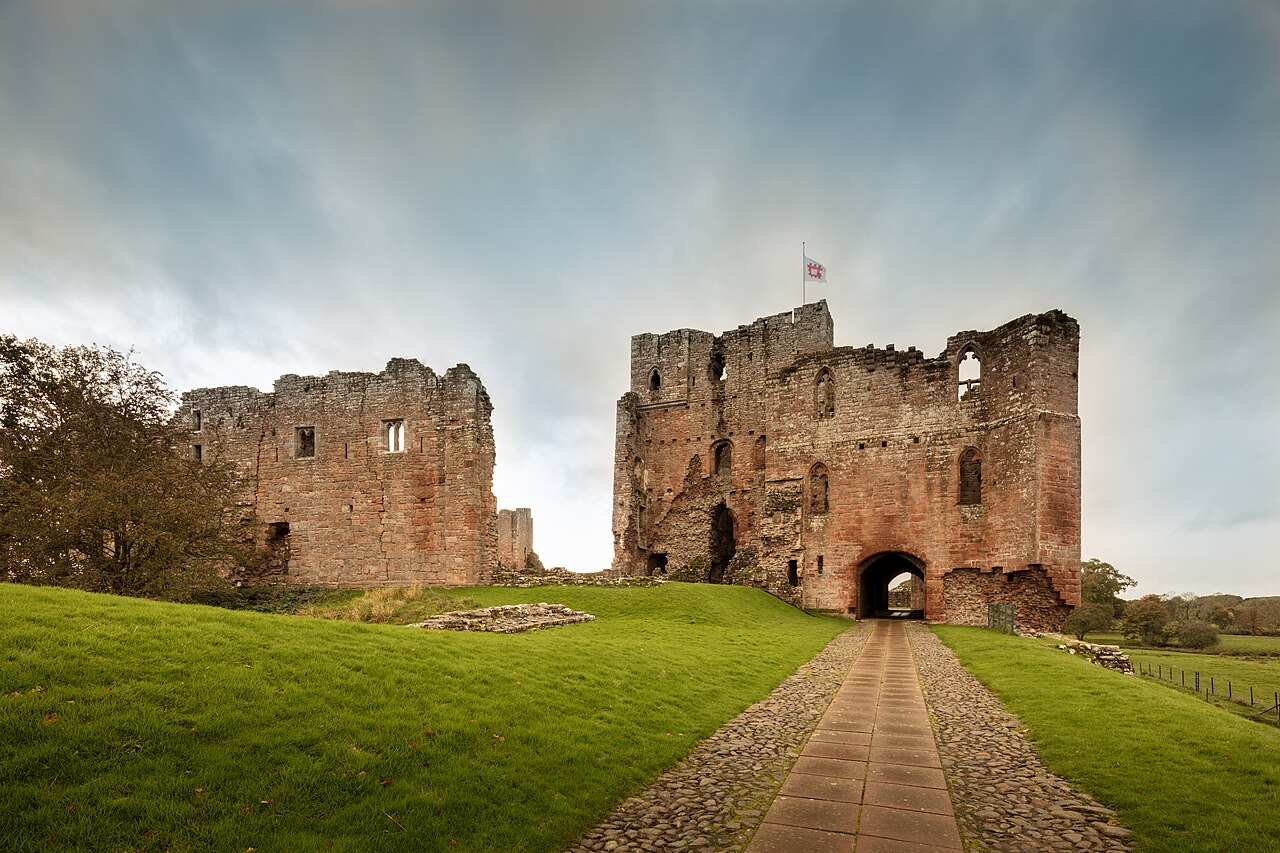
A notable 17th-century addition is the gateway through the curtain wall, built from grey stone and topped with battlements, reflecting the architectural styles of that era. Flanking this gateway are two cottages of exceptional historic value, both holding Grade I listed status, underscoring their heritage importance.
Lady Anne’s Beehouse and other unique structures
Within the castle grounds lies the rare and architecturally significant Lady Anne’s Beehouse, a two-storey stone building dating from the mid-17th century. Its square plan and distinctive pyramid-shaped roof, combined with pointed arched windows on the upper floor, make it an unusual and well-preserved example of early modern ancillary architecture. This building also enjoys Grade I listed protection.
The castle’s outer defenses include sandstone walls mainly constructed during the 18th and 19th centuries, parts of which have been designated Grade II listed. The battlemented North Lodge, a 19th-century structure, also holds Grade II status, contributing to the historic character of the estate.
Early modern period and Lady Anne Clifford’s legacy
Appleby Castle retained its importance into the early modern period. It hosted King James I during his 1617 visit, highlighting its continued significance. In the mid-17th century, the castle became the residence of the notable Lady Anne Clifford, a prominent noblewoman and patron of architecture and restoration.
Following damage sustained during the 1648 siege in the Second English Civil War, when Roundhead forces partially dismantled its defenses, Lady Anne undertook extensive restoration work between 1651 and 1653. She rebuilt the castle’s stables in 1652, arranged quadrangularly around a courtyard, which remain an integral part of the complex. Her efforts preserved the castle’s medieval fabric while adapting it for domestic use.
Subsequent alterations to Caesar’s Tower during the 17th and 18th centuries reflect changing architectural tastes and functional needs, including modifications to the upper floors. The main mansion was substantially rebuilt in 1686, with a northwest wing added in 1695, marking the transition from fortress to stately home.
19th and 20th century developments and modern use
Throughout the 19th century, Appleby Castle underwent further restorations, including the installation of sash windows that modernized its appearance. The estate passed through various owners, and in 1973 it was acquired by Ferguson Industrial Holdings (FIH PLC). Under CEO Denis Vernon, the castle served as corporate headquarters and a training centre, with the grounds hosting a rare breeds survival centre.
In 1998, the castle gained wider public attention through a BBC documentary, and later that year was purchased by Christopher Nightingale. Since 2009, Mrs. Sally Nightingale has been the sole owner, opening the castle and grounds to the public on limited occasions. Caesar’s Tower now houses the Norman Centre, an interactive museum educating visitors about the castle’s rich history.
In 2024, Appleby Castle was placed on the market with an asking price of £9.5 million, reflecting its status as a remarkable historic estate combining medieval fortifications with early modern and later architectural layers.
Heritage status and public access
The castle and its grounds enjoy Grade II* listed status, recognizing their particularly important historic interest. The preservation of medieval structures alongside early modern additions offers valuable insight into the evolution of English castles from military strongholds to noble residences.
Visitors today can explore the courtyard, the imposing Caesar’s Tower, and the surrounding wings, gaining an understanding of Norman defensive design and later architectural adaptations. The Norman Centre within the tower provides educational exhibits and interactive displays, enhancing the visitor experience.
Appleby Castle remains a significant cultural landmark in Cumbria, reflecting centuries of English history, architecture, and noble lineage.
Frequently asked questions (FAQ)
- How do I visit Appleby Castle and what can I expect?
- Appleby Castle is open to the public on limited days, offering access to Caesar’s Tower and the Norman Centre museum. Visitors can explore the medieval courtyard and learn about the castle’s history through interactive exhibits.
- What is the historical significance of Caesar’s Tower?
- Caesar’s Tower is the Norman keep built around 1170, serving as the castle’s defensive core and symbolizing feudal power. It is a prime example of Norman military architecture and remains largely intact.
- Who was Lady Anne Clifford and what was her role at Appleby Castle?
- Lady Anne Clifford was a 17th-century noblewoman who restored Appleby Castle after damage in the English Civil War. She rebuilt the stables and preserved much of the medieval structure, leaving a lasting legacy.
- Is Appleby Castle protected for its heritage value?
- Yes, the castle and its grounds hold Grade II* listed status, highlighting their particularly important historic and architectural interest.
- Can I see Lady Anne’s Beehouse during my visit?
- Lady Anne’s Beehouse is a unique mid-17th-century structure within the castle grounds. While it is a protected Grade I listed building, access may be limited, but it can be viewed from the outside during visits.
Photo gallery

Information
Sources & official resources
Verify the information above using these authoritative references.
Loading map...
Visitor reviews
No reviews yet. Been here? Write the first review and help other travelers!
Write the first reviewVisited this castle? Share your experience
Your review helps other travelers and adds first-hand knowledge to our encyclopedia.