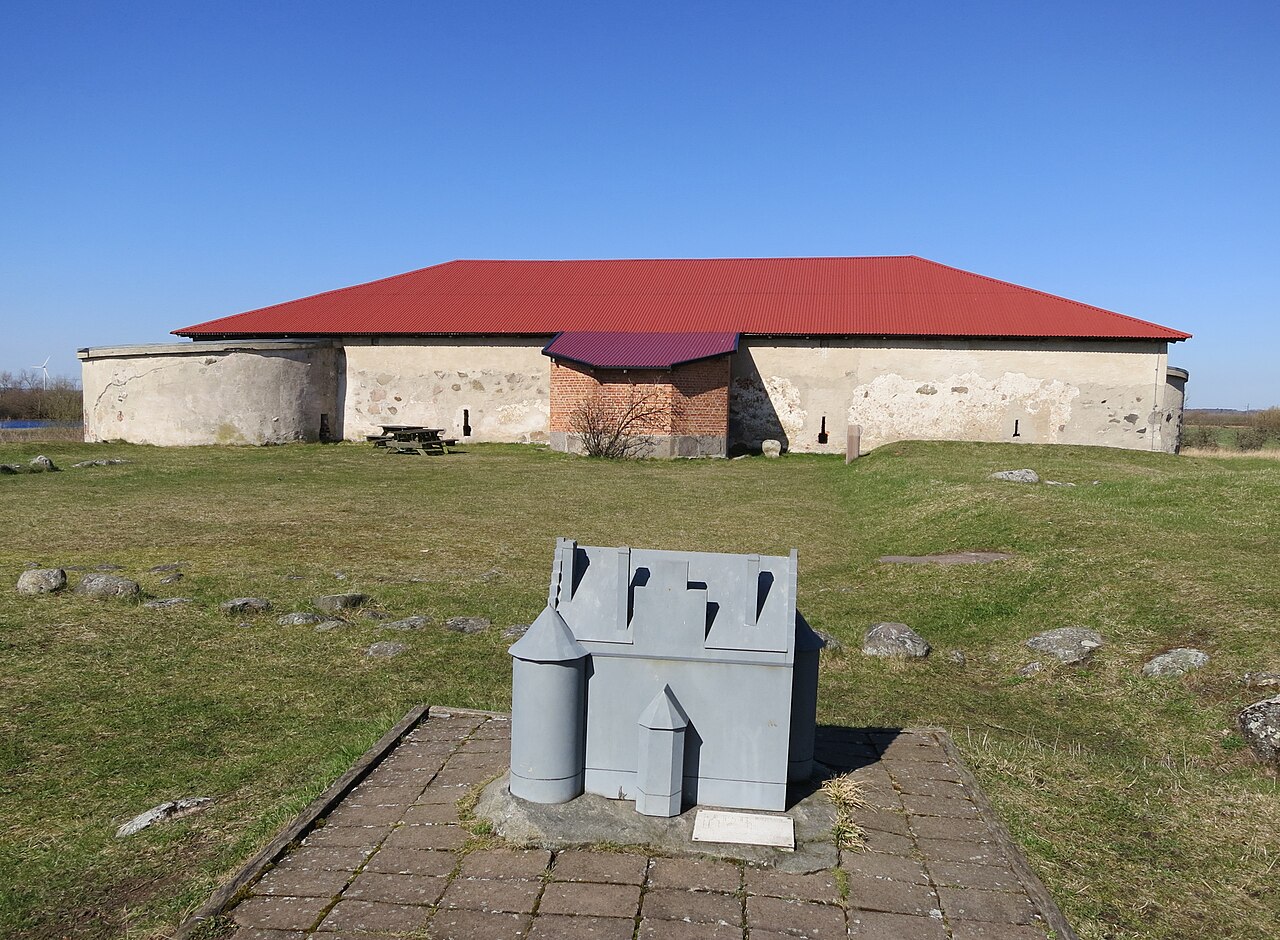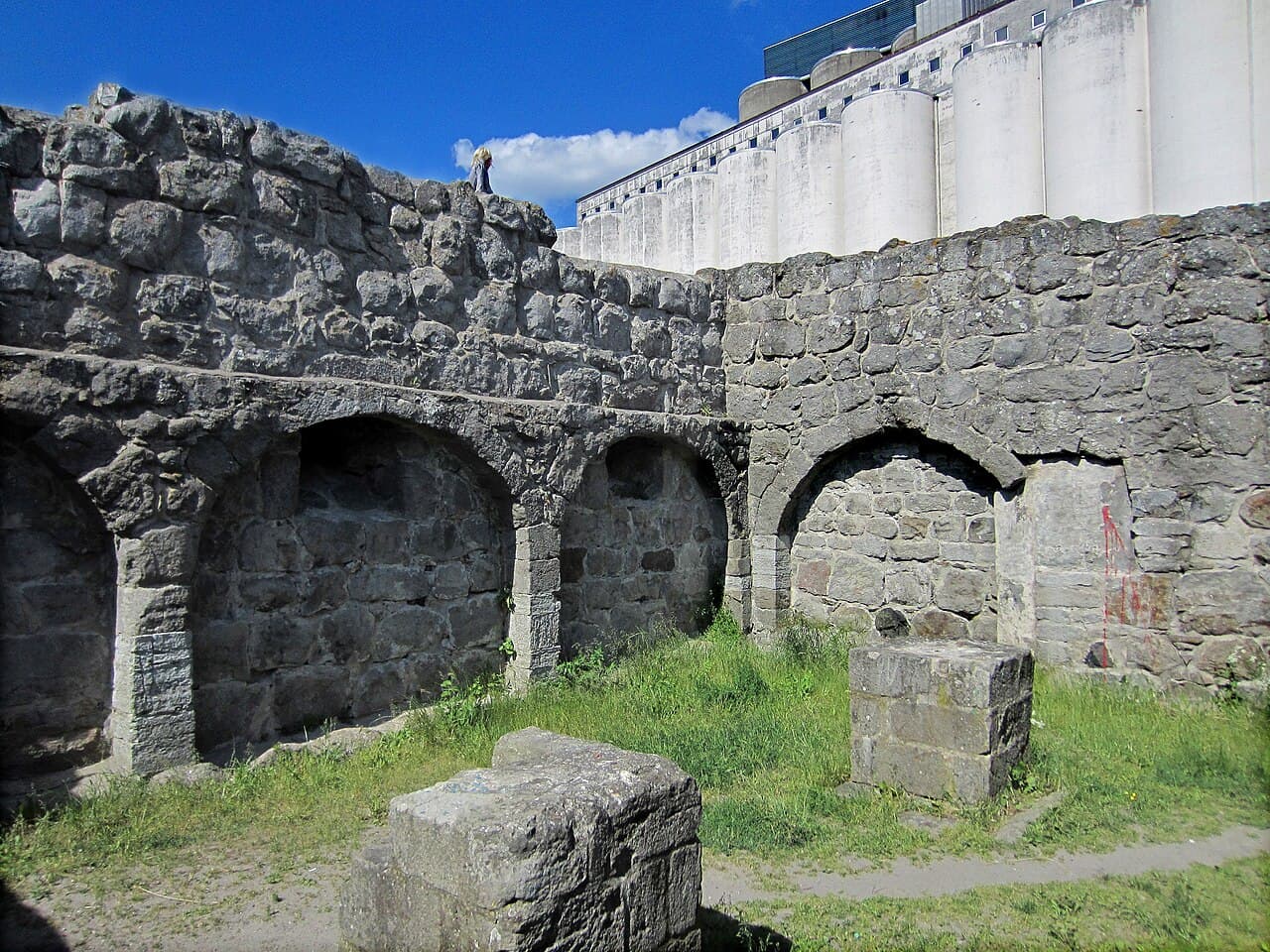
The Aose Castle ruins are situated near the historic port town of Åhus in southern Sweden. This site preserves the remains of a high medieval fortress originally constructed in the 12th century. The castle's strategic location on a hill provided commanding views of the surrounding landscape and access to the Baltic Sea, making it a significant defensive stronghold in the region.
Historical background and origins
Traditionally, it was believed that the castle was commissioned by Archbishop Eskil, a powerful ecclesiastical figure in medieval Scandinavia. However, recent archaeological excavations and research have uncovered compelling evidence indicating that the first lord of Aose Castle was likely Canute the Great, the King of Denmark and England in the early 11th century. This suggests that the castle's origins may predate the 12th century, though the main construction phase is attributed to the 1100s.
The castle underwent significant rebuilding in 1286, reflecting the evolving military and political circumstances of the period. Throughout its history, Aose Castle played a role in local power struggles and served as a defensive bastion against external threats.
Architectural features and fortifications
Aose Castle was a classic example of a hill castle, utilizing the natural elevation to enhance its defensive capabilities. The fortress was encircled by a high stone wall designed to deter attackers and withstand sieges. Surrounding the castle was a moat, which was crossed by a drawbridge, a typical medieval feature allowing controlled access and additional security.
The castle complex likely included various internal structures such as a keep or donjon, residential quarters, storage buildings, and possibly a chapel, although much of this has been lost to time and sand encroachment. The thick walls and strategic placement of towers would have provided vantage points for archers and guards.
Defensive design elements
The high curtain walls were reinforced with battlements and possibly arrow slits, allowing defenders to repel attackers effectively. The moat added a critical layer of defense, making direct assaults difficult and forcing enemies to approach via the drawbridge, which could be raised to isolate the castle.
Destruction and decline
The castle met its demise in 1569 during a military campaign led by Duke Karl, who later became King Karl IX of Sweden. The fortress was deliberately destroyed to prevent its use by opposing forces in the conflicts of the period. Following its destruction, the ruins were gradually buried by drifting sand, a common phenomenon in coastal areas subject to shifting dunes and winds.
Excavation and archaeological significance
Interest in the Aose Castle ruins was revived in the late 19th century when archaeological excavations uncovered the foundations and remnants of the castle's walls and defensive features. These excavations have provided valuable insights into medieval fortification techniques and the castle's role in Scandinavian history.
Further research continues to refine understanding of the castle's origins, construction phases, and historical context, making it an important site for both historians and archaeologists.
Visiting the ruins today
Today, the Aose Castle ruins stand as a protected archaeological site. Visitors can explore the remains of the walls and moat, gaining a tangible sense of medieval fortification architecture. The site offers a glimpse into the turbulent history of southern Sweden and the strategic importance of coastal castles during the high medieval period.
Interpretative signage and guided tours help convey the castle's story, its architectural features, and its significance in the broader history of the region.
Frequently asked questions (FAQ)
- When was Aose Castle originally built?
- Aose Castle was originally built in the 12th century, with evidence suggesting earlier origins linked to Canute the Great in the early 11th century.
- What type of castle is Aose Castle?
- Aose Castle is classified as a hill castle, utilizing elevated terrain for defense with features like high walls and a moat.
- Who destroyed Aose Castle and when?
- The castle was destroyed in 1569 by Duke Karl, who later became King Karl IX of Sweden, during a military campaign.
- Can visitors explore the ruins of Aose Castle today?
- Yes, the ruins of Aose Castle are accessible to visitors as a protected archaeological site with visible remains of walls and moat.
- What defensive features did Aose Castle have?
- Aose Castle featured a high stone wall, a moat crossed by a drawbridge, battlements, and likely arrow slits for defense.
Photo gallery

Information
Loading map...
Visitor reviews
No reviews yet. Been here? Write the first review and help other travelers!
Write the first reviewVisited this castle? Share your experience
Your review helps other travelers and adds first-hand knowledge to our encyclopedia.