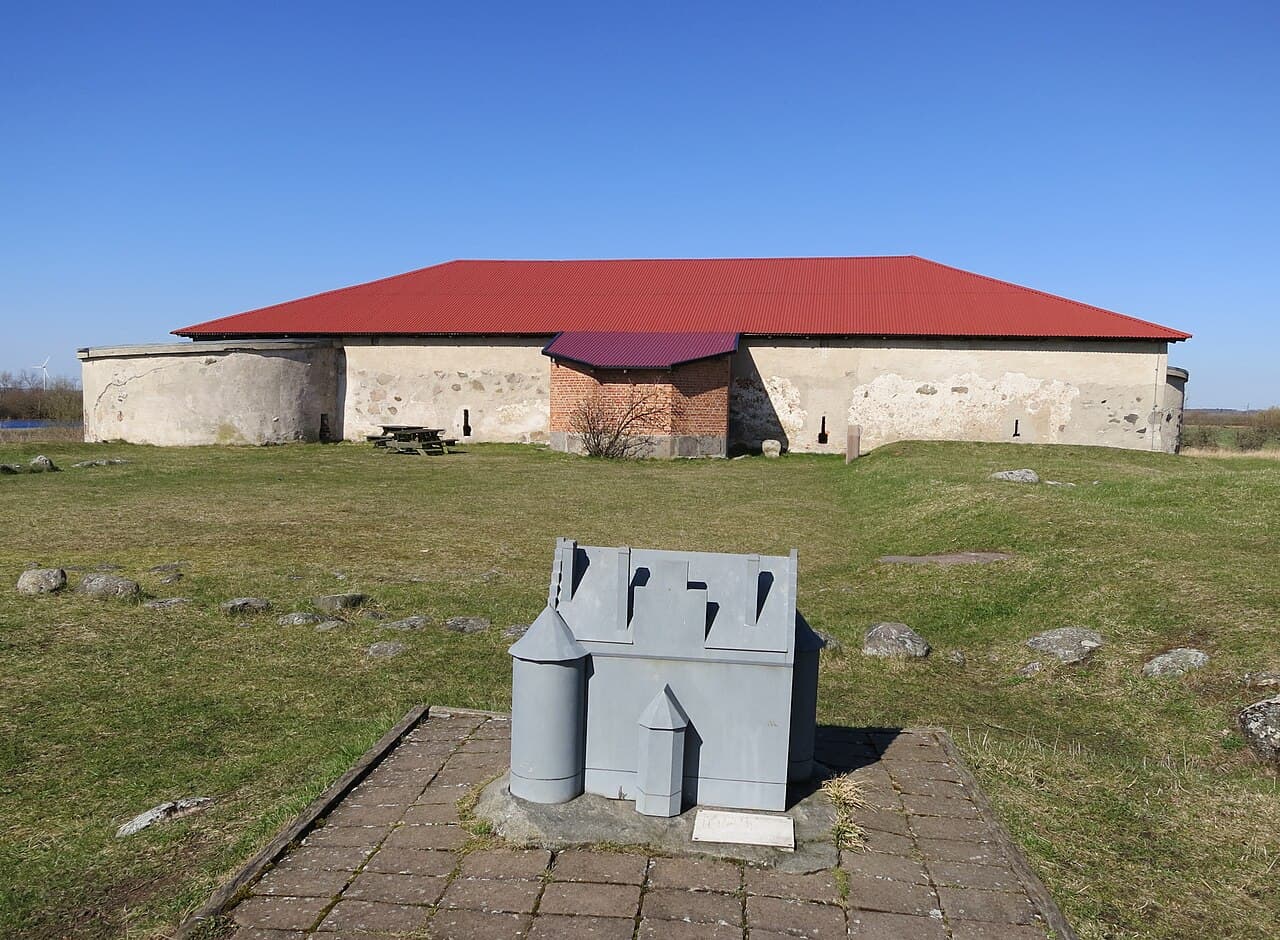
Lillö Castle Ruins
Lillö Castle ruins stand as a significant medieval archaeological site in Kristianstad municipality, Scania, Sweden. Originally constructed in the 14th century, the castle was strategically positioned amid the natural defenses of the inaccessible marshlands and the River Helge å. This location provided a strong defensive advantage, typical of castles built during the late medieval period.
Early history and development
The earliest known record of Lillö Castle dates to around 1343, when it was owned by Åke Axelsson (Tott), a member of the influential Tott family. The castle's origins likely trace back to a fortress established in the late 13th century, initially serving as a defensive stronghold on what was known as "Little Island" (Lillö in Swedish). Over time, this fortress was expanded and fortified, evolving into a more complex castle structure known as Lillöhus.
Architectural features and layout
Although now in ruins, archaeological excavations have revealed aspects of the castle's construction and layout. The castle was built using local stone materials and incorporated typical medieval defensive elements such as thick walls and possibly a moat, leveraging the surrounding wetlands for additional protection. The castle's design would have included towers, courtyards, and residential chambers, reflecting its dual role as a military fortress and noble residence.
Natural defenses and strategic location
The marshlands and the River Helge å created natural barriers that made direct assaults difficult, enhancing the castle's defensive capabilities. This positioning was a deliberate choice, common among medieval builders seeking to maximize natural terrain advantages to compensate for the limitations of construction technology at the time.
Ownership and historical significance
Throughout its history, Lillö Castle was associated with prominent noble families, including the Tott, Trolle, and Huitfeldt families. These families played important roles in the political and military history of the region. The castle served as a noble residence and a military stronghold during a turbulent period marked by conflicts between Denmark and Sweden.
The war of 1657-1658 and destruction
The castle's decline culminated during the war of 1657-1658, when Denmark lost the province of Scania to Sweden. During this conflict, Lillöhus was deliberately demolished to prevent its use by opposing forces. Since then, the castle has remained a ruin, with only fragments of its original structure surviving.
Archaeological excavations and current condition
Extensive archaeological digs at the site have uncovered artifacts and structural remains that provide insights into the daily life and defensive strategies of the castle's inhabitants. These finds are displayed on-site, offering visitors a glimpse into the medieval period and the castle's historical context.
Visitor experience and educational displays
The castle ruins are accessible to the public, with display panels in the courtyard providing detailed information about the castle's history and surroundings. A key for entry is available from the Naturum Vattenriket visitor centre, allowing controlled access to the site. The surrounding fields and wetlands are notable for their rich birdlife, adding natural interest to the historical visit.
Cultural and natural heritage
Lillö Castle ruins not only represent an important cultural heritage site but also contribute to the ecological value of the region. The wetlands around the castle support diverse wildlife, making the area a point of interest for both history enthusiasts and nature lovers.
Today, Lillö Castle ruins are recognized as a protected archaeological site, preserving the legacy of medieval fortifications in southern Sweden. The site serves as a valuable resource for historians and archaeologists studying medieval Scandinavian castles and the complex history of the Scania region.
Frequently asked questions (FAQ)
- How do I visit Lillö Castle ruins?
- Visitors can access Lillö Castle ruins by obtaining a key from the Naturum Vattenriket visitor centre. The site is open for exploration during daylight hours, allowing visitors to view the archaeological displays and enjoy the surrounding natural environment.
- What is the historical significance of Lillö Castle?
- Lillö Castle was a strategic medieval fortress owned by prominent noble families like the Tott, Trolle, and Huitfeldt. It played a role in regional conflicts, especially during the war of 1657-1658, before being demolished to prevent enemy use.
- When was Lillö Castle built?
- The castle was originally constructed in the 14th century, with records indicating ownership from around 1343. Its origins likely date back to a fortress established in the late 13th century.
- What architectural features did Lillö Castle have?
- Lillö Castle featured thick stone walls, towers, courtyards, and residential chambers. It utilized natural defenses like marshlands and the River Helge å to enhance its fortifications.
- Is the castle accessible for visitors with limited mobility?
- Due to its status as a ruin located within marshy terrain, accessibility may be limited for visitors with mobility challenges. Visitors are advised to check with the Naturum Vattenriket visitor centre for specific accessibility information.
Photo gallery

Information
Current owner
Municipality
Loading map...
Visitor reviews
No reviews yet. Been here? Write the first review and help other travelers!
Write the first reviewVisited this castle? Share your experience
Your review helps other travelers and adds first-hand knowledge to our encyclopedia.



