Vittskövle Castle — Sweden castle

Vittskövle Castle

Vittskövle Castle: a Renaissance water castle in Skåne, Sweden
Vittskövle, Sweden
Renaissance (15th–17th c.)
Well Preserved

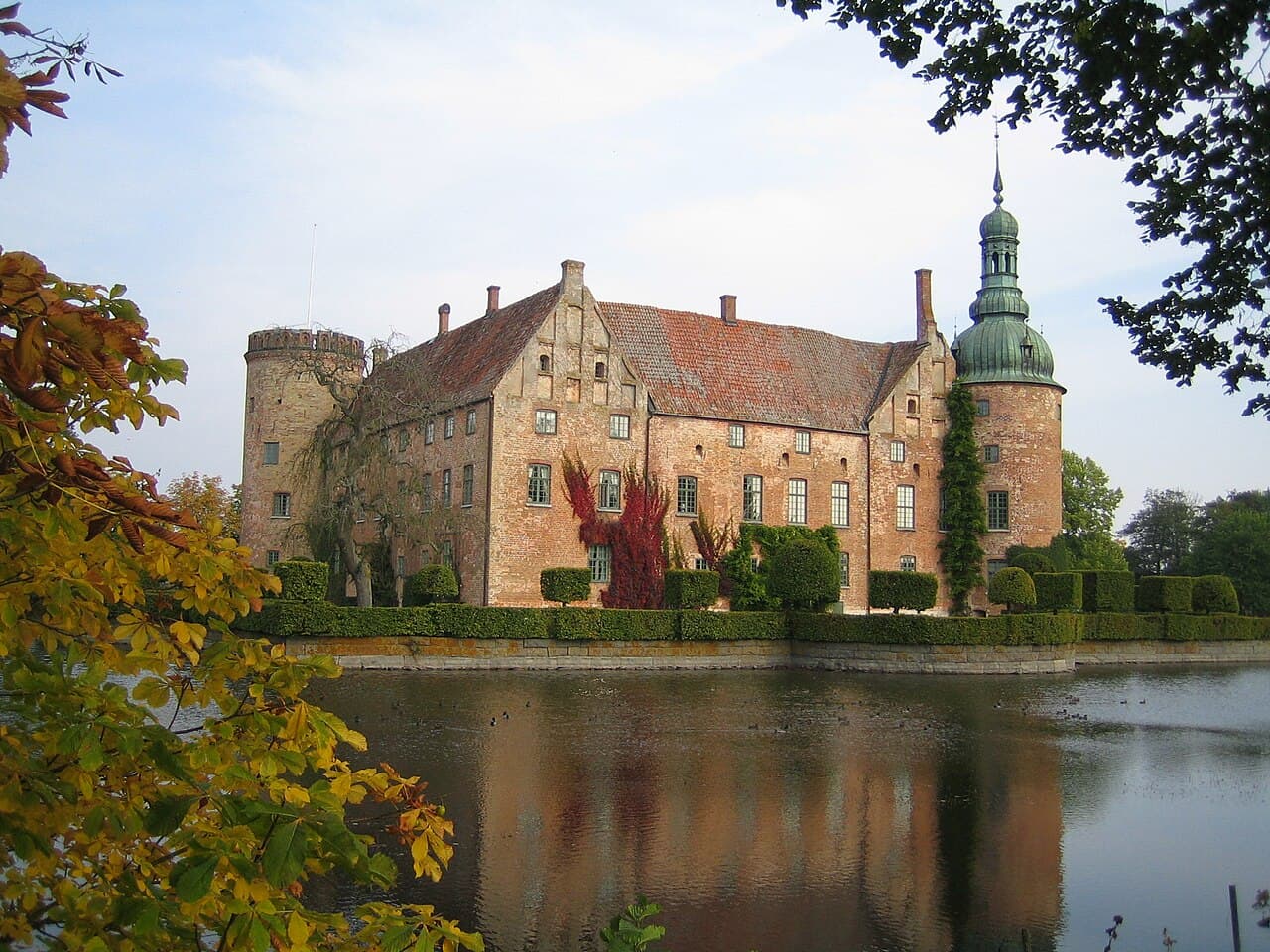
Vittskövle Castle, located in the municipality of Kristianstad in southern Sweden, stands as one of the best-preserved Renaissance castles in the Nordic countries. Built in 1553 by Jens Axelsson Brahe, this castle replaced earlier medieval structures and was designed as a defensive water castle on an island in marshland, supported by wooden piles. It is the largest castle in Skåne with approximately 100 rooms, showcasing the grandeur and military architecture of the 16th century Renaissance period.

Architectural design and defensive features

The castle's four-winged layout forms a nearly square fortress rising three stories high, surrounded by a moat that utilizes the natural marshy terrain for defense. The structure includes two strong square corner towers positioned diagonally to cover all flanking approaches, designed to withstand artillery attacks. The walls are notably thick and robust, built to resist cannon fire, highlighting the transition in military architecture during the Renaissance era when gunpowder weaponry became prominent.

One of the castle's most distinctive architectural features is the northwest tower, which was damaged by fire in the 18th century and later rebuilt with a romantic medieval spire that reflects the 18th-century romanticism movement and the era's fascination with medieval aesthetics. The castle also retains traces of shooting galleries on the upper floors, which were walkways along the roof eaves providing sheltered positions for defenders to fire upon attackers.

Historical context and ownership lineage

The estate's origins date back to medieval times when the region was under Danish rule. The earliest known settlement was called Egeside, located near Lake Yngsjön, held by the brothers Harald and Holger Egeside in the early 13th century. Through the centuries, the estate passed through prominent noble families, including the Krognos and Brahe families, and briefly to the Archbishop of Lund before returning to the Brahe family after the Reformation.

Jens Axelsson Brahe initiated the construction of the current Renaissance castle in the mid-16th century, completed by his son Henrik Brahe in 1577. Following Henrik's death, the estate passed to the Barnekow family through marriage, who maintained ownership even after the Treaty of Roskilde in 1658 transferred the region from Danish to Swedish control. The Barnekows were recognized by the Swedish House of Nobility and continued to strengthen the castle's defenses, notably in 1678 during ongoing regional conflicts.

Gardens, parklands, and later modifications

The castle is surrounded by extensive grounds that reflect evolving landscape design trends from the 18th and 19th centuries. In the late 1700s, Adolf Fredrik Barnekow, the family architect, designed formal gardens featuring pavilions, fish ponds, and a distinctive Turkish-style pavilion, exemplifying the period's interest in exotic architectural motifs. The gardens were admired by notable visitors such as the botanist Carl Linnaeus, who visited in 1749 and praised the cultivation of fruits like apricots, peaches, quince, and grapes.

In the 19th century, under the ownership of Rudolf Hodder Stjernswärd, the grounds were expanded to include an English landscape park with naturalistic features and several auxiliary buildings constructed in a medieval style. These buildings were inspired by the designs of Carl Georg Brunius, a cathedral architect from Lund and a medieval revival enthusiast. The castle interiors were also updated during this period, with painted ceilings and walls overseen by Christian Laurentius Gernandt, reflecting early 19th-century artistic trends.

Preservation and current status

Today, Vittskövle Castle remains remarkably well preserved, showcasing a blend of Renaissance military architecture, romantic medieval revival elements, and landscaped gardens that narrate its layered history. The castle continues to serve as a private residence for the Stjernswärd family, while the surrounding English park is open to the public, offering visitors a glimpse into the estate's historical grandeur and horticultural heritage.

Declared a heritage site in 1966, the castle stands as a significant cultural monument in southern Sweden. Its strategic location on an island with water defenses, combined with its architectural sophistication and rich history, make it a notable example of Nordic Renaissance castles.

Notable architectural details

  • Wooden pile foundations supporting heavy masonry on marshy terrain
  • Four-winged, tiled roof structure with three stories
  • Diagonal corner towers designed for artillery defense
  • Moat and water defenses integrated with natural landscape
  • Shooting galleries on upper floors for defensive firing positions
  • 18th-century romantic medieval spire on the rebuilt northwest tower
  • Formal 18th-century gardens with exotic pavilions and fish ponds
  • 19th-century English park and medieval-style auxiliary buildings
  • Painted ceilings and walls from early 19th century interiors

Historical significance

The castle’s history reflects the complex political and cultural shifts in southern Scandinavia, from Danish medieval rule through the Renaissance and into Swedish sovereignty after 1658. Its architectural evolution mirrors advancements in military technology and changing tastes, from functional Renaissance fortifications to romanticized medieval revival and landscaped park aesthetics.

Vittskövle Castle’s continuous private ownership and preservation have allowed it to retain much of its original character, making it an invaluable resource for understanding Nordic Renaissance castles and noble estates.

Frequently asked questions (FAQ)

What is Vittskövle Castle known for?
Vittskövle Castle is renowned for its stunning architecture and rich history, dating back to the 16th century. It showcases a blend of Renaissance and Baroque styles, making it a remarkable example of Swedish castle design. The castle is also significant for its historical connections to Swedish nobility and its well-preserved interiors.
When was Vittskövle Castle built?
Vittskövle Castle was constructed in the early 16th century, with its foundation laid around 1540. Over the centuries, it has undergone various renovations and expansions, which have contributed to its unique architectural features. The castle's long history makes it an important landmark in Swedish heritage.
Can I visit Vittskövle Castle?
Yes, Vittskövle Castle is open to visitors, allowing you to explore its beautiful grounds and historical interiors. Guided tours are often available, providing insights into the castle's history and architecture. Be sure to check the castle's official website for information on tour availability and special events.
What are the opening hours for Vittskövle Castle?
The opening hours for Vittskövle Castle may vary depending on the season and special events. Typically, it is open to visitors from late spring through early autumn, with guided tours available on weekends and holidays. It's advisable to check the castle's official website for the most current opening hours before planning your visit.
Is it possible to hold events at Vittskövle Castle?
Yes, Vittskövle Castle offers facilities for hosting various events, including weddings, corporate gatherings, and private parties. The picturesque setting and historic ambiance make it a unique venue for special occasions. Interested parties should contact the castle administration for details on booking and available services.
What is the best time to visit Vittskövle Castle?
The best time to visit Vittskövle Castle is during the late spring and summer months when the weather is pleasant and the gardens are in full bloom. This period typically offers the most guided tours and events. Additionally, the castle often hosts special activities and exhibitions during these months, enhancing the visitor experience.
Are there any nearby attractions to visit?
Yes, there are several nearby attractions to explore while visiting Vittskövle Castle. The surrounding area features beautiful parks, historical sites, and charming villages that showcase Swedish culture. Visitors can also enjoy outdoor activities such as hiking and cycling in the scenic landscapes of southern Sweden.
What are the ticket prices for visiting Vittskövle Castle?
Ticket prices for Vittskövle Castle may vary depending on the type of tour and age of the visitor. Generally, there are discounted rates for children, students, and seniors. For the most accurate and up-to-date pricing information, it is recommended to check the castle's official website before planning your visit.
How do I get to Vittskövle Castle?
Vittskövle Castle is easily accessible by car and is located just a short drive from the nearest major city, Kristianstad. Public transportation options, including buses and trains, are also available, making it convenient for visitors. Detailed directions can be found on the castle's official website to assist with your travel planning.

Photo gallery

Vittskövle Castle
Click to view
1 photo • Click any image to view in full screen

Information

Hill Castle

Loading map...

Visitor reviews

No reviews yet. Been here? Write the first review and help other travelers!

Write the first review

Visited this castle? Share your experience

Your review helps other travelers and adds first-hand knowledge to our encyclopedia.

Write a review

(5/5)

0/2000 characters

Your review will be visible after admin approval

Nearby castles

10.9 km

Maltesholm Castle

Kristianstad, Sweden

Maltesholm Castle, located in Kristianstad Municipality, Sweden, stands as a remarkable example of a historic estate that reflects the architectural and cultural evolution from the Renaissance period through the 18th century Swedish classical style. The castle's origins trace back to the Middle Ages, when the estate was part of the larger Vittskövle estate, owned by the notable Brahe family during the era of Danish rule over Scania. This deep historical lineage situates Maltesholm within the broader narrative of Scandinavian noble estates, illustrating shifts in ownership, architectural trends, and landscape design over several centuries. The castle, as it is known today, was initially constructed between 1635 and 1638 by Malte Juul, the Danish high constable of Kristianstad. Juul expanded the estate by acquiring neighboring lands and named the manor after himself, establishing a substantial Renaissance manor built primarily in brick. This original structure featured three floors, a prominent staircase tower crowned with an elaborate spire, and distinctive crow-stepped gables, all encircled by a wide moat. These architectural elements were characteristic of the Danish Renaissance style under King Christian IV, highlighting the castle's initial grandeur and defensive features. Architectural transformation and 18th-century remodeling In the late 17th and 18th centuries, the estate underwent significant expansion and transformation under the ownership of the Ramel family. Malte Ramel, one of Sweden's wealthiest landowners in his time, enlarged the domains considerably. His son, Hans Ramel, known as "Bygge-Hans" for his dedication to construction projects, spearheaded a major remodeling of the castle, completed in 1780. This renovation marked a departure from the original Renaissance design, reducing the castle by one floor and removing the iconic crow-stepped gables and spire. The access to the manor was also modernized by replacing the original drawbridge with a solid stone bridge. The 1780 remodeling embraced the Swedish classical palace style, characterized by a smooth plastered facade and a hipped (valmat) roof where all sides slope gently downward. This architectural style reflected contemporary tastes for elegance, symmetry, and restraint, contrasting with the more ornate Renaissance features of the original manor. Despite these changes, the castle retained its historical moat, preserving a tangible link to its defensive past. The höge väg: monumental stone road One of the most impressive features from this period is the Höge väg, a monumental stone road approximately 1.3 kilometers long and varying between 12 and 20 meters in width. In certain sections, the raised roadway reaches up to six meters in height, presenting an imposing approach to the estate. The construction of this road was a massive undertaking that spanned nearly 50 years, requiring workers to contribute a stone daily. This labor-intensive project not only enhanced the estate's accessibility but also symbolized the wealth and ambition of the Ramel family. Gardens, park, and notable landscape features The grounds surrounding Maltesholm Castle have evolved over approximately 370 years, initially laid out as a Renaissance garden divided into flower and utility quarters. Over time, the garden transformed into an 18th-century landscape park designed with symmetry along two main axes extending from the manor. This style reflects the broader European shift towards landscaped parks that combined aesthetics with functionality. Within the park stands a classical-style pavilion designed by the esteemed Swedish architect Carl Hårleman in 1770. This pavilion adds architectural elegance and serves as a focal point within the garden. Additionally, the estate features an orangery built in 1781, historically used to shelter exotic plants, including what is recorded as Sweden's first cultivation of bananas, a botanical curiosity noted by the renowned naturalist Carl von Linné (Linnaeus). The park is also home to remarkable trees such as Sweden's largest yew and an imposing Douglas fir that stands 35 meters tall with a trunk circumference of 450 centimeters, estimated to be over a century old. These natural features contribute to the estate's rich biodiversity and aesthetic appeal, enhancing its status as a cultural and natural heritage site open to the public. Historical significance and notable visitors Maltesholm Castle has been a residence for several prominent noble families, including the Brahe, Ramel, De la Gardie, and Palmstierna families. The estate changed hands in 1800 when it was acquired by Axel Gabriel De la Gardie, governor of Kristianstad County, through his marriage to Christina Gustava Ramel. The De la Gardie family maintained ownership for over a century until the estate passed to the Palmstierna family in 1933, who remain the private owners today. A notable historical visitor was Carl von Linné (Linnaeus), who toured the estate on May 25, 1749. He documented the manor's gardens and agricultural practices, particularly noting a diverse beech forest east of the estate. This forest is now protected as a nature reserve, underscoring the estate's environmental importance alongside its cultural heritage. Östra sönnarslöv church and the ramel family crypt Close to the castle, Östra Sönnarslöv Church, dating from the 12th century, maintains a historic connection to the estate through the Ramel family crypt. This crypt houses three large stone sarcophagi containing the remains of Malte Ramel and his two wives, emphasizing the long-standing ties between the family and the region. The church itself is adorned with 15th-century frescoes, adding to the area's rich historical tapestry. Preservation and current status Today, Maltesholm Castle stands as a well-preserved example of a manor that has undergone significant architectural transformation while retaining key features from its Renaissance origins. The moat remains intact, and the castle's classical facade and roof reflect the 18th-century remodeling. The estate continues as a private residence of the Palmstierna family, but the gardens and park are accessible to the public, allowing visitors to experience the blend of architectural history and natural beauty. The castle's blend of Renaissance defensive features and elegant classical design, combined with its extensive landscaped grounds and monumental stone road, make it a unique cultural landmark in southern Sweden. Its layered history, from medieval estate to Renaissance manor to classical palace, offers valuable insights into the architectural and social history of the region.

Post-Renaissance (17th–18th c.)
Details
13.3 km
Aose Castle Ruins — Sweden castle

Aose Castle Ruins

Åhus, Sweden

The Aose Castle ruins are situated near the historic port town of Åhus in southern Sweden. This site preserves the remains of a high medieval fortress originally constructed in the 12th century. The castle's strategic location on a hill provided commanding views of the surrounding landscape and access to the Baltic Sea, making it a significant defensive stronghold in the region. Historical background and origins Traditionally, it was believed that the castle was commissioned by Archbishop Eskil, a powerful ecclesiastical figure in medieval Scandinavia. However, recent archaeological excavations and research have uncovered compelling evidence indicating that the first lord of Aose Castle was likely Canute the Great, the King of Denmark and England in the early 11th century. This suggests that the castle's origins may predate the 12th century, though the main construction phase is attributed to the 1100s. The castle underwent significant rebuilding in 1286, reflecting the evolving military and political circumstances of the period. Throughout its history, Aose Castle played a role in local power struggles and served as a defensive bastion against external threats. Architectural features and fortifications Aose Castle was a classic example of a hill castle, utilizing the natural elevation to enhance its defensive capabilities. The fortress was encircled by a high stone wall designed to deter attackers and withstand sieges. Surrounding the castle was a moat, which was crossed by a drawbridge, a typical medieval feature allowing controlled access and additional security. The castle complex likely included various internal structures such as a keep or donjon, residential quarters, storage buildings, and possibly a chapel, although much of this has been lost to time and sand encroachment. The thick walls and strategic placement of towers would have provided vantage points for archers and guards. Defensive design elements The high curtain walls were reinforced with battlements and possibly arrow slits, allowing defenders to repel attackers effectively. The moat added a critical layer of defense, making direct assaults difficult and forcing enemies to approach via the drawbridge, which could be raised to isolate the castle. Destruction and decline The castle met its demise in 1569 during a military campaign led by Duke Karl, who later became King Karl IX of Sweden. The fortress was deliberately destroyed to prevent its use by opposing forces in the conflicts of the period. Following its destruction, the ruins were gradually buried by drifting sand, a common phenomenon in coastal areas subject to shifting dunes and winds. Excavation and archaeological significance Interest in the Aose Castle ruins was revived in the late 19th century when archaeological excavations uncovered the foundations and remnants of the castle's walls and defensive features. These excavations have provided valuable insights into medieval fortification techniques and the castle's role in Scandinavian history. Further research continues to refine understanding of the castle's origins, construction phases, and historical context, making it an important site for both historians and archaeologists. Visiting the ruins today Today, the Aose Castle ruins stand as a protected archaeological site. Visitors can explore the remains of the walls and moat, gaining a tangible sense of medieval fortification architecture. The site offers a glimpse into the turbulent history of southern Sweden and the strategic importance of coastal castles during the high medieval period. Interpretative signage and guided tours help convey the castle's story, its architectural features, and its significance in the broader history of the region.

High Medieval (11th–13th c.)
Details
18.2 km

Ovesholm Castle

Kristianstad, Sweden

Ovesholm Castle is a historic estate located near Kristianstad in Sweden, known for its post-Renaissance architectural style and rich heritage. The estate's earliest recorded owner was Åke Holm in 1580, marking the beginning of its documented history. In 1620, an earlier main building was constructed by Ove Urup close to the present castle's site, establishing the foundation for the estate's later development. The current castle structure was commissioned by Carl Adam Wrangel af Adinal, son of Henning Reinhold Wrangel, after the estate was donated to the Wrangel family in 1774. The construction spanned from 1792 to 1804, reflecting the architectural tastes of the post-Renaissance period with influences that emphasize symmetry, classical details, and refined elegance. This period saw a departure from medieval fortifications towards more comfortable and stately manor houses, which is evident in Ovesholm's design. Architectural features and style The castle exhibits characteristics typical of the post-Renaissance style, including a balanced and harmonious façade, large windows to allow natural light, and carefully proportioned rooms designed for residential comfort rather than defense. The building is constructed primarily from stone and brick, materials favored in Scandinavian manor houses of the era. The layout likely includes formal reception rooms, private family quarters, and service areas arranged around a central axis. In 1857, Axel Hugo Raoul Hamilton undertook an enlargement of the castle. This expansion may have introduced elements reflecting mid-19th-century tastes, potentially incorporating some romantic or historicist details, although the core post-Renaissance character remains dominant. The Hamilton family's stewardship has preserved the castle's architectural integrity while adapting it to contemporary needs over the centuries. Historical significance and ownership The estate's transition from the Holm family to the Wrangels in the late 18th century marked a significant chapter in its history. Carl Adam Wrangel af Adinal was not only responsible for the castle's construction but also enriched Ovesholm with a notable library and a collection of art and sculptures, reflecting the cultural interests of the Swedish nobility during this period. These collections would have made the castle a center of intellectual and artistic activity. Today, Ovesholm remains in the possession of the Hamilton family, descendants of Axel Hugo Raoul Hamilton, who have maintained the estate as a private residence. Due to its private ownership, the castle is not open to the public, limiting direct visitor access but preserving its status as a well-maintained historic manor. Estate grounds and surroundings The castle is situated within an estate that likely includes landscaped gardens and parkland typical of Swedish manor houses of the 18th and 19th centuries. These grounds would have been designed to complement the architecture and provide a picturesque setting, possibly featuring tree-lined avenues, ornamental plantings, and water features. The estate's location near Kristianstad situates it within a region rich in history and cultural heritage. Preservation and current condition Ovesholm Castle is classified as well preserved, maintaining much of its original structure and design elements despite its age. The continued ownership by the Hamilton family has ensured ongoing care and conservation. Although not accessible for public tours, the castle's preservation contributes to Sweden's architectural heritage, representing the evolution of manor house design from the post-Renaissance period onward.

Post-Renaissance (17th–18th c.)
Details