Anavarza Castle
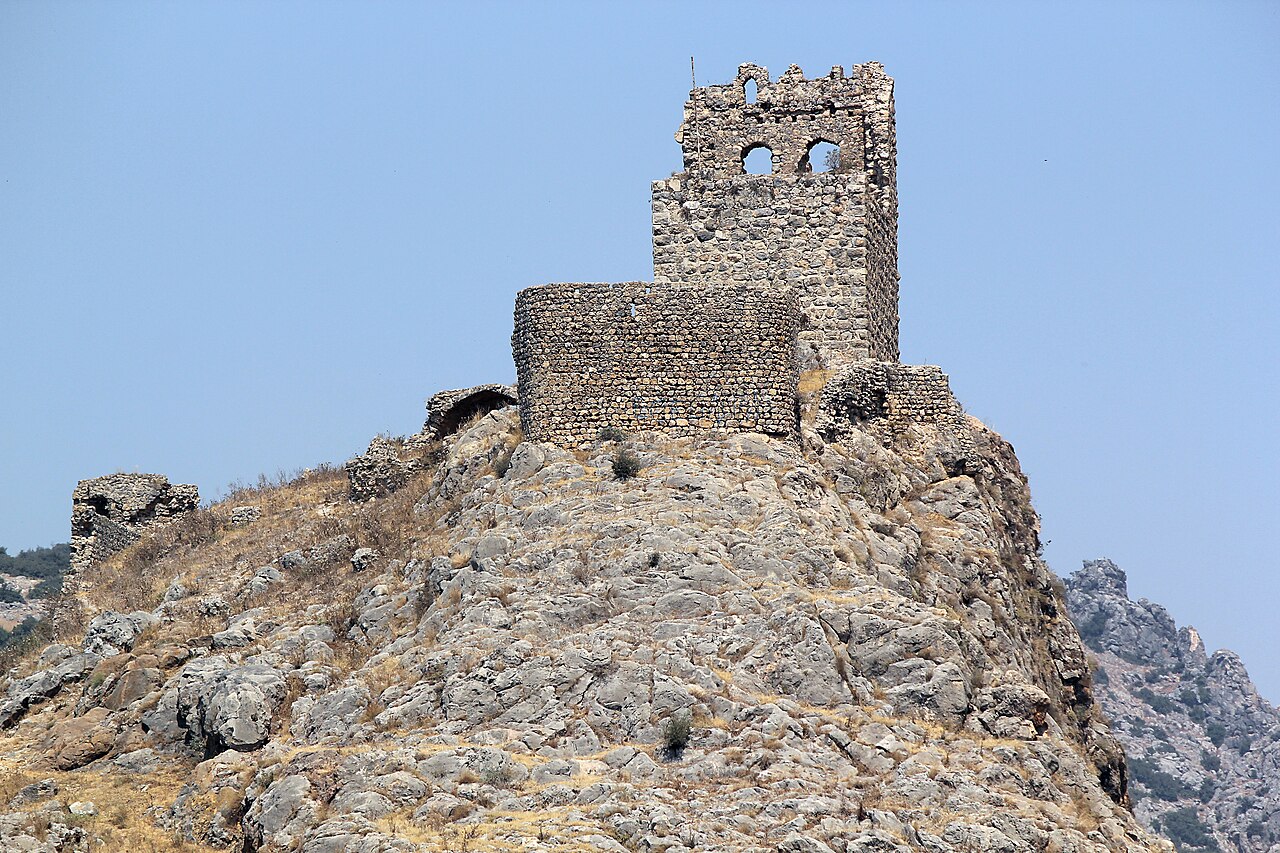
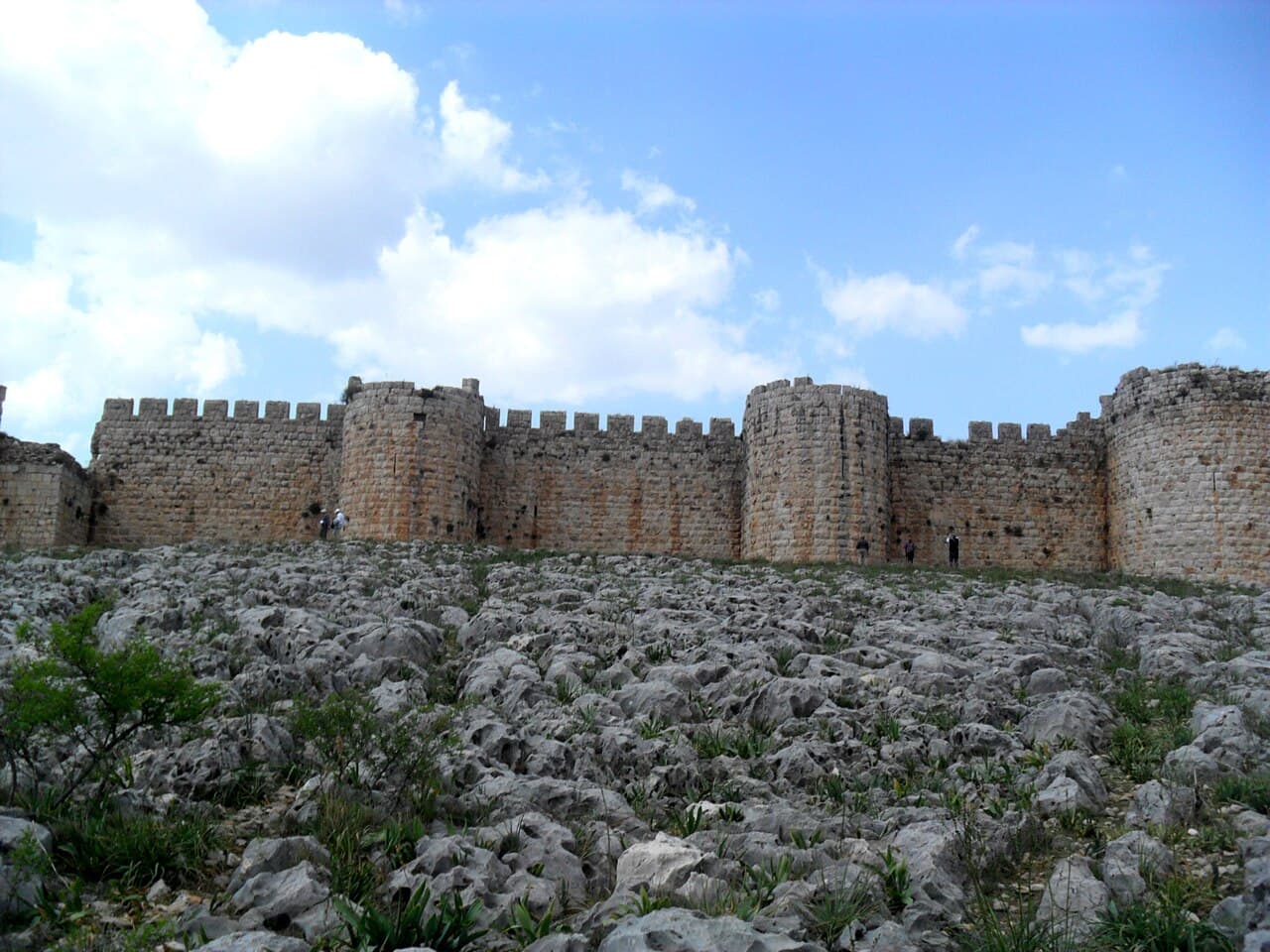
Anavarza Castle, also known locally as Anavarza Kalesi, stands prominently on a 200-meter-high limestone outcrop near the village of Dilekkaya in the Adana province of Turkey. This imposing fortress commands a strategic position with clear intervisibility to other significant fortresses such as Yilan, Toprakkale, Amuda, Tumlu, and Sis castles. The castle overlooks the Sombaz Çay river, which flows along the eastern flank of the outcrop before joining the larger Ceyhan River. The western side of the outcrop is characterized by nearly vertical cliffs, beneath which lie the remains of the ancient city of Anazarbus.
Early fortifications and ancient city of anazarbus
The origins of Anavarza Castle trace back to the acropolis of the ancient city of Anazarbus. The city flourished during the 1st century AD as a prosperous urban center in the region. Over subsequent centuries, the city was renamed Justinopolis and later Justinianopolis, reflecting its importance within the Byzantine Empire. However, in the second half of the 7th century, the city suffered devastating raids during the Arab invasions, leading to its abandonment for a period.
Abbasid refortification and early medieval conflicts
The site was resettled during the Abbasid period, and in 796 AD, the Abbasid Caliph Harun al-Rashid undertook significant refortification efforts, including the construction of defensive works such as the nearby Haruniye Castle. Throughout the 9th century, the fortress endured multiple Byzantine raids, notably the destructive attack in 855 AD which necessitated reconstruction by Caliph al-Mutawakkil.
Byzantine conquest and crusader occupation
In 962 AD, the city was captured by the Byzantine Emperor Nikephoros II Phokas, who restored the fortress and stationed a Byzantine garrison. The castle later fell to the armies of the First Crusade in late 1097 or early 1098 and was incorporated into the Principality of Antioch under Bohemond I.
Armenian cilicia and architectural developments
By around 1110, the castle was seized by Thoros I, Lord of Armenian Cilicia and a member of the Rubenid dynasty. After a devastating earthquake in 1114, the castle was rebuilt. In 1137, it was besieged for 37 days and captured by the Byzantine Emperor John II Komnenos during his campaign to reassert Byzantine control over Cilicia. Ownership of the castle fluctuated between the Armenians and Byzantines in the following decades.
Final armenian possession and administrative role
By the late 12th century, Anavarza Castle was firmly under Armenian control, serving as the administrative center of the Armenian Kingdom of Cilicia. The keep was repaired around 1187-1188 by King Leo I of Armenia. Shortly thereafter, the kingdom's administrative center was relocated north to Sis Castle.
Mamluk raids and later history
The castle faced its first raids by the Mamluks in the 1270s. The Armenians were expelled permanently in 1374, after which a Mamluk garrison occupied the fortress through much of the 15th century.
Architectural layout and features
Anavarza Castle is characterized by its two baileys: a large rectangular outer bailey to the south and a smaller, narrower inner bailey to the north. The entrance to the inner bailey is protected by a square keep situated at the narrowest part of the limestone outcrop, a strategic defensive position. The castle's natural defenses are enhanced by the steep cliffs on the western side and the river on the eastern side, making it a formidable stronghold.
Surrounding ancient city and archaeological significance
Beneath the western cliffs lie the ruins of the ancient city of Anazarbus, which, though largely destroyed, provide valuable archaeological insights into the region's history. The proximity of the castle to these ruins underscores its strategic and administrative importance throughout antiquity and the medieval period.
Modern access and visitor information
Today, Anavarza Castle is freely accessible to visitors and offers a captivating glimpse into the layered history of Cilicia. The castle ruins, perched in a spectacular location, are highly recommended for those interested in medieval fortifications and Armenian heritage. Visitors can also explore the nearby archaeological site of Anazarbus, enriching the experience with a broader understanding of the area's historical context.
With its commanding views, rich history spanning from the Roman era through the Byzantine, Armenian, and Mamluk periods, Anavarza Castle remains a significant cultural landmark in southern Turkey.
Frequently asked questions (FAQ)
- How do I get to Anavarza Castle?
- Anavarza Castle is located near the village of Dilekkaya in Adana province, Turkey. It is accessible by local roads, and visitors typically reach it by car or guided tour from nearby cities.
- What is the historical significance of Anavarza Castle?
- Anavarza Castle has a rich history spanning from the Roman period through Byzantine, Armenian, and Mamluk control. It served as a strategic fortress and administrative center in Cilicia.
- Is Anavarza Castle open to the public?
- Yes, Anavarza Castle is freely accessible to visitors. The site offers ruins that can be explored without an entrance fee.
- What architectural features are notable at Anavarza Castle?
- The castle features two baileys, a large outer and a smaller inner bailey, with a square keep guarding the entrance. Its location on a limestone outcrop with steep cliffs enhances its natural defenses.
- When was Anavarza Castle built?
- The first fortifications date back to the 1st century AD, originally as the acropolis of the ancient city of Anazarbus.
Photo gallery

Information
Address
Near Dilekkaya Köyü Yolu, Turkey
Loading map...
Visitor reviews
No reviews yet. Been here? Write the first review and help other travelers!
Write the first reviewVisited this castle? Share your experience
Your review helps other travelers and adds first-hand knowledge to our encyclopedia.