Bucak Castle

Bucak Castle: medieval Armenian fortress in Cilicia, Turkey
Above Kale Sk., Turkey
High Medieval (11th–13th c.)
Ruins

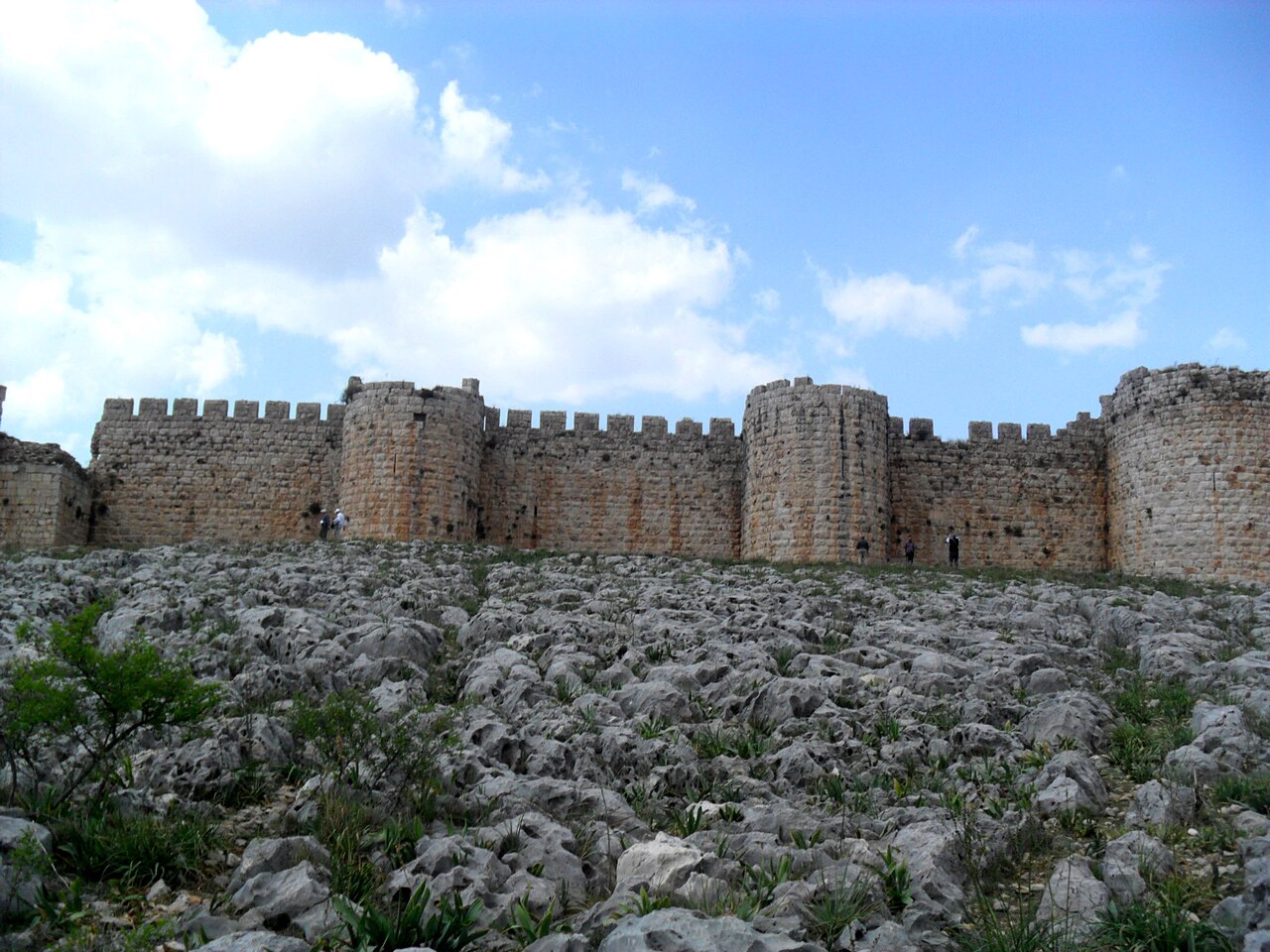
Bucak Castle, locally known as Bucak Kalesi, is a medieval fortress perched on a gently sloping hilltop in the hamlet of Bucak, within Turkey's Adana province. This castle occupies a strategic position in the historic region of Cilicia, an area notable for its Armenian kingdom that flourished from the late 11th century until the late 14th century. Despite its modest size, Bucak Castle played an important defensive role, overseeing key routes connecting the Taurus Mountains to the Cilician plains.

Historical context and significance

The castle was constructed during the high medieval period, most likely in the 11th century, coinciding with the rise of the Armenian Kingdom of Cilicia. This kingdom was established by Armenian refugees fleeing Seljuk invasions, and it became a significant political and military power in the region. Bucak Castle was part of a network of fortifications built by the Armenians to secure their territory against external threats such as the Seljuks, Crusaders, and later the Mamluks.

While the exact medieval name of Bucak Castle remains unknown, its architectural features and location strongly suggest Armenian origins. The castle functioned primarily as a small garrison fort, tasked with guarding the southern exit of a mountain route descending from Vahka Castle (also known as Vahga), an important stronghold of the Rubenid dynasty, which ruled the Armenian Kingdom of Cilicia.

Bucak Castle's strategic position enabled it to maintain intervisibility with other key fortresses such as Anavarza Castle and Amuda Castle. This line of sight was crucial for communication and early warning systems across the rugged terrain of Cilicia.

Architectural features and layout

The castle is built on the summit of a hill at the southern edge of the Taurus Mountains, taking advantage of the natural elevation for defense. The terrain is rocky and uneven, which, combined with the castle's compact design, made it a formidable obstacle for attackers despite its relatively small size.

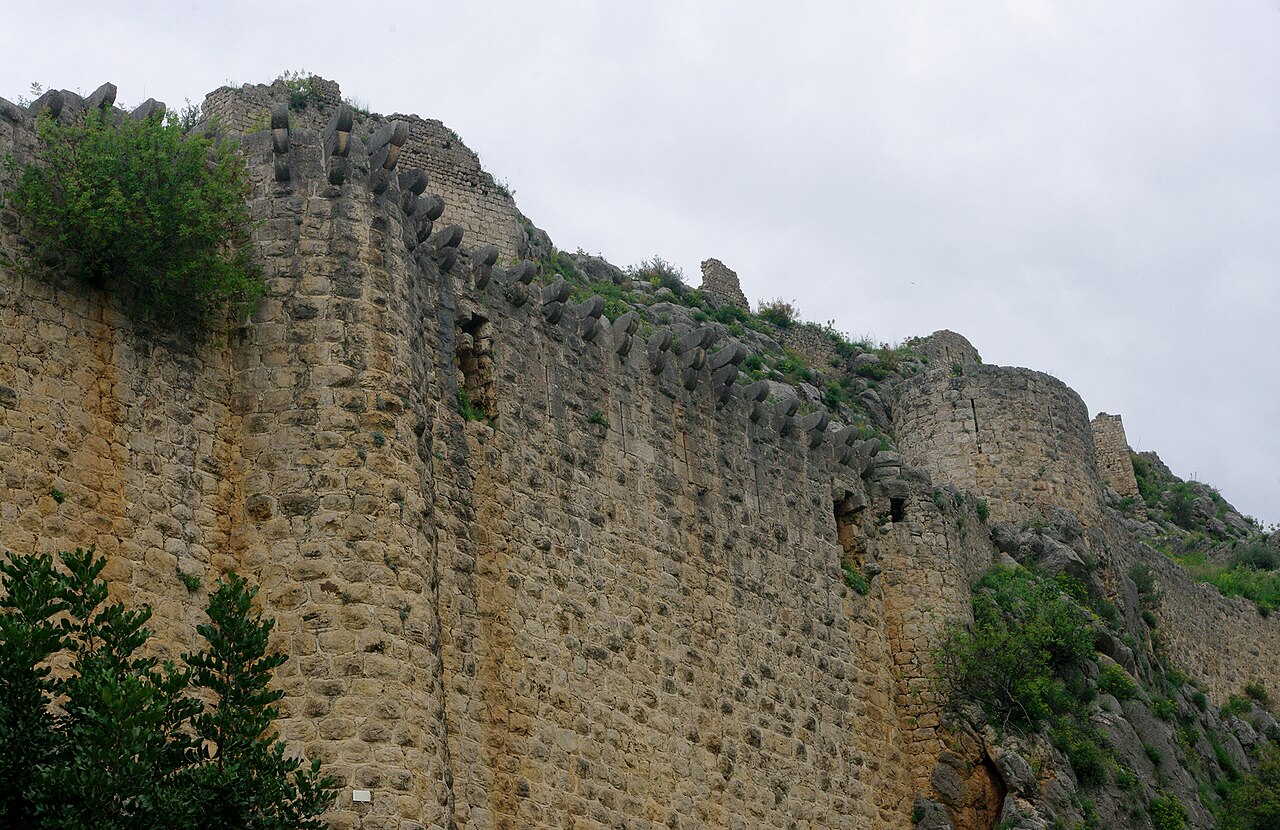
Although detailed architectural plans are scarce, the remains indicate typical Armenian military construction of the period, featuring thick stone walls adapted to the hill's contours. The entrance is located at the southeast corner, but due to the terrain, visitors typically approach from the northwest. The castle likely included basic defensive elements such as battlements and towers, though much of the superstructure has not survived intact.

Bucak Castle's position overlooking the route from Vahka Castle to the Cilician plains highlights its role in controlling movement and providing security for the Armenian kingdom's heartland.

Visiting Bucak Castle today

Currently, Bucak Castle is accessible to visitors and can be reached by a short hike of approximately 10 minutes over rocky terrain. The path requires some care due to the uneven ground and the presence of local wildlife, including wild turtles inhabiting the hill.

Visitors should note that while the entrance is on the southeast side, the practical approach is from the northwest due to the natural landscape. The castle offers scenic views of the surrounding Cilician plains and the Taurus Mountains, making it a rewarding destination for history enthusiasts and hikers alike.

Despite its modest size and partial ruinous condition, Bucak Castle remains a significant example of Armenian military architecture in Cilicia and a testament to the region's complex medieval history.

Frequently asked questions (FAQ)

How do I get to Bucak Castle?
Bucak Castle can be reached by a short hike of about 10 minutes over rocky terrain. Visitors typically approach from the northwest side, although the entrance is on the southeast corner.
What is the historical significance of Bucak Castle?
Bucak Castle was built in the 11th century as a small Armenian garrison fort guarding a key route from the Taurus Mountains to the Cilician plains during the Armenian Kingdom of Cilicia.
Is Bucak Castle open to visitors?
Yes, Bucak Castle is freely accessible to the public. Visitors should be prepared for a short hike over uneven ground and may encounter local wildlife such as wild turtles.
What architectural features does Bucak Castle have?
The castle features thick stone walls typical of Armenian military architecture of the high medieval period, built on a hilltop for strategic defense with battlements and towers likely present in its original form.
Can I see other castles from Bucak Castle?
Yes, Bucak Castle has intervisibility with Anavarza Castle and Amuda Castle, which allowed for communication and early warnings across the region during medieval times.

Information

Hill Castle

Address

Above Kale Sk., Turkey

Loading map...

Visitor reviews

No reviews yet. Been here? Write the first review and help other travelers!

Write the first review

Visited this castle? Share your experience

Your review helps other travelers and adds first-hand knowledge to our encyclopedia.
Write a review

(5/5)

0/2000 characters

Your review will be visible after admin approval

Nearby castles

10.6 km
Sis Castle — Turkey castle

Sis Castle

Kozan, Turkey

Sis Castle, also known as Kozan Castle, is a historic fortress located near the city of Kozan in the Adana Province of Turkey. Perched on a high rocky ridge of the Taurus Mountains, the castle occupies a strategic position on a narrow, elongated spur that extends for nearly 700 meters, spanning two peaks. This elevated location provided commanding views and clear intervisibility with other significant fortifications such as Anavarza Castle, Andil, Tumlu, and Yilan Castles, underscoring its military importance in controlling the surrounding region. The origins of Sis Castle date back to the early medieval period, specifically the 9th century, although there is no evidence of fortifications at the site prior to the Byzantine era. The earliest historical record involving Sis is from 704-705 AD when a small Greek settlement at the foot of the mountain successfully repelled an Arab attack with the assistance of the Byzantine emperor's brother, Heraclius. This settlement was likely protected by a fortified acropolis atop the ridge, which evolved into the castle structure known today. Byzantine and Abbasid control In the early 9th century, Sis became part of the fortified frontier zone of the Abbasid Caliphate. The Caliph Al-Mutawakkil undertook reconstruction of the existing Byzantine defenses in the mid-9th century, reinforcing the site's military capabilities. The castle changed hands several times; in 962 AD, the Byzantine army led by Nikephoros II Phokas recaptured Sis, reasserting Byzantine authority over the region. The Armenian kingdom and Sis as a royal capital In 1113, the castle and town were seized by Rubenid Baron Thoros I, marking the beginning of Armenian control. Shortly thereafter, the area suffered a devastating earthquake in 1114. Byzantine forces under Emperor John II Komnenos briefly retook Sis in 1137, but the Armenians reoccupied the castle before 1172. From 1177, Sis Castle became the royal residence of the Armenian Kingdom of Cilicia and the seat of the Armenian patriarchs. Between approximately 1180 and 1190, the administrative capital of the Armenian kingdom was transferred from Anavarza to Sis, elevating the castle's political significance. During the reigns of King Leo I and Hethum I (1187–1270), the castle underwent extensive military and ecclesiastical construction. Notably, Hethum I's wife, Zapel, founded a hospital within the castle grounds in 1241, reflecting the site's role as a center of governance and care. Architecture and fortifications The castle's layout follows the natural contours of the rocky spur, with an outer rampart enclosing two main sections and a total of 44 bastions. The inner castle is situated in the southern section, providing a final defensive stronghold. The fortress includes numerous vaulted utility chambers used for storage, reflecting its role as a self-sustaining military complex. Within the castle are the ruins of two Armenian chapels, likely dating from the 13th century. One chapel is located on the central spur, while the other is inside a semicircular tower on the east wall of the southeast bailey. These religious structures emphasize the castle's importance as a spiritual as well as political center. The main entrance features a vaulted corridor that may date from the Mamluk period (post-1375), bearing an Arabic inscription. Behind this is a simpler gateway, possibly the original Byzantine entrance. This layering of architectural elements illustrates the castle's complex history of occupation and reconstruction. Later history and decline From 1266 to 1375, Sis Castle and the Armenian capital endured repeated raids by the Mamluks and their Egyptian allies, suffering at least ten successful attacks. The city was further devastated by the bubonic plague in 1348. The last Armenian king, Leo V, was captured in the castle, marking the decline of Armenian rule. Despite the political turmoil, Sis remained the seat of the Armenian patriarchs from 1292 until 1873. However, the patriarch resided there permanently only from the 17th century, with a dedicated monastery established in 1734. The royal palace, once located just below the castle, was destroyed during the Mamluk siege of 1375; only two corner towers of its donjon survive. Visiting Sis Castle today Today, Sis Castle is freely accessible to visitors. While the ruins themselves may not be extensively preserved, the site offers spectacular views over the surrounding countryside and the city of Kozan below. The castle's strategic position and layered history make it a significant cultural and historical landmark in the region.

Early Medieval (5th–10th c.)
Details
21.4 km
Anavarza Castle — Turkey castle

Anavarza Castle

Near Dilekkaya Köyü Yolu, Turkey

Anavarza Castle, also known locally as Anavarza Kalesi, stands prominently on a 200-meter-high limestone outcrop near the village of Dilekkaya in the Adana province of Turkey. This imposing fortress commands a strategic position with clear intervisibility to other significant fortresses such as Yilan, Toprakkale, Amuda, Tumlu, and Sis castles. The castle overlooks the Sombaz Çay river, which flows along the eastern flank of the outcrop before joining the larger Ceyhan River. The western side of the outcrop is characterized by nearly vertical cliffs, beneath which lie the remains of the ancient city of Anazarbus. Early fortifications and ancient city of anazarbus The origins of Anavarza Castle trace back to the acropolis of the ancient city of Anazarbus. The city flourished during the 1st century AD as a prosperous urban center in the region. Over subsequent centuries, the city was renamed Justinopolis and later Justinianopolis, reflecting its importance within the Byzantine Empire. However, in the second half of the 7th century, the city suffered devastating raids during the Arab invasions, leading to its abandonment for a period. Abbasid refortification and early medieval conflicts The site was resettled during the Abbasid period, and in 796 AD, the Abbasid Caliph Harun al-Rashid undertook significant refortification efforts, including the construction of defensive works such as the nearby Haruniye Castle. Throughout the 9th century, the fortress endured multiple Byzantine raids, notably the destructive attack in 855 AD which necessitated reconstruction by Caliph al-Mutawakkil. Byzantine conquest and crusader occupation In 962 AD, the city was captured by the Byzantine Emperor Nikephoros II Phokas, who restored the fortress and stationed a Byzantine garrison. The castle later fell to the armies of the First Crusade in late 1097 or early 1098 and was incorporated into the Principality of Antioch under Bohemond I. Armenian cilicia and architectural developments By around 1110, the castle was seized by Thoros I, Lord of Armenian Cilicia and a member of the Rubenid dynasty. After a devastating earthquake in 1114, the castle was rebuilt. In 1137, it was besieged for 37 days and captured by the Byzantine Emperor John II Komnenos during his campaign to reassert Byzantine control over Cilicia. Ownership of the castle fluctuated between the Armenians and Byzantines in the following decades. Final armenian possession and administrative role By the late 12th century, Anavarza Castle was firmly under Armenian control, serving as the administrative center of the Armenian Kingdom of Cilicia. The keep was repaired around 1187-1188 by King Leo I of Armenia. Shortly thereafter, the kingdom's administrative center was relocated north to Sis Castle. Mamluk raids and later history The castle faced its first raids by the Mamluks in the 1270s. The Armenians were expelled permanently in 1374, after which a Mamluk garrison occupied the fortress through much of the 15th century. Architectural layout and features Anavarza Castle is characterized by its two baileys: a large rectangular outer bailey to the south and a smaller, narrower inner bailey to the north. The entrance to the inner bailey is protected by a square keep situated at the narrowest part of the limestone outcrop, a strategic defensive position. The castle's natural defenses are enhanced by the steep cliffs on the western side and the river on the eastern side, making it a formidable stronghold. Surrounding ancient city and archaeological significance Beneath the western cliffs lie the ruins of the ancient city of Anazarbus, which, though largely destroyed, provide valuable archaeological insights into the region's history. The proximity of the castle to these ruins underscores its strategic and administrative importance throughout antiquity and the medieval period. Modern access and visitor information Today, Anavarza Castle is freely accessible to visitors and offers a captivating glimpse into the layered history of Cilicia. The castle ruins, perched in a spectacular location, are highly recommended for those interested in medieval fortifications and Armenian heritage. Visitors can also explore the nearby archaeological site of Anazarbus, enriching the experience with a broader understanding of the area's historical context. With its commanding views, rich history spanning from the Roman era through the Byzantine, Armenian, and Mamluk periods, Anavarza Castle remains a significant cultural landmark in southern Turkey.

Early Medieval (5th–10th c.)
Details
26.7 km

Ağzıkaraca Castle

East of the road between Ağzıkaraca and Tepecikören, Turkey

Ağzıkaraca Castle, locally known as Ağzıkaraca Kalesi, is located on a flat hill northwest of the hamlet sharing its name in the Adana province of Turkey. The castle occupies a strategic position in the historic region of Cilicia, an area renowned for its complex history and cultural exchanges, particularly during the medieval period when it served as the territory of the Armenian Kingdom of Cilicia from the late 11th century until the late 14th century. Despite its location within this historically Armenian-influenced region, Ağzıkaraca Castle itself does not exhibit architectural features typical of Armenian fortifications, suggesting a different origin. The castle's exact medieval name and detailed history remain unknown, a common situation for many fortifications in this region due to the passage of time and limited contemporary documentation. Historical context and origins Archaeological and architectural evidence suggests that Ağzıkaraca Castle may have origins extending back to the Late Roman or Early Byzantine periods, potentially placing its initial construction in the 4th or 5th century AD. This would make the castle one of the older fortifications in the Cilicia region, predating the Armenian Kingdom's control. The castle's location offers intervisibility with the nearby Sis Castle, the historic capital of the Armenian Kingdom of Cilicia, indicating its possible strategic importance in controlling local routes or serving as a lookout point. Architectural features and layout The castle is situated on a flat hill, which is somewhat unusual as many castles in the region are built on more rugged terrain or rocky outcrops. The remains primarily consist of the foundations of the circuit walls, with some sections of the walls still standing. These walls once enclosed the castle's interior, which contained various structures now lost to time. Within the castle grounds, numerous circular holes are cut into the bedrock. These holes, some covered by lids in the past, have uncertain functions. They may have served as cisterns for water storage, essential for sustaining occupants during sieges or dry seasons, or as rock-cut graves, a funerary practice seen in other ancient sites of the region. The presence of cisterns would align with typical defensive architecture designed to support prolonged habitation. Archaeological finds at the site include shards of ceramics and traces of former buildings, cisterns, and graves carved into the rock. These remains provide clues to the castle's use and the daily lives of its occupants, though the lack of extensive excavation limits detailed understanding. Current condition and accessibility Today, Ağzıkaraca Castle is largely in ruins, with most of its stonework removed over time by local inhabitants who repurposed the materials for their own construction needs. What remains are the foundational walls and a few standing wall sections, alongside the rock-cut features scattered across the plateau. The site is covered by abundant vegetation, which can obscure some features and pose challenges for visitors exploring the area. The castle can be visited freely, but reaching it requires some walking through fields where crops and plants may grow over a meter high during certain seasons. This makes the approach somewhat difficult, and visitors should exercise caution when navigating the terrain. Significance and research potential While Ağzıkaraca Castle is not as architecturally prominent or well-documented as other castles in Cilicia, it holds value as a potentially early medieval fortification with connections to the broader historical landscape of the region. Its possible Late Roman or Early Byzantine origins provide a link to the transitional period before the rise of the Armenian Kingdom of Cilicia. Further archaeological investigation could shed light on the castle's precise historical role, construction phases, and relationship with nearby fortifications like Sis Castle. The site's rock-cut graves and cisterns also present opportunities to understand the cultural practices and defensive strategies employed by its occupants. Visitors interested in medieval architecture and the layered history of Cilicia may find Ağzıkaraca Castle a modest but intriguing site, offering a glimpse into the region's complex past and the endurance of its ancient monuments despite centuries of change.

High Medieval (11th–13th c.)
Details