Anaktoropolis
Anaktoropolis is a notable Byzantine fortress located near Nea Peramos in the municipality of Megalopolis, Greece. This hill castle stands on the site of the ancient city of Oisyme, reflecting the strategic military and administrative concerns of the Byzantine Empire in the region of Eastern Macedonia. Its long history spans from the early medieval period through the late Byzantine era, illustrating the evolution of fortification techniques and the shifting political landscape of the area.
The fortress's origins date back to between the 6th and 9th centuries, marking its establishment in the early medieval period. Initially known as Alektryopolis, the settlement gained ecclesiastical importance by the 10th century, serving as a bishopric under the Archbishopric of Philippi. The presence of a bishop named Georgios is attested by an 11th-century lead seal, indicating sustained religious activity within the fortress walls.
Historical evolution and political significance
Throughout the 11th century, the fortress's name evolved through various forms such as Alektoroupolis and Anaktoroupolis, reflecting the linguistic and administrative changes of the period. The fortress underwent significant repairs during the 12th and 13th centuries, underscoring its continued military and administrative relevance in the Byzantine defensive network.
In the 14th century, the fortress gained renewed prominence under the name Eleftheroupolis. During this period, Emperor Andronikos III Palaiologos initiated extensive renovations of the fortress walls, enhancing its defensive capabilities. Control of the fortress shifted from Alexios Apokaukos to two brothers from Velikani, Alexios and Ioannis, who established a semi-autonomous principality. Their activities, including piracy, contributed to regional instability.
The fortress's Byzantine control ended between 1383 and 1387 when Ottoman forces captured and destroyed Eleftheroupolis. Despite this devastation, the bishopric is still mentioned in records from the late 15th century, indicating a lingering ecclesiastical presence even after the fortress's military decline.
Architectural features and defensive structures
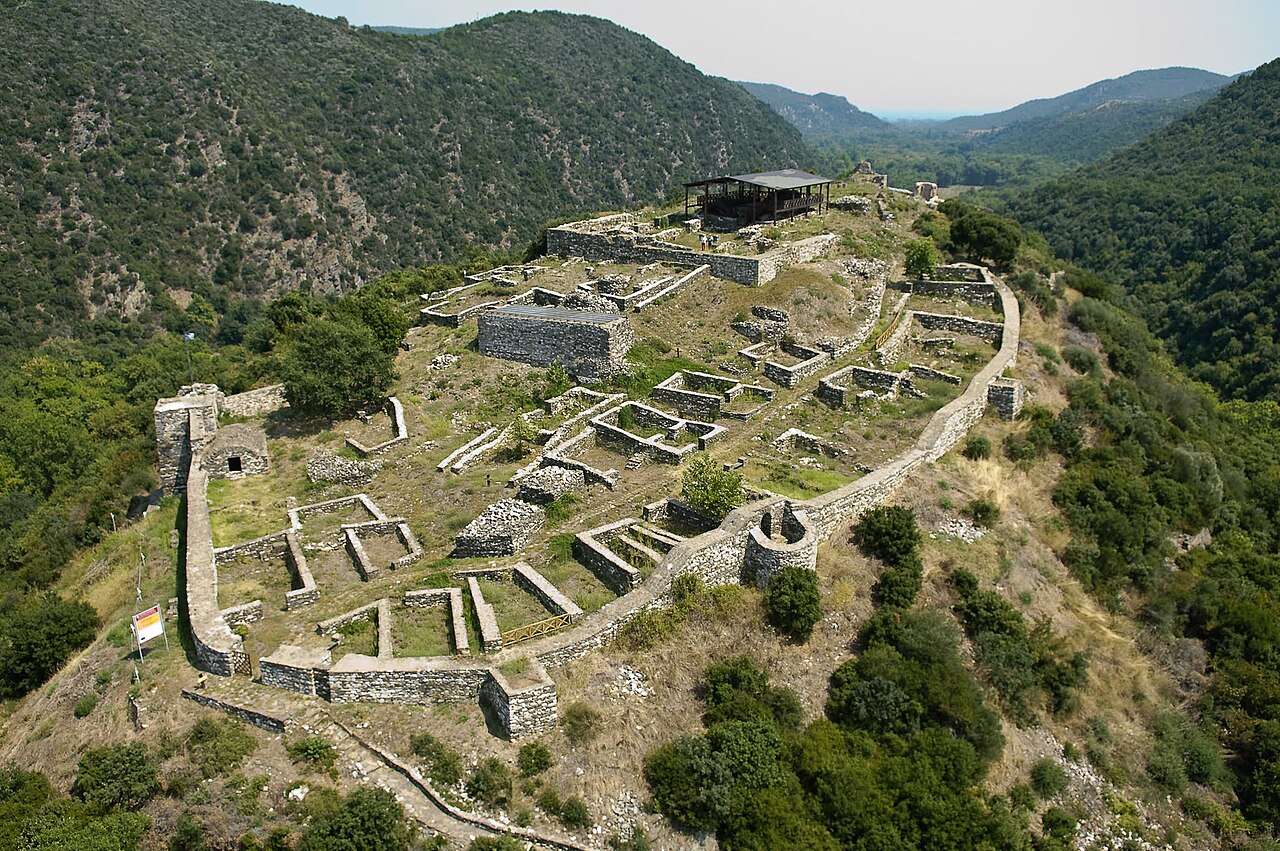
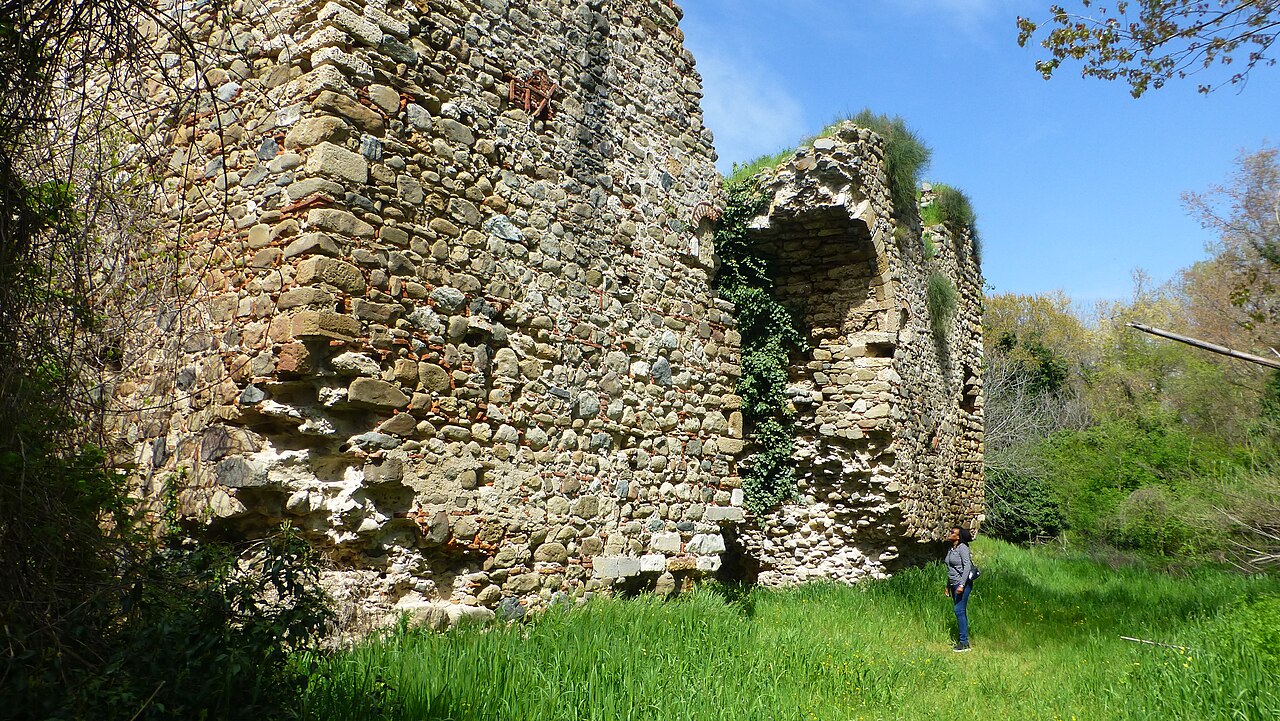
Anaktoropolis fortress is situated on the northern slope of a low hill overlooking Eleftheres Bay, enclosing an area of approximately 1.55 hectares. The defensive walls, constructed mainly of stone, extend nearly 650 meters and form an irregular enclosure about 150 meters long north to south and 100 meters wide east to west. The walls are roughly two meters thick and originally rose between six and eight and a half meters in height.
The fortress is fortified with thirteen towers of varying shapes—rectangular, round, and polygonal—strategically placed closer together where the land approach was more accessible. Tower heights range from 7.5 to 9.5 meters, with the largest tower located at the southeast corner reaching 11.5 meters. This tower provided a commanding defensive position.
Additional fortifications include a lower outer wall on the eastern side, designed to reinforce the more vulnerable flank. The fortress has three confirmed gates: a main gate on the western face, a northern gate providing access toward the harbor, and a smaller southern gate near the large southeastern tower. Scholars speculate an eastern gate once existed, though it has not been definitively located.
Interior structures and religious sites
Within the fortress walls, archaeological remains reveal the presence of religious buildings. Foundations of a small chapel have been uncovered in the southeast section, indicating ongoing Christian worship. Near the western gate, a well was discovered, essential for water supply during sieges. Additionally, four column capitals from a cross-domed church have been found, believed to belong to the bishop's cathedral, although no other structural elements of this church survive in situ.
External features and harbor facilities
Outside the fortress to the west lie the remains of the settlement's cemetery, providing evidence of continued habitation near the defensive enclosure. To the north, the harbor was protected by a mole—a stone pier extending into the sea—facilitating maritime trade and military movements. Remnants of this mole remain visible underwater, highlighting the fortress's connection to coastal activities.
Inscriptions and archaeological discoveries
An important historical artifact is a brick inscription embedded in the southern outer wall. Composed of flat, elongated bricks arranged to form letters, the inscription is badly damaged, leaving its full content unclear. Scholarly debate dates it either to the late 12th century (1167–1170) or to 1340 during the reign of Andronikos III, based on references to the eighth indiction year, a Byzantine dating system.
Archaeological excavations conducted between 1974 and 1983 revealed significant details about the fortress layout and structures. In 1989, a small chapel was uncovered, adding to the understanding of the site's religious function. More recent restoration efforts from 2011 to 2015 focused on stabilizing the ruins, reconstructing approximately 1,250 cubic meters of masonry, and installing modern infrastructure such as electrical wiring, lighting, water supply, and fire protection to support ongoing archaeological research and preservation.
Modern history and preservation efforts
In the 20th century, the fortress ruins were repurposed for military use during World War I, with Bulgarian troops establishing artillery positions nearby. Following the war, in 1922, Greek refugees from Asia Minor sought shelter within the remains and used materials from the fortress to construct new homes, reflecting the site's ongoing significance to local communities.
Today, Anaktoropolis stands as a well-preserved example of a Byzantine hill castle with extensive fortifications and rich historical layers. Its architectural features, including the robust walls, diverse towers, and religious structures, provide valuable insights into Byzantine military architecture and regional history. The site continues to be a focus for archaeological study and cultural heritage preservation, attracting scholars and visitors interested in Byzantine history and medieval fortifications.
Frequently asked questions (FAQ)
- How do I get to Anaktoropolis from Nea Peramos?
- Anaktoropolis is easily accessible from Nea Peramos by car or public transport. If driving, follow the main roads leading to the castle, which is well-signposted. Public buses also connect Nea Peramos to nearby towns, making it convenient for visitors.
- What is the historical significance of Anaktoropolis?
- Anaktoropolis is an important archaeological site that dates back to the ancient Greek civilization. It was believed to be a ceremonial center and showcases the architectural prowess of the time. The ruins provide insights into the social and political dynamics of ancient Greece.
- When was Anaktoropolis built?
- Anaktoropolis was constructed during the late Bronze Age, around the 15th century BC. It served as a significant hub for the Minoan civilization and continued to be inhabited through various historical periods. The castle's architecture reflects the cultural influences of the era.
- Can I enter the castle grounds?
- Yes, visitors can enter the grounds of Anaktoropolis to explore the ruins and enjoy the scenic views. However, certain areas may have restricted access for preservation purposes. It’s advisable to follow the guidelines provided by the site management.
- Why is Anaktoropolis an architectural marvel?
- Anaktoropolis is considered an architectural marvel due to its intricate design and impressive stonework that has withstood the test of time. The layout of the castle reflects advanced engineering techniques and offers a glimpse into the sophisticated urban planning of ancient societies. Visitors can admire the remaining structures and envision the grandeur of its original form.
- Is it possible to take guided tours of Anaktoropolis?
- Yes, guided tours are available and are highly recommended for a deeper understanding of the site's history and significance. Knowledgeable guides provide valuable insights and anecdotes that enhance the visitor experience. Check the official website for tour schedules and availability.
- What are the opening hours for Anaktoropolis?
- Anaktoropolis is typically open to visitors from 9 AM to 5 PM during the peak tourist season. Hours may vary during the off-season, so it’s best to check in advance. Plan your visit accordingly to make the most of your time exploring the site.
- What are the ticket prices for Anaktoropolis?
- Ticket prices for Anaktoropolis are generally affordable, with discounts available for students and seniors. Children under a certain age may enter for free. It’s advisable to purchase tickets at the entrance or through the official website to avoid long lines.
- When is the best time to visit Anaktoropolis?
- The best time to visit Anaktoropolis is during the spring and fall months when the weather is mild and crowds are smaller. This allows for a more comfortable exploration of the site. Summer can be very hot, so early morning visits are recommended if visiting during this season.
- Are there any nearby attractions to visit along with Anaktoropolis?
- Yes, there are several nearby attractions, including the stunning beaches of Nea Peramos and the historic town of Kavala. Visitors can also explore local tavernas and shops that offer a taste of Greek culture. Combining these sites with your visit to Anaktoropolis makes for a fulfilling day of exploration.
Information
Website
Visit websiteSources & official resources
Verify the information above using these authoritative references.
Loading map...
Visitor reviews
No reviews yet. Been here? Write the first review and help other travelers!
Write the first reviewVisited this castle? Share your experience
Your review helps other travelers and adds first-hand knowledge to our encyclopedia.