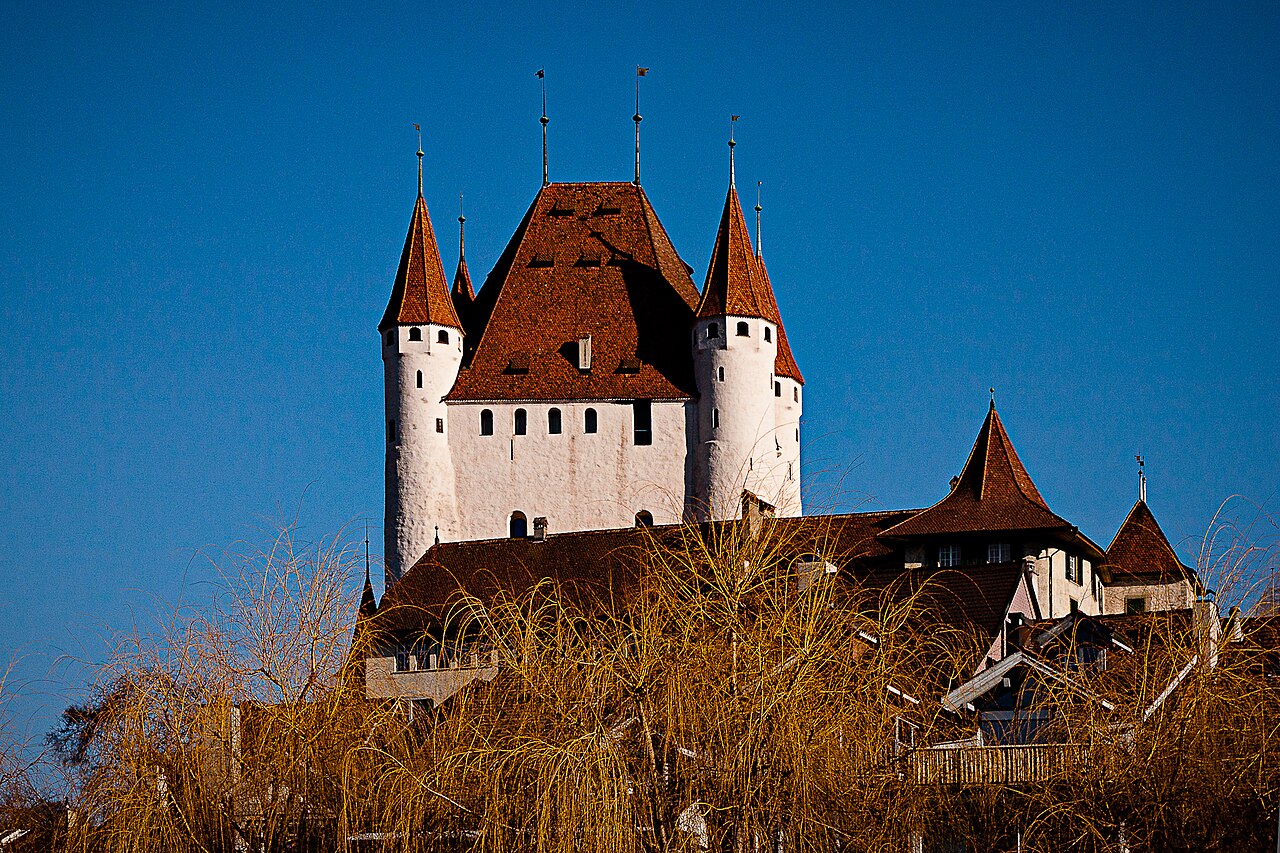
Amsoldingen Castle
Amsoldingen Castle, located in the village of Amsoldingen in Switzerland, is a significant example of early medieval architecture, dating back to the 10th century AD. Originally constructed as the residence for the wealthy provost of the collegiate church of Amsoldingen, the castle reflects the intertwined history of religious and secular power in medieval Europe. The castle and the neighboring ecclesiastical buildings were part of a complex that symbolized the influence of the church in the region.
Historical background and ownership
The castle was initially built to house the provost overseeing the collegiate church dedicated to St. Mauritius. Over time, both the provost and the church experienced a decline in wealth and influence. By 1484, ownership of the castle transferred to St. Vincent's cathedral in Bern, marking a shift from local ecclesiastical control to a more centralized authority. Shortly thereafter, in 1496, the college of canons in Bern sold the castle and its surrounding lands to the prosperous merchant Barthlome May. This transition from ecclesiastical to private ownership illustrates the changing socio-economic landscape of the late medieval period.
In 1536, Barthlome's grandson, Sulpitius May, sold the castle, after which it passed through several owners. By the late 17th century, the castle was owned by Samuel Bodmer, an engineer and surveyor. Bodmer resided in the castle between 1711 and 1724 while designing an extensive flood control system for the area around Thun Lake and the Aare River. This project was crucial for protecting local villages and farmland from flooding, highlighting the castle's role beyond a mere residence.
Throughout the 18th and early 19th centuries, the castle belonged to the Luternau family, who enhanced the estate by developing parks around the castle grounds. The property changed hands multiple times in the early 19th century, passing from Ludwig Zeerleder to Alfred de Rougemont von Bonstetten, and then to Beat Ludwig Tscharner von Erlach. Under von Erlach's ownership, the castle underwent significant renovations in 1846, adopting a neo-Gothic architectural style that reflected the 19th-century romantic revival of medieval forms.
Architectural features and renovations
The castle's original construction in the 10th century corresponds with the Ottonian period of architecture, characterized by the use of stone and robust, fortress-like structures. The castle was built to serve both residential and defensive purposes, typical of early medieval hill castles in the region. The building materials included stone scavenged from the ruins of Aventicum, the ancient Roman city nearby, linking the site to earlier historical layers.
The neo-Gothic renovation in the mid-19th century introduced stylistic elements such as pointed arches, decorative battlements, and ornate windows, transforming the castle's medieval silhouette into a romanticized version of a Gothic fortress. This restoration was part of a broader European trend during the 19th century that sought to revive medieval architectural forms, often with a focus on aesthetic appeal rather than strict historical accuracy.
St. Mauritius collegiate church: history and architecture
The castle is closely associated with the neighboring collegiate church of St. Mauritius, which shares a similarly ancient origin. The first church on the site was constructed in the 6th century in an early Romanesque style. The current church dates from the 10th century and is an example of Ottonian three-aisle church architecture. It was built on the foundations of the earlier church using stone from Aventicum.
According to tradition, the church's endowment or stift was founded in the 10th century by King Rudolph II of Burgundy. It was one of twelve churches established around Lake Thun, marking an important ecclesiastical network in the region. The church is first mentioned in written records in 1228.
Significant modifications occurred around 1210, including the construction of a crypt and renovation of the south aisle. The interior was richly decorated with murals by around 1300, including a notable painting of Saint Christopher on the north wall that remains visible today. Between 1345 and 1486, a Romanesque bell tower was added after the demolition of the southern apse.
Over the centuries, the church's fortunes waned, culminating in its dissolution as a collegiate church in 1484 when it was incorporated into the newly created St. Vincent's cathedral stift in Bern. It then became the parish church for Amsoldingen. The Protestant Reformation reached the area in 1528, after which the church served a Protestant congregation.
The church suffered fire damage in 1576, leading to major renovations including a new roof and the raising of the main apse. A new pulpit was installed in 1577, and the oldest of the four bells currently in the tower was hung in 1579. The wooden ceiling dates from the mid-17th century, and a mural depicting the Last Supper was painted in 1668.
Landscape and surroundings
The castle's grounds were enhanced during the 18th and early 19th centuries with the creation of parks and landscaped gardens, particularly under the ownership of the Luternau family. These gardens complemented the castle's architectural presence and reflected changing tastes in estate design during this period.
The castle is situated near Lake Thun and the Aare River, key geographic features that influenced its historical significance. The flood control works designed by Samuel Bodmer in the early 18th century highlight the strategic importance of controlling water in this region.
Current status and cultural significance
Today, Amsoldingen Castle stands as a well-preserved monument reflecting multiple phases of architectural and historical development from the early medieval period through the 19th century neo-Gothic revival. Its close connection to the collegiate church of St. Mauritius adds to its cultural and religious significance in the region.
The castle and church are important heritage sites that illustrate the evolution of ecclesiastical and secular power in medieval Switzerland. Their architectural features, historical associations with notable figures such as King Rudolph II and Samuel Bodmer, and the artistic elements within the church make them valuable destinations for scholars and visitors interested in medieval history, architecture, and Swiss cultural heritage.
Frequently asked questions (FAQ)
- How do I visit Amsoldingen Castle and the collegiate church?
- Amsoldingen Castle and the collegiate church of St. Mauritius are located in the village of Amsoldingen, Bern. Visitors can explore the exterior grounds and church; check local tourism websites for opening hours and guided tours.
- What is the historical significance of Amsoldingen Castle?
- Amsoldingen Castle was built in the 10th century as the residence of the provost of the collegiate church, reflecting early medieval ecclesiastical power and later noble ownership.
- When was the castle renovated in neo-Gothic style?
- The castle underwent a significant neo-Gothic renovation in 1846 under the ownership of Beat Ludwig Tscharner von Erlach, incorporating romantic revival architectural elements.
- Can I see medieval murals inside the collegiate church?
- Yes, the collegiate church of St. Mauritius features murals dating back to around 1300, including a well-preserved painting of Saint Christopher on the north wall.
- Is the castle accessible to the public?
- The castle is privately owned and not generally open for interior tours, but the church and surrounding grounds can be visited by the public.
Information
Current owner
Private owner
Loading map...
Visitor reviews
No reviews yet. Been here? Write the first review and help other travelers!
Write the first reviewVisited this castle? Share your experience
Your review helps other travelers and adds first-hand knowledge to our encyclopedia.