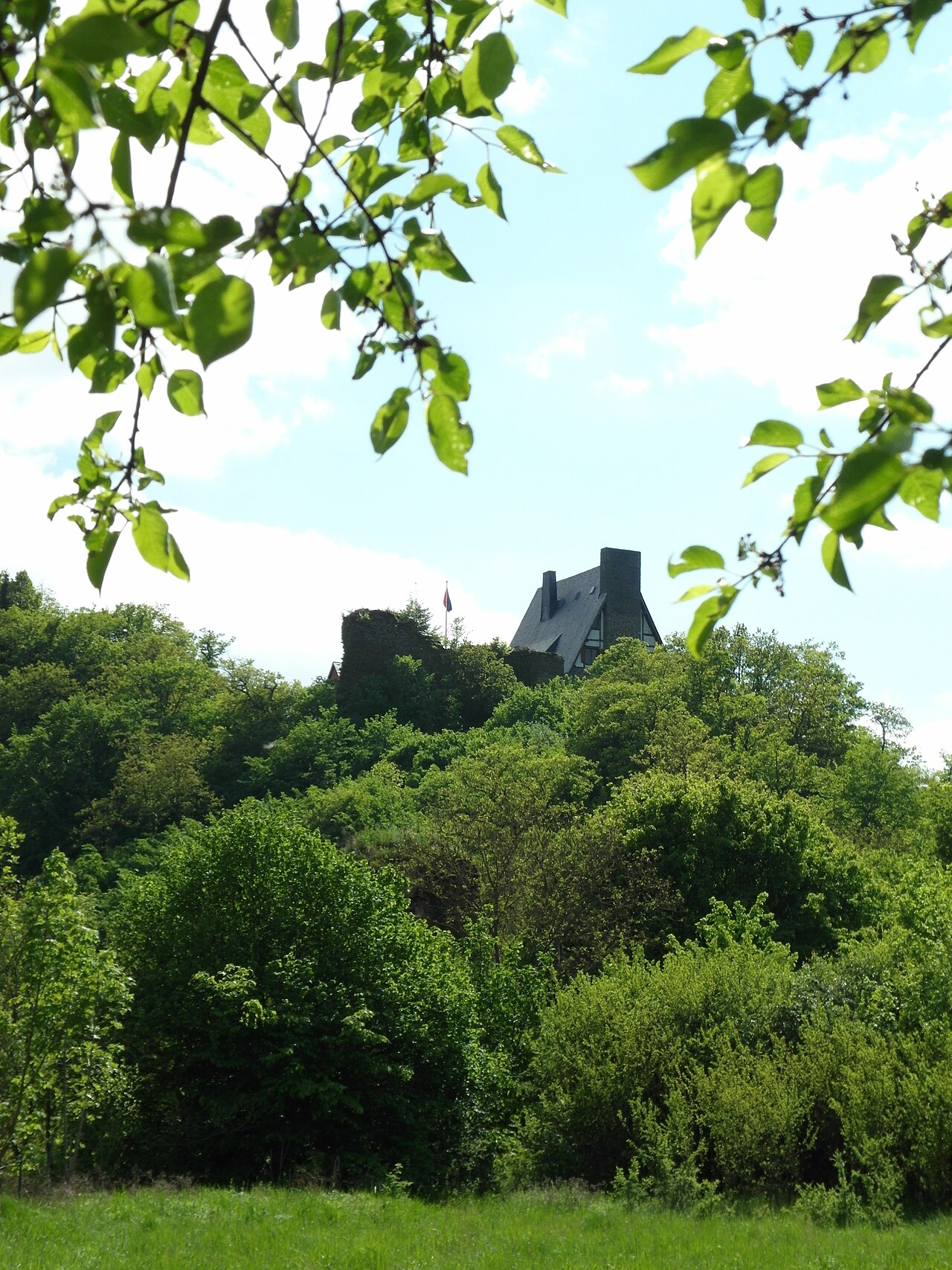
Altensteig Castle
Altensteig Castle is a significant medieval fortress located in the town of Altensteig in Baden-Württemberg, Germany. Its origins trace back to the 12th century, making it a noteworthy example of high medieval castle architecture in the region. The castle's strategic position and robust construction reflect its historical role as a defensive stronghold and administrative center through several centuries of changing territorial control.
Early history and ownership transitions
The castle was first documented in 1287 when it was under the ownership of the Counts of Hohenberg. This initial mention situates Altensteig Castle firmly within the feudal landscape of medieval Germany. In a notable episode of territorial conflict, Hermann, the son of Margrave Rudolf of Baden, conquered Altensteig but was compelled to return it to Count Burkhard von Hohenberg in 1288, underscoring the contested nature of the region during this period.
By 1398, the Hohenberg family sold the Lordship of Altensteig to the Margraves of Baden. Under Baden’s control, Altensteig Castle became the seat of the Baden bailiffs, marking its transition from a noble residence to an administrative hub. This shift highlights the castle’s evolving function in governance and regional administration.
Architectural features and structural evolution
The castle's most prominent feature is its residential tower, which measures approximately 11 by 16 meters at its base and is constructed from durable sandstone masonry. Architectural analysis suggests that the lower portion of this tower dates from the 12th to 13th centuries, consistent with the original construction period of the castle. This tower originally contained six floors, which accommodated a variety of essential functions including cellars, a great hall, kitchen, living quarters, and servant quarters.
One of the castle’s most notable interior spaces is the Knight's Hall, located on the second floor of the main tower. This large hall was likely used for gatherings, ceremonies, and administrative purposes, reflecting the social and political importance of the castle’s occupants.
In the 15th century, it is believed that an Alemannic timber-framed building was added to the existing stone structure, indicating a phase of expansion and adaptation to changing residential needs. This combination of stone and timber framing illustrates the castle's architectural evolution over several centuries.
Fortifications and defensive elements
The northern side of Altensteig Castle was fortified with a defensive wall featuring battlements and two towers. These towers served a dual purpose: they fortified the castle and also functioned as prisons. The western tower, known as the "Heaven" tower, was equipped with barred windows that allowed guards to monitor the surroundings. In contrast, the eastern tower, called the "Hell" tower, contained a deep dungeon approximately 15 meters underground, used for detaining prisoners under harsh conditions.
The castle’s fortifications were integrated with the town’s city wall, creating a cohesive defensive system that protected both the castle and the adjacent settlement. This integration underscores Altensteig Castle’s role not only as a noble residence but also as a critical element of the town’s military defense.
Transition to württemberg rule and later developments
In 1603, Altensteig came under the control of the Duchy of Württemberg as part of a territorial exchange, marking another significant shift in its governance. Shortly after, from 1605 onwards, the renowned architect Heinrich Schickhardt was commissioned to construct the New Castle in Altensteig. This new building served as the administrative and residential seat for the Württemberg bailiffs, reflecting the modernization of the castle complex and the administrative needs of the duchy.
Following this development, the original Altensteig Castle gradually lost its primary residential function. By the 18th century, the old castle was repurposed as a grain silo, demonstrating a shift from military and administrative uses to more utilitarian agricultural functions. Despite this change, the castle’s medieval structures have remained largely intact, preserving its historical fabric.
Historical significance and preservation status
Altensteig Castle stands as a well-preserved example of a high medieval hill castle with significant architectural and historical value. Its combination of sandstone masonry, timber framing, and defensive fortifications offers insight into the construction techniques and defensive strategies of the period. The castle’s continuous use and adaptation over the centuries reflect the evolving political and social landscape of southwestern Germany.
Today, Altensteig Castle is recognized for its architectural heritage and serves as a cultural landmark within the region. Its preservation allows visitors and scholars to explore a tangible link to the medieval past and the complex history of territorial power in the German states.
Frequently asked questions (FAQ)
- How do I get to Altensteig Castle?
- Altensteig Castle is conveniently located in Altensteig, Germany, and can be reached by car or public transportation. If you are driving, there are parking facilities nearby. For those using public transport, check local bus schedules that connect to Altensteig.
- What is the historical significance of Altensteig Castle?
- Altensteig Castle dates back to the 13th century and served as a stronghold for the local nobility. It played a crucial role in the region's defense during various conflicts throughout the Middle Ages. Today, it stands as a testament to the architectural and historical heritage of the area.
- When was Altensteig Castle built?
- Altensteig Castle was constructed in the early 13th century, around the year 1240. Over the centuries, it underwent several renovations and expansions, reflecting the architectural styles of different eras. Its historical layers make it an intriguing site for visitors interested in medieval history.
- Can I take guided tours of Altensteig Castle?
- Yes, guided tours are available for visitors who wish to learn more about the castle's history and architecture. Tours are typically offered during the peak season and can provide a deeper understanding of the castle's significance. It's advisable to check the schedule in advance and book your spot.
- Why is Altensteig Castle a popular tourist attraction?
- Altensteig Castle is popular due to its rich history, stunning views of the surrounding landscape, and well-preserved architecture. Visitors appreciate the opportunity to explore the castle grounds and learn about its past. Its picturesque setting also makes it a favorite for photography enthusiasts.
- Is it possible to visit Altensteig Castle with accessibility needs?
- Altensteig Castle offers some accessibility features, but visitors should be aware that the castle is located on elevated terrain with uneven surfaces. It is recommended to check in advance for specific accessibility options and to contact the visitor center for assistance. Planning ahead can help ensure a more comfortable visit.
- What are the opening hours for Altensteig Castle?
- Altensteig Castle is typically open to visitors from April to October, with varying hours depending on the season. During peak tourist months, the castle may have extended hours. It's best to consult the official website for the most current opening hours before your visit.
- What are the ticket prices for Altensteig Castle?
- Ticket prices for Altensteig Castle are generally affordable, with discounts available for students and seniors. Family tickets are also offered, making it a great destination for all ages. Be sure to check the official website for the latest pricing information and any special offers.
- What are some nearby attractions to Altensteig Castle?
- Nearby attractions include the charming town of Altensteig itself, with its historic buildings and local shops. The beautiful Black Forest region offers numerous hiking trails and scenic views, making it an excellent complement to your castle visit. Don’t miss the opportunity to explore the local culture and natural beauty in the area.
Information
Loading map...
Visitor reviews
No reviews yet. Been here? Write the first review and help other travelers!
Write the first reviewVisited this castle? Share your experience
Your review helps other travelers and adds first-hand knowledge to our encyclopedia.