Alsunga
Alsunga Castle stands as a remarkable testament to the medieval and early modern history of Latvia. Located in the municipality of Alsunga, this castle originated as a fortified stronghold of the Livonian Order in the 14th century and evolved through centuries into a Baroque residence reflecting the region's dynamic cultural and political changes. The castle's strategic position on a small hill by the Kauliņa River allowed it to control vital trade routes between Prussia and Livonia, making it an important military and economic center during the Late Medieval period.
The earliest historical records connected to the site date back to 1230-1231, referencing a treaty involving the indigenous Curonian tribe and the papal legate Baldwin von Alma. This agreement marked the beginning of Christian influence in a region previously dominated by Baltic pagan cultures. By the mid-14th century, the Livonian Order had established a fortified residence known as Alschwangen, which was first documented in 1341. The transition from a wooden stronghold to a stone fortress was completed in 1372, when a substantial stone castle was constructed featuring a square courtyard enclosed by thick stone walls.
Medieval architecture and fortifications
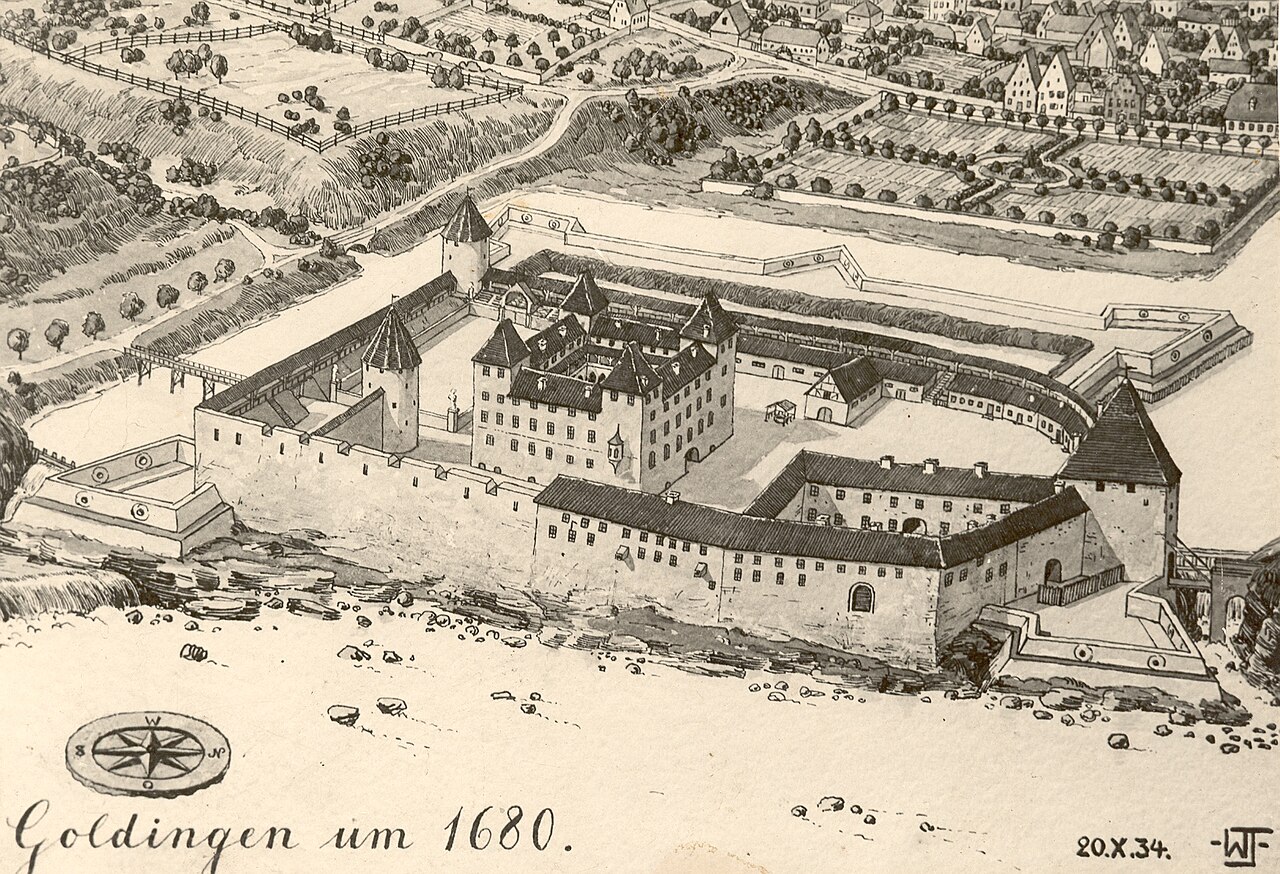
The original castle design included a quadrangular courtyard approximately 65 by 60 meters in size, surrounded by stone walls. Two main wings formed the core of the structure: the eastern wing served as the residential quarters, likely housing a chapel, while the southern wing was dedicated to economic and service functions. This layout was typical of Livonian Order castles, combining military defense with administrative and domestic needs.
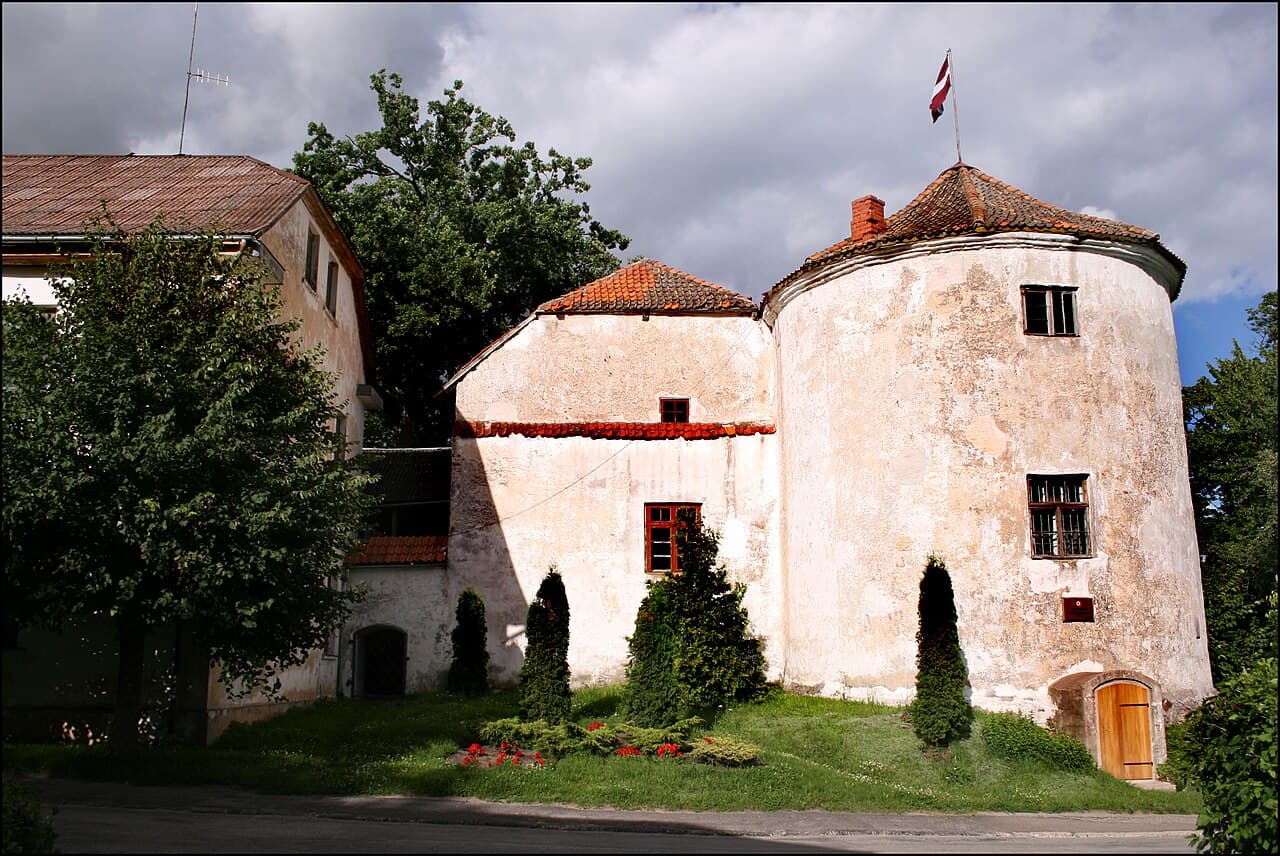
Significant defensive enhancements were made around the turn of the 15th century, including the addition of a round cannon tower at the northeastern corner. This tower was specifically designed to accommodate the emerging use of gunpowder artillery, reflecting advances in military technology. In the 16th century, a second round tower was constructed at the southwestern corner, further strengthening the castle's defenses. These towers featured thick masonry walls capable of withstanding cannon fire and remain among the best-preserved elements of the castle today.
Strategic role and military history
Alsunga Castle's location on a hill provided commanding views of the surrounding landscape and control over a key route connecting the Baltic interior with the coast. During its early history, the castle served as a military outpost for the Livonian Order, overseeing the region and protecting travelers. Its large courtyard suggests it also functioned as a refuge for local populations during times of conflict.
The castle experienced damage during the Polish-Swedish wars in the 17th century, reflecting the turbulent political landscape of the Baltic region. Despite destruction, the fortress was rebuilt and adapted to new uses, transitioning from a purely military installation to a noble residence.
Transformation into a baroque residence
Following the secularization of the Livonian Order in 1561, Alsunga Castle became part of the newly formed Duchy of Courland and Semigallia. It was no longer a military fortress but a noble estate. Ownership passed through several families, including the von Kanitz and von Schwerin families, who influenced the castle's cultural and religious character.
In 1623, the marriage of Count Johann Ulrich von Schwerin to Barbara Konarska introduced Catholicism to the predominantly Protestant region, leading to the arrival of Jesuit missionaries and the establishment of the unique Suiti community, known for its distinctive cultural heritage. This religious shift is a notable aspect of the castle's history and regional identity.
In 1741, the castle underwent significant remodeling in the Baroque architectural style, reflecting contemporary tastes and the castle's new role as a noble residence rather than a fortress. The Baroque transformation included the addition of a second floor in later centuries, as well as interior renovations to accommodate administrative and residential functions. The castle's two towers, originally defensive, were integrated into the Baroque design, enhancing its imposing silhouette.
Later uses and preservation
During the 18th and 19th centuries, Alsunga Castle served as the administrative center of the Alsunga estate under the Dukes of Courland and Semigallia. In the 20th century, following Latvia's independence and land reforms, the castle was repurposed for civic uses. In 1925, it housed a dairy operation, and in 1939, a second floor was added to accommodate a local school, marking a shift from aristocratic residence to community institution.
Today, Alsunga Castle is restored and well-preserved, maintaining much of its historical form. Key architectural features such as the vaulted chambers in the northeastern wing, the robust cannon towers, and the original stone walls survive, providing valuable insight into medieval military architecture and the castle's evolution over time. The castle also hosts the Alsunga Administrative District Council, a museum, and a tourist information center, making it a cultural hub for visitors interested in Latvian history and heritage.
Architectural details and cultural significance
Alsunga Castle exemplifies the transition from medieval fortress architecture to early modern noble residence. Its stone quadrangle layout with defensive towers is characteristic of Late Medieval Livonian castles. The integration of gunpowder artillery defenses in the form of round cannon towers illustrates the adaptation to changing military technologies in the 15th and 16th centuries.
The castle's later Baroque modifications reflect broader European architectural trends and the changing social functions of such estates. The preservation of both medieval and Baroque elements offers a unique opportunity to study architectural evolution in the Baltic region.
Moreover, the castle's connection to the Suiti community highlights its cultural importance beyond architecture and military history. This community's enduring traditions, language, and religious practices contribute to Latvia's diverse cultural landscape, with Alsunga Castle serving as a focal point of this heritage.
Visitor experience and accessibility
Visitors to Alsunga Castle can explore the well-preserved stone walls, towers, and vaulted chambers, gaining insight into the castle's defensive and residential functions. The museum housed within the castle offers exhibits on local history, the Livonian Order, and the Suiti culture.
The castle's location in the picturesque Latvian countryside, near the Kauliņa River, provides a scenic setting for cultural tourism. Its role as a local administrative center ensures it remains accessible and maintained, welcoming tourists interested in medieval architecture, Baltic history, and regional traditions.
Alsunga Castle stands as a significant cultural monument, embodying centuries of Latvian history from medieval times through the Baroque period to the modern era. Its preservation and continued use underscore the importance of safeguarding historical sites that connect present-day communities with their rich past.
Frequently asked questions (FAQ)
- How do I get to Alsunga Castle?
- Alsunga Castle is located in the charming village of Alsunga, Latvia. Visitors can reach the castle by car or use public transportation from nearby cities, with the closest bus stops just a short walk away from the site.
- What is the historical significance of Alsunga Castle?
- Alsunga Castle, built in the late 19th century, is notable for its unique architectural style that reflects the local heritage. It has served various purposes over the years, including as a private residence and a cultural site, making it an important landmark in Latvian history.
- When was Alsunga Castle constructed?
- Construction of Alsunga Castle began in the 1880s and was completed in the early 1890s. This period marked a significant development in the region, showcasing the prosperity of the local gentry during that era.
- Can I take guided tours of Alsunga Castle?
- Yes, guided tours of Alsunga Castle are available, allowing visitors to explore its rich history and architectural features. It's recommended to book in advance, especially during peak tourist seasons, to ensure a spot on the tour.
- Why is Alsunga Castle a popular tourist destination?
- Alsunga Castle attracts visitors for its stunning architecture and picturesque surroundings. The castle also hosts various cultural events and exhibitions throughout the year, enhancing its appeal as a destination for both history enthusiasts and casual tourists.
- Is it possible to visit Alsunga Castle year-round?
- Yes, Alsunga Castle is open to visitors year-round, though specific opening hours may vary seasonally. It's advisable to check the official website or contact the castle for the most up-to-date information on visiting hours.
- What are the ticket prices for visiting Alsunga Castle?
- Ticket prices for Alsunga Castle are quite reasonable, typically ranging from a few euros for adults to discounted rates for children and seniors. Group discounts may also be available, making it an affordable excursion for families and larger parties.
- What is the best time to visit Alsunga Castle?
- The best time to visit Alsunga Castle is during the spring and summer months when the gardens are in full bloom, and outdoor events are more frequent. However, autumn also offers a beautiful backdrop with vibrant foliage, making it a lovely time for sightseeing.
- Are there nearby attractions to visit when at Alsunga Castle?
- Yes, the area surrounding Alsunga Castle is rich in attractions, including scenic nature trails and other historical sites. Visitors can explore the local culture, enjoy outdoor activities, and discover charming villages nearby to enhance their experience.
Photo gallery

Information
Website
Visit websiteSources & official resources
Verify the information above using these authoritative references.
Loading map...
Visitor reviews
No reviews yet. Been here? Write the first review and help other travelers!
Write the first reviewVisited this castle? Share your experience
Your review helps other travelers and adds first-hand knowledge to our encyclopedia.