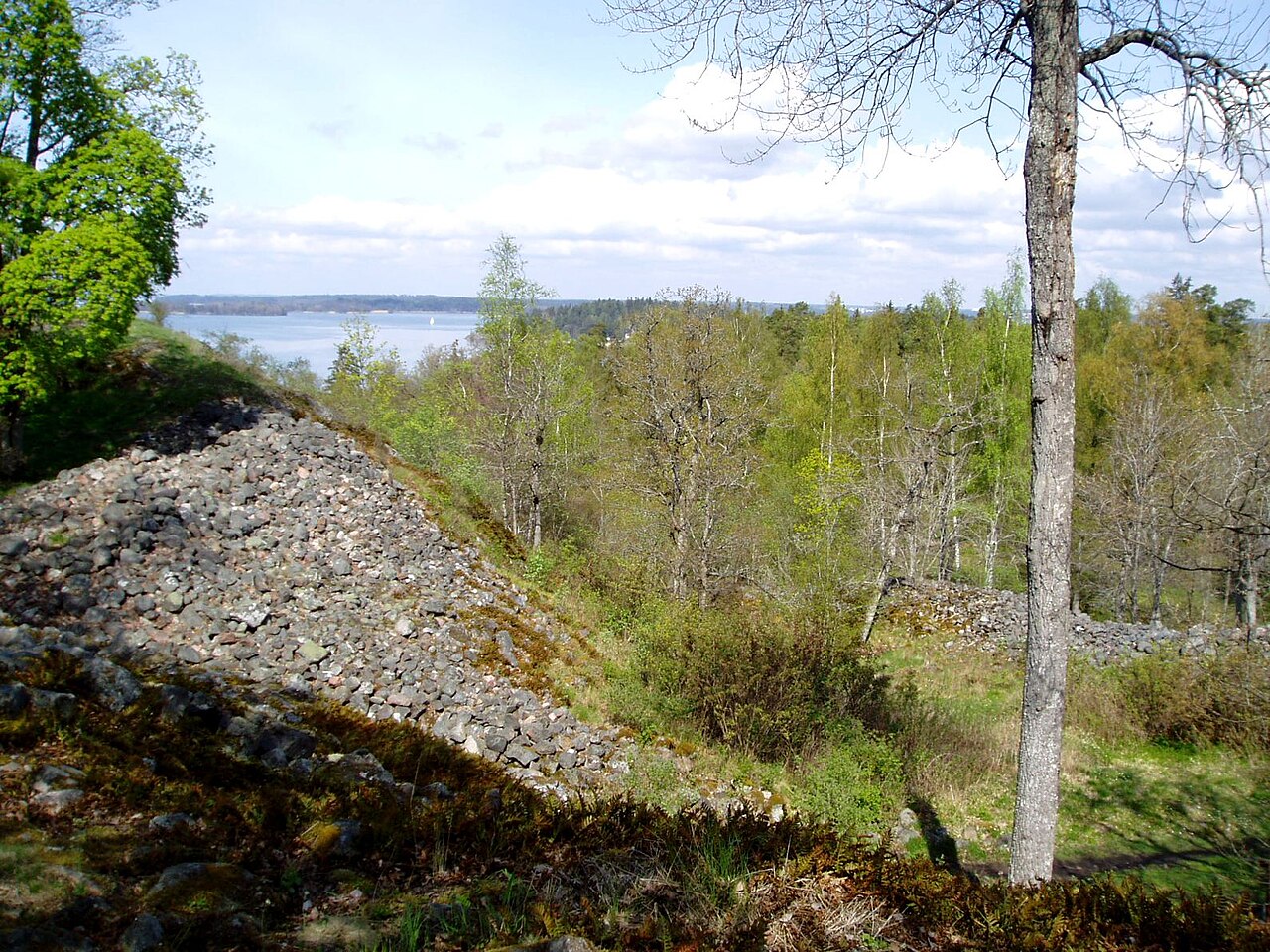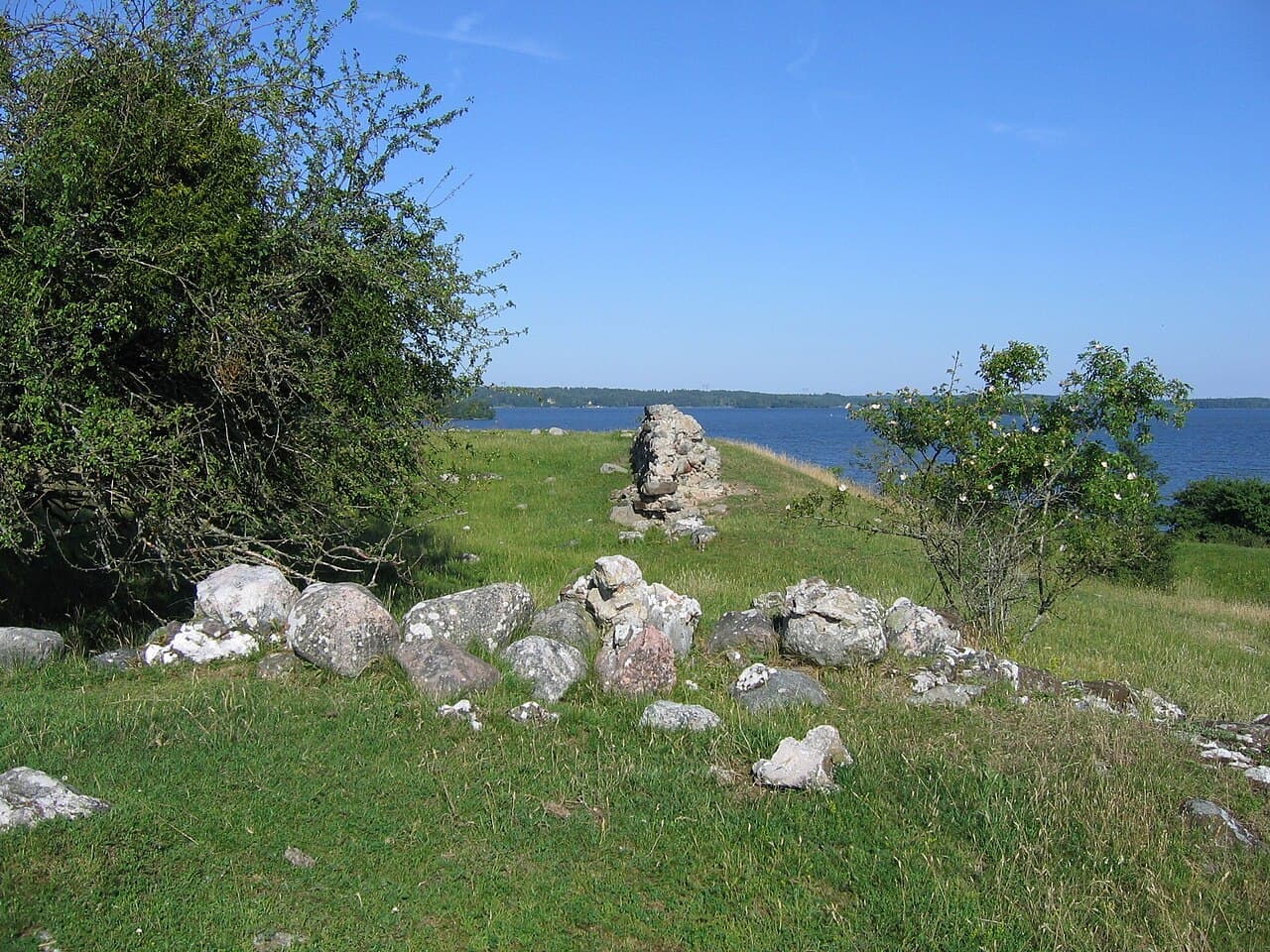
Alsnö hus, also known as "Alsnö House," is a significant archaeological ruin located on the island of Adelsö in Lake Mälaren, central-eastern Sweden. This site is part of the historically rich Hovgården settlement and forms a key component of the Birka and Hovgården UNESCO World Heritage Site. The ruins represent the remains of a 13th-century medieval palace that played a crucial role in Sweden's early royal history during the High Medieval period.
Historical context and significance
The construction of Alsnö hus dates back to the 13th century, a time when the Swedish monarchy was consolidating its power and establishing royal residences to assert control over the region. The palace served as a royal residence and administrative center, reflecting the growing influence of the Swedish crown. It is closely associated with the reign of King Magnus III of Sweden, who is believed to have used the palace during his rule.
The site is historically significant as it is linked to the enactment of the Alsnö stadga (Alsnö Ordinance) in 1279, a royal decree that laid the foundation for the Swedish nobility's privileges, including tax exemptions for knights. This legislation marked a pivotal moment in the development of Sweden's feudal system and aristocratic class, underscoring the political importance of Alsnö hus as a royal seat.
Architectural features and layout
The original structure of Alsnö hus was a stone-built palace typical of High Medieval architecture in Scandinavia. Although only ruins remain today, archaeological excavations have revealed the outlines of the palace's foundations, including walls, chambers, and possibly a great hall. The building was constructed using local stone materials, characteristic of the period's durable royal constructions.
The palace was strategically located on the island of Adelsö, offering a commanding view of Lake Mälaren and controlling important waterways. This location was vital for both defense and administration, as it allowed the monarchy to monitor trade routes and secure the surrounding region.
Defensive elements
While primarily a residence, Alsnö hus likely incorporated defensive features typical of medieval palaces, such as thick stone walls and limited access points, to protect against potential attacks. The proximity to water also provided a natural defensive barrier. However, as a palace rather than a fortress, its design emphasized royal prestige and administrative function over military strength.
Archaeological investigations and preservation
Excavations at Alsnö hus have been conducted intermittently since the early 20th century, uncovering valuable artifacts and structural remains that shed light on medieval Swedish royal life. These investigations have helped historians and archaeologists understand the layout, construction techniques, and usage of the palace.
Today, the site is preserved as archaeological ruins and is accessible to visitors interested in Sweden's medieval heritage. Interpretive signage and guided tours provide context about the palace's history, architecture, and its role within the broader Birka and Hovgården cultural landscape.
Cultural and heritage importance
Alsnö hus holds a prominent place in Sweden's cultural heritage as a symbol of medieval royal authority and the early development of the Swedish state. Its inclusion in the UNESCO World Heritage Site alongside Birka and Hovgården highlights its international significance.
The site attracts scholars, history enthusiasts, and tourists who seek to explore the origins of Swedish monarchy and medieval society. Its ruins offer a tangible connection to the political and social transformations of the 13th century, making Alsnö hus a valuable educational resource and a point of national pride.
Frequently asked questions (FAQ)
- What is Alsnö hus known for?
- Alsnö hus is renowned for its historical significance as one of Sweden's oldest royal residences, dating back to the late 13th century. It served as a royal hunting lodge and has deep ties to Swedish monarchy, making it a vital piece of Sweden's architectural and cultural heritage.
- When was Alsnö hus built?
- Alsnö hus was constructed in the late 13th century, with its foundation believed to be laid around 1280. The castle has undergone various renovations and restorations over the centuries, reflecting the architectural styles of different periods.
- Can I visit Alsnö hus?
- Yes, visitors are welcome to explore the grounds of Alsnö hus. However, access to the interior may be limited during certain times of the year, so it's best to check in advance for any guided tours or special events.
- What are the opening hours for Alsnö hus?
- Alsnö hus typically opens to the public from late spring through early autumn, with exact hours varying by season. It's advisable to check the official website or local tourism information for the most current opening times before planning your visit.
- Is it possible to get to Alsnö hus using public transportation?
- Yes, public transportation options are available to reach Alsnö hus, including local buses that connect to Adelsö. Visitors can also take a ferry from the mainland, making the journey to this historical site both scenic and accessible.
- What are the ticket prices for visiting Alsnö hus?
- Admission to Alsnö hus is generally free for the grounds, but there may be a fee for guided tours or special events. It's recommended to check the official website for the latest information on ticket prices and any available packages.
- When is the best time to visit Alsnö hus?
- The best time to visit Alsnö hus is during the late spring and summer months when the weather is pleasant, and the gardens are in full bloom. This season also offers more frequent guided tours and events, enhancing the visitor experience.
- What nearby attractions can I explore after visiting Alsnö hus?
- After visiting Alsnö hus, you can explore other nearby attractions, such as the beautiful Adelsö Church and the scenic nature trails of the island. Additionally, the nearby Björkö and Ekerö islands offer a rich history and stunning landscapes for further exploration.
- Is Alsnö hus accessible for visitors with disabilities?
- Alsnö hus strives to accommodate all visitors, including those with disabilities. While the grounds are generally accessible, it is advisable to contact the site in advance to confirm specific accessibility options and any assistance that may be required.

Information
Current owner
Swedish National Heritage Board
Loading map...
Visitor reviews
No reviews yet. Been here? Write the first review and help other travelers!
Write the first reviewVisited this castle? Share your experience
Your review helps other travelers and adds first-hand knowledge to our encyclopedia.