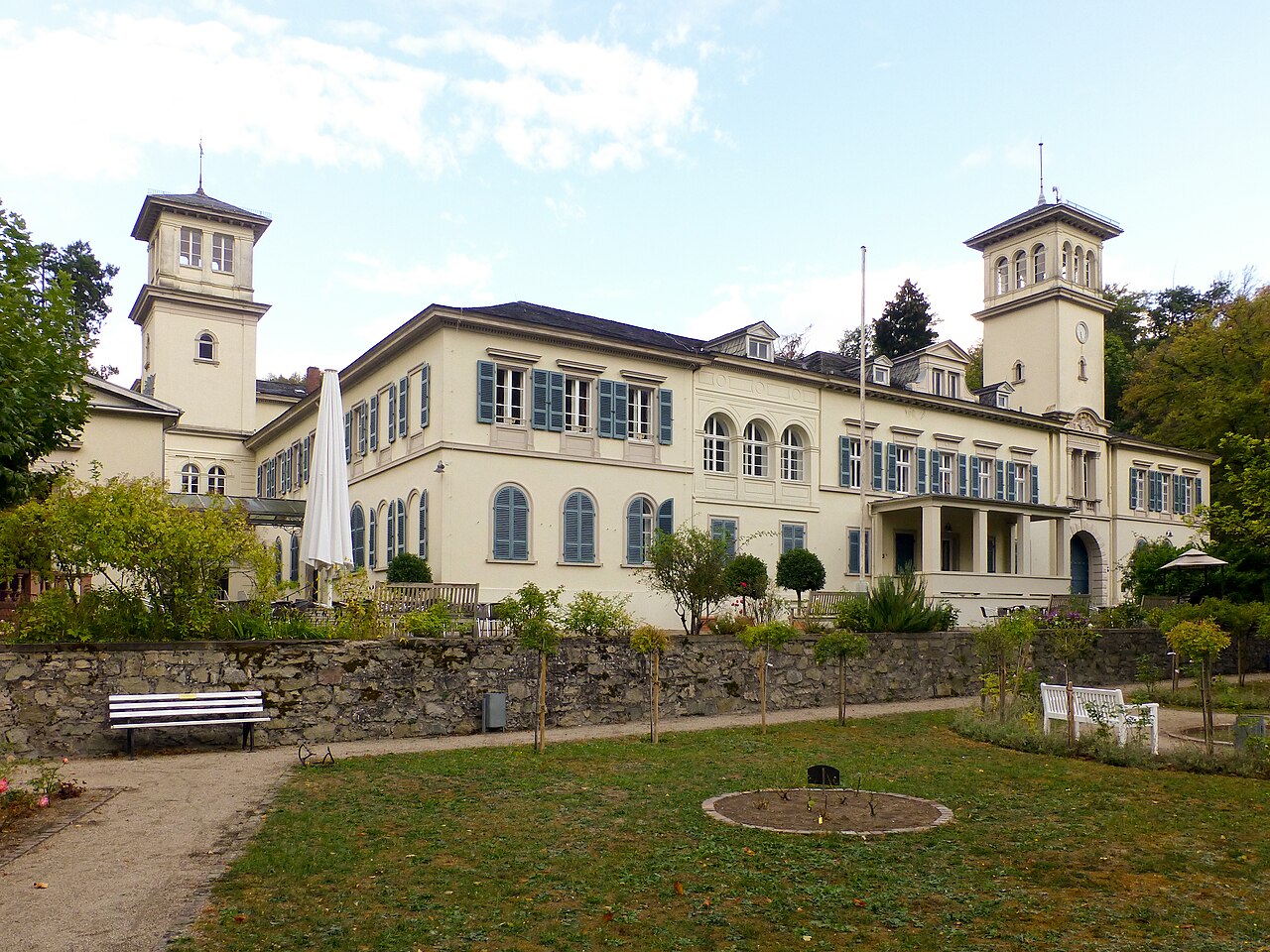
Burg Jossa
Burg Jossa is a medieval hilltop castle located near the municipality of Seeheim-Jugenheim in Germany. Constructed in the late 13th century, this fortress occupies a strategic position on the Dagsberg ridge, standing approximately 295 meters above sea level. The castle was built by the noble brothers Gebhard II and Giso IV von Jossa around 1290 to 1300, marking an important development in regional fortifications during the late medieval period.
Founding and historical significance
The castle's establishment is closely tied to the inheritance of the Amt Jossa jurisdiction, which included several villages and scattered lands. This inheritance came from their mother, Agnes von Bickenbach, daughter of Konrad II von Bickenbach. The brothers' construction of Burg Jossa served to consolidate their local authority and provide a defensible seat for their rule.
On August 4, 1312, Gebhard and Giso granted Burg Jossa as a fief to Archbishop Peter von Aspelt of Mainz. This arrangement stipulated that the castle remain accessible to the archbishop and that its lords either maintain neutrality or support Mainz in conflicts. This reflects the castle's role within the complex power dynamics of the ecclesiastical principality of Mainz and the broader political landscape of the Holy Roman Empire.
Following Gebhard II's death circa 1335, ownership began to shift. The Schenken family of Erbach gradually acquired the estate in parts, eventually gaining full ownership, although the fief technically remained under Mainz's control. This transition illustrates the fluid nature of territorial control among noble families during the late Middle Ages.
Architectural features and defensive structures
Burg Jossa is classified as a hill castle, strategically positioned on a ridge for natural defense. The castle complex was enclosed by a substantial earthwork and a roughly circular outer defensive wall approximately 270 meters long, enclosing an area of about 5,200 square meters. Within this boundary, the castle's core structures occupied roughly 910 square meters.
The site featured a prominent bergfried—a tall defensive tower with a diameter of 8.4 meters—serving as the primary stronghold and lookout point. The bergfried was complemented by a shield wall up to 3.75 meters thick, designed to absorb and deflect attacks. An additional internal wall extended from the bergfried into the courtyard, creating a layered defense that allowed defenders to retreat safely into the tower.
Residential and economic buildings were arranged within the enclosure: a residential building and an economic outbuilding stood on the western side, likely serving day-to-day functions such as storage and food preparation. On the eastern side, a stable accommodated horses or livestock, situated near the bergfried for protection.
The castle's natural defenses were enhanced by a neck ditch to the southeast—a wide trench about 50 meters across—separating the castle from the rest of the ridge. This ditch acted as a formidable obstacle to attackers, leveraging the natural topography to strengthen the fortress's security.
Decline and archaeological rediscovery
After the mid-14th century, Burg Jossa fell into decline. By around 1360, the castle began to deteriorate and was partially dismantled, with its stones repurposed for local building projects. By the 19th century, only ruins remained.
In 1848, an excavation led by Grand Duke Ludwig III of Hesse-Darmstadt uncovered various medieval artifacts, including storage pots, a horn, a small shield, nails, and a small sword. These finds confirmed the castle's military and domestic functions during its occupation. The excavated foundations were reburied by 1860, and the site was leveled to create a public gathering space, reflecting a shift in the site's use from military to communal.
Current state and visitor experience
Today, Burg Jossa exists primarily as an archaeological site with visible earthworks and remnants of the defensive ditch still discernible in the landscape. The robust earthworks outline the former boundaries of the castle, and hiking trails allow visitors to explore the site and appreciate the medieval fortification's scale and layout.
Although the original stone structures have mostly vanished, the surviving features provide valuable insight into the design and function of a late medieval hill castle in this region of Germany. The site's natural setting and historical significance make it a point of interest for those studying medieval architecture and regional history.
Regional context and historical importance
Burg Jossa's location near Seeheim-Jugenheim places it within the historical context of the Hessian region, an area marked by numerous medieval castles and noble estates. Its connection to the Archbishopric of Mainz situates it within the political and ecclesiastical struggles of the Holy Roman Empire during the 13th and 14th centuries.
The castle's construction and subsequent decline reflect broader trends in medieval fortification, where strategic hilltop sites were favored for defense but later abandoned as political and military circumstances evolved. Burg Jossa serves as a case study in the lifecycle of a regional noble stronghold, from its founding through its integration into larger territorial entities and eventual obsolescence.
Frequently asked questions (FAQ)
- How do I get to Burg Jossa?
- Burg Jossa is located near Seeheim-Jugenheim in Hesse, Germany. Visitors can reach the site by car or local public transport, followed by a hike along marked trails leading to the castle hill.
- What remains can I see at Burg Jossa?
- Visitors can observe the castle's earthworks, including the outer defensive wall and neck ditch. Although the stone structures are mostly gone, the bergfried's foundation and shield wall remnants are visible.
- When was Burg Jossa built and by whom?
- Burg Jossa was constructed between 1290 and 1300 by the brothers Gebhard II and Giso IV von Jossa, local nobles who inherited the Amt Jossa jurisdiction.
- Is Burg Jossa accessible year-round?
- The site is open year-round as it is an outdoor archaeological location. However, visitors should check local conditions and weather before planning a visit.
- Are there guided tours available at Burg Jossa?
- Currently, there are no regular guided tours at Burg Jossa. Visitors can explore the site independently using informational signs and hiking maps available in the area.
Information
Loading map...
Visitor reviews
No reviews yet. Been here? Write the first review and help other travelers!
Write the first reviewVisited this castle? Share your experience
Your review helps other travelers and adds first-hand knowledge to our encyclopedia.