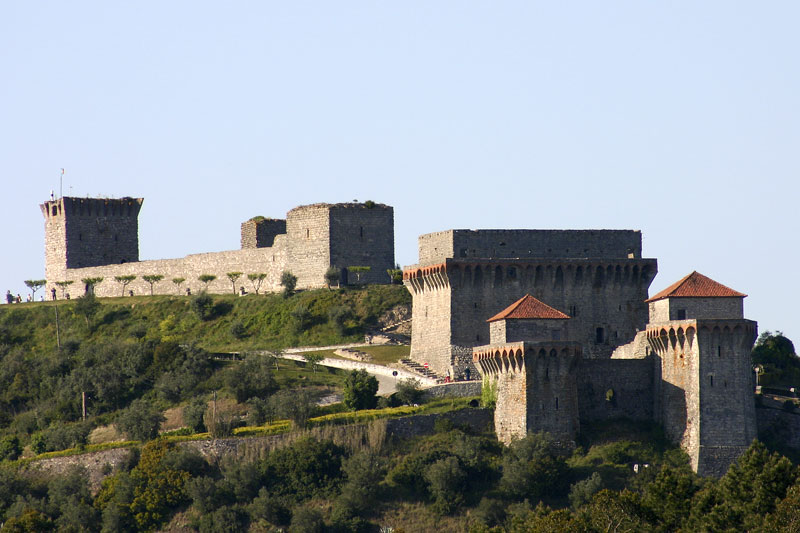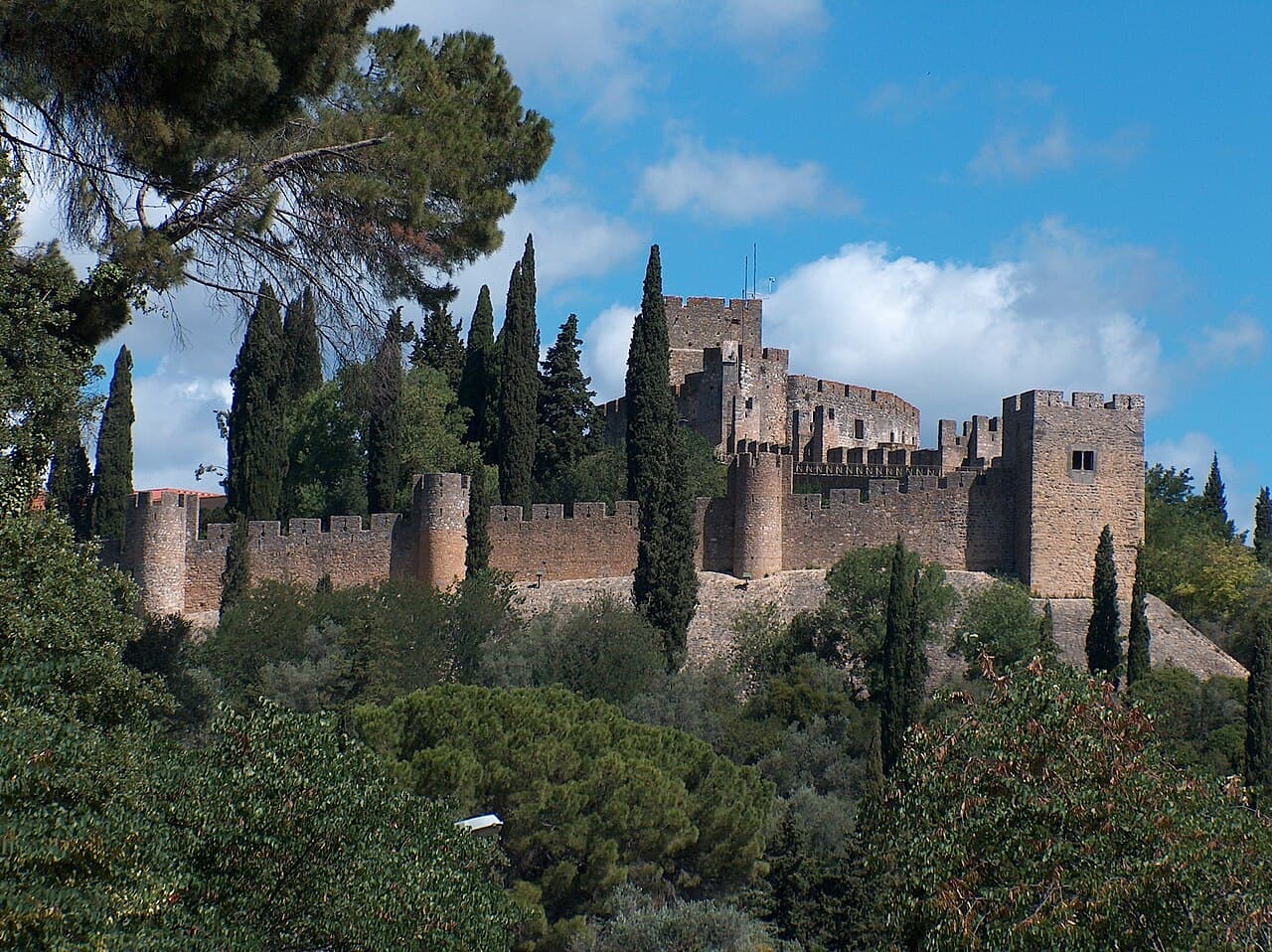
Tomar Castle
Tomar Castle, also known as Castelo de Tomar, is a remarkable medieval fortress located in the town of Tomar, in the Médio Tejo region of Portugal. Founded in the 12th century by the Knights Templar, the castle played a pivotal role in the military and religious history of Portugal during the High Medieval period. It stands as a testament to the strategic and architectural ingenuity of the Templars and later the Order of Christ, reflecting centuries of Portuguese history and culture.
The castle's origins trace back to the early efforts of the Knights Templar in the Iberian Peninsula, where they initially held the castles of Soure and Longrovia. After Soure Castle was destroyed in 1144 during a Muslim offensive, the Templars contributed to the capture of Santarém in 1147. As a reward, they were granted the ruined castle of Ceras in 1159, with the mission to rebuild and repopulate the area. However, the Templar Master in Portugal, Gualdim Pais, opted to construct a new fortress on a more strategically advantageous hill near the Nabão River, close to the ancient Roman settlement of Sellium. Construction began in March 1160, marking the establishment of Tomar Castle.
Architectural design and defensive innovations
Tomar Castle was designed with an irregular polygonal ground plan, featuring an inner castle with a keep and outer walls that enclosed the early intramural town and a parade ground. This layout was innovative for Portugal at the time, introducing defensive elements such as the battered base talus on the outer walls, which helped deflect projectiles and resist undermining, and the keep within the inner castle, a feature uncommon in Portuguese fortifications before this period.
The castle's position on a hill overlooking the Nabão River provided a commanding view of the surrounding plain, enhancing its defensive capabilities. The fortification was part of the Tagus Line, a series of castles including Abrantes, Almourol, Belver, and Torres Novas, established to defend against incursions by the Almohad Caliphate.
The blood gate and the 1190 siege
One of the castle's most dramatic historical episodes occurred in 1190 when the Almohad caliph Yaqub al-Mansur launched a major offensive during the Reconquista. After retaking the Algarve and advancing northward, the Almohads crossed the Tagus Line, besieging Santarém and capturing Abrantes and Torres Novas. They then laid siege to Tomar Castle for six days. Despite breaching one of the outer gates, fierce resistance from the Templar defenders prevented the castle's capture. The breached gate became known as the Blood Gate in memory of the intense fighting that took place there.
The convent of christ and later history
During the 13th century, the castle's defensive oratory and the round church in the northwest corner evolved into the Convent of Christ, a significant religious complex that expanded over the centuries. Following the dissolution of the Knights Templar in 1312, the castle and its lands were transferred to the Portuguese Crown. King Denis of Portugal founded the Order of Christ in 1319, which inherited the Templars' properties and made Tomar Castle its headquarters.
Subsequent monarchs, including King Manuel I and King John III, commissioned restorations and expansions of the castle and convent, particularly in the 16th century. These works led to the relocation of the intramural population to the town near the river. Over time, the castle's military significance waned, and it gradually fell into disuse, while the convent remained active until the 19th century and served as a military hospital in the 20th century.
Architectural features of the convent and castle
The Convent of Christ is renowned for its unique blend of architectural styles, including Romanesque, Gothic, Manueline, and Renaissance elements. The original round church, or Charola, is a rare example of Templar ecclesiastical architecture, inspired by the Church of the Holy Sepulchre in Jerusalem. The castle's walls, towers, and gates exhibit typical medieval military architecture, with later modifications reflecting Renaissance influences.
Preservation and visitor information
Today, Tomar Castle is classified as a National Monument and forms part of the UNESCO World Heritage Site that includes the Convent of Christ. The castle is well preserved, though the inner castle with the keep is not accessible to visitors. The surrounding town of Tomar offers additional historical attractions and amenities for tourists.
The castle grounds are open to the public during daytime hours, providing visitors with the opportunity to explore its imposing walls, gates, and courtyards. The Convent of Christ can be visited for a fee, offering access to its richly decorated chapels, cloisters, and museums. Together, the castle and convent offer a comprehensive glimpse into Portugal's medieval military and religious history.
Restoration efforts and historical significance
Restoration work has been carried out periodically, including significant projects in the 20th century to preserve the walls and structural integrity of the castle. These efforts have ensured that Tomar Castle remains a vital cultural and historical landmark, illustrating the legacy of the Knights Templar and the evolution of Portuguese fortifications.
Frequently asked questions (FAQ)
- What is the historical significance of Tomar Castle?
- Tomar Castle, built in the late 12th century, played a crucial role in the Reconquista and served as the headquarters for the Knights Templar in Portugal. Its strategic location and impressive architecture reflect the power and influence of the Templars during the Middle Ages, making it a key site for understanding Portugal's history.
- When was Tomar Castle built?
- Tomar Castle was founded in 1160 by the Knights Templar, and its construction continued over the following centuries. The castle's design evolved through various architectural styles, including Gothic and Manueline, showcasing the rich historical timeline of the site.
- What are the opening hours for Tomar Castle?
- Tomar Castle is generally open to visitors from 9:00 AM to 6:00 PM from April to September, and from 9:00 AM to 5:00 PM from October to March. It's advisable to check the official website for any seasonal changes or special closures before your visit.
- Can I take guided tours of Tomar Castle?
- Yes, guided tours are available and highly recommended to fully appreciate the history and architecture of Tomar Castle. Knowledgeable guides provide insights into the castle's significance and the stories behind its construction, enhancing your visit.
- Is it possible to access Tomar Castle with mobility issues?
- Tomar Castle has some areas that may be challenging for visitors with mobility issues due to uneven terrain and stairs. However, there are accessible routes available, and staff are generally helpful in providing assistance as needed.
- What is the best time to visit Tomar Castle?
- The best time to visit Tomar Castle is during the spring (April to June) and fall (September to October) when the weather is pleasant and the crowds are smaller. Visiting during these months allows for a more enjoyable experience exploring the castle and its surroundings.
- What are the ticket prices for visiting Tomar Castle?
- As of the latest information, ticket prices for Tomar Castle are typically around €6 for adults, with discounts available for seniors and students. Children under 12 usually enter for free, making it an affordable destination for families.
- What nearby attractions can I visit while in Tomar?
- While in Tomar, you can also explore the Convent of Christ, a UNESCO World Heritage site, renowned for its stunning architecture and historical significance. Additionally, the charming town of Tomar offers beautiful gardens, local shops, and traditional Portuguese cuisine, making it a delightful place to spend your day.
Photo gallery

Information
Address
Estr. do Convento, Portugal
Loading map...
Visitor reviews
No reviews yet. Been here? Write the first review and help other travelers!
Write the first reviewVisited this castle? Share your experience
Your review helps other travelers and adds first-hand knowledge to our encyclopedia.