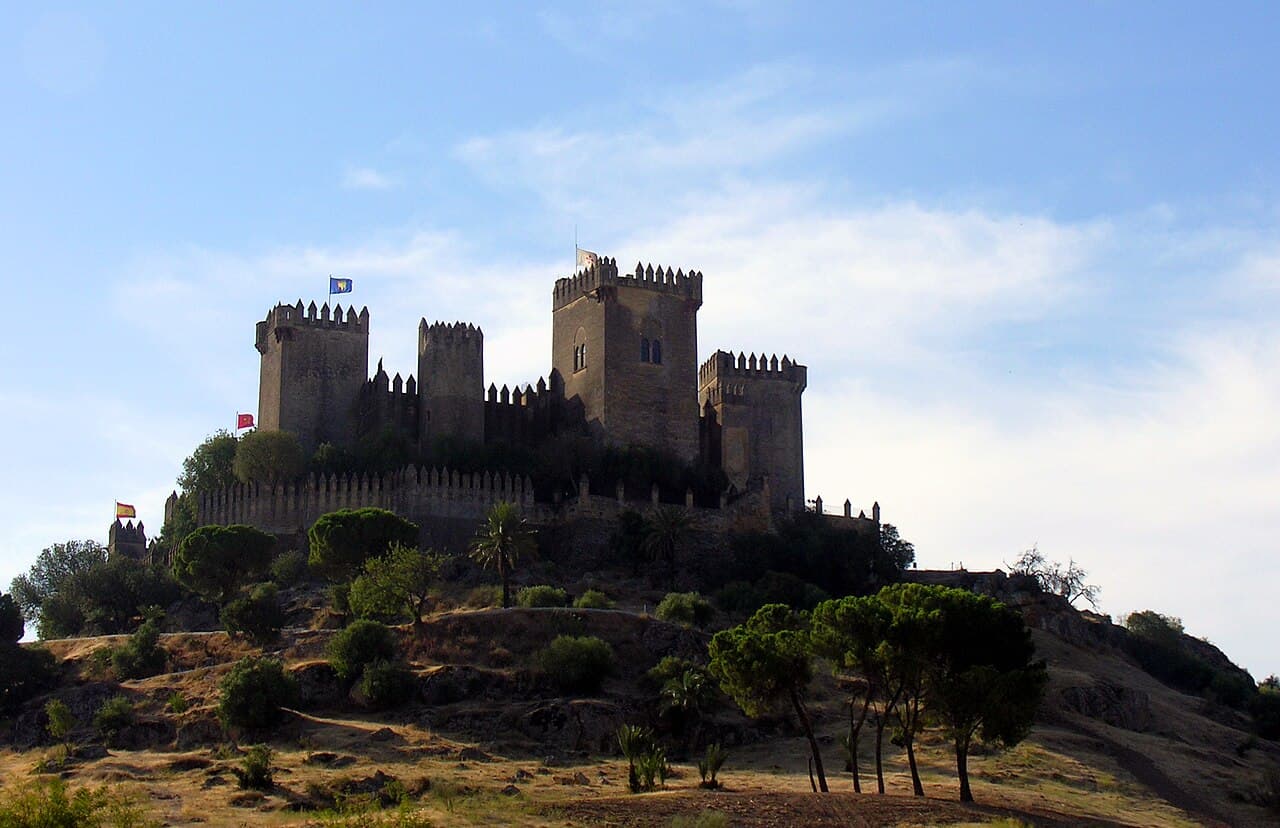
Almodóvar del Río Castle — Spain castle

Almodóvar del Río Castle

Almodóvar del Río Castle: a historic hill fortress in Andalucia
Almodóvar del Río, Andalucia, Spain
Early Medieval (5th–10th c.)
Restored

Almodóvar del Río Castle stands as a remarkable example of a hill castle with a rich history spanning from the Roman era through Islamic rule to the Christian Reconquista. Situated on a commanding hill approximately 252 meters high overlooking the Guadalquivir River in the province of Andalucia, Spain, the castle’s strategic location made it a vital military and administrative center throughout the Early Medieval and later periods.

The site’s origins trace back to an Iberian-Turdetan fortified settlement known as Cárbula, noted by the Roman author Pliny the Elder for its economic activities including pottery, silver mining, and coin minting. Later, the Romans established a military camp on the hill called El Redondo, laying the groundwork for the fortress that would follow. In the 8th century AD, the Umayyad Arabs constructed the fortress known as al-Mudawar on this hill, incorporating it into the Emirate and later the Caliphate of Córdoba. The name evolved into Almodóvar, reflecting its Arabic roots.

Medieval history and cultural transitions

Throughout the 10th to 13th centuries, Almodóvar del Río Castle changed hands among several Muslim powers, including the Caliphate of Córdoba, the Taifa kingdoms of Carmona and Seville, and eventually the Almohad Empire. This period saw the fortress serving as a key defensive and administrative post in the region.

In 1226, the castle was the site of a significant battle where the Moorish King Abed Mohammed de Baeza died at its gates. That same year, the fortress fell to the Christian forces of King Ferdinand III of Castile, marking a major turning point as it became part of the Christian kingdom. Subsequently, the castle was expanded and reinforced under the reigns of several Castilian monarchs, including Pedro I of Castile, Enrique II of Trastamara, and Alfonso XI.

Castilian period and noble ownership

During the 14th and 15th centuries, the castle served various roles including a royal residence and a prison. It housed notable prisoners such as Doña Juana de Lara and the 1st Duke of Benavente. The fortress also safeguarded treasures of the Castilian crown and was governed by prominent figures like Alfonso Diaz de Vargas and Gonzalo Fernandez de Cordova.

In the early modern period, the castle passed into the hands of noble families such as the Baena and Cabra houses. By the 17th century, it became a seigneurial estate under Francisco del Corral y Guzmán after being sold by King Felipe IV.

20th-century restoration and architectural features

By the late 19th century, the castle had fallen into a state of ruin. The 12th Count of Torralva, Rafael Desmaissieres y Farina, inspired by his travels and passion for history, undertook a monumental restoration project starting in 1901. Working closely with the architect Adolfo Fernández Casanova, known for his restoration of the Seville Cathedral, they aimed to revive the castle’s medieval grandeur.

The restoration involved extensive rebuilding of walls, battlements, and towers using stone from various quarries. Approximately 6,000 cubic meters of stone were moved and shaped by a workforce of around 800 laborers over 36 years. This painstaking work was interrupted by the Spanish Civil War but left the castle largely restored and preserved.

Architectural highlights

The castle’s layout reflects typical Andalusian military architecture with a central tower of homage (keep) flanked by the square (Cuadrada) and round (Redonda) towers. The fortress walls are reinforced with battlements and defensive towers, designed to provide surveillance and protection against invaders. The castle’s position atop the hill offers commanding views over the Guadalquivir valley, emphasizing its strategic importance.

The restoration respected the castle’s historical layers, preserving elements from the Roman, Islamic, and Christian periods. The complex includes fortified courtyards, dungeons, and living quarters, showcasing the evolution of military and residential architecture over centuries.

Cultural significance and current status

Today, Almodóvar del Río Castle is recognized as one of the best-preserved and most magnificent castles in Spain. It is a protected cultural heritage site under Spanish law since 1985. The castle attracts visitors interested in medieval history, architecture, and Andalusian heritage.

Its enduring presence offers a tangible link to the region’s complex history of cultural exchange and conflict, embodying the legacy of Roman military planning, Moorish fortification techniques, and Christian medieval castle-building traditions.

Visitors can explore the castle’s towers, walls, and interiors, gaining insight into the strategic and residential functions it served over more than a millennium. The castle’s restoration and preservation efforts stand as a testament to the dedication of its 20th-century restorers and the ongoing commitment to safeguarding Spain’s historical monuments.

Frequently asked questions (FAQ)

How do I get to Almodóvar del Río Castle?
Almodóvar del Río Castle is easily accessible by car, located just 20 kilometers from Córdoba, Spain. Public transportation options are available, including buses that run regularly from Córdoba to Almodóvar del Río.
What is the historical significance of Almodóvar del Río Castle?
Almodóvar del Río Castle dates back to the 8th century and was originally built by the Moors. It played a crucial role in the defense of the region during the Reconquista and has been a significant landmark throughout its history.
When was Almodóvar del Río Castle last renovated?
The castle underwent significant renovations in the 20th century, particularly in the 1990s when it was restored to preserve its historical integrity. These efforts have helped maintain its structure and appearance for visitors today.
Can I take guided tours of the castle?
Yes, guided tours are available and provide an enriching experience by offering insights into the castle's history and architecture. It's recommended to book in advance, especially during peak tourist seasons.
Is Almodóvar del Río Castle accessible for visitors with disabilities?
The castle has made efforts to improve accessibility for all visitors. However, due to its historical structure, some areas may present challenges; it's best to check with the castle staff for specific accommodations.
What is the best time to visit Almodóvar del Río Castle?
The best time to visit is during the spring and early autumn when the weather is mild, making it ideal for exploring the castle grounds. Summer can be quite hot, so visiting in the early morning or late afternoon is advisable.
What are the ticket prices for Almodóvar del Río Castle?
Ticket prices for Almodóvar del Río Castle are quite affordable, with discounts available for students and seniors. It’s a good idea to check the official website for current pricing and any special promotions.
What are the opening hours for Almodóvar del Río Castle?
Almodóvar del Río Castle is generally open to visitors from 10 AM to 8 PM during the summer months and has reduced hours in winter. It’s recommended to verify the current schedule before your visit, as hours may vary on holidays.
Are there any nearby attractions to visit?
Yes, visitors can explore the charming village of Almodóvar del Río, which offers local shops and restaurants. Additionally, the nearby Guadalquivir River provides beautiful scenery and outdoor activities.

Photo gallery

Almodóvar del Río Castle
Click to view

Photo by Phillip Capper•CC BY 2.0

1 photo • Click any image to view in full screen

Information

Hill Castle

Sources & official resources

Verify the information above using these authoritative references.

Loading map...

Visitor reviews

No reviews yet. Been here? Write the first review and help other travelers!

Write the first review

Visited this castle? Share your experience

Your review helps other travelers and adds first-hand knowledge to our encyclopedia.

Write a review

(5/5)

0/2000 characters

Your review will be visible after admin approval

Nearby castles

0.6 km

Castillo de Almodovar del Rio

Almodóvar del Río, Spain

Castillo de Almodóvar del Río, located approximately 24 kilometers from Córdoba on the left bank of the Guadalquivir River, is a striking example of a hill castle with deep historical roots spanning from Roman times through the Middle Ages and into the modern era. Originally a Roman military castrum, the site was strategically chosen for its elevation atop El Redondo hill, which rises 218 meters above sea level and commands expansive views of the surrounding Andalusian plains and the town below. The castle's name derives from the Arabic "al-Mudawar," meaning "the round castle" or "secure enclosure," reflecting its origins during the early Islamic period in the Iberian Peninsula. Constructed by the Berbers around 760 AD, the fortress was built on the foundations of a Roman fortification and likely an earlier Iberian-Turdetani oppidum known as Cárbula. This ancient settlement was notable in the 2nd century BC for its pottery production, local silver mining, and coin minting, as described by Pliny the Elder. Architectural evolution and historical significance Throughout the Early Medieval period, the castle served as a vital defensive stronghold within the Emirate and later the Caliphate of Córdoba. Its fortifications were adapted and expanded to meet the military needs of the time, with construction techniques reflecting Andalusian military architecture characterized by robust stone and masonry walls. The castle's defensive system prominently features three main towers: the Cuadrada (Square Tower), the Redonda (Round Tower), and the Torre del Homenaje (Keep). These towers formed the backbone of the fortress's medieval defenses and remain key architectural highlights today. During the 11th century, control of the castle fluctuated between the Taifa kingdoms of Carmona and Seville, illustrating the region's political instability following the collapse of the Caliphate. Subsequently, the fortress was reintegrated under the Almoravid and later the Almohad dynasties, who ruled from Seville in the 12th and 13th centuries. These successive rulers maintained and enhanced the castle's fortifications to secure their territories. In 1240, the castle was incorporated into the Castilian crown by King Ferdinand III. It was granted to Córdoba's municipal council three years later, signaling its transition from a Muslim fortress to a Christian stronghold. The castle continued to hold strategic and residential importance through the 14th century, serving as a royal residence for monarchs such as Pedro I and Enrique II. The 15th century linked the castle to prominent noble families, including Baena and Cabra, and in 1513 it was used as collateral in a land transaction involving the nearby town of Fuente Obejuna. By 1629, King Felipe IV sold the castle and town to Francisco del Corral y Guzmán, establishing a seigniory. 20th-century restoration and modern use By the early 20th century, Castillo de Almodóvar del Río had fallen into ruin. Between 1901 and 1936, extensive restoration was undertaken by Rafael Desmaissieres y Farina, the 12th Count of Torralva, with architect Adolfo Fernández Casanova leading the technical work. This restoration aimed to revive the castle's medieval character, carefully respecting its original layout and defensive features. The project halted with the outbreak of the Spanish Civil War, after which ownership eventually passed to the Solís family, who maintain the castle today. The restored castle now stands as a well-preserved example of a fortified hilltop settlement, showcasing medieval Andalusian military architecture with its intact walls, towers, and keep. Its commanding position atop El Redondo hill continues to offer panoramic views, making it a popular site for visitors interested in Spain's rich historical and architectural heritage. Castle features and visitor experience The fortress's construction primarily employs stone and masonry typical of the region's military architecture. Visitors can explore the three main towers, each with distinctive shapes and defensive purposes. The Cuadrada Tower offers insight into the castle's square defensive bastions, while the Redonda Tower exemplifies the rounded fortification style that provided enhanced resistance to siege weaponry. The Torre del Homenaje, or keep, served as the last line of defense and a royal residence, symbolizing the castle's status and power. The castle's walls and battlements are largely intact due to the early 20th-century restoration efforts, allowing visitors to appreciate the fortress's formidable defensive design. The layout includes courtyards and chambers that reflect the castle's evolution through different historical periods, from Roman origins to Islamic and Christian modifications. Popular culture and cultural significance In recent years, Castillo de Almodóvar del Río has gained international recognition as a filming location for popular television series, including the seventh season of Game of Thrones and the 2020 series Warrior Nun. This exposure has increased its profile as a cultural landmark and tourist attraction. The castle's layered history, architectural features, and commanding location make it a significant monument within Andalusia's heritage. It embodies the region's complex past, from ancient Iberian settlements through Roman, Islamic, and Christian influences, and stands today as a testament to centuries of military architecture and historical transformation.

Early Medieval (5th–10th c.)
Details
19.5 km

Castillo de Hornachuelos

Hornachuelos, Spain

Castillo de Hornachuelos stands as a significant example of Hispano-Muslim military architecture in Spain, with origins tracing back to the 8th and 9th centuries during the era of the Emirate of Córdoba. Situated in the town of Hornachuelos, the castle was initially constructed as part of a defensive network to protect local populations from external threats. Over centuries, its strategic importance evolved, reflecting the complex historical and political changes in the region. Historical development and strategic importance The castle's earliest construction phase corresponds to the period when the Emirate of Córdoba sought to consolidate control over the Iberian Peninsula. During the 10th century, as the Emirate transitioned into the Caliphate of Córdoba, the fortress underwent significant modifications to reinforce its role as a military stronghold. These enhancements included strengthening walls and towers to better withstand sieges and attacks. Following the Reconquista and the fall of the Nasrid Kingdom of Granada in 1492, the military significance of Castillo de Hornachuelos diminished considerably. The castle's defensive walls gradually fell into disuse, and many of its stone blocks were repurposed by local inhabitants for construction within the town. By the mid-19th century, the castle was described by historian Luis María Ramírez de las Casas-Deza as abandoned and overgrown, marking a period of neglect. Architectural features and layout The castle is primarily constructed from stone blocks, a common material in medieval fortifications, which provided durability and defense against invaders. The surviving structures include the prominent keep tower (torre del homenaje), which served as the last line of defense and a symbol of lordly power. This tower dominates the castle's silhouette and offers insight into the defensive strategies of the period. The main courtyard or plaza de armas measures approximately 40 by 30 meters, providing an open area essential for the movement and coordination of defenders. Within this courtyard lies a cistern, likely dating from the 14th century, which was crucial for water storage during sieges. This cistern was restored in the mid-1980s, shedding light on the castle's adaptations beyond its original medieval design. Additional architectural elements include the reconstructed northwest tower and sections of the adarve or wall walk. The adarve allowed defenders to patrol and defend the castle walls effectively. The removal of houses built alongside the walls by 2019 has helped to reveal and preserve these features, enhancing the castle's historical integrity. Restoration and preservation efforts Restoration initiatives began in the late 20th century, aiming to stabilize and conserve the castle's remaining structures. A key project in the mid-1980s involved repairing the 14th-century cistern, led by Antonio Castro Escobar. From 1995 to 2019, extensive work was undertaken to remove modern constructions that had encroached upon the castle walls, allowing for more authentic restoration. Since 2015, architect Monique Betancourt has overseen restoration activities, supported by provincial and local government funding. These efforts have focused on structural repairs and archaeological excavations, particularly around the castle's main keep tower. In 2021, plans were announced for further restoration of the keep, accompanied by archaeological investigations to better understand the site's historical layers. The castle is protected under Spanish heritage laws as a Bien de Interés Cultural, ensuring its preservation for future generations and recognition as a cultural landmark. Significance and visitor experience Castillo de Hornachuelos offers visitors a tangible connection to the medieval history of southern Spain and the complex interactions between Muslim and Christian powers during the Middle Ages. The castle's hilltop position provides commanding views of the surrounding landscape, emphasizing its strategic placement. Visitors can explore the restored areas, including the keep tower, courtyard, and sections of the defensive walls. The site serves as an educational resource, illustrating medieval military architecture and the historical evolution of fortifications in the Iberian Peninsula.

Early Medieval (5th–10th c.)
Details
20.4 km
Alcazar de los Reyes Cristianos — Spain castle

Alcazar de los Reyes Cristianos

Cordoba, Spain

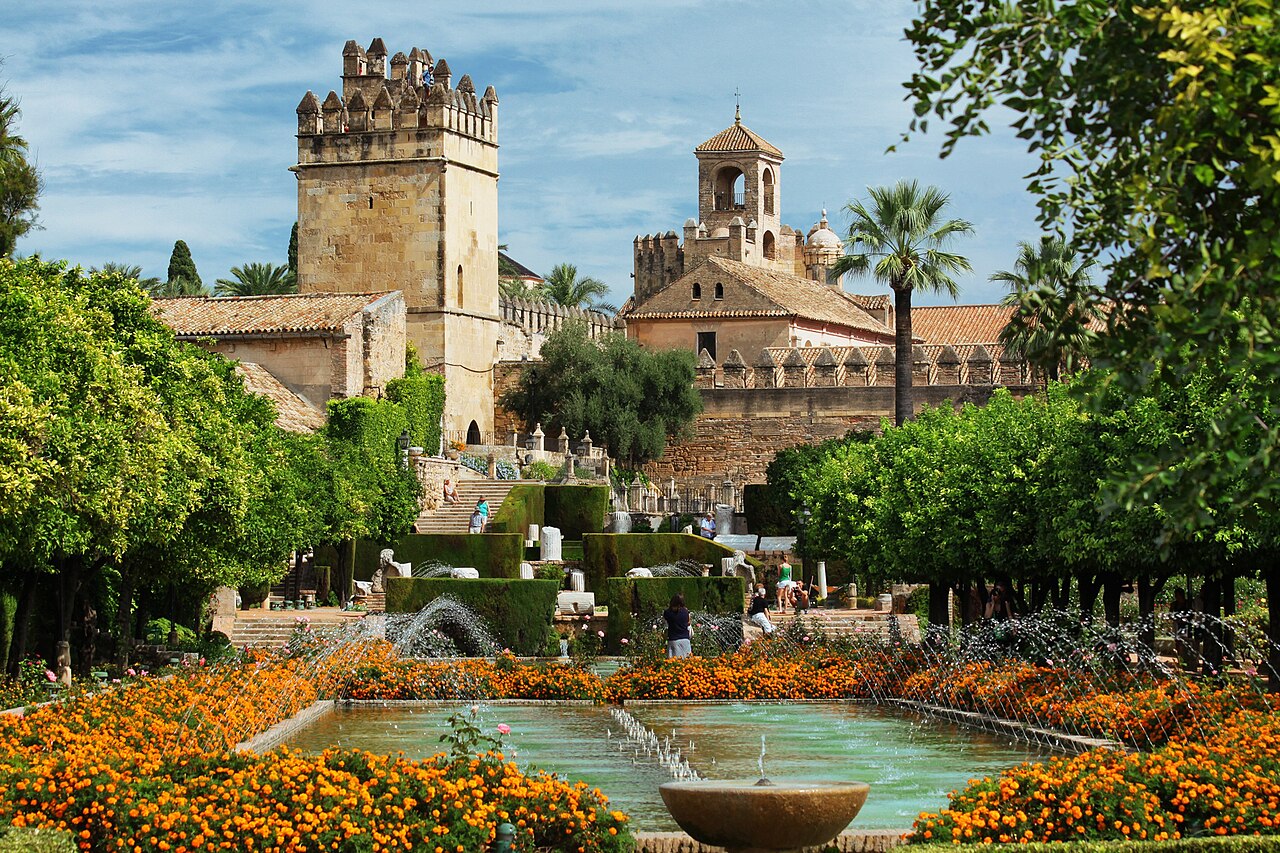
The Alcázar de los Reyes Cristianos, or Castle of the Christian Monarchs, stands prominently in the historic heart of Córdoba, Spain, adjacent to the Guadalquivir River and near the iconic Grand Mosque. This medieval fortress is a remarkable testament to the layered history of the region, reflecting centuries of Roman, Islamic, and Christian influence in its architecture and function. Originally a Roman military camp, the site evolved through Islamic rule into a formidable alcázar before becoming a royal residence and a center of the Spanish Inquisition. The Alcázar is a prime example of a hill castle strategically situated to control the city and river access. Its complex architectural fabric showcases Mudéjar elements alongside Gothic and Romanesque influences, illustrating the cultural fusion characteristic of Andalusia. The fortress’s four main towers, extensive gardens, and richly decorated interiors narrate stories of conquest, royal power, religious authority, and architectural innovation. Historical evolution of the alcázar de los reyes cristianos Roman origins and early fortifications The site of the Alcázar was originally fortified in the 1st century AD as a Roman castellum, serving as a military outpost to secure the important Guadalquivir River crossing. Roman masonry and foundations remain visible in the lower walls of the fortress, underscoring the site's long-standing defensive significance. Archaeological discoveries include mosaics and a 3rd-century Carrara marble sarcophagus decorated with mythological scenes, highlighting the Roman presence. Islamic period: umayyad and almohad fortifications During the early medieval period, Córdoba became a major center of Islamic culture under the Umayyad Caliphate. The original Roman fortifications were replaced by an Umayyad alcázar, a palace-fortress that combined residential and military functions. Later, the Almohad dynasty in the 12th century constructed a robust alcazaba or fortress on the site, incorporating advanced defensive features such as thick walls and towers. This phase included the construction of the large arch recently uncovered beneath the Baroque gate, dating to around 1171-1172. Christian conquest and medieval royal residence Following the Christian conquest of Córdoba in 1236 by King Fernando III of Castile, the Alcázar was divided among royal, religious, and military authorities. Major reconstruction began under King Alfonso XI in 1328, who transformed the fortress into a royal residence with enhanced fortifications. The construction of the Royal Baths in the Mudéjar style during this period reflects the blending of Islamic and Christian architectural traditions. The Alcázar reached its historical prominence under the Catholic Monarchs, Isabella I and Ferdinand II, who used it as a military headquarters during the Granada War (late 15th century). The fortress also served as a royal residence and the site where Christopher Columbus sought support for his voyages. The captivity of the Nasrid emir Boabdil here in 1483 marks a significant event in the Reconquista. The alcázar during the spanish inquisition and later uses After the conquest of Granada in 1492, the Alcázar became the seat of the Spanish Inquisition, serving as a tribunal and prison. The fortress was adapted with prison cells and torture chambers, including the conversion of the Royal Baths into spaces for interrogation. This dark chapter lasted until the abolition of the Inquisition in 1812. Subsequently, the Alcázar functioned as a civil prison until the establishment of the Second Spanish Republic in the 20th century. Its military and judicial roles diminished as the fortress transitioned into a cultural and historical monument. Architectural features and structural layout Towers and defensive structures The fortress is roughly square and defined by four principal towers, each with distinct historical origins and architectural styles. The Tower of the Lions, dating from the 13th century, is the oldest and features distinctive lion-shaped gargoyles. It houses the Chapel of San Eustaquio, reflecting the Christian appropriation of the site. The octagonal Tower of Homage, formerly the Clock Tower, stands at the northeast corner and exhibits Gothic features such as an ogival ceiling. This tower played a central role in royal and judicial activities. The circular Tower of the Inquisition at the southwest corner was used to store Inquisition archives and symbolizes the fortress’s judicial history. The Tower of the Dove at the southeast corner is a 20th-century reconstruction replacing a demolished 19th-century tower. Interior halls and mosaics The Salón de los Mosaicos is an 18th-century hall originally serving as the Inquisition chapel. It displays eight Roman mosaics from the 2nd and 3rd centuries depicting mythological scenes. The hall also contains the remarkable Carrara marble sarcophagus mentioned earlier. The Reception Hall, also called the Ocean Hall, houses a Roman mosaic dedicated to Oceanus, the god of the ocean, and 17th-century choir stalls representing Córdoba’s ancient parishes. These rooms illustrate the layering of historical periods within the Alcázar’s fabric. Patios and gardens The Patio de Crucero, or Mudéjar Courtyard, is a square courtyard on the western side with arcaded galleries on three sides and a central fountain flanked by two ponds. A wall bearing the Castilian Crown coat of arms connects the Towers of the Lions and the Inquisition, providing access to the gardens. The Patio de las Mujeres, or Eastern Courtyard, contains archaeological remains from Roman, late antique, Umayyad, and Almohad periods. Excavations revealed a 6-meter-high Almohad wall and a large medieval sewer system. Named during the prison era, it was the section designated for female inmates. The extensive gardens cover approximately 55,000 square meters across three terraces. The Higher and Lower Gardens date from the mid-20th century, while the Middle Garden, formerly the Garden of the Inquisitors, dates from the 19th century. The gardens feature palms, cypresses, orange and lemon trees, fountains, and ponds. The Paseo de los Reyes, a cypress-lined promenade, includes sculptures of the monarchs who built the Alcázar and culminates with a group depicting the Catholic Monarchs and Christopher Columbus. Modern restoration and cultural significance Declared a Historic Monument in 1931, the Alcázar underwent extensive restoration in the mid-20th century, led by Mayor Antonio Cruz Conde, and reopened to the public in 1960. Recent archaeological work from 2015 to 2025 has focused on uncovering hidden Almohad architectural elements, including a large 12th-century arch discovered in 2023 beneath the original Baroque gate, which was reopened that year as the main entrance. Modern interventions have also improved accessibility with elevators and structural conservation. The Alcázar is part of the UNESCO World Heritage Site of Córdoba’s historic center since 1994, attracting visitors worldwide to explore its rich history and architectural splendor. The fortress stands as a symbol of the complex cultural history of Andalusia, embodying the coexistence and conflict of Roman, Islamic, and Christian civilizations. Its layered architecture, from Roman foundations to Mudéjar baths and Gothic towers, offers a unique glimpse into medieval military and residential design.

High Medieval (11th–13th c.)
Details