Allahabad Fort
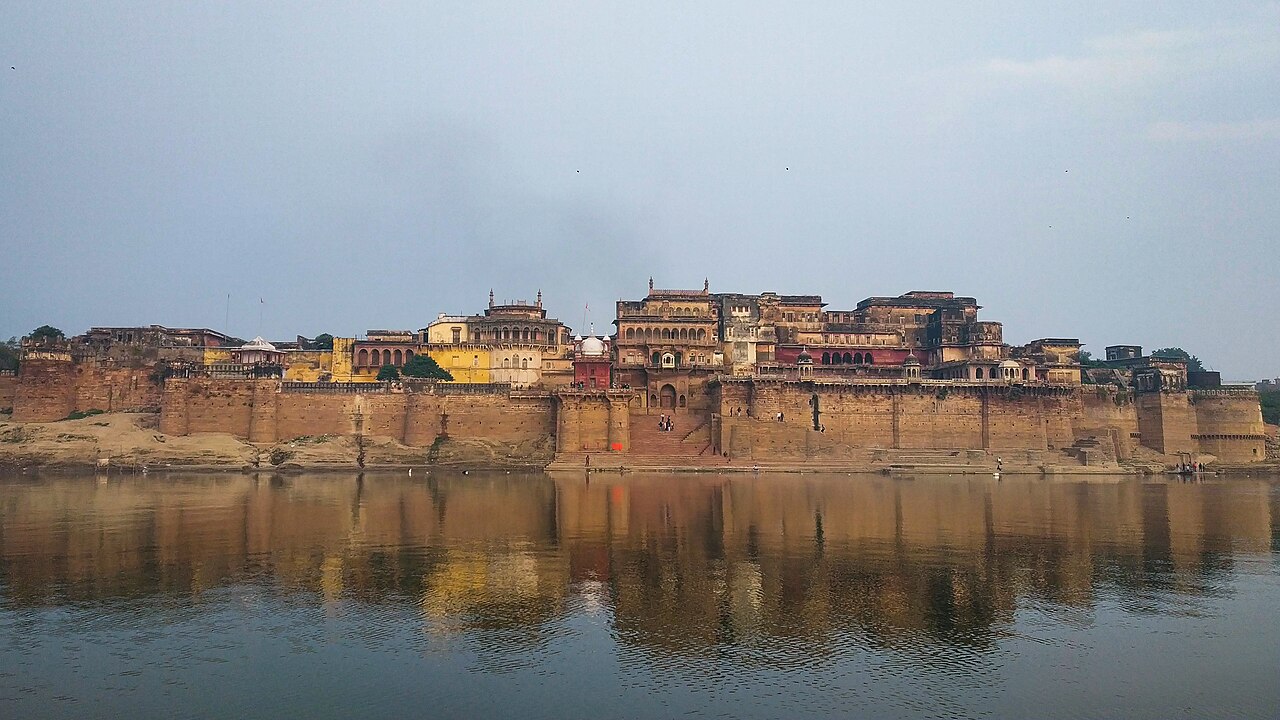
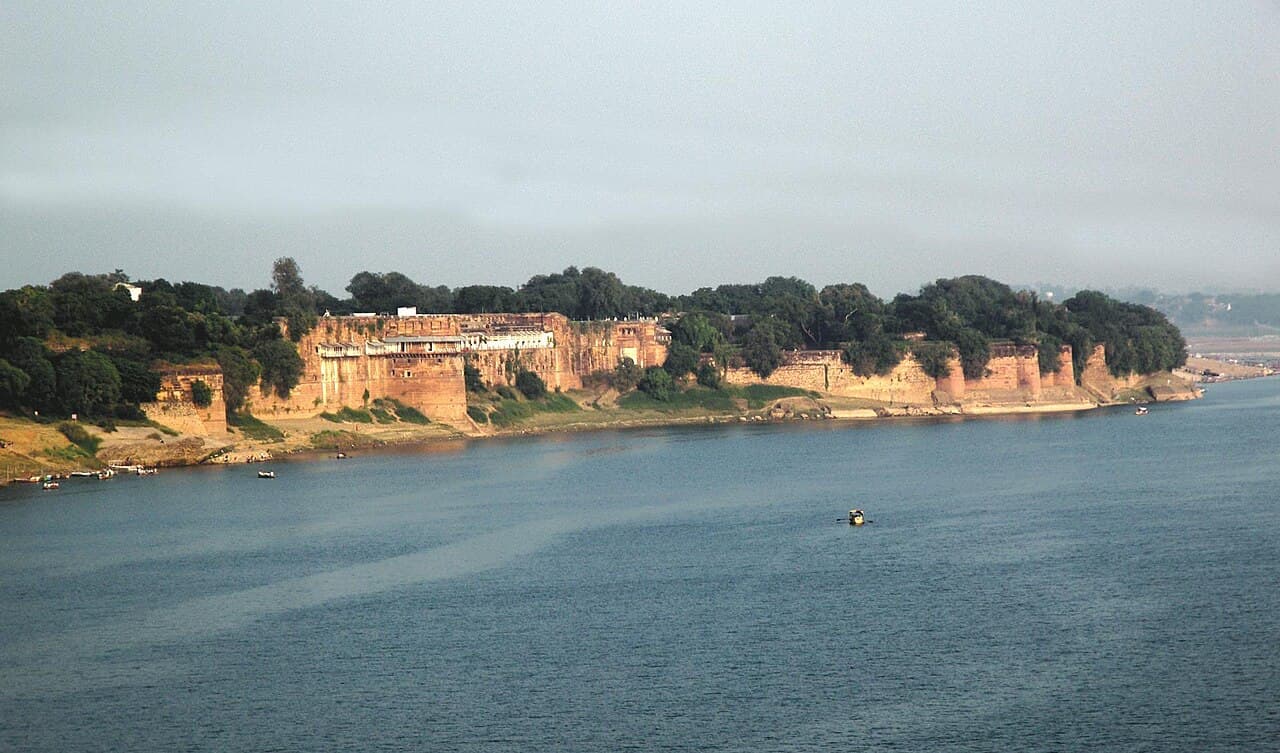
Allahabad Fort is a prominent bastioned fortress constructed in 1583 by the Mughal emperor Akbar, located in the city of Prayagraj (formerly Allahabad), India. This imposing fortification stands strategically on the banks of the Yamuna River, near its confluence with the Ganges River, a site of great geographical and cultural significance. The fort is recognized by the Archaeological Survey of India as a monument of national importance, reflecting its historical and architectural value.
Historical context and construction
The construction of Allahabad Fort was commissioned by Emperor Akbar during the Mughal Empire in the late 16th century, a period marked by extensive military and architectural expansion. Built in 1583, it served both as a military stronghold and a symbol of Mughal authority in the region. The fort's location at the confluence of two major rivers was chosen for its strategic advantages in controlling riverine trade routes and regional defense.
Interestingly, within the fort there exists a stone inscription that mentions the year 1583, but this inscription is associated with Emperor Ashoka and was originally from the ancient city of Kosambi. It was later relocated to Allahabad Fort, linking the site to a much earlier historical period. This artifact underscores the layered historical significance of the fort's location, connecting the Mughal era with ancient Indian history.
Architectural features and fortifications
Allahabad Fort exemplifies the characteristics of a bastioned fortress, a design that incorporates angled bastions projecting outward from the curtain walls. These bastions allowed defenders to cover adjacent walls with crossfire, enhancing the fort's defensive capabilities against artillery and siege tactics prevalent in the late medieval and early modern periods.
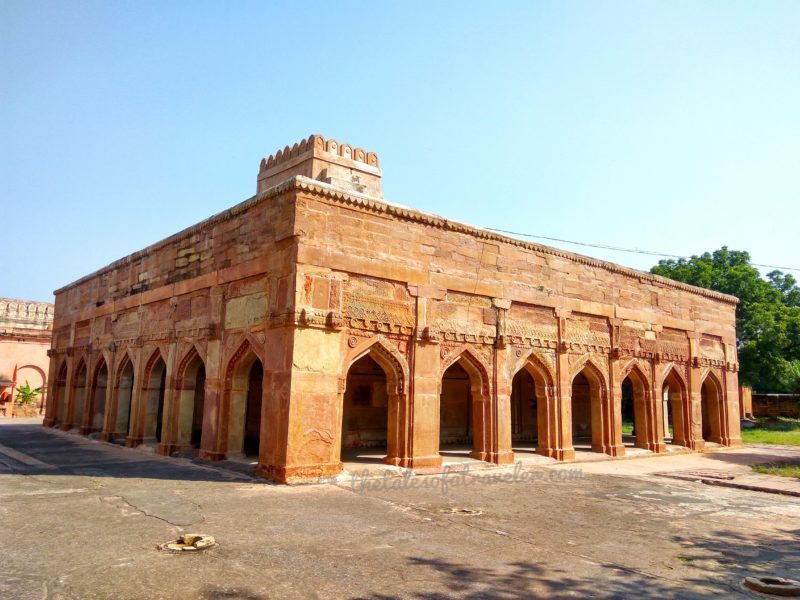
The fort's walls are constructed primarily from red sandstone, a material favored in Mughal architecture for its durability and aesthetic appeal. The massive walls enclose a complex of palatial structures, administrative buildings, and military installations. The fort's layout reflects the Mughal emphasis on combining functional military design with elements of grandeur and imperial authority.
Within the fort, visitors can find several notable architectural elements, including massive gates fortified to withstand assault, watchtowers for surveillance, and internal courtyards that provided space for troops and ceremonies. The design integrates both defensive and residential functions, typical of Mughal forts of this period.
Strategic importance and historical role
Throughout its history, Allahabad Fort has played a significant role in regional politics and military campaigns. Its position at the confluence of the Yamuna and Ganges rivers made it a key site for controlling access to northern India. The fort witnessed various historical events, including conflicts during the decline of the Mughal Empire and the rise of British colonial power.
During the British colonial period, the fort was used as a military garrison and administrative center. Its robust construction allowed it to remain a strategic asset well into the 19th century. The fort's history reflects the transitions of power in India from Mughal to British rule, and it stands as a testament to the military and architectural ingenuity of its builders.
Preservation and current status
Today, Allahabad Fort is classified as a monument of national importance by the Archaeological Survey of India. It is well preserved considering its age, though access to certain areas may be restricted as parts of the fort are still under military control. The fort attracts scholars, historians, and tourists interested in Mughal architecture and Indian history.
Efforts have been made to maintain the fort's structural integrity and to promote its cultural heritage. The fort's location near the confluence of two sacred rivers also adds to its significance as a site of religious and cultural tourism.
Visiting Allahabad Fort
Visitors to Allahabad Fort can explore its vast ramparts, impressive gates, and inner courtyards. The fort offers a glimpse into the military architecture of the Mughal period and the historical layers of one of India's oldest cities. Its proximity to the Triveni Sangam, the sacred confluence of the Yamuna, Ganges, and mythical Sarasvati rivers, further enhances its appeal.
While some areas of the fort may be restricted, guided tours and informational displays help visitors understand the fort's significance and architectural features. The best time to visit is during the cooler months, from October to March, when the weather is more comfortable for exploring the extensive grounds.
Frequently asked questions (FAQ)
- How do I get to Allahabad Fort?
- You can reach Allahabad Fort by taking a taxi or auto-rickshaw from Allahabad city center. The fort is located near the confluence of the Ganges, Yamuna, and Saraswati rivers, making it easily accessible for visitors.
- What is the historical significance of Allahabad Fort?
- Allahabad Fort was built in 1583 by the Mughal Emperor Akbar and has a rich history associated with the Mughal dynasty. It served as a strategic military base and a site of governance, playing a crucial role in India's history.
- When was Allahabad Fort opened to the public?
- Allahabad Fort was opened to the public in 1920 after being maintained and cared for by the Archaeological Survey of India. Since then, it has become a popular destination for both tourists and locals.
- Can I take photographs inside Allahabad Fort?
- Yes, photography is allowed in most areas of Allahabad Fort, making it a great spot for capturing stunning views and architectural details. However, be mindful of specific signs indicating areas where photography may be restricted.
- Why is the architecture of Allahabad Fort unique?
- The architecture of Allahabad Fort is a blend of Indo-Islamic styles, showcasing intricate carvings, large gateways, and massive walls. Its design reflects the Mughal architectural prowess, with features such as large courtyards and watchtowers that enhance its grandeur.
- Is it possible to visit Allahabad Fort during the monsoon season?
- Yes, Allahabad Fort can be visited during the monsoon season, but it's advisable to check the weather conditions beforehand. The lush greenery around the fort during this time adds to its beauty, although rain can sometimes affect accessibility.
- What are the opening hours of Allahabad Fort?
- Allahabad Fort is open to visitors from sunrise to sunset, allowing ample time for exploration. It's recommended to arrive early to enjoy the fort with fewer crowds and to take in the scenic views of the rivers.
- What are the ticket prices for visiting Allahabad Fort?
- The entry fee for Indian citizens is typically nominal, while foreign tourists may have a slightly higher fee. It's best to check the latest ticket prices at the entrance or on the official website before your visit.
- What are some nearby attractions to visit after Allahabad Fort?
- After visiting Allahabad Fort, you can explore nearby attractions such as the Triveni Sangam, Anand Bhawan, and the Allahabad Museum. These sites offer additional insights into the rich cultural and historical landscape of Allahabad.
Photo gallery

Information
Loading map...
Visitor reviews
No reviews yet. Been here? Write the first review and help other travelers!
Write the first reviewVisited this castle? Share your experience
Your review helps other travelers and adds first-hand knowledge to our encyclopedia.