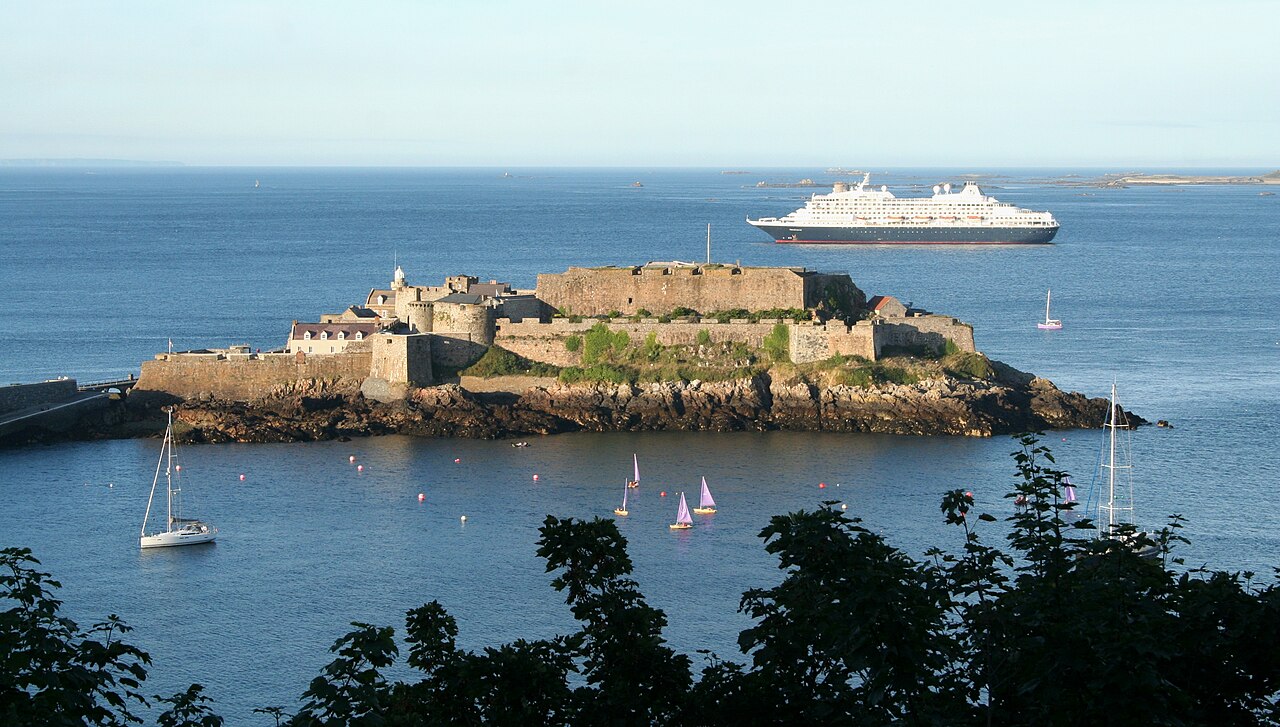
Alderney Fortifications
The Alderney fortifications represent a significant military heritage on the island of Alderney, part of the Channel Islands in the United Kingdom. While the island had a Roman fortification in ancient times, the majority of its defensive structures date from the 19th and 20th centuries. These fortifications were developed primarily in response to evolving naval threats and later expanded extensively during the German occupation of World War II, making Alderney one of the most fortified places in the world.
Victorian era fortifications
In the aftermath of growing tensions with France, the British government initiated the construction of new fortifications on Alderney from 1845 onwards. These defenses were part of a broader Victorian military strategy to protect the British coastline and naval interests. The most prominent of these is Fort Clonque, completed in 1855. Located on a rocky islet connected to Alderney by a causeway, Fort Clonque was designed to mount ten guns and housed a crew of 59 men. The fort included bomb-proof buildings to protect personnel and ammunition. Initially, the barracks were situated on the shore, which presented a logistical challenge at high tide, as it was impossible to reach the fort to man the guns during these times.
Fort Tourgis, also completed in 1855, was the second largest fort on the island. It featured 33 guns arranged in five batteries and required a garrison of 346 men. The fort was strategically positioned on a headland overseeing the bays of Clonque and Plattes Saline, with numerous loopholed walls for infantry defense. It provided sufficient accommodation within the fort itself, unlike Fort Clonque.
Along the island's second beach, two smaller batteries—Platte Saline and Doyle—were constructed, mounting three and four guns respectively. These installations were utilized by the Alderney militia until its disbandment in 1882, and subsequently by the militia artillery until 1929. In addition to these major forts, there are approximately ten smaller forts and batteries built by the British military across the island, reflecting the strategic importance of Alderney in coastal defense.
German occupation and fortifications during world war ii
The strategic significance of Alderney was further underscored during the Second World War. In 1940, the majority of the island's population evacuated to England, leaving a largely deserted island. The German military occupied Alderney with a force of around 450 soldiers, initially manning the existing British fortifications.
In 1941, Adolf Hitler ordered the extensive fortification of the Channel Islands as part of the Atlantic Wall defenses. The task of construction was assigned to the Organisation Todt, a civil and military engineering group responsible for large-scale fortifications. Thousands of workers were brought to Alderney and housed in several camps. By January 1942, the island held approximately 6,000 workers in four camps.
Forced labor camps
Among these camps, Camp Sylt was designated for Jewish prisoners who were subjected to slave labor under harsh conditions. Camp Norderney housed forced laborers including Russian and Polish prisoners of war, as well as men from various other nationalities. Initially managed by the Organisation Todt, these camps came under the control of the SS in March 1943. Many prisoners endured severe treatment, and those who survived were often transferred to France to work on other Atlantic Wall projects.
The human cost of these fortifications is marked by the presence of 397 known graves on Alderney. A notable tragedy occurred on the night of 7-8 July 1944, when two German minesweepers were sunk by Allied destroyers, resulting in the deaths of around 200 German personnel.
Architectural and military features
The Victorian forts on Alderney are characterized by their robust masonry construction, designed to withstand naval bombardment. Fort Clonque's bomb-proof buildings and Fort Tourgis's loopholed walls exemplify mid-19th century military architecture focused on artillery defense and infantry protection. The smaller batteries along the beaches provided additional layers of defense against potential amphibious assaults.
The German fortifications added a complex network of bunkers, tunnels, gun emplacements, and anti-aircraft positions. These structures were built using reinforced concrete and integrated into the island's natural landscape to create a formidable defensive system. The extensive use of forced labor and the scale of construction reflect the strategic priority placed on Alderney by the German military command.
Legacy and preservation
Today, Alderney's fortifications stand as a testament to the island's military history spanning from the Victorian era through World War II. Many of the Victorian forts remain well-preserved, offering insight into 19th-century coastal defense strategies. The German bunkers and camps, while in various states of preservation, serve as poignant reminders of the island's occupation and the human suffering endured during that period.
The island is accessible to visitors who can explore these historic sites, gaining an understanding of the evolution of military architecture and the strategic importance of Alderney in British and European history. Preservation efforts continue to maintain these structures as cultural heritage sites, with interpretive materials available to enhance public knowledge.
Frequently asked questions (FAQ)
- How do I get to Alderney to visit the fortifications?
- Alderney is accessible by ferry from Guernsey or by flights from the UK. Visitors should check schedules in advance as services vary seasonally.
- What are the main features of Fort Clonque?
- Fort Clonque is a Victorian-era coastal fort located on a tidal island connected by a causeway. It mounts ten guns and features bomb-proof buildings designed for artillery defense.
- Can I explore the German WWII fortifications on Alderney?
- Yes, many German bunkers and camps remain accessible to visitors. Guided tours are available to provide historical context and explain the significance of these structures.
- When is the best time to visit Alderney's fortifications?
- The fortifications are open daily from 10:00 to 16:00, with the best weather and accessibility typically from late spring to early autumn.
- Are there any entry fees to visit the Alderney fortifications?
- Yes, an entry fee of £7 for adults and £4 for children is charged to support preservation and visitor services.
Information
Opening hours
10:00-16:00, daily
Ticket prices
£7 adult, £4 child
Current owner
State museum
Loading map...
Visitor reviews
No reviews yet. Been here? Write the first review and help other travelers!
Write the first reviewVisited this castle? Share your experience
Your review helps other travelers and adds first-hand knowledge to our encyclopedia.