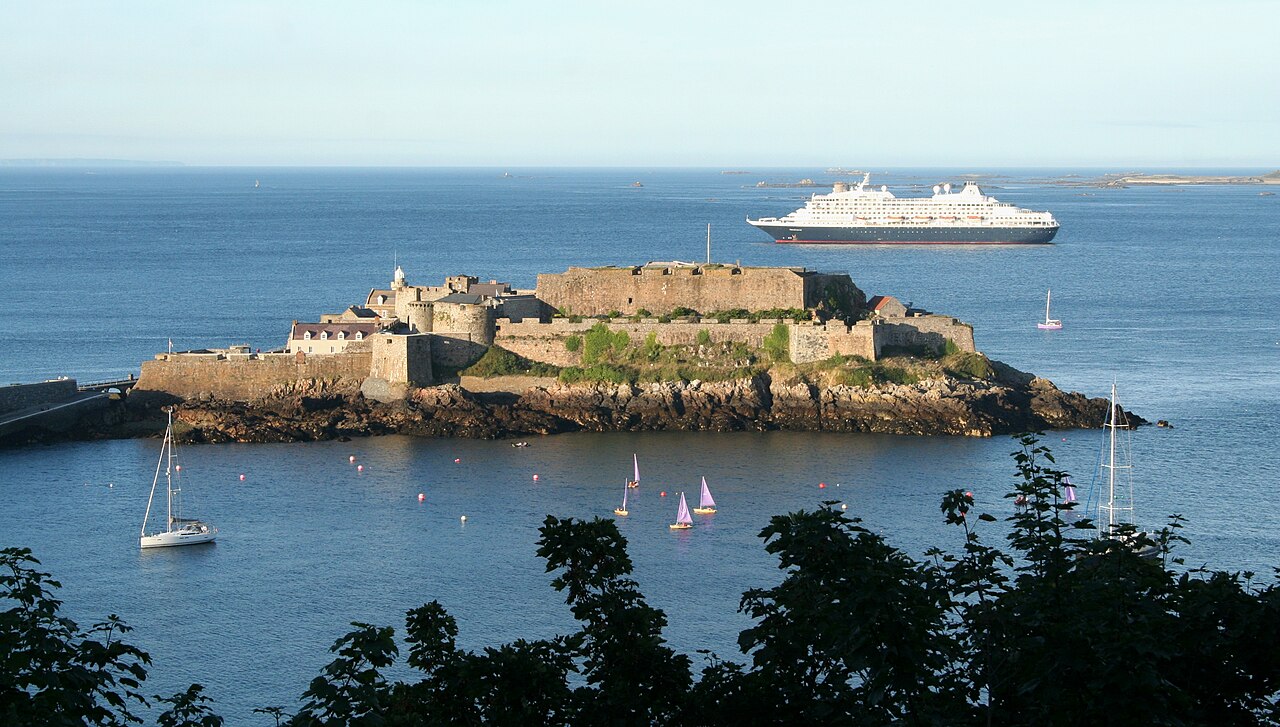
Alderney's Roman Fort

Alderney's Roman fort and heritage site
Alderney, United Kingdom
Early Medieval (5th–10th c.)
Partially Preserved

Alderney's Roman fort stands as a significant historical and archaeological site on the island of Alderney, part of the United Kingdom of Great Britain and Northern Ireland. This fort is one of the best-preserved Roman military structures in the British Isles, dating back to the 4th century AD, specifically built in the late 300s during the late Roman Empire. It occupies a strategic position above Alderney's only natural harbour, highlighting its importance in maritime defense and control during Roman times.

Roman origins and architectural features

The fort was constructed with stone and Roman concrete, materials typical of Roman engineering that contributed to its durability. The surviving walls are remarkably thick, measuring approximately 10 feet thick, and reach heights of about 26 feet in some sections. The fort's design includes a prominent Roman tower, though today only fragments of this tower remain. The tower's structure and function show similarities to Roman signal stations found in northern England, particularly in Yorkshire, suggesting it may have served a similar role in communication and coastal surveillance.

The fort's walls enclose a courtyard where the tower once stood, indicating a typical Roman military layout aimed at defense and observation. The robustness of the walls and the use of Roman concrete demonstrate advanced construction techniques that have allowed much of the fort's outer walls to survive through centuries.

Historical context and later modifications

Following the Roman period, the site likely continued to hold strategic importance. The Alderney Nunnery is believed to have been located on or near the fort's grounds, although the exact relationship between the fort and the nunnery remains subject to archaeological interpretation.

In 1793, during the period of heightened military tensions in Europe, the British refurbished the Roman fort. This refurbishment included leveling off some of the tower walls, which altered the original Roman structure but was intended to adapt the site for contemporary defense needs. This modification reflects the site's continued military significance well beyond the Roman era.

World War II impact and modern archaeological efforts

During the German occupation of Alderney in World War II, the fort's ruins were incorporated into the island's extensive defensive network. The Germans inserted a Type 501 bunker between the remaining walls of the Roman tower, ingeniously using the north and south internal walls as shuttering for pouring concrete. This adaptation illustrates the layering of military architecture on the site, combining ancient Roman foundations with 20th-century fortifications.

Today, the site has undergone a major restoration and makeover, opening to the public as a heritage attraction. Visitors can explore not only the Roman fort remains but also the large WWII bunker and other features. The site includes informative storyboards and an information room that provide context about the site's long history and archaeological significance.

Visitor experience and educational value

The newly opened heritage site offers a comprehensive experience for visitors interested in military history, archaeology, and Roman architecture. The combination of Roman and World War II structures presents a unique opportunity to observe how defensive strategies and building technologies evolved over nearly two millennia.

Interpretive materials on site help visitors understand the construction techniques of the Roman fort, the strategic importance of Alderney in different historical periods, and the impact of modern warfare on ancient sites. The presence of the WWII bunker adds depth to the narrative, showing how historical sites can be repurposed through time.

Significance in British Isles heritage

Alderney's Roman fort is a rare example of a Roman coastal fortification preserved in the British Isles. Its survival through the centuries, including adaptations by the British military and German occupiers, makes it a layered historical monument. The site contributes valuable insight into Roman military architecture, the island's strategic role, and the continuity of defensive use from antiquity through modern times.

As a well-preserved archaeological site, it attracts historians, archaeologists, and tourists alike, offering a tangible connection to the Roman presence in the Channel Islands and their enduring legacy in British history.

Frequently asked questions (FAQ)

How do I get to Alderney's Roman fort?
The fort is located on Alderney island, accessible by ferry or plane from the UK and nearby Channel Islands. Once on Alderney, local transport or walking can take you to the site above the natural harbour.
What can I expect to see at the Roman fort site?
Visitors can explore the remains of the Roman fort walls, fragments of the tower, a large WWII bunker, and informative displays detailing the site's history from Roman times through WWII.
When is the best time to visit Alderney's Roman fort?
The site is open daily from 10:00 to 16:00. Spring and summer months offer the best weather for exploring the outdoor ruins and nearby harbour views.
Is the site accessible for visitors with mobility issues?
The terrain includes some uneven surfaces and ruins, which may pose challenges for visitors with limited mobility. Assistance and information are available on site to help plan your visit.
Are there guided tours available at the fort?
Guided tours are offered seasonally, providing detailed insights into the fort's Roman origins, WWII adaptations, and archaeological findings. Check the official website for tour schedules.

Information

Water Castle

Opening hours

10:00-16:00, daily

Ticket prices

£5 adult, £3 child

Current owner

Heritage trust

Sources & official resources

Verify the information above using these authoritative references.

Loading map...

Visitor reviews

No reviews yet. Been here? Write the first review and help other travelers!

Write the first review

Visited this castle? Share your experience

Your review helps other travelers and adds first-hand knowledge to our encyclopedia.

Write a review

(5/5)

0/2000 characters

Your review will be visible after admin approval

Nearby castles

3.1 km

Alderney Fortifications

Alderney, United Kingdom

The Alderney fortifications represent a significant military heritage on the island of Alderney, part of the Channel Islands in the United Kingdom. While the island had a Roman fortification in ancient times, the majority of its defensive structures date from the 19th and 20th centuries. These fortifications were developed primarily in response to evolving naval threats and later expanded extensively during the German occupation of World War II, making Alderney one of the most fortified places in the world. Victorian era fortifications In the aftermath of growing tensions with France, the British government initiated the construction of new fortifications on Alderney from 1845 onwards. These defenses were part of a broader Victorian military strategy to protect the British coastline and naval interests. The most prominent of these is Fort Clonque, completed in 1855. Located on a rocky islet connected to Alderney by a causeway, Fort Clonque was designed to mount ten guns and housed a crew of 59 men. The fort included bomb-proof buildings to protect personnel and ammunition. Initially, the barracks were situated on the shore, which presented a logistical challenge at high tide, as it was impossible to reach the fort to man the guns during these times. Fort Tourgis, also completed in 1855, was the second largest fort on the island. It featured 33 guns arranged in five batteries and required a garrison of 346 men. The fort was strategically positioned on a headland overseeing the bays of Clonque and Plattes Saline, with numerous loopholed walls for infantry defense. It provided sufficient accommodation within the fort itself, unlike Fort Clonque. Along the island's second beach, two smaller batteries—Platte Saline and Doyle—were constructed, mounting three and four guns respectively. These installations were utilized by the Alderney militia until its disbandment in 1882, and subsequently by the militia artillery until 1929. In addition to these major forts, there are approximately ten smaller forts and batteries built by the British military across the island, reflecting the strategic importance of Alderney in coastal defense. German occupation and fortifications during world war ii The strategic significance of Alderney was further underscored during the Second World War. In 1940, the majority of the island's population evacuated to England, leaving a largely deserted island. The German military occupied Alderney with a force of around 450 soldiers, initially manning the existing British fortifications. In 1941, Adolf Hitler ordered the extensive fortification of the Channel Islands as part of the Atlantic Wall defenses. The task of construction was assigned to the Organisation Todt, a civil and military engineering group responsible for large-scale fortifications. Thousands of workers were brought to Alderney and housed in several camps. By January 1942, the island held approximately 6,000 workers in four camps. Forced labor camps Among these camps, Camp Sylt was designated for Jewish prisoners who were subjected to slave labor under harsh conditions. Camp Norderney housed forced laborers including Russian and Polish prisoners of war, as well as men from various other nationalities. Initially managed by the Organisation Todt, these camps came under the control of the SS in March 1943. Many prisoners endured severe treatment, and those who survived were often transferred to France to work on other Atlantic Wall projects. The human cost of these fortifications is marked by the presence of 397 known graves on Alderney. A notable tragedy occurred on the night of 7-8 July 1944, when two German minesweepers were sunk by Allied destroyers, resulting in the deaths of around 200 German personnel. Architectural and military features The Victorian forts on Alderney are characterized by their robust masonry construction, designed to withstand naval bombardment. Fort Clonque's bomb-proof buildings and Fort Tourgis's loopholed walls exemplify mid-19th century military architecture focused on artillery defense and infantry protection. The smaller batteries along the beaches provided additional layers of defense against potential amphibious assaults. The German fortifications added a complex network of bunkers, tunnels, gun emplacements, and anti-aircraft positions. These structures were built using reinforced concrete and integrated into the island's natural landscape to create a formidable defensive system. The extensive use of forced labor and the scale of construction reflect the strategic priority placed on Alderney by the German military command. Legacy and preservation Today, Alderney's fortifications stand as a testament to the island's military history spanning from the Victorian era through World War II. Many of the Victorian forts remain well-preserved, offering insight into 19th-century coastal defense strategies. The German bunkers and camps, while in various states of preservation, serve as poignant reminders of the island's occupation and the human suffering endured during that period. The island is accessible to visitors who can explore these historic sites, gaining an understanding of the evolution of military architecture and the strategic importance of Alderney in British and European history. Preservation efforts continue to maintain these structures as cultural heritage sites, with interpretive materials available to enhance public knowledge.

Modern (19th–20th c.)
Details
34.8 km

Château de Querqueville

Querqueville, France

Château de Querqueville is a notable example of a post-Renaissance château located in the town of Querqueville, France. Constructed around 1730, the castle was originally built by the Barbou family, a noble lineage that contributed to the architectural and cultural heritage of the region. The château reflects the stylistic tendencies of its era, characterized by elegant yet restrained design elements typical of early 18th-century French aristocratic residences. Historical significance and ownership The château gained historical prominence partly due to its association with Napoleon I, who visited the estate in 1811. This visit underscores the castle's importance as a residence of note during the Napoleonic era. The building's function evolved over time, and in 1938, it was acquired by the Querqueville community to serve as the town hall, marking a shift from private noble residence to a public administrative building. Architectural features and style As a post-Renaissance structure, Château de Querqueville exhibits architectural characteristics that bridge the classical influences of the Renaissance with the emerging styles of the 18th century. The design likely includes symmetrical façades, balanced proportions, and refined decorative details that emphasize harmony and order. Although specific architectural details of the château are less documented, its construction period suggests the presence of typical elements such as mullioned windows, mansard roofs, and possibly a formal garden layout consistent with French aristocratic estates of the time. Structural layout The château's layout would traditionally include a central main building flanked by wings or outbuildings, arranged around a courtyard or garden space. The use of local stone and masonry techniques would have been standard, ensuring durability and a stately appearance. Interior spaces were likely designed to accommodate both residential comfort and formal receptions, with rooms such as salons, dining halls, and private chambers. The château's role in the community today Since its acquisition by the local municipality in 1938, Château de Querqueville has served as the town hall, integrating the historic building into the civic life of Querqueville. This adaptive reuse has helped preserve the château and maintain its relevance within the community. The castle's preservation status is generally considered well preserved, reflecting ongoing maintenance and respect for its historical value. Visiting and cultural importance While primarily functioning as a municipal building, Château de Querqueville remains a point of interest for visitors and historians interested in French post-Renaissance architecture and Napoleonic history. Its connection to notable historical figures and its architectural qualities contribute to its cultural heritage significance in the Normandy region. Context within Normandy's architectural heritage Querqueville lies within Normandy, a region rich in medieval and early modern castles. Château de Querqueville stands out as a representative of the post-Renaissance period, contrasting with the many medieval fortresses and Gothic castles nearby. Its preservation and continued use highlight the diversity of castle types in Normandy, from fortified strongholds to elegant châteaux reflecting changing tastes and social structures in France's history.

Post-Renaissance (17th–18th c.)
Details
39.1 km
Castle Cornet — Guernsey castle

Castle Cornet

Saint Peter Port, Guernsey

Castle Cornet stands as a remarkable historic fortress in Saint Peter Port, Guernsey, with a legacy spanning over 800 years. This imposing hill castle offers commanding views of the entire east coast of Guernsey and extends across the sea to the neighboring islands of Herm, Sark, and Alderney. Its strategic location has made it a vital military stronghold through centuries of conflict, including pivotal roles during the English Civil War and the German occupation in World War II. Originally constructed in the early 13th century, Castle Cornet began as a tidal island fortress, designed primarily for defense and control of the surrounding waters. The initial fortification included a keep, a chapel, two courtyards, and curtain walls. Over the centuries, the castle expanded and evolved architecturally to meet changing military needs, incorporating additional defensive structures and adapting to advances in siege technology. Architectural evolution and defensive features The castle's original medieval design featured a classic keep or donjon as the central stronghold, surrounded by protective curtain walls and fortified gatehouses. The chapel within the castle grounds served the spiritual needs of its garrison and residents. The two courtyards provided space for military drills, storage, and daily activities of the castle's inhabitants. As artillery technology progressed, Castle Cornet was modified to withstand cannon fire and naval attacks. The castle's walls were thickened and reinforced, and new bastions and gun platforms were added to accommodate heavy artillery. The castle's position on a tidal island allowed it to control access to Saint Peter Port harbor effectively, making it a critical maritime fortress. The castle during the english civil war Castle Cornet played a significant role during the English Civil War in the mid-17th century. Guernsey was largely Parliamentarian, but the castle remained a Royalist stronghold, leading to a prolonged siege. The castle held out for several years, resisting Parliamentary forces until the conflict ended. This period highlighted the fortress's strategic importance and robust defensive capabilities. World war ii and german occupation During World War II, the castle was occupied by German forces as part of the wider occupation of the Channel Islands. The Germans fortified the castle further, installing modern artillery and defensive structures to repel Allied attacks. Remnants of these fortifications remain visible today, adding a modern layer to the castle's rich military history. Modern use and visitor experience Today, Castle Cornet serves as a cultural and historical hub, housing four distinct museums that explore various aspects of military history. These include exhibits dedicated to the castle's own story, the Royal Air Force, and maritime history, offering visitors a comprehensive understanding of the fortress's multifaceted past. The castle grounds are meticulously maintained by a full-time keeper who preserves the historic gardens, enhancing the visitor experience with beautifully tended landscapes. A unique and popular attraction is the daily firing of a 32-pound cannon at noon, performed by a gunner dressed in traditional 19th-century uniform. This ceremony is a highlight for visitors and brings history vividly to life. Visitors can enjoy guided tours in the morning to explore the castle's extensive fortifications, followed by refreshments in the on-site café. The combination of historical education, scenic views, and leisure opportunities makes Castle Cornet a must-visit destination in Guernsey. Architectural significance and preservation Castle Cornet is an outstanding example of a medieval tidal island fortress that has adapted through centuries of military innovation. Its preservation as a well-preserved historic site allows insight into medieval defensive architecture as well as later military enhancements from the 17th century through the 20th century. The castle's curtain walls, battlements, towers, and gatehouses illustrate the evolution of fortification techniques. The integration of gun batteries and modern artillery emplacements from World War II adds to its architectural complexity, making it a rare example of continuous military use over eight centuries. Efforts to maintain and restore the castle ensure its survival as a cultural landmark and educational resource. The site is managed to balance historical integrity with public accessibility, enabling visitors to experience a tangible connection to Guernsey's strategic past.

High Medieval (11th–13th c.)
Details