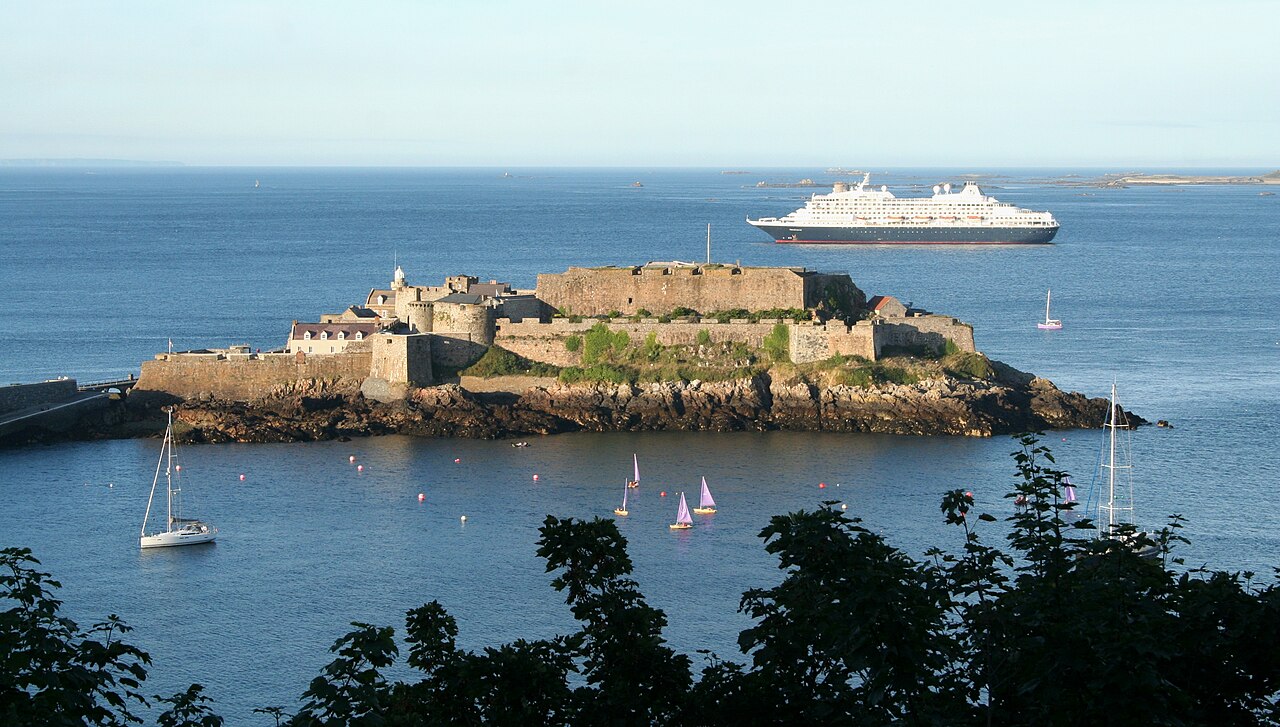
Castle Cornet
Castle Cornet stands as a remarkable historic fortress located on a former tidal island off the coast of Guernsey, part of the United Kingdom. Originally constructed between 1206 and 1256, this high medieval hill castle was built following the division of the Duchy of Normandy in 1204, to assert control over the strategically vital waters surrounding Guernsey. Its unique position on the rock made it a formidable defensive structure, guarding the island through centuries of conflict and change.
The castle’s early history is marked by its capture in 1339 during the Hundred Years' War, when a French force seized the island. The siege and subsequent massacre of the garrison underscored the castle's military importance. Over the centuries, Castle Cornet evolved architecturally to meet the demands of advancing military technology, particularly with the introduction of cannon and gunpowder in the mid-16th century. Between 1545 and 1548, extensive remodeling transformed its defenses, incorporating bastions and artillery platforms to withstand contemporary siege warfare.
Architectural evolution and military significance
Medieval origins and fortifications
The initial construction phase of Castle Cornet established a classic hill castle layout, with robust stone walls, a central keep, and defensive towers positioned to maximize surveillance and protection. The castle’s location on Cornet Rock, initially a tidal island, provided natural moat-like defenses, making direct assault difficult. Early structures included a keep or donjon, curtain walls, and a gatehouse, all designed to repel invaders and serve as a stronghold for the island’s governors.
16th-century modernization
By the mid-1500s, the advent of gunpowder weaponry necessitated significant upgrades. The castle was remodeled with thicker walls and angled bastions to deflect cannon fire, reflecting the principles of Renaissance military architecture. Notably, iron and stone were quarried from nearby Crevichon Island to support these enhancements, as documented in historical records from 1566. The castle’s artillery emplacements were strategically positioned to command the approaches to Guernsey’s harbor.
Disasters and resilience
The 1672 lightning strike and explosion
One of the most dramatic events in Castle Cornet’s history occurred in 1672, when a lightning bolt struck the castle’s magazine, causing a catastrophic explosion. This disaster destroyed the keep and several living quarters, resulting in the deaths of the Governor’s mother, wife, and several staff members. At the time, the Governor was Lord Hatton. Despite this tragedy, the castle remained a vital military and administrative center.
Integration into maritime infrastructure
Following its military role, Castle Cornet was integrated into the construction of the breakwater during the Napoleonic Wars, enhancing the island’s harbor defenses. The breakwater also featured a pond constructed in 1887 to celebrate Queen Victoria’s Diamond Jubilee, which later served as a seaplane base during World War I. These adaptations illustrate the castle’s ongoing strategic relevance beyond traditional fortifications.
20th-century history and cultural legacy
World war ii occupation
During World War II, Castle Cornet was occupied by a small contingent of German troops as part of the occupation of the Channel Islands. Its fortifications were utilized for coastal defense, and the castle endured the challenges of wartime occupation while preserving its historical fabric.
Post-war restoration and public heritage
In 1945, the castle was formally presented to the people of Guernsey by the Crown, marking its transition from a military fortress to a cultural and historical monument. Today, Castle Cornet is restored and open to the public, housing several museums including the Castle Museum, Maritime Museum, and the Royal Guernsey Militia Museum. These institutions preserve and interpret the castle’s rich history, architecture, and its role in the island’s defense across centuries.
Architectural features and visitor experience
Defensive structures
Visitors to Castle Cornet can explore its extensive battlements, curtain walls, and surviving towers, which vividly demonstrate medieval and Renaissance military architecture. The castle’s layout includes fortified gatehouses, artillery platforms, and remnants of the original keep prior to its destruction in 1672.
Museums and exhibitions
The museums within Castle Cornet offer in-depth insights into the island’s maritime history, military heritage, and the daily life of the castle’s occupants. Exhibits include weaponry, uniforms, historical documents, and artifacts recovered from the castle and surrounding waters. The castle’s scenic location and well-preserved structures provide a unique educational and cultural experience for visitors.
Significance and preservation
Castle Cornet is a cultural landmark of Guernsey, symbolizing the island’s resilience and strategic importance through turbulent historical periods. Its preservation as a restored high medieval hill castle ensures that future generations can appreciate its architectural grandeur and historical narratives. The castle’s integration into local heritage tourism highlights its ongoing relevance and vitality as a monument of British and Norman history.
Frequently asked questions (FAQ)
- How do I get to Castle Cornet?
- Castle Cornet is located in St. Peter Port, Guernsey. You can reach it by foot from the town center, or use local buses that service the area. There are also parking facilities nearby for those who prefer to drive.
- What is the historical significance of Castle Cornet?
- Castle Cornet has a rich history dating back to the 13th century and has played a key role in Guernsey's defense over the centuries. It has served as a royal fortress, a military stronghold, and even a prison. Today, it stands as a testament to Guernsey's strategic importance throughout history.
- When was Castle Cornet built?
- The construction of Castle Cornet began in 1206, making it one of the oldest structures on the island of Guernsey. Over the years, it has undergone numerous renovations and expansions to adapt to changing military needs. Its architecture reflects various styles from different periods, showcasing its historical evolution.
- Can I visit Castle Cornet year-round?
- Yes, Castle Cornet is open for visitors throughout the year, though opening hours may vary by season. It is advisable to check the official website for the most up-to-date information on hours and any special events. Guided tours are available to enhance your experience.
- Why is Castle Cornet a popular tourist attraction?
- Castle Cornet is popular due to its stunning views, rich history, and well-preserved architecture. Visitors can explore its museums, gardens, and exhibits, making it an educational experience for all ages. Additionally, the castle's location offers beautiful coastal scenery, making it a picturesque spot to visit.
- Is it possible to access Castle Cornet for individuals with disabilities?
- Yes, Castle Cornet strives to be accessible to all visitors. There are designated pathways and facilities to accommodate those with mobility challenges. It is recommended to contact the castle in advance for specific accessibility inquiries and assistance.
- What are the ticket prices for Castle Cornet?
- Ticket prices for Castle Cornet vary based on age and group rates, with discounts available for families and seniors. Children under a certain age may enter for free. It's best to check the official website for the latest pricing and any special offers.
- What is the best time to visit Castle Cornet?
- The best time to visit Castle Cornet is during the spring and summer months when the weather is typically pleasant and ideal for outdoor exploration. Many special events and activities are also hosted during this period, enhancing the visitor experience. However, visiting in the autumn can provide a quieter atmosphere with fewer crowds.
- What nearby attractions can I explore after visiting Castle Cornet?
- After visiting Castle Cornet, you can explore other nearby attractions such as the Guernsey Museum and Art Gallery, the Little Chapel, and the picturesque St. Peter Port waterfront. Each of these sites offers unique insights into Guernsey's culture and history, making for a fulfilling day of exploration.
Information
Website
Visit websiteSources & official resources
Verify the information above using these authoritative references.
Loading map...
Visitor reviews
No reviews yet. Been here? Write the first review and help other travelers!
Write the first reviewVisited this castle? Share your experience
Your review helps other travelers and adds first-hand knowledge to our encyclopedia.