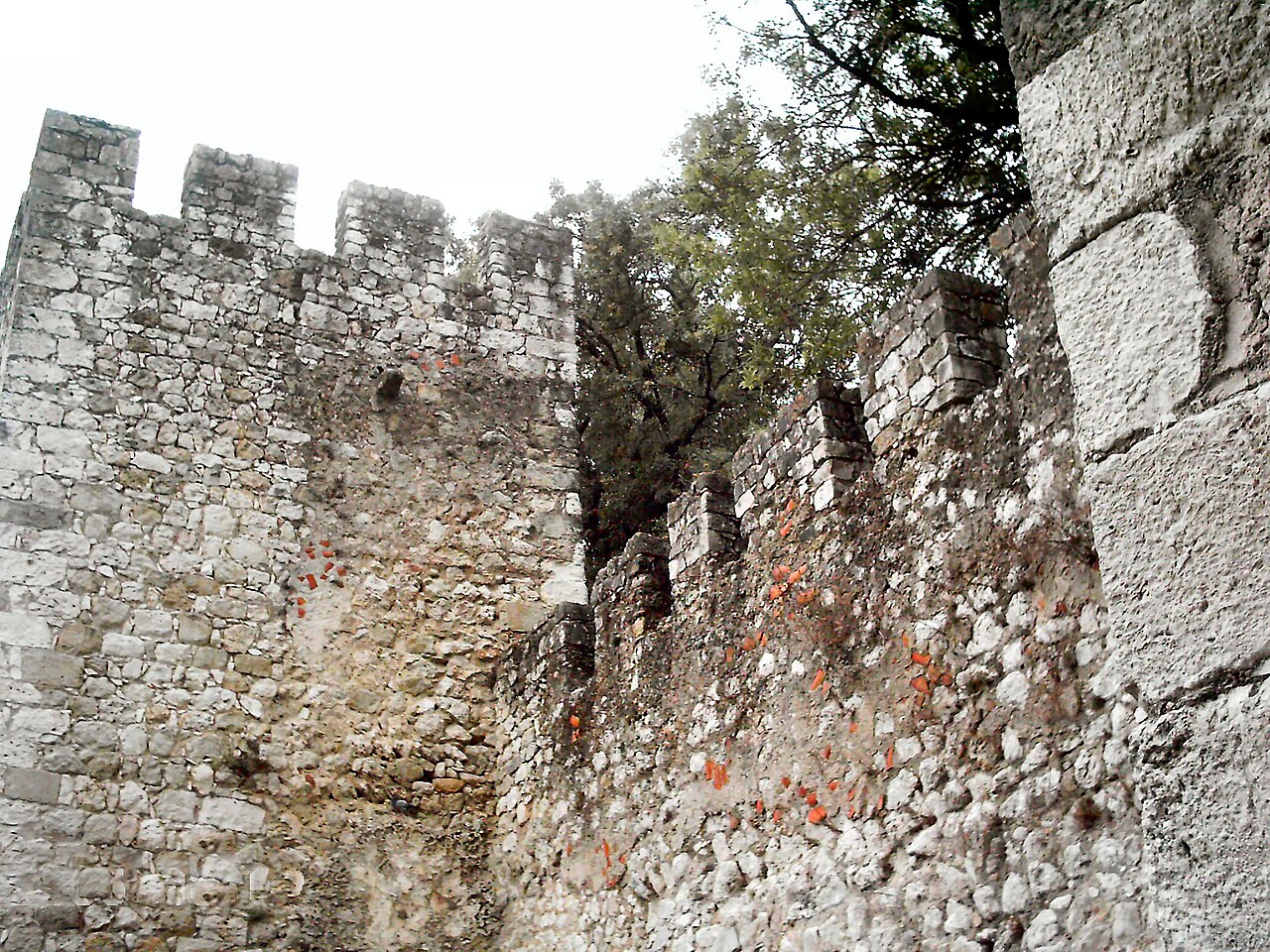
Santarém Castle
Santarém Castle, known locally as Castelo de Santarém, is a remarkable hilltop fortress located in the city of Santarém, within the Lezíria do Tejo region of Portugal. This castle stands prominently on a strategic hill overlooking the right bank of the Tagus River, a location that has been continuously fortified since prehistoric times. The site’s long and complex history reflects the varied cultural and political influences that have shaped the Iberian Peninsula over millennia.
The earliest fortifications at Santarém date back to approximately the 8th century BCE, when the site likely served as a prehistoric hillfort. This early settlement was later integrated into the expanding Roman Empire in 138 BCE, when it was known as Scalabi Castro or Escálabis. Under Roman rule, the site became an important commercial and administrative center along the Tagus River, with a permanent military presence established following Julius Caesar's conquest around 90 BCE. The Romans constructed significant infrastructure, including a temple podium dating from the 1st century BCE, the remains of which were uncovered within the castle grounds.
Following the decline of Roman authority, Santarém passed through the hands of several groups. The Suebi took control in 529 AD, succeeded by the Visigoths in the 7th century, who referred to the site as Sancta Irena. The early 8th century saw the arrival of Muslim forces, who renamed the settlement Chantirein or Chantarim. The Muslims maintained the urban character and agricultural productivity of the town, which became part of the Taifa of Badajoz by the early 12th century.
The Christian reconquest and medieval significance
During the turbulent period of the Christian Reconquista, Santarém changed hands multiple times between Muslim and Christian forces. On March 15, 1147, King Afonso I of Portugal led a daring night assault to capture Santarém Castle. His knights scaled the walls using ladders, opening the gates to the main army and initiating a fierce battle that resulted in the slaughter of the Muslim inhabitants. Following this victory, the castle and town were entrusted to the Knights Templar, who played a key role in the defense and administration of the region.
The castle withstood several attempts by the Almohads to retake the fortress, including sieges in 1171, 1181, and a prolonged four-month siege in 1184. These failed attempts solidified Santarém’s status as a critical stronghold in the Christian defensive line along the Tagus River.
Political and military role in the late medieval period
Throughout the Late Middle Ages, Santarém Castle served as an important administrative center for the Portuguese crown. King Denis of Portugal spent his final year at the castle, dying there in 1325. The fortress was further fortified by King Ferdinand I in the late 14th century, who remodeled the main entrance, known as the Porta de Santiago, with a distinctive pointed ogival arch in 1382.
During the 1383–1385 Portuguese interregnum, the castle was briefly garrisoned by Castilian troops under John I of Castile. However, it was reclaimed by Portuguese forces following their decisive victory at the Battle of Aljubarrota in 1385, reaffirming Santarém’s strategic importance.
Architectural features and fortifications
The castle is a classic example of a hill castle with a complex defensive system that evolved over centuries. The original fortifications included the Alcáçova enclosure, which served as the fortified upper settlement, surrounded by extensive walls that protected the town below. A barbican provided an additional outer defense, and the riverside neighborhoods of Ribeira and Alfange were also enclosed by their own walls.
The town’s defenses featured seven main gates aligned with key access routes. Among these, the Porta do Sol and Porta da Alcáçova survive today in fragmentary form. The Porta de Santiago is architecturally notable for its ogival arches and once displayed the Portuguese coat of arms, although these inscriptions are now worn away.
The fortifications were strengthened by a combination of quadrangular and semicircular bastions, as well as square towers positioned at strategic points. The walls were topped with solid prismatic merlons, creating battlements that provided cover for defenders. Narrow arrow slits allowed archers to defend the castle while minimizing their exposure.
Key towers included the Torre do Bufo within the Alcáçova enclosure, the Torre de Manços, and an albarrã tower, a detached defensive tower adjacent to the main enclosure. The Torre das Cabaças, also known as Cabaceiro, remains a visible part of the castle’s defensive network.
Later modifications and restorations
The castle underwent significant modernization during the 17th century Restoration War, with the addition of Mannerist style fortifications including a triangular ravelin with sloped walls leading to a domed guardhouse. These enhancements reflected the evolving military technology of the period.
Despite suffering severe damage during the 1531 Lisbon earthquake, the castle was repeatedly repaired and strengthened, including during the Liberal Wars in the early 19th century. However, by the late 19th century, Santarém Castle had lost all military importance and was gradually integrated into the expanding urban fabric of the city.
Archaeological discoveries and current condition
Archaeological excavations in the 1990s revealed important Roman remains within the castle grounds, notably the podium of a Roman temple dating from the 1st century BCE. This discovery highlights the site’s long-standing religious and cultural significance.
Today, the castle’s remains primarily consist of the outer walls of the inner castle, which follow the hill’s natural contours, and the surviving Porta do Sol gate. The inner castle’s medieval structures have largely disappeared, and the site now serves as a public park offering panoramic views over the Tagus River and the surrounding landscape.
Visitors can freely explore the castle during daylight hours. While the remains have been heavily restored, the site offers a unique opportunity to appreciate the layered history of Santarém, from prehistoric fortifications through Roman, Muslim, and medieval Christian phases, to modern military adaptations.
Frequently asked questions (FAQ)
- How do I get to Santarém Castle?
- Santarém Castle is located in the heart of Santarém, Portugal, and can be easily reached by car or public transport. If you're traveling from Lisbon, it's about a one-hour drive or a short train ride followed by a walk through the charming streets of the town.
- What is the historical significance of Santarém Castle?
- Santarém Castle, originally built in the 12th century, played a crucial role in the defense and governance of the region during the Middle Ages. It is a symbol of the city's rich history and its strategic importance in the defense against invasions.
- When was Santarém Castle built?
- The construction of Santarém Castle began in the late 11th century and continued into the 12th century, with significant modifications made over the centuries. It has withstood numerous sieges and conflicts, reflecting the turbulent history of Portugal.
- Can I visit Santarém Castle year-round?
- Yes, Santarém Castle is open to visitors throughout the year, but it’s always best to check the specific opening hours before your visit. Seasonal events and festivals may also affect access, offering unique experiences during certain times of the year.
- Why is Santarém Castle popular among tourists?
- Santarém Castle is popular due to its stunning architecture and panoramic views of the Tagus River and surrounding landscape. Additionally, its historical significance and the beautifully preserved ruins provide a fascinating glimpse into Portugal's past, making it a must-visit for history enthusiasts.
- Is it possible to explore the interior of the castle?
- While parts of Santarém Castle are accessible to the public, some areas may be restricted due to preservation efforts. Visitors can enjoy walking through the grounds and exploring the exterior features, which are rich in history and offer breathtaking views.
- What are the ticket prices for Santarém Castle?
- Admission to Santarém Castle is typically affordable, with a small fee for adults and discounted rates for children and seniors. Free entry may be available on certain days, so it's a good idea to check the official website for current pricing and any available promotions.
- What are the opening hours of Santarém Castle?
- Santarém Castle generally opens in the morning and closes in the late afternoon, with extended hours during the summer months. For the most accurate and up-to-date information, it is recommended to consult the official website before your visit.
- What nearby attractions should I visit while in Santarém?
- While visiting Santarém Castle, don’t miss the opportunity to explore nearby attractions such as the Church of Marvila and the beautiful Jardim das Portas do Sol. The town itself is rich in history and offers charming streets, shops, and local eateries that enhance the experience.
Information
Address
Largo do Alcáçova 1, Portugal
Loading map...
Visitor reviews
No reviews yet. Been here? Write the first review and help other travelers!
Write the first reviewVisited this castle? Share your experience
Your review helps other travelers and adds first-hand knowledge to our encyclopedia.