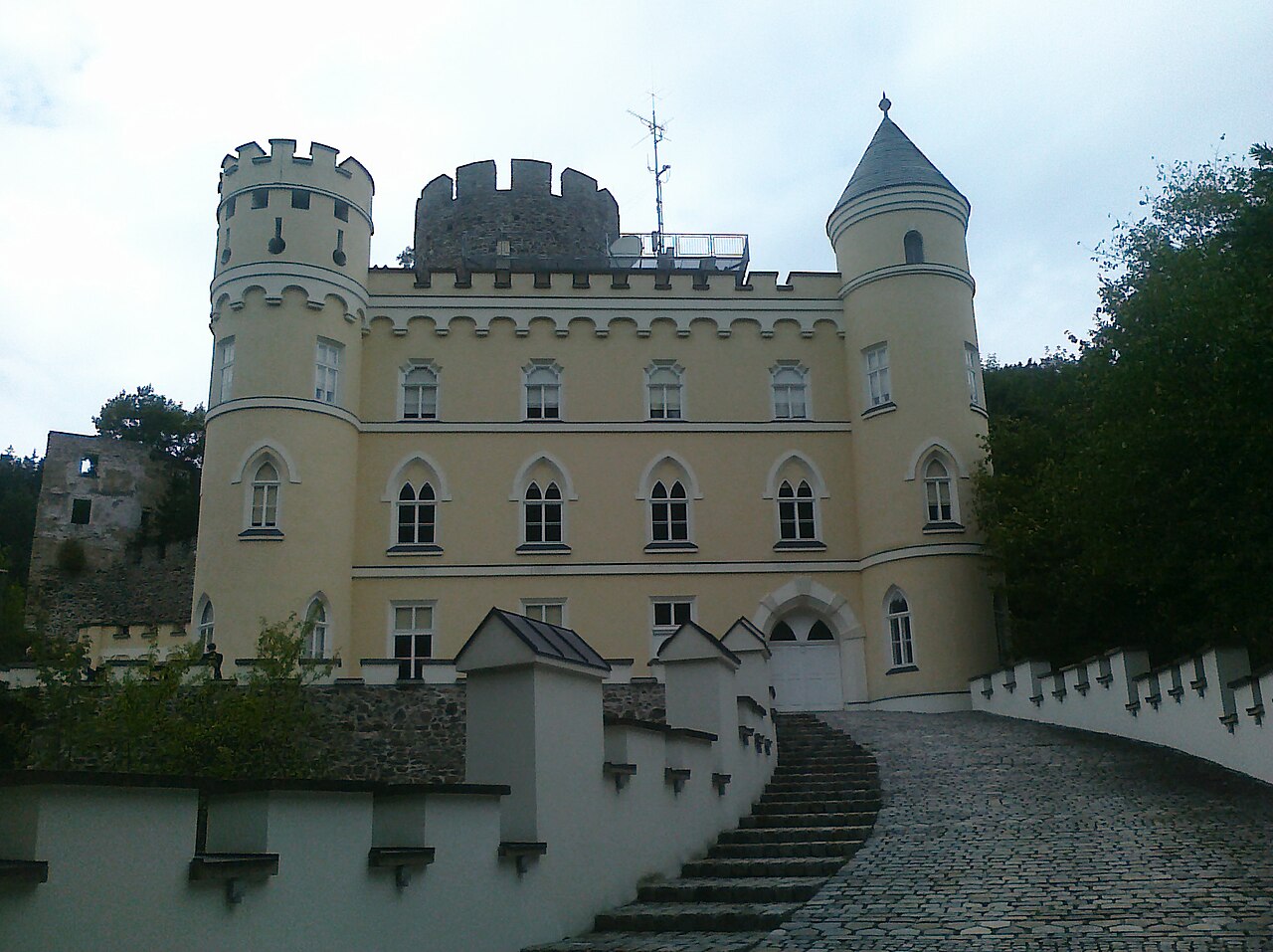
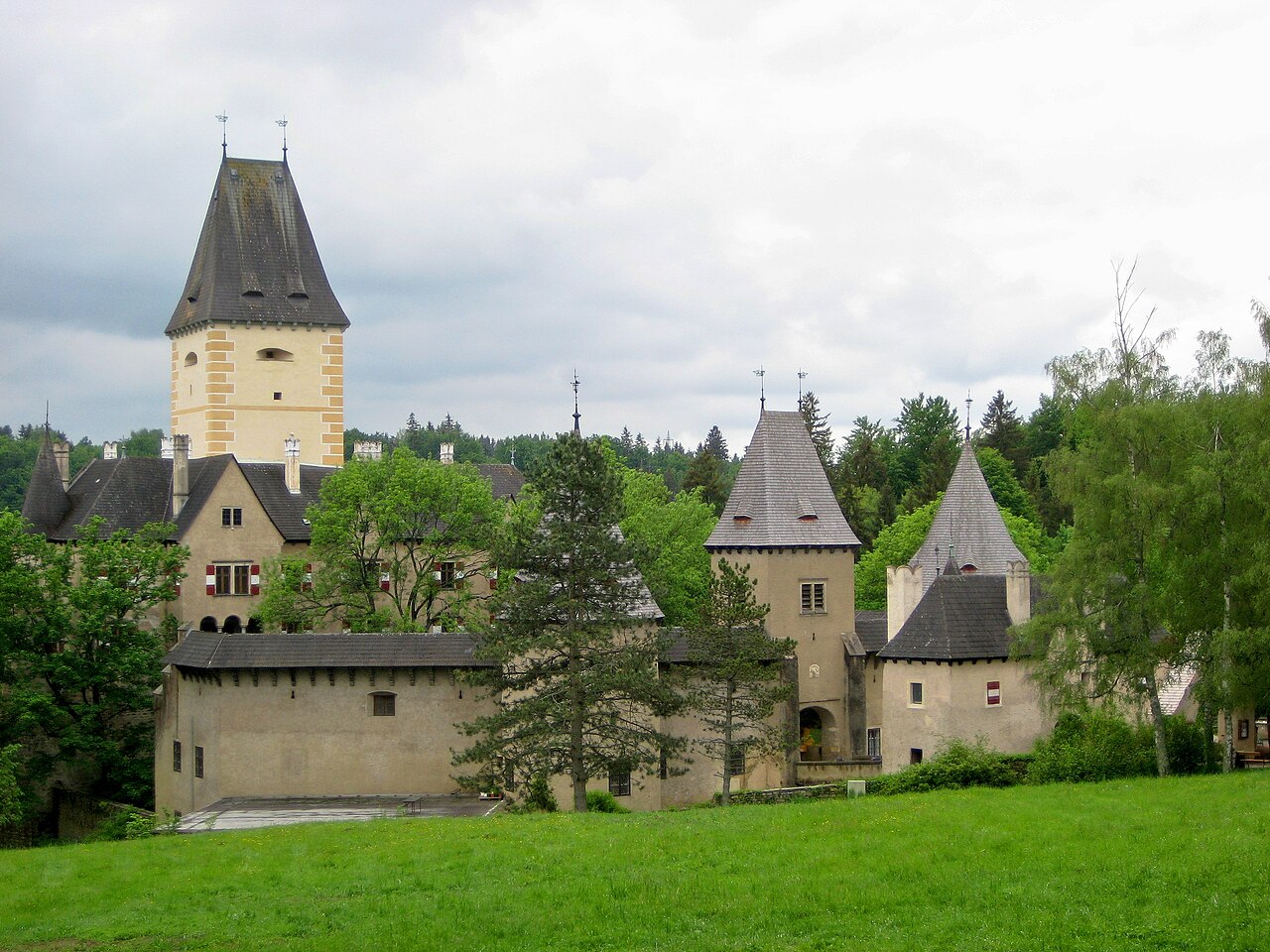
Albrechtsberg Castle
Albrechtsberg Castle, located in the municipality of Albrechtsberg an der Großen Krems in Austria, is a remarkable example of a high medieval hill castle that evolved significantly over several centuries. Its origins trace back to the 12th century, with the first documentary mention in 1230 linking the fortress to the noble Konrad von Albrechtsperge. This castle stands as a testament to the region's turbulent history and architectural transitions from medieval fortification to Renaissance residence.
Historical background and early origins
The castle's site lies within the historically significant Waldviertel region, part of the eastern frontier known as the Marcha orientalis. This borderland was subject to early settlement and fortification efforts following the 10th-century Hungarian invasions. The Babenberg dynasty, beginning around 976, played a key role in organizing and colonizing the area, establishing new lordships and encouraging noble estates.
By approximately 1100, a noble estate existed in the Große Krems valley, owned by a ministerial servant named Adelhart, whose legacy survives in the place name Elharteschirchen ("Adelhart's church") recorded in 1137. The castle itself was first documented in 1230, indicating an established seat of power in the region. Over the following centuries, ownership passed among prominent families, including the Starhembergs in the 13th and 14th centuries and the Protestant Neidegger family from 1377 to 1527.
Architectural evolution and Renaissance transformation
Originally constructed as a medieval fortress, Albrechtsberg Castle underwent significant changes, especially in the 16th century under the knight Erasmus von Peuckham. After suffering damage during the Hussite Wars in the early 15th century, the castle was transformed into a Renaissance-style residence. This conversion reflected broader shifts in architectural preferences and the reduced military role of castles during this period.
The castle's current structure largely dates from the late 16th century and is characterized by its irregular, multi-winged layout arranged around three courtyards. The imposing high crenellated ring wall features several prominent watch and defense towers equipped with distinctive keyhole slits for archers and firearms. Defensive elements such as a machicolation above the northeast main gate—locally termed a Pechnase—demonstrate the castle's military heritage.
Key architectural features
- The southern entrance is marked by a round-arched portal with the date "1675" inscribed on the gable field, indicating later modifications.
- One courtyard contains a cross-vaulted arcade supported by squat columns, showcasing Renaissance architectural influence.
- The interior preserves a smoke kitchen with a distinctive pyramidal chimney, designed to vent cooking smoke efficiently.
- Several rooms feature cross-vaulted ceilings, and a wooden ceiling dated 1604 remains intact, highlighting the craftsmanship of the period.
- An 18th-century granary with a hipped roof reflects the castle's later use in estate management and agricultural storage.
- The castle chapel houses the Neidegger family burial vault, linking the structure to its noble past and religious traditions.
Military history and conflicts
Albrechtsberg Castle experienced significant military action over the centuries. It was heavily damaged during the Hussite Wars in the early 15th century, a series of religious and political conflicts that affected much of Central Europe. Later, during the Thirty Years' War (1618–1648), the castle again suffered damage, particularly from imperial troops under Charles Bonaventure de Longueval in 1619.
These conflicts reflect the castle's strategic importance in the region and the shifting power dynamics of the Holy Roman Empire. Despite these damages, the castle was repaired and adapted by successive owners, including Christoph Wilhelm Veldendorf (1630), Hans Bernhard Zägkhler (1652), and Matthias Ernst Spindler von und zu Hofegg (1662), who established a fideicommissum to secure the estate's inheritance.
Later ownership and modern developments
From 1695, the castle was owned by the Lempruch family, ennobled within the Holy Roman Empire and originating from northern Germany. They held the property until the mid-20th century. In the late 20th century, ownership passed to the paleontologist Edith Kristan-Tollmann and geologist Alexander Tollmann, whose son Raoul Tollmann maintained the estate until 2021.
In 2022, the castle was acquired by Erich Erber, who has announced plans to adapt the site for events and hotel use by 2025. This transition represents a modern approach to preserving and utilizing historic castles, balancing heritage conservation with economic sustainability.
Architectural layout and current condition
Situated atop an elevated, irregular hill, Albrechtsberg Castle is a complex of buildings primarily dating from the late 16th century. The castle's tall crenellated ring wall with battlements encloses the multi-winged structure, which is arranged around three distinct courtyards. The defensive towers with keyhole-shaped embrasures highlight the castle's original military purpose.
The castle's interior features include cross-rib vaulted rooms and a preserved smoke kitchen with its pyramidal chimney. The wooden ceiling dated 1604 is a rare surviving example of period craftsmanship. The chapel and granary add to the historical layers visible at the site.
Overall, the castle is well preserved with many original features intact, offering valuable insight into the architectural and social history of the region from the medieval period through the Renaissance and into the modern era.
Frequently asked questions (FAQ)
- What is the historical significance of Albrechtsberg Castle?
- Albrechtsberg Castle, built in the 19th century, is a stunning example of romantic architecture set in the picturesque landscape of Austria. Its historical importance lies in its connection to the aristocracy of the region and the exquisite art and design features that reflect the era's opulence.
- When was Albrechtsberg Castle constructed?
- Construction of Albrechtsberg Castle began in 1856 and was completed in 1861. The castle was designed by the architect Gottfried Semper and showcases the architectural styles of the time, making it a fascinating destination for history enthusiasts.
- Can I visit Albrechtsberg Castle?
- Yes, Albrechtsberg Castle is open to visitors, offering guided tours that explore its rich history and stunning architecture. Be sure to check the official website for any specific visiting guidelines or restrictions before planning your trip.
- What are the opening hours of Albrechtsberg Castle?
- Albrechtsberg Castle typically opens its doors to visitors from April to October, with specific hours varying by season. It is advisable to check the castle's official website for the most current opening hours and any special events that may affect access.
- Is it possible to access Albrechtsberg Castle by public transport?
- Yes, Albrechtsberg Castle is accessible by public transport, with several bus routes connecting to the nearby town of Albrechtsberg an der Großen Krems. Visitors can also enjoy a scenic drive or bike ride through the beautiful countryside to reach the castle.
- What is the best time to visit Albrechtsberg Castle?
- The best time to visit Albrechtsberg Castle is during the spring and summer months when the gardens are in full bloom and the weather is pleasant for outdoor exploration. Additionally, special events and guided tours are often more frequent during these seasons.
- What are the ticket prices for visiting Albrechtsberg Castle?
- Ticket prices for Albrechtsberg Castle vary depending on the type of tour and age group, with discounts often available for children and seniors. It’s best to check the castle’s official website for the most accurate and updated pricing information.
- Are there any nearby attractions to visit while at Albrechtsberg Castle?
- Yes, visitors to Albrechtsberg Castle can also explore the beautiful surrounding vineyards and scenic hiking trails in the area. Additionally, nearby towns offer charming shops and local cuisine, making for a delightful day of exploration.
Information
Loading map...
Visitor reviews
No reviews yet. Been here? Write the first review and help other travelers!
Write the first reviewVisited this castle? Share your experience
Your review helps other travelers and adds first-hand knowledge to our encyclopedia.