Alange Castle
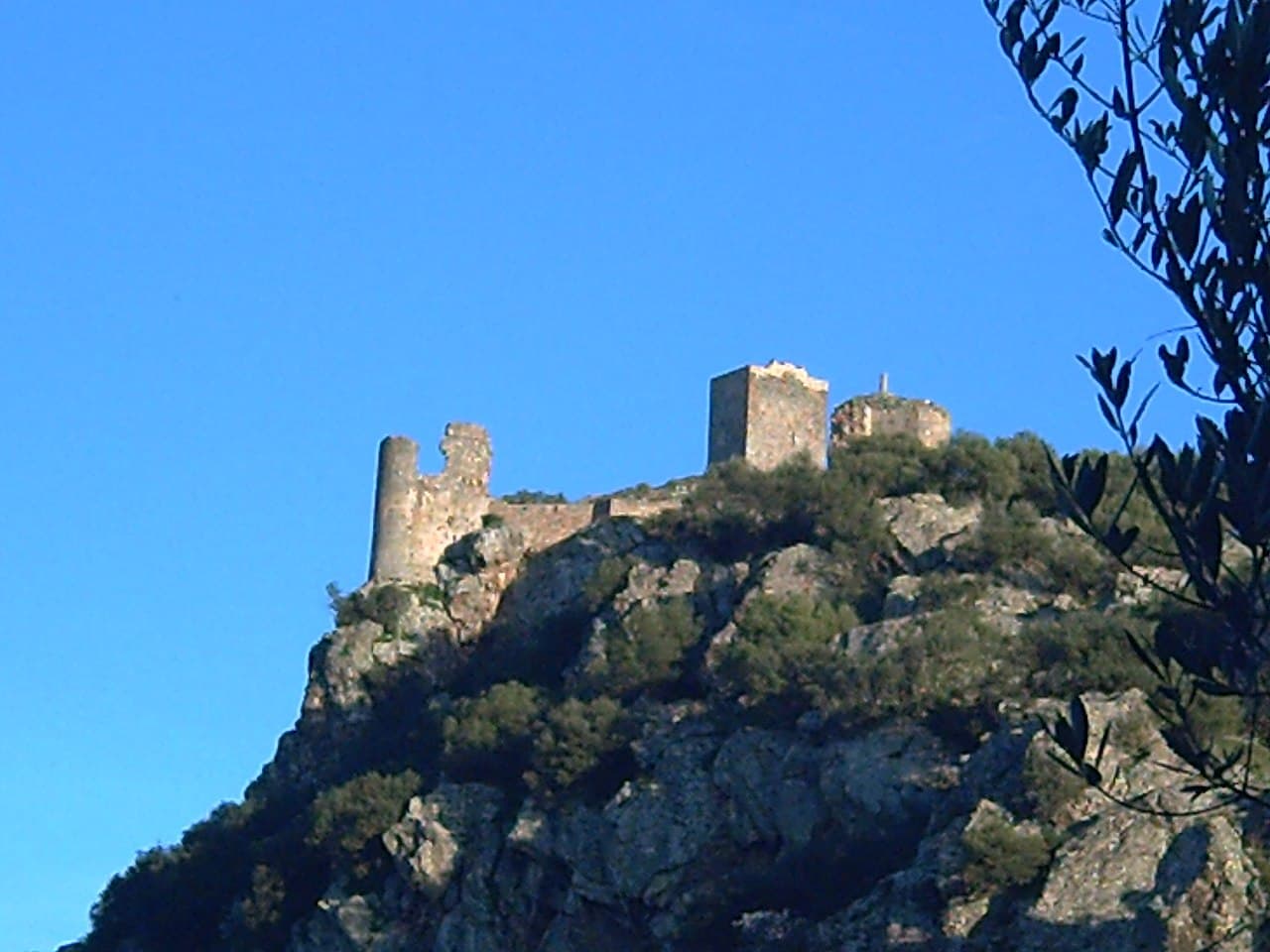
Alange Castle stands as a remarkable example of a hill castle with a rich history spanning from Roman times through the Islamic period and the Christian Reconquista. Located on the Cerro de la Culebra, a rocky hill approximately 485 meters above sea level in the municipality of Alange, Spain, the castle commands a strategic vantage point overlooking the confluence of the Matachel and Guadiana rivers, the surrounding plains, and the village below. Its position allowed control over the ancient Silver Way, a crucial trade route, underscoring the fortress's military and economic significance throughout its history.
Roman origins and early strategic importance
The site originally hosted a Roman fortress known as Castrum Colubri, established to exert dominance over the region during the Roman occupation of Hispania. Constructed on a rocky outcrop composed of quartzite or granite, the fortress utilized the natural elevation to provide a defensive advantage and surveillance over the territory. This early phase laid the foundation for the site's enduring military role.
Islamic reconstruction and architectural features
In the mid-9th century, around 850 AD, the castle was rebuilt by the Arabs under the leadership of Hixn al-Hanash during the Islamic conquest of the Iberian Peninsula. This reconstruction introduced the toponym Alange, derived from the Arabic al-Hanash or al-Hanx, later evolving into al-Anj. The fortress served as a defensive stronghold within the frontier regions of Al-Andalus, controlling access to the Silver Way and protecting the surrounding lands.
The castle's architecture from this period is characterized by robust brick walls and numerous windows with distinctive horseshoe-shaped arches, a hallmark of Islamic design. The presence of wells dating from the Islamic period within the complex highlights the self-sufficiency of the fortress during sieges. The layout reflects the typical Muslim military architecture adapted to the rocky terrain.
Defensive structures and layout
The fortress included multiple towers, with the central keep or tower of homage serving as the last refuge in case of attack. The walls incorporated both brick and stone masonry, demonstrating the blend of construction techniques. The Puerta del Sol (Gate of the Sun), an arched entrance, remains one of the best-preserved access points and exemplifies the fusion of Islamic and later Christian architectural influences.
Christian conquest and modifications
Between 1243 and 1245, during the Reconquista, the castle was captured by Christian forces under the reign of King Fernando III of Castile. The Order of Santiago, a military and religious order, took control of the fortress, establishing the Encomienda of Alange as a territorial and administrative jurisdiction. The castle then functioned as both a military stronghold and an administrative center.
Christian modifications to the castle included strengthening the existing walls and adapting the fortress to new military technologies and needs. Despite these changes, the castle retained much of its Islamic architectural character, resulting in a layered historical narrative visible in the masonry and structural elements.
Military significance and historical events
Throughout its history, Alange Castle was a witness to numerous battles and sieges between Moors and Christians, reflecting the turbulent dynamics of the Iberian Peninsula during the Middle Ages. Its strategic location allowed control over the Silver Way and the surrounding fertile plains, making it a coveted military asset.
The castle oversaw key geographical points including the village of Alange, the meeting of the Matachel and Guadiana rivers, and the broader comarca. Its inaccessibility due to the steep hilltop location made it a formidable defensive position.
Decline and preservation
The fortress was abandoned around 1550, as military and political priorities shifted and newer fortifications were developed elsewhere. Today, the castle remains are partly preserved, with three towers and the central keep still standing. These structures showcase the strong brick walls and the horseshoe-shaped windows characteristic of its Islamic origins.
Sections of the defensive walls survive, combining brick and stone masonry and illustrating the complex history of construction phases from Roman foundations through Islamic reconstruction to Christian adaptations. The Puerta del Sol remains a notable architectural feature accessible to visitors.
On April 22, 1949, Alange Castle was declared a Spanish historical monument, recognizing its cultural and historical importance. The site is a valuable heritage asset that offers insights into the layered history of military architecture and the cultural interplay between Roman, Islamic, and Christian civilizations in Spain.
Architectural highlights and visitor experience
Visitors to Alange Castle can explore the ruins perched atop the Cerro de la Culebra, enjoying panoramic views of the surrounding landscape, including the nearby city of Mérida and other regional castles such as Hornachos and Montemolín. The castle's layout reveals its complex history through its surviving structures and masonry.
The central keep stands as a testament to the fortress's defensive capabilities, while the Puerta del Sol offers a glimpse into the architectural synthesis of different periods. The presence of wells and other features from the Islamic period enrich the narrative of the castle's self-sustaining design during times of conflict.
Alange Castle remains a significant monument for understanding the military, cultural, and architectural evolution in southwestern Spain from antiquity through the medieval period.
Frequently asked questions (FAQ)
- How do I get to Alange Castle?
- Alange Castle is located on Cerro de la Culebra near the village of Alange in Extremadura, Spain. It is accessible by local roads from the village, with parking available nearby. Visitors should prepare for a hike uphill to reach the ruins.
- What is the historical significance of Alange Castle?
- Alange Castle has a layered history from Roman times through the Islamic period and Christian Reconquista. It controlled the Silver Way trade route and witnessed numerous battles, reflecting the strategic military importance of the region.
- Can I explore the remains of Alange Castle?
- Yes, visitors can explore the ruins including the towers, keep, and defensive walls. The Puerta del Sol remains accessible, offering insight into the castle's architectural evolution. However, some areas may be unstable, so caution is advised.
- When was Alange Castle built and by whom?
- The current castle structure was rebuilt by Arabs in the 9th century on a Roman fortress site. It was later captured by Christian forces in the mid-13th century during the Reconquista.
- Is there an entrance fee to visit Alange Castle?
- Visiting Alange Castle is generally free of charge, but it is advisable to check with local tourist information centers for any updates on access or guided tours.
Photo gallery

Photo by Better•Public domain
Information
Current owner
Spanish government
Loading map...
Visitor reviews
No reviews yet. Been here? Write the first review and help other travelers!
Write the first reviewVisited this castle? Share your experience
Your review helps other travelers and adds first-hand knowledge to our encyclopedia.