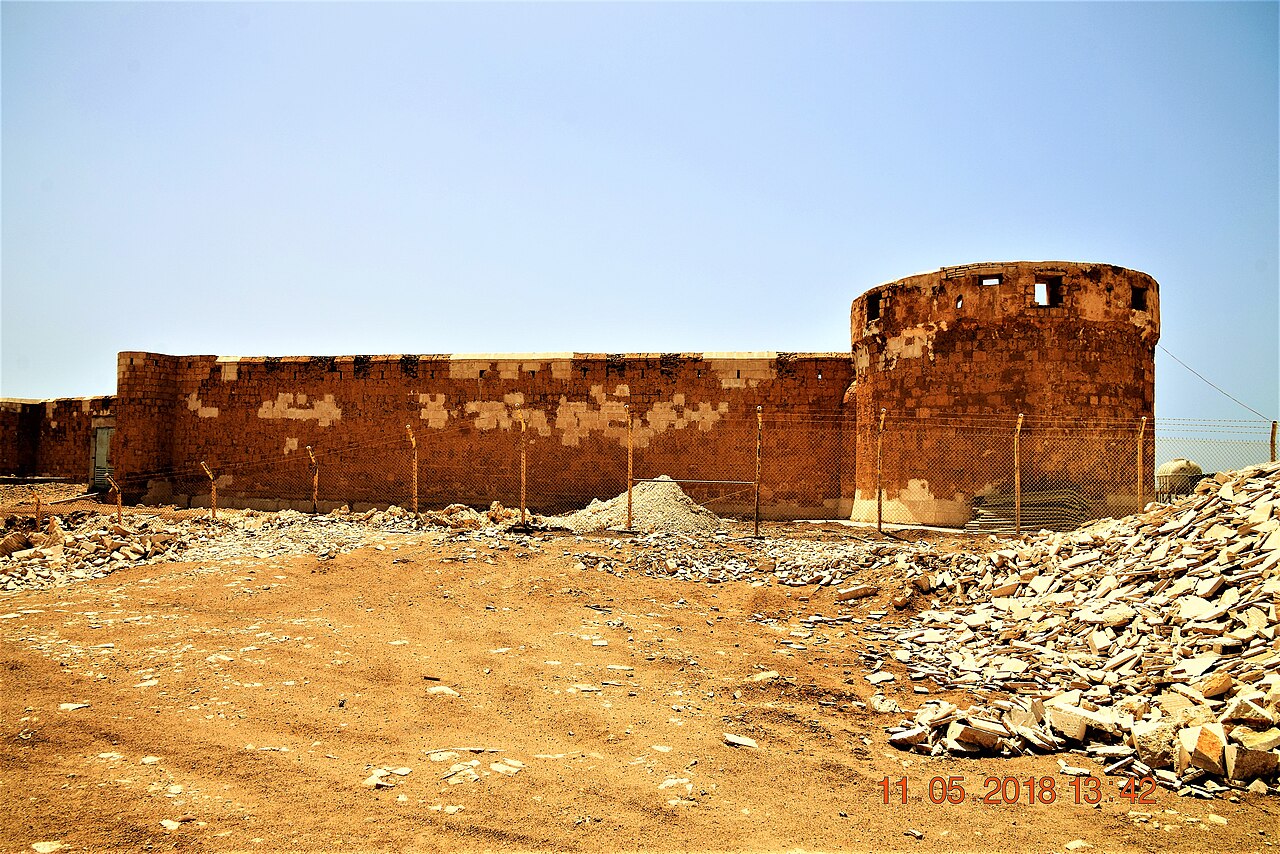
Al Wajh Castle
Al Wajh Castle stands as a prominent historical fortress located in the municipality of Al Wajh, within the Tabuk region of Saudi Arabia. Constructed in 1875 CE (1276 AH), this hill castle was established by local authorities to serve as a fortified administrative center, reflecting the strategic importance of Al Wajh as a coastal town along the Red Sea. Its primary purpose was to secure and oversee the surrounding region, combining military defense with governance functions.
The castle's foundation is deeply tied to the geopolitical and economic significance of the late 19th century, when controlling coastal access and regional stability were paramount. As a government stronghold, Al Wajh Castle played a crucial role in safeguarding the area from external threats, facilitating local administration, and asserting the authority of regional rulers during a period marked by shifting power dynamics in the Arabian Peninsula.
Over the decades, as security conditions evolved and modern governmental structures emerged, the castle's defensive role diminished. However, its historical and cultural significance endured, leading to its transformation into a museum in recent years. Today, the castle preserves and displays a rich collection of historical images and narratives related to the town of Al Wajh, offering visitors insight into the region's heritage and the castle's multifaceted past.
Architectural layout and defensive features
Al Wajh Castle exhibits a distinctive rectangular layout, measuring approximately 55 meters in length and 51 meters in width. The fortress is enclosed by robust walls that form a protective perimeter around an inner courtyard. At each of the four corners stand three-quarter circle towers, which were integral to the castle's defensive capabilities, providing elevated vantage points for surveillance and defense against potential attackers.
The main entrance is centrally positioned on the western wall, leading into a stone-paved vestibule spanning about 30 square meters. This entrance area was designed not only for security but also to convey a sense of authority and permanence through its durable and aesthetically crafted stonework. From the vestibule, a passage to the right grants access to the courtyard, which is surrounded by a series of rooms aligned along the inner walls of the castle.
Functional spaces within the castle
The rooms surrounding the courtyard likely served a variety of administrative and residential functions, supporting the castle's role as a government center. Among these chambers is a dedicated bathroom complex, accessible from the courtyard, which illustrates the attention given to the daily needs and hygiene of the castle's inhabitants.
Nearby, the remains of a furnace indicate the presence of facilities for heating or cooking, essential for sustaining occupants during their stay. Adjacent to these rooms, a staircase composed of two flights with seven steps each ascends to a stone-paved walkway atop the walls. This elevated path allowed guards and officials to patrol the perimeter and maintain vigilance over the surrounding landscape.
Historical significance and preservation efforts
Throughout its active use, Al Wajh Castle was a vital military and administrative hub, embodying the intersection of defense and governance in the late 19th century Arabian context. Its strategic coastal location underscored its importance in controlling maritime access and regional security.
In recognition of its cultural and historical value, the castle has been included in the National Register of Urban Heritage maintained by the Saudi Heritage Authority. This designation reflects a broader national initiative to document, conserve, and promote archaeological and historic sites across Saudi Arabia, ensuring that the legacy of Al Wajh Castle is preserved for future generations.
Today, the castle remains largely intact, with its structural elements well-preserved, allowing visitors and scholars to gain a clear understanding of its original form and use. The integration of defensive features with practical living spaces highlights the castle's multifunctional character, bridging military, administrative, and domestic needs.
Cultural role and museum conversion
The transformation of Al Wajh Castle into a museum has reinforced its role as a custodian of local heritage. The museum showcases historical photographs, documents, and artifacts that narrate the story of Al Wajh town and its development over time. This cultural repurposing extends the castle's significance beyond its original military function, making it a focal point for education and tourism in the region.
Architectural style and construction techniques
The castle's construction reflects the regional architectural traditions of the late 19th century, characterized by the use of locally sourced materials and robust building techniques suited to the harsh coastal environment. The thick walls and corner towers are typical defensive features designed to withstand potential sieges and attacks.
The use of carved stone in the vestibule and the presence of functional elements such as bathrooms and heating facilities indicate a blend of practicality and craftsmanship. The design balances the need for security with the requirements of administration and habitation, illustrating the castle's role as a comprehensive stronghold.
Structural details and defensive design
The four three-quarter circle towers at the corners provided overlapping fields of fire and observation, a common military architectural strategy to eliminate blind spots. The elevated walkway along the walls allowed for continuous patrols, enhancing the castle's defensive readiness.
The rectangular plan optimized the use of space within the fortress, facilitating efficient movement and communication between different functional areas. The courtyard served as a central open space for gatherings, administrative activities, and access to the various chambers.
Visiting al wajh castle today
Visitors to Al Wajh Castle can explore its well-preserved walls, towers, and inner courtyard, gaining insight into the military architecture and administrative history of the region. The museum housed within the castle offers a rich collection of exhibits that deepen understanding of Al Wajh's historical context.
The castle's location in the coastal town of Al Wajh makes it accessible for travelers interested in Saudi Arabia's heritage. Its preservation as a cultural landmark ensures that it continues to attract historians, tourists, and locals alike, contributing to the appreciation of the kingdom's diverse historical landscape.
Frequently asked questions (FAQ)
- How do I get to Al Wajh Castle?
- Al Wajh Castle is located in the town of Al Wajh in Saudi Arabia, easily accessible by car or public transport from nearby cities. If you're driving, follow the main roads leading to Al Wajh, and look for signs directing you to the castle.
- What is the historical significance of Al Wajh Castle?
- Al Wajh Castle has a rich history as a defensive fortress built in the 19th century, playing a vital role in protecting the region from invasions. It also served as a key point for trade and commerce, linking the interior of Saudi Arabia to the Red Sea.
- When was Al Wajh Castle built?
- Construction of Al Wajh Castle began in the late 19th century, around the 1800s, under the orders of the Ottoman Empire. The castle's architecture reflects the military style of the period, designed to withstand attacks and serve as a stronghold.
- Can I visit Al Wajh Castle?
- Yes, Al Wajh Castle is open to visitors who wish to explore its historical significance and architectural beauty. Be sure to check local guidelines and potential restrictions before your visit.
- Why is the architecture of Al Wajh Castle unique?
- The architecture of Al Wajh Castle is characterized by its traditional mud-brick construction and strategic design, which was typical of military fortifications in the region. The castle features thick walls, watchtowers, and a layout that reflects its purpose as a defensive stronghold.
- Is it possible to take guided tours of Al Wajh Castle?
- Yes, guided tours of Al Wajh Castle may be available, offering visitors insights into its history and architecture. It's advisable to check with local tour operators or the castle's management for scheduled tours and availability.
- What are the opening hours for Al Wajh Castle?
- Al Wajh Castle typically opens to visitors from early morning until late afternoon, but specific hours may vary. It is best to confirm the current opening hours before planning your visit to ensure access.
- What is the best time to visit Al Wajh Castle?
- The best time to visit Al Wajh Castle is during the cooler months, from October to March, when temperatures are more pleasant for outdoor exploration. Visiting during this period allows for a more comfortable experience as you tour the castle and its surroundings.
- Are there any nearby attractions to see when visiting Al Wajh Castle?
- Yes, nearby attractions include the beautiful beaches along the Red Sea, historical sites in Al Wajh, and local markets where visitors can experience the culture. Exploring these nearby sites can enhance your visit and provide a deeper understanding of the region.
- What are the ticket prices for Al Wajh Castle?
- Ticket prices for Al Wajh Castle are generally affordable, making it accessible for a wide range of visitors. It is recommended to check for any special rates or discounts that may be available for groups or students.
Information
Loading map...
Visitor reviews
No reviews yet. Been here? Write the first review and help other travelers!
Write the first reviewVisited this castle? Share your experience
Your review helps other travelers and adds first-hand knowledge to our encyclopedia.