Al Muwaiji Fort
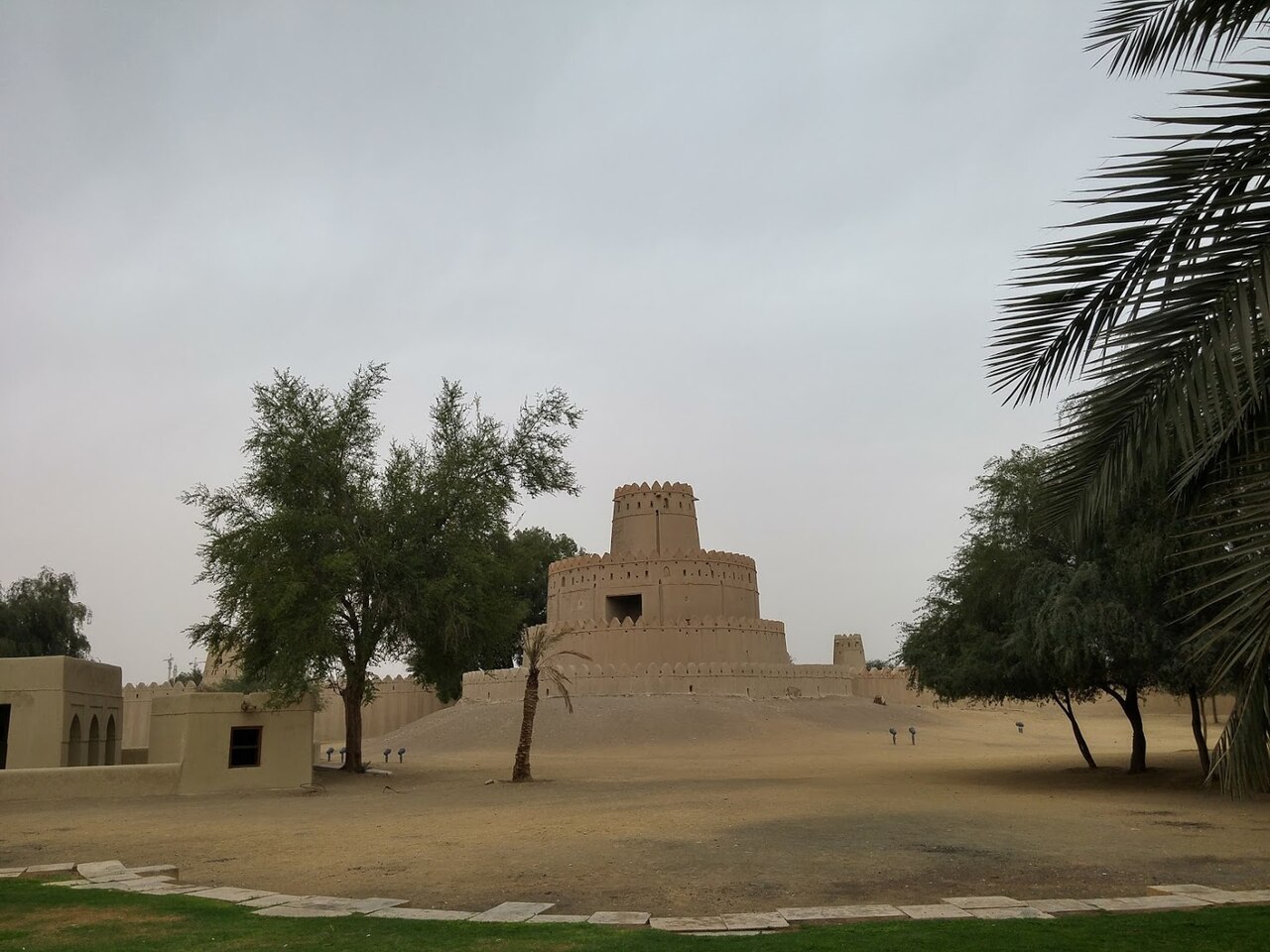
Al Muwaiji Fort, locally known as Qasr Al Muwaiji, stands as a significant historical landmark in the city of Al Ain, within the emirate of Abu Dhabi in the United Arab Emirates. This fort, constructed in the early 20th century, played a crucial role in the defense and governance of the Muwaiji oasis, one of the smaller but strategically important oases in the region. Today, it serves as a museum that preserves and presents the rich heritage of the Al Nahyan family and the broader history of the UAE's eastern region.
The fort is situated near the border with Oman, in an area historically known as the Al Buraimi Oasis, which originally encompassed the present-day twin cities of Al Ain (UAE) and Al Buraimi (Oman). This oasis region has been inhabited for centuries, with evidence of continuous agricultural and human activity dating back to at least the 18th century. The fort's location was strategically chosen to guard the western entrance to the oasis and to serve as a center of administration and social gathering.
Historical context and strategic importance
During the late 19th and early 20th centuries, the area around Al Ain was of great geopolitical significance. Numerous forts and watchtowers were constructed by the ruling families of Abu Dhabi to assert control over the oases and to protect local communities from raids and rival claims. Al Muwaiji Fort was built around the first decade of the 20th century by Sheikh Khalifa bin Zayed bin Khalifa Al Nahyan, a prominent member of the Al Nahyan dynasty, under the reign of his father, Sheikh Zayed bin Khalifa (Zayed I).
The fort functioned not only as a military stronghold but also as a diwan, a council chamber where governance and judicial matters were addressed. It was a focal point for the local community, facilitating political discussions, dispute resolutions, and social events. The fort's defensive role was underscored during the 1952 Saudi incursion when raiders attempted to capture the Abu Dhabi forts in the oasis region, seeking to assert Saudi claims over the territory. The fort and others in the area were defended by forces including the Trucial Oman Scouts and the army of Muscat-Oman, with British diplomatic intervention eventually leading to the withdrawal of Saudi forces.
Architectural features and layout
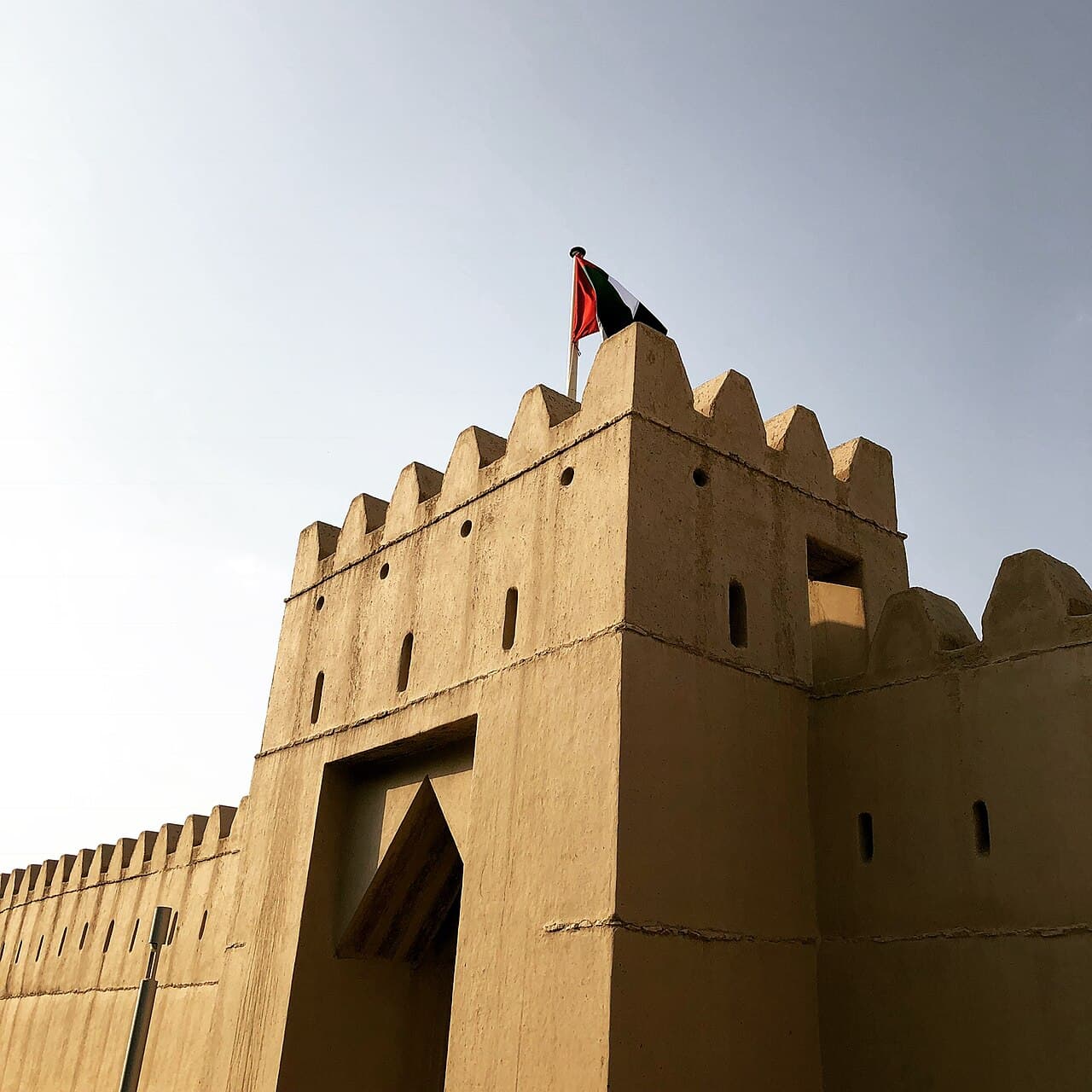
Al Muwaiji Fort exhibits a classic square ground plan typical of many traditional Arabian forts, with sturdy rectangular towers positioned at three of its corners, two of which project outward to provide enhanced defensive coverage. The walls and towers are constructed mainly from mudbrick, a locally sourced material that offered effective insulation against the desert climate and was a common building technique in the region.
The fort's main entrance is a large, imposing gate designed to control access and provide protection. Inside, the internal layout reflects multiple phases of construction and expansion, particularly during the mid-20th century when significant renovations were undertaken by Sheikh Zayed bin Sultan Al Nahyan. These improvements included doubling the size of the diwan, enlarging kitchens and guest rooms, and adding a mosque within the complex. These enhancements underscore the fort's dual role as both a residence and a political center.
Restoration and archaeological work
Following the departure of Sheikh Zayed and his family to Abu Dhabi city in 1966, the fort fell into disrepair and was partially repurposed for agricultural use, including a date palm plantation within its walls. However, beginning in the late 20th century and continuing into the 21st century, the fort became the subject of extensive archaeological excavations and restorations aimed at preserving its historical fabric.
Between 2009 and 2015, a comprehensive archaeological project revealed multiple layers of construction and artifacts, including copper coins dating from 1897, which helped confirm the fort's early 20th-century origins. Restoration efforts carefully maintained the fort's traditional mudbrick construction techniques to preserve its authenticity. Additionally, a modern exhibition courtyard was designed by architects Machado and Silvetti to complement the historic structure, creating a harmonious blend of heritage and contemporary museum design.
Al nahyan family and cultural significance
Al Muwaiji Fort holds profound cultural and historical significance as the childhood home of Sheikh Khalifa bin Zayed Al Nahyan, the current ruler of Abu Dhabi and President of the UAE. Born in the fort in 1948, Sheikh Khalifa spent much of his early life within its walls under the guardianship of his father, Sheikh Zayed, who served as the Ruler’s Representative of the Eastern Region from 1946 until his ascension as ruler of Abu Dhabi in 1966.
The fort's role as a family residence and political center during this critical period in UAE history links it directly to the nation's formative years. Sheikh Zayed's leadership and vision were instrumental in the unification of the emirates and the establishment of the UAE in 1971, making the fort a symbol of the country's heritage and governance traditions.
Visiting al muwaiji fort today
Currently, Al Muwaiji Fort is open to the public as a museum offering free admission. Visitors can explore the well-preserved fortifications, the restored residential and administrative spaces, and the modern exhibition areas that provide insights into the fort's history and the Al Nahyan family's legacy.
The museum's displays include artifacts uncovered during archaeological excavations, multimedia presentations, and exhibitions on the history of the Al Ain oasis and its strategic importance. The site serves as a cultural hub, educating visitors about the traditional architecture, social structures, and political history of the UAE's eastern region.
Al Muwaiji Fort is an excellent example of early 20th-century Arabian fort architecture, combining functional military design with social and administrative uses. Its preservation and transformation into a museum ensure that this vital piece of UAE heritage remains accessible and appreciated by future generations.
Frequently asked questions (FAQ)
- What is the historical significance of Al Muwaiji Fort?
- Al Muwaiji Fort served as a military stronghold, administrative center, and family residence for the Al Nahyan dynasty, notably as the childhood home of Sheikh Khalifa bin Zayed Al Nahyan.
- When was Al Muwaiji Fort built and by whom?
- The fort was constructed in the early 20th century by Sheikh Khalifa bin Zayed bin Khalifa Al Nahyan under the reign of Sheikh Zayed bin Khalifa (Zayed I).
- Can visitors tour Al Muwaiji Fort today?
- Yes, the fort is open to the public as a museum with free admission and offers insights into the history of the Al Ain region and the Al Nahyan family.
- What architectural features distinguish Al Muwaiji Fort?
- The fort features a square layout with rectangular corner towers, traditional mudbrick construction, a large main gate, and mid-20th century expansions including a mosque and enlarged diwan.
- How has Al Muwaiji Fort been preserved and restored?
- Extensive archaeological excavations and restoration projects between 2009 and 2015 preserved the fort's traditional mudbrick fabric and added a modern exhibition courtyard.
- What are the visiting hours and ticket prices for Al Muwaiji Fort?
- The fort is open daily from 09:00 to 17:00 with free admission for all visitors.
Photo gallery

Information
Opening hours
09:00-17:00, daily
Ticket prices
Free
Current owner
Abu Dhabi Tourism & Culture Authority
Website
Visit websiteAddress
Sheik Khalifa Bin Zayed Street, Al Ain, Abu Dhabi, United Arab Emirates
Sources & official resources
Verify the information above using these authoritative references.
Loading map...
Visitor reviews
No reviews yet. Been here? Write the first review and help other travelers!
Write the first reviewVisited this castle? Share your experience
Your review helps other travelers and adds first-hand knowledge to our encyclopedia.