Al Jahili Fort
Al Jahili Fort stands as a prominent historical and architectural landmark in the city of Al Ain, within the emirate of Abu Dhabi in the United Arab Emirates. Constructed in the late 19th century, this fortification is a testament to the region's strategic importance and rich cultural heritage. It was built primarily to protect the valuable Al Jahili Oasis and the surrounding date palm plantations, which were vital to the local economy and sustenance.
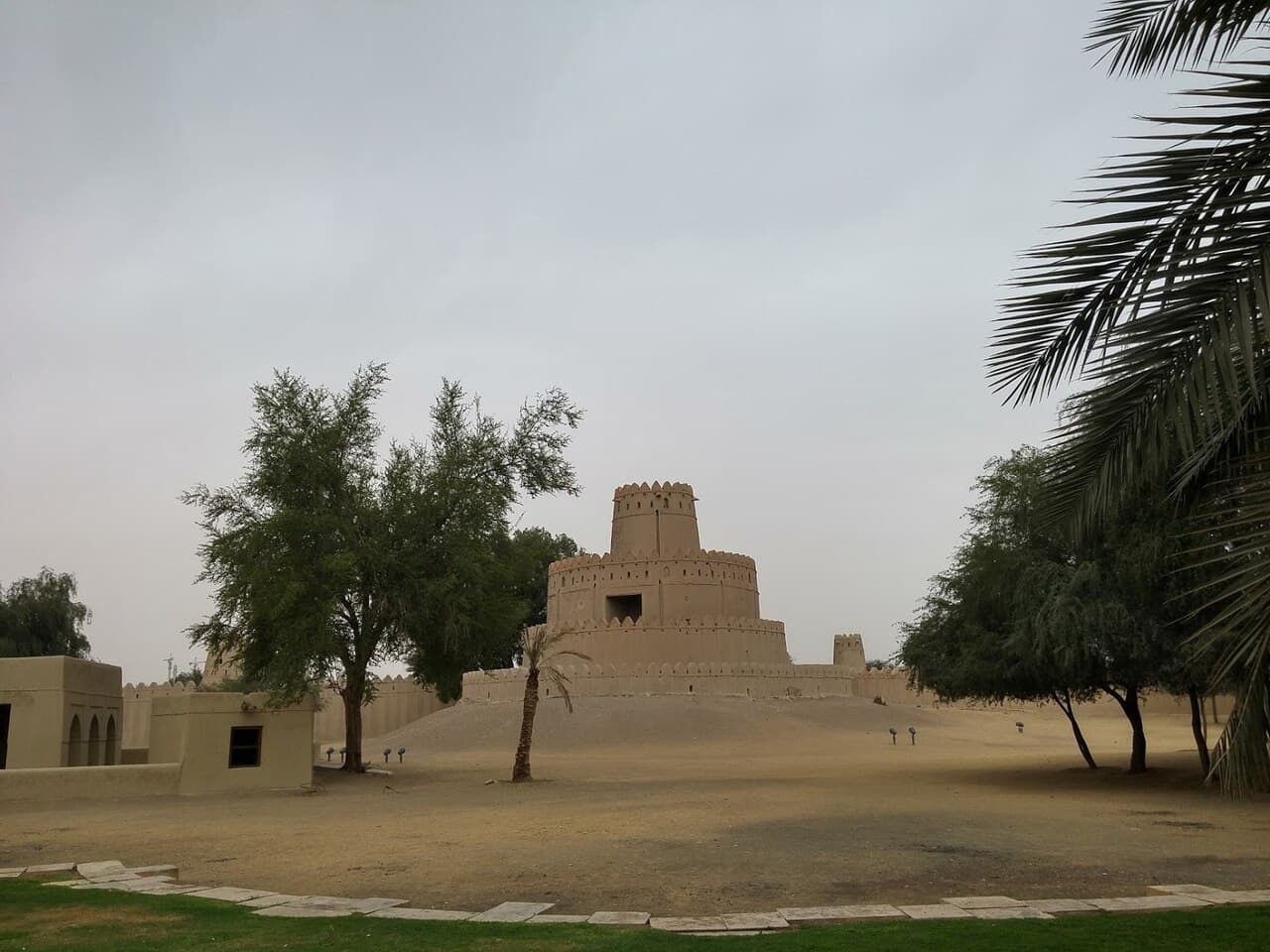
The fort's origins trace back to the reign of Sheikh Zayed bin Khalifa Al Nahyan, known as Zayed the Great, who commissioned its construction between 1891 and 1898. This period marked a significant phase in the consolidation of power by the Al Nahyan dynasty in the region. Originally, the fort consisted of a square inner structure and a distinctive freestanding round watchtower composed of four concentric tiers, designed for surveillance and defense.
Historical context and strategic significance
The area encompassing Al Ain and the neighboring town of Al Buraimi in Oman was historically recognized as the Al Buraimi Oasis, a fertile and vital area amidst the desert landscape. In the late 19th and early 20th centuries, the region saw the construction of numerous forts and towers aimed at securing control over these oases and protecting them from tribal conflicts and raiders.
In 1952, the fort played a role during a conflict when Saudi forces attempted to seize the oasis. The Trucial Oman Scouts, supported by the Muscat-Oman army and British diplomatic intervention, successfully repelled the Saudi incursion, reaffirming Abu Dhabi's control over the area. This event underscored the fort's military importance in the mid-20th century.
Architectural features and layout
Al Jahili Fort is a large rectangular structure, approximately 118 meters on each side and rising to about 8 meters in height. It exemplifies traditional desert military architecture, constructed using local materials and methods suited to the harsh environment.
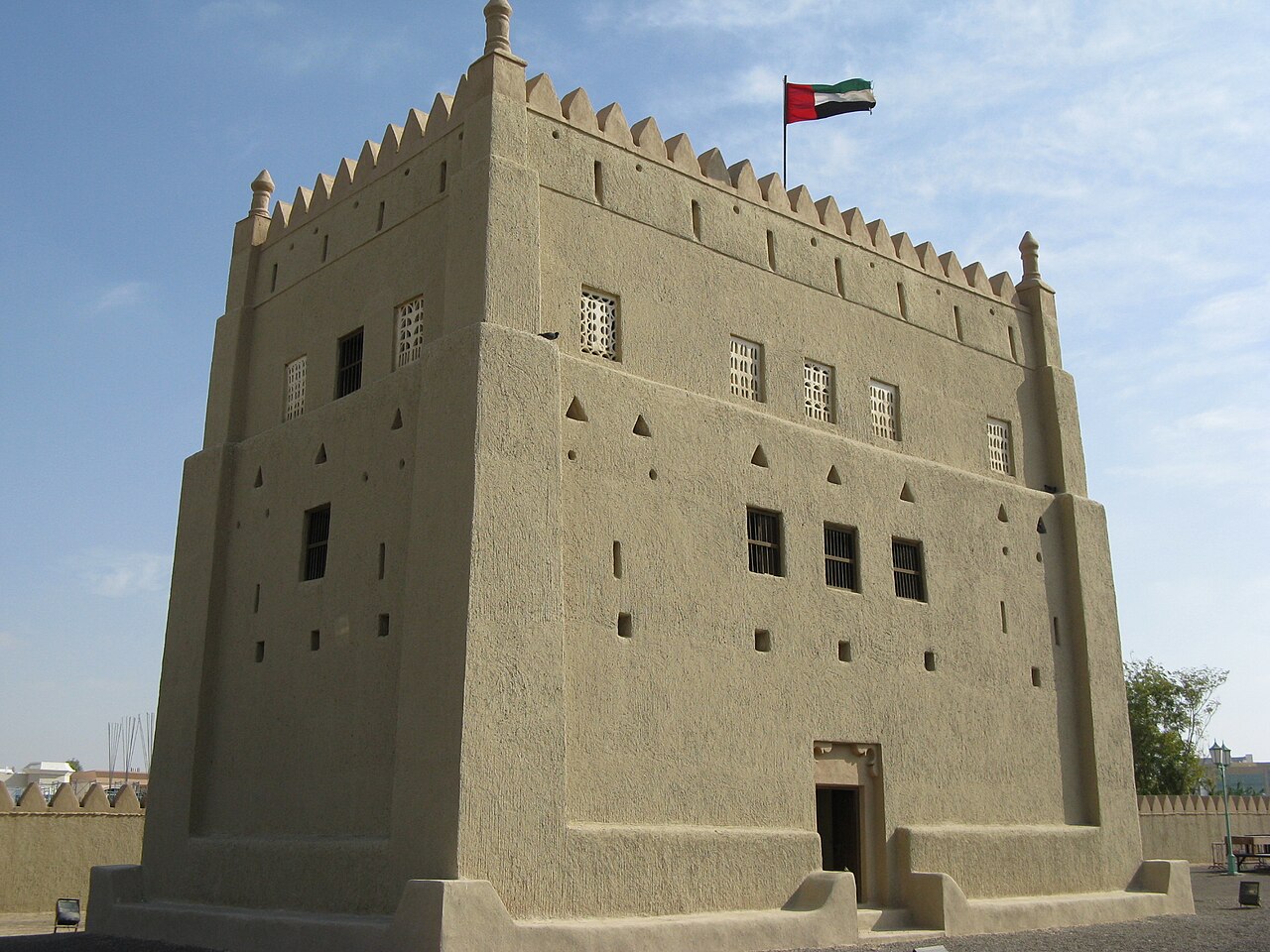
The fort features four facades, each equipped with embrasures—small openings designed for rifle fire—and triangular balconies that served as defensive positions for guards. Surrounding the fort is an external courtyard or public square, which historically functioned as a gathering space for official and communal activities.
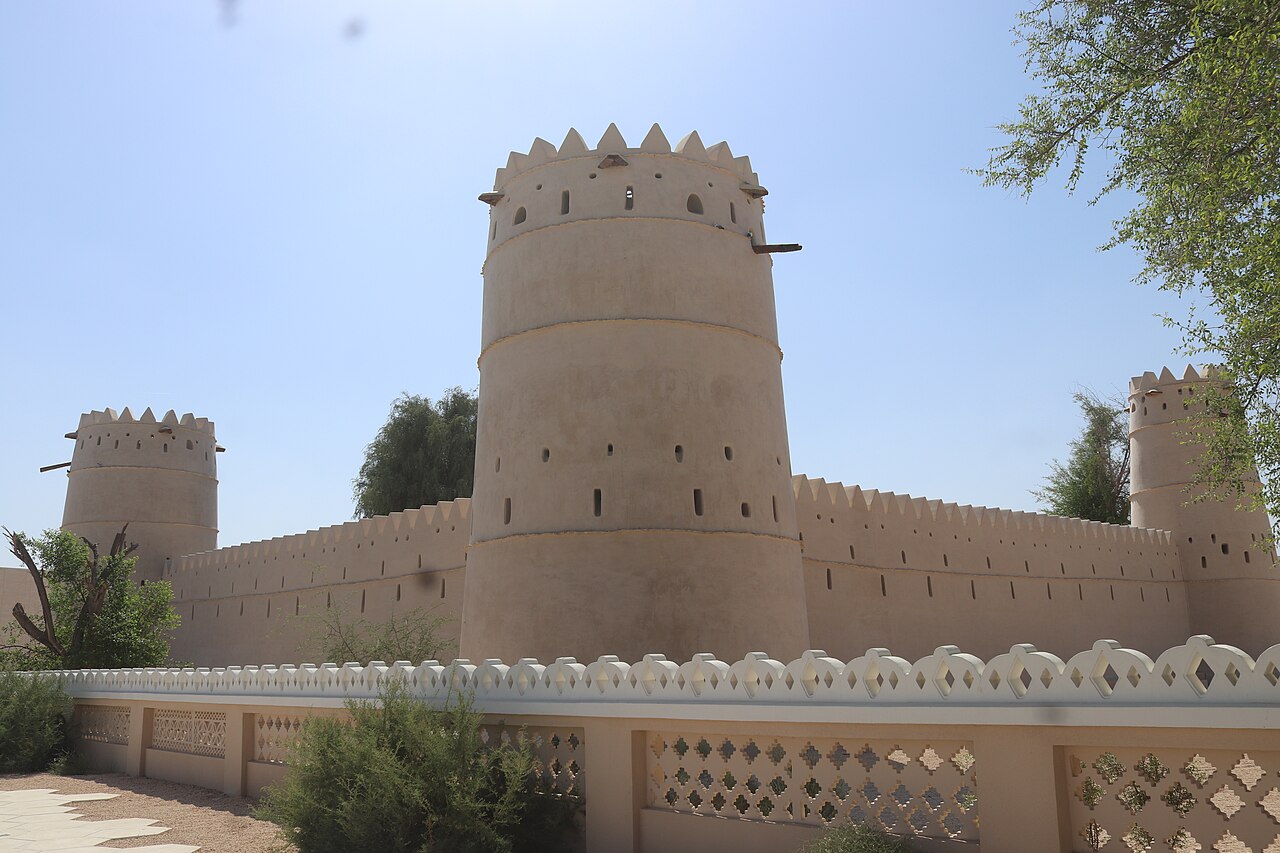
The fort is fortified with four towers of varying shapes and sizes. Three are circular, each about 5 meters in diameter and 14 meters tall, consisting of three floors. These circular towers mirror the design of the fort's main entrance towers and served as lookout points. The fourth tower, located at the northwest corner, is rectangular, measuring approximately 7 by 4 meters with two floors, built sturdier than the circular towers, likely serving a specialized defensive role.
Adjacent to the fort's walls is a historic mosque, highlighting the integration of military and religious functions within the complex. This proximity reflects the cultural and social fabric of the time, where spiritual and defensive needs were closely linked.
Military use and later restoration
By the early 1950s, the fort had deteriorated but was restored when requisitioned by the British as a barracks for the Trucial Oman Levies, later known as the Trucial Oman Scouts. The British added a rectangular defensive wall that enclosed the inner fort and watchtower, creating a large courtyard. Barracks and service buildings were constructed along the inside of this wall to accommodate military personnel.
The current gate building, notable for its two towers, was originally a simple wide gate designed to allow military vehicles access. This gate was expanded after the fort ceased military use in the early 1980s, enhancing its architectural prominence.
Following the formation of the United Arab Emirates in 1971, Al Jahili Fort transitioned from a military installation to a cultural heritage site. Restoration efforts began in the mid-1980s under the Department of Antiquities and Museums in Al Ain, with a more comprehensive restoration completed between 2007 and 2008 by the Abu Dhabi Authority for Culture & Heritage. These efforts included infrastructure improvements to support cultural activities and visitor engagement.
Current cultural significance and visitor experience
Today, Al Jahili Fort is a well-preserved example of traditional desert fortifications and serves as a cultural center in Al Ain. It is open to the public free of charge, inviting visitors to explore its historic architecture and learn about the region's past.
The fort houses a permanent exhibition dedicated to Wilfred Thesiger, a renowned British explorer who developed a close relationship with Sheikh Zayed and extensively documented the surrounding desert landscapes in the 1940s. This photographic exhibition is a major attraction, offering insight into the area's natural and cultural heritage during a pivotal era.
Additional plans for the fort include expanding its role as a cultural hub, with facilities such as a library, audiovisual displays, and spaces for temporary art exhibitions to enrich visitor engagement and education.
Recognition and architectural awards
The restoration and preservation of Al Jahili Fort have been internationally recognized. It received the Chicago Athenaeum International Architecture Award in 2010 and the Terra Award for contemporary earthen architecture in 2013. These accolades highlight the fort's exemplary restoration and its significance as a cultural and architectural landmark in the region.
Legacy and influence
Al Jahili Fort's cultural impact extends beyond the UAE. A smaller replica of the fort was constructed near the Sheikh Zayed Bridge in the Swat Valley, Pakistan, officially opened in 2013. This reflects the fort's symbolic importance and its influence on architectural heritage appreciation internationally.
Modern additions to the site include a helicopter landing pad on the eastern side, which has facilitated aerial photography and documentation, aiding ongoing conservation efforts.
Overall, Al Jahili Fort remains a vital link to the history of the Al Ain region, embodying the military, cultural, and social narratives that have shaped this part of the Arabian Peninsula over more than a century.
Frequently asked questions (FAQ)
- How do I visit Al Jahili Fort?
- Al Jahili Fort is open daily from 9:00 to 18:00 and admission is free. It is located south of Jahili Round About in Al Ain, Abu Dhabi, and is accessible by car or local transport.
- What is the historical significance of Al Jahili Fort?
- Built between 1891 and 1898 by Sheikh Zayed bin Khalifa Al Nahyan, the fort protected the Al Ain Oasis and served as a military base for the Trucial Oman Scouts, playing a key role in regional defense and tribal peace.
- Can I see exhibitions inside the fort?
- Yes, the fort houses a permanent exhibition of photographs by British explorer Wilfred Thesiger, showcasing the desert landscape and cultural heritage of the region from the 1940s.
- Is Al Jahili Fort accessible for people with disabilities?
- The fort has made efforts to improve accessibility, but due to its historic nature, some areas may be challenging to access. Visitors with mobility issues are advised to check with the site in advance.
- When was the fort restored?
- Restoration began in the mid-1980s and a major renovation was completed between 2007 and 2008 by the Abu Dhabi Authority for Culture & Heritage, preserving its architectural integrity and enhancing visitor facilities.
Photo gallery

Information
Opening hours
9:00-18:00, daily
Ticket prices
Free
Current owner
Department of Culture and Tourism - Abu Dhabi
Address
South of Jahili Round About, Al Ain, Abu Dhabi, UAE
Loading map...
Visitor reviews
No reviews yet. Been here? Write the first review and help other travelers!
Write the first reviewVisited this castle? Share your experience
Your review helps other travelers and adds first-hand knowledge to our encyclopedia.