Al Ain Palace
Al Ain Palace is a significant historic residence located in the city of Al Ain, within the emirate of Abu Dhabi in the United Arab Emirates. Constructed in 1937, the palace was the home of Sheikh Zayed bin Sultan Al Nahyan, the founding father of the UAE, until 1966 when he moved to Abu Dhabi. Today, the palace has been restored and functions as the Al Ain Palace Museum, offering visitors a glimpse into the traditional lifestyle and heritage of the region.
Historical context and regional significance
The area encompassing Al Ain and the adjacent city of Al Buraimi in Oman was originally a collection of oases spread over approximately 24 square kilometers, just north of the Jebel Hafeet mountain. Historically, this region was known as the Al Buraimi Oasis. During the late 19th and early 20th centuries, several forts and watchtowers were constructed to assert control by Abu Dhabi over the western oases and to protect inhabitants from bandit raids.
In 1952, the strategic importance of the oasis led to an incursion by Saudi forces aiming to annex the territory. The conflict was resolved with the intervention of the Trucial Oman Scouts and the Muscat-Oman army, supported diplomatically by the British, resulting in the Saudi withdrawal. Following the independence of the UAE in 1971, border agreements divided the oasis between Abu Dhabi and Oman, with the Abu Dhabi section becoming known as Al Ain.
Architectural features and layout of Al Ain Palace
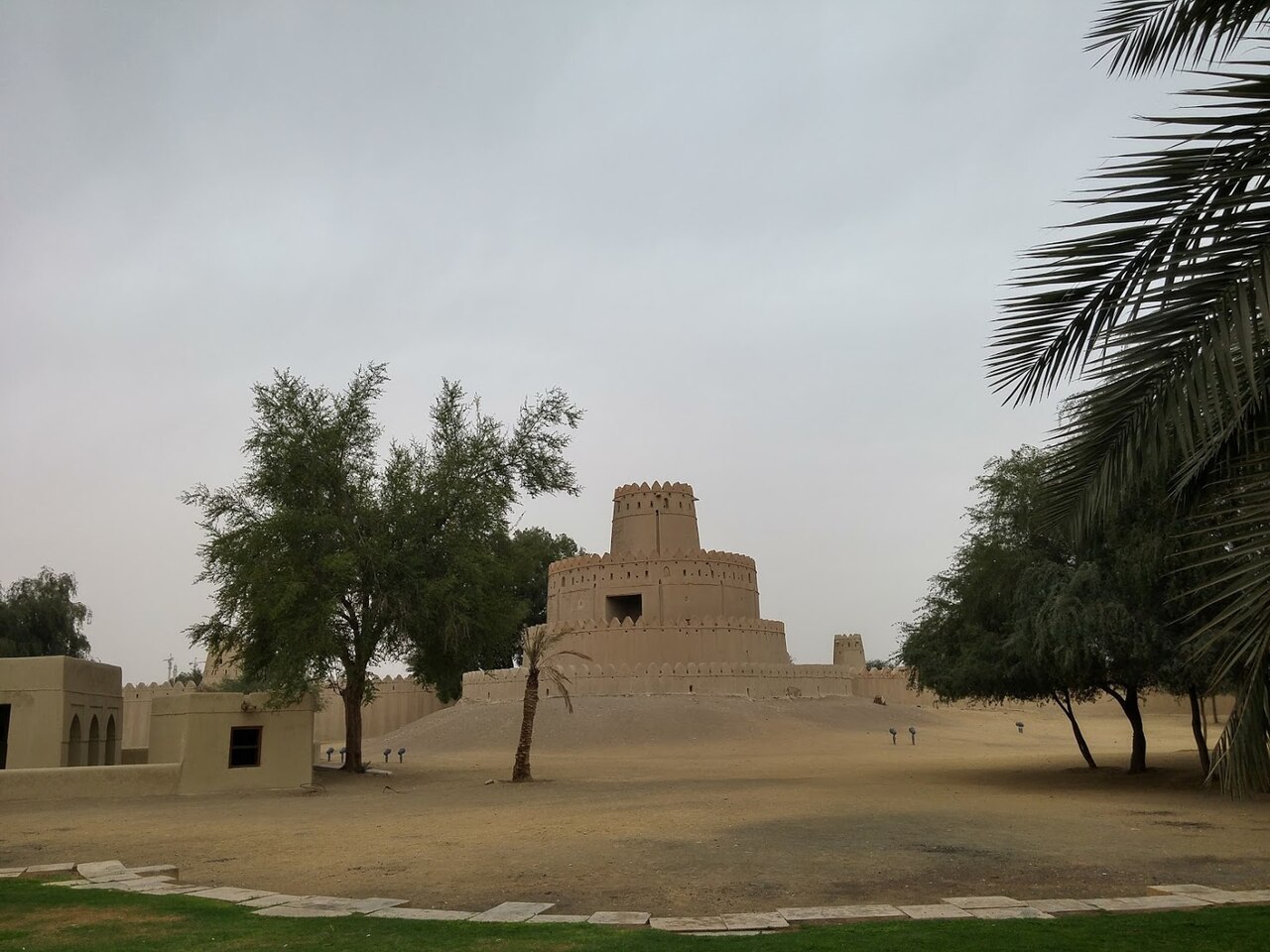
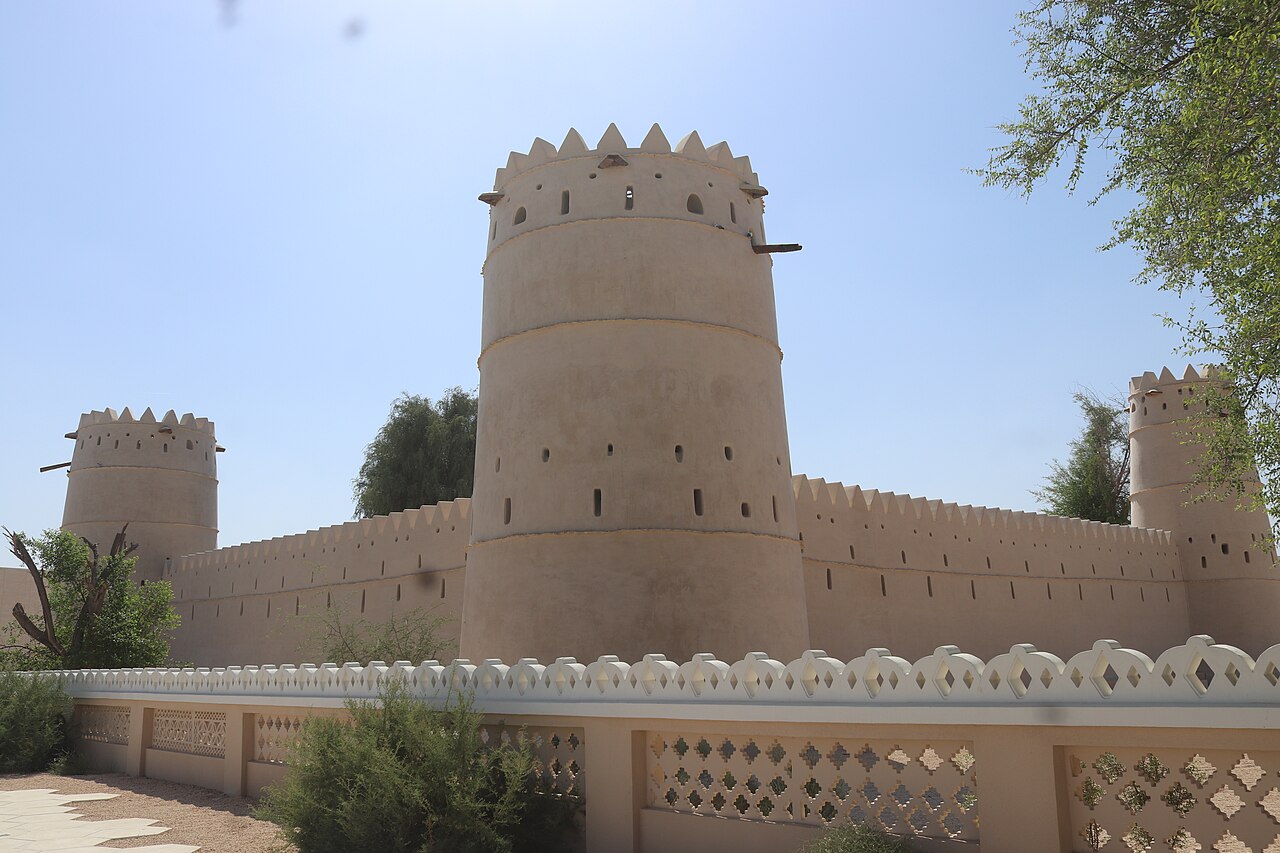
The Al Ain Palace was built as a traditional residence with a combination of functional and aesthetic elements. The palace's entrance is notable for its gate building flanked by round towers, which resemble the watchtower at the nearby Al Jahili Fort. These towers were likely designed more for visual impact than for defense.
The palace complex is organized around several courtyards featuring gardens and surrounded by various buildings. These structures served distinct purposes, including accommodation for guests, the sheikh's immediate family, his family-in-law, and service quarters. The design reflects traditional Arabian residential architecture, emphasizing privacy, hospitality, and climate adaptation.
Defensive and aesthetic elements
While the palace incorporates towers and fortified-looking elements, these were primarily symbolic rather than military. The round towers and gatehouse create a dignified façade that conveys status and authority. The palace's walls and layout also facilitate climate control and privacy, important in the desert environment.
Sheikh Zayed bin Sultan Al Nahyan and his residence
Sheikh Zayed bin Sultan Al Nahyan lived in the palace from its completion until 1966, when he relocated to Abu Dhabi to lead the emirate and later the federation of the United Arab Emirates. His time at Al Ain Palace coincided with a period of significant political and social change in the region.
The palace was not only a family home but also a center for tribal and political gatherings. Its design supported the traditional Bedouin values of hospitality and governance. The presence of multiple guest quarters highlights the importance of social and diplomatic functions.
Restoration and museum conversion
Between 1998 and 2001, the palace underwent a careful restoration aimed at preserving its historic fabric and adapting it for public access. The restoration respected the original architectural features, including the courtyards, towers, and gardens, while upgrading the interiors to accommodate museum exhibits.
Today, the Al Ain Palace Museum is open to visitors free of charge. It offers a comprehensive insight into the lifestyle of the ruling family and the cultural heritage of Al Ain. Although many rooms have similar decoration, the palace's entrance façade with its distinctive towers remains the most visually striking feature.
Al Ain's transformation and cultural importance
Since the palace's construction, Al Ain has evolved from a cluster of oases into a thriving city. The division of the oasis between the UAE and Oman led to divergent development paths, with Al Ain growing rapidly and becoming a major urban center, while Al Buraimi retained a quieter character.
The palace stands as a symbol of the region's heritage and the legacy of Sheikh Zayed, reflecting the transition from traditional oasis life to modern statehood. Its preservation as a museum allows visitors to connect with the historical and cultural roots of the UAE.
Frequently asked questions (FAQ)
- What is the historical significance of Al Ain Palace?
- Al Ain Palace is a key historical site in the UAE, serving as a former royal residence for the ruling family. It reflects the rich heritage and culture of the region, showcasing traditional Emirati architecture and the lifestyle of the past.
- When was Al Ain Palace built?
- Al Ain Palace was constructed in 1937 and has undergone several renovations over the years. It stands as a testament to the architectural evolution in the UAE and has been preserved to honor its historical importance.
- Can I visit Al Ain Palace?
- Yes, visitors are welcome to explore Al Ain Palace. The palace is open to the public, allowing guests to experience its grandeur and learn about its history through exhibitions and guided tours.
- What are the opening hours for Al Ain Palace?
- Al Ain Palace is typically open from 9:00 AM to 5:00 PM, Saturday through Thursday, and closed on Fridays. It is advisable to check the official website for any changes in hours or special events before your visit.
- Is there an admission fee to enter Al Ain Palace?
- Yes, there is a nominal entrance fee to visit Al Ain Palace, which helps in the maintenance of the site. Ticket prices are generally affordable, making it accessible for both locals and tourists.
- What is the best time to visit Al Ain Palace?
- The best time to visit Al Ain Palace is during the cooler months, from October to April. During this time, temperatures are more pleasant, allowing for a comfortable exploration of the palace and its surrounding gardens.
- Are there any nearby attractions to Al Ain Palace?
- Yes, Al Ain Palace is located near several other attractions, including the Al Ain Oasis and the Al Ain National Museum. These sites offer additional insights into the history and culture of the UAE, making for a full day of exploration.
- Is Al Ain Palace accessible for visitors with disabilities?
- Yes, Al Ain Palace is designed to be accessible for all visitors, including those with disabilities. The site has ramps and facilities that accommodate individuals with mobility challenges, ensuring everyone can enjoy the historical experience.
- How do I get to Al Ain Palace?
- Al Ain Palace is easily accessible by car or public transport from various locations in Al Ain. If you are driving, ample parking is available on-site, and there are also taxi services that can take you directly to the palace.
Information
Address
Hessa Bint Mohammed Street, Al Ain, Abu Dhabi, United Arab Emirates
Loading map...
Visitor reviews
No reviews yet. Been here? Write the first review and help other travelers!
Write the first reviewVisited this castle? Share your experience
Your review helps other travelers and adds first-hand knowledge to our encyclopedia.