Al-Mua’azam Fort
Al-Mua’azam Fort stands as a significant historical monument in Saudi Arabia, embodying the strategic military and logistical efforts of the Ottoman Empire in the early 17th century. Constructed in 1031 AH (1622 CE) during the reign of Sultan Osman II, the fort was a crucial part of the Ottoman strategy to secure the Syrian pilgrimage route. This route was vital for Muslim pilgrims traveling between Tabuk and Al-Ula, traversing harsh desert landscapes where water and safe havens were scarce. The fort’s primary role was to protect and oversee the pilgrims, ensuring their safety in this challenging environment.
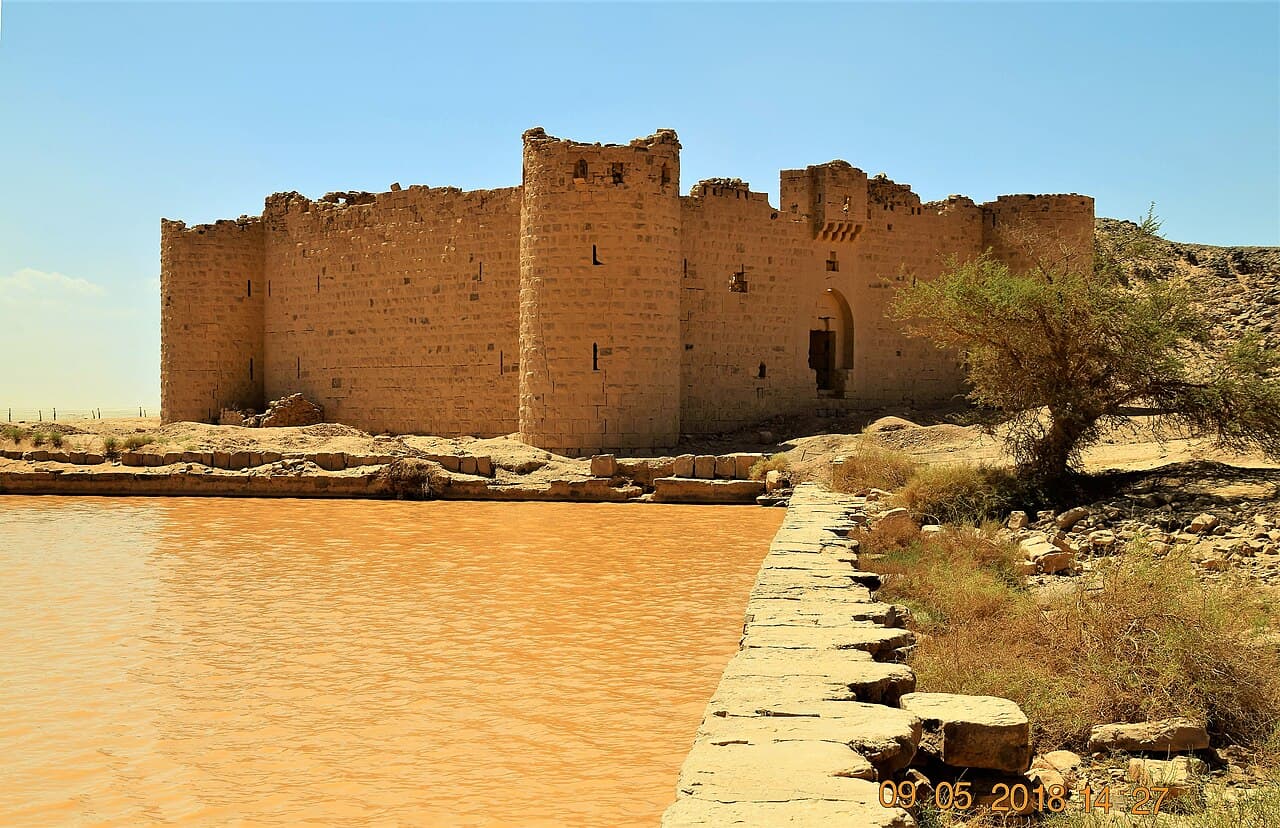
The fort is located near a large water reservoir originally built in the Ayyubid period by Al-Malik Al-Mu’azzam, nephew of the famed Crusades-era leader Saladin. This reservoir served as an essential oasis and supply point, highlighting the critical importance of water management in desert fortifications. The Ottoman construction of the fort was intended to safeguard this life-sustaining resource and provide a guarded stopover for travelers. Despite its strategic importance, historical records from travelers such as Al-Kubriti (1631) and Al-Khayari (1671) indicate that the fort and reservoir suffered neglect fairly early, with the water supply drying up by the late 17th century and the fort subsequently falling into disuse.
Historical context and significance
The establishment of Al-Mua’azam Fort reflects the Ottoman Empire’s broader efforts to control and protect key routes across their vast territories. The fort’s location on a hill overlooking the desert route was tactically chosen to maximize surveillance and defense capabilities. The Ottoman military presence ensured that the pilgrimage route remained secure from Bedouin raids and other threats, facilitating religious travel and trade.
However, the fort’s active use was relatively short-lived. By 1035 AH (1625 CE), only a few years after its construction, the fort was abandoned as Ottoman forces withdrew and Bedouin groups took control. This marked the beginning of a long period of decline and neglect lasting over two centuries, during which the fort ceased to function as a military or protective installation.
Renewed occupation and late 19th-century history
In the late 19th century, Al-Mua’azam Fort experienced a revival of sorts when Moroccan guards were stationed there. This was under the auspices of Emir Abdelkader al-Jazairi, a notable figure exiled to the region. The German explorer Julius Oetinger documented this period in 1884, describing a Moroccan caretaker living at the fort with his family. This caretaker role suggests the fort regained some strategic or symbolic importance, likely serving as a waypoint and watch post amid shifting political and social dynamics in the area.
Architectural features and layout
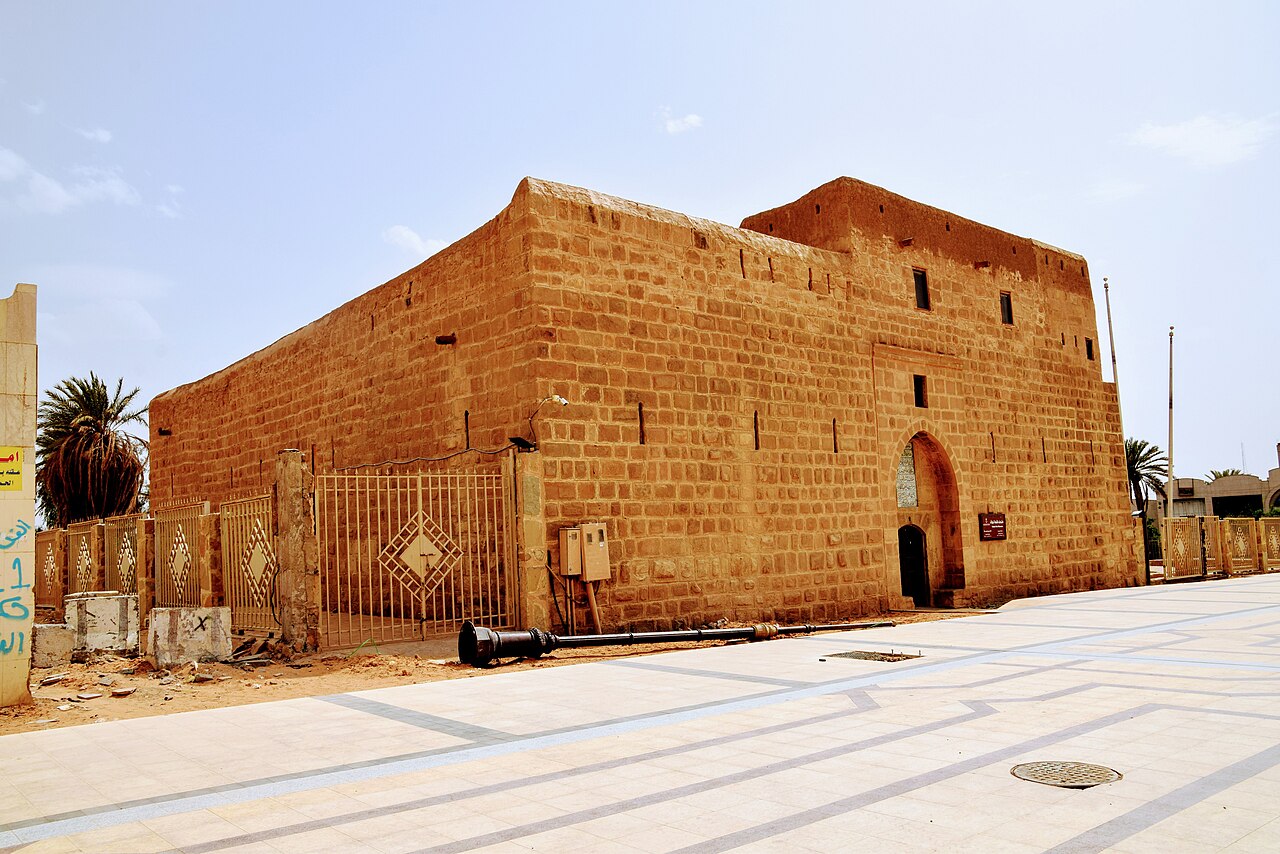
Al-Mua’azam Fort exhibits a rectangular plan centered around a spacious courtyard. This courtyard is surrounded by rooms, staircases, and upper-level galleries that once housed soldiers and personnel. The fort’s defensive design includes four circular towers positioned at each corner, providing elevated vantage points for surveillance and defense.
The fort’s main entrance is a single, prominent gateway characterized by a large arch and small defensive openings cleverly concealed behind it to protect against attackers. The use of finely cut stone in yellow and reddish tones, resembling the traditional "shamisi" stone from Mecca, demonstrates the builders’ attention to both durability and aesthetic detail. These stones are meticulously laid in regular layers to form sturdy walls reaching two stories in height.
Above the internal walkway, the walls are topped with a parapet designed to provide additional protection for guards patrolling the battlements. The exterior walls feature narrow slits serving as firing ports, enabling defenders to repel attacks while remaining shielded.
Decorative and symbolic elements
The main gate is adorned with two stone inscriptions. One inscription, in Turkish script, credits Ali ibn Muhammad Al-Mimar Bashi from Damascus as the master builder, underscoring the fort’s Ottoman architectural heritage. Another inscription features carved lions flanking the gate’s shoulders, symbolizing strength and protection. Above the gate, a stone projection supported by five protruding stones contains a small rectangular window capped by a triangular stone element, adding to the fort’s distinctive architectural character.
Water management structures
An essential feature of the fort is its stone-lined well, critical for drawing water in the arid desert environment. Nearby, two additional stone-lined wells and the large square water reservoir highlight the sophisticated water management system. The reservoir, approximately 100 cubits on each side, was engineered to collect and store floodwaters from the surrounding valley, ensuring a reliable water supply for pilgrims and residents alike.
Later developments and surrounding structures
Close to the fort, remnants of three railway buildings constructed from carefully dressed stone and an elevated water tank indicate later infrastructural developments in the area. These structures suggest the site’s continued strategic importance into more modern times, reflecting evolving transportation and water supply technologies.
The fort itself extends roughly 400 paces around its perimeter, with the reservoir featuring 25 stone steps descending to the water’s edge, facilitating access when the reservoir was full. Together, these features provide a clear view of the fort’s role as a fortified oasis and protector of a vital pilgrimage route through a challenging desert landscape.
Al-Mua’azam Fort in cultural heritage
Today, Al-Mua’azam Fort stands as a testament to the military and logistical ingenuity of the Ottoman Empire in desert environments. Its preservation offers valuable insights into the architectural techniques, strategic planning, and water management practices necessary for sustaining life and security in harsh climates. The fort’s historical significance as a guardian of pilgrimage routes enhances its cultural value, making it an important site for understanding the region’s Islamic and Ottoman heritage.
Visitors to the site can appreciate the blend of functional military architecture with symbolic and decorative elements, reflecting the fort’s dual role as both a defensive structure and a beacon of authority and protection in the desert. The surviving structures and waterworks continue to evoke the challenges and solutions of desert fortification, offering a unique window into a critical period of Middle Eastern history.
Frequently asked questions (FAQ)
- When was Al-Mua’azam Fort built and by whom?
- Al-Mua’azam Fort was built in 1622 CE by the Ottoman Empire during the reign of Sultan Osman II to protect the Syrian pilgrimage route.
- What is the architectural layout of Al-Mua’azam Fort?
- The fort has a rectangular plan with a central courtyard, surrounded by rooms, staircases, and upper galleries, and features four circular corner towers for defense.
- Why was the fort strategically important?
- It guarded a vital water reservoir and served as a secure stopover for pilgrims traveling the harsh desert Syrian pilgrimage route between Tabuk and Al-Ula.
- Is Al-Mua’azam Fort accessible to visitors today?
- The fort is partially preserved and can be visited, offering insights into Ottoman military architecture and desert water management.
- What notable inscriptions are found at the fort?
- The main gate bears inscriptions crediting Ali ibn Muhammad Al-Mimar Bashi as the master builder and features carved lions symbolizing strength.
Photo gallery

Information
Loading map...
Visitor reviews
No reviews yet. Been here? Write the first review and help other travelers!
Write the first reviewVisited this castle? Share your experience
Your review helps other travelers and adds first-hand knowledge to our encyclopedia.