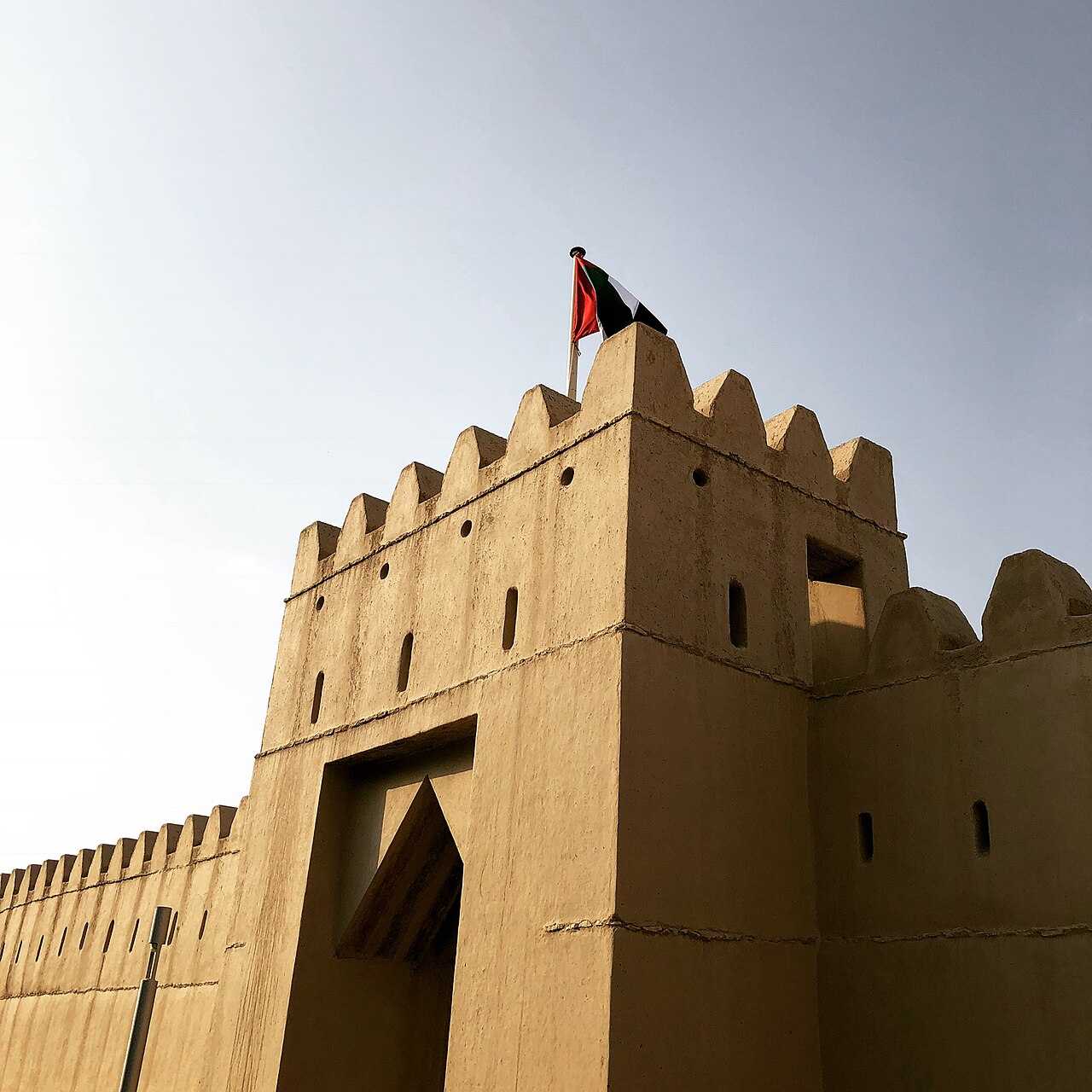
Al A'ankah Fort
Al A'ankah Fort is a historic fortified house located near the village of Remah in the emirate of Abu Dhabi, United Arab Emirates. Positioned strategically near the road connecting Abu Dhabi and Al Ain, this fortification served defensive and residential purposes in the mid-19th century. Though commonly referred to as a fort today, it was originally constructed as a fortified house, reflecting the architectural and cultural practices of the region during that era.
Historical background and significance
The fort is believed to have been built around 1848 by Sheikh Saeed bin Tahnoon, who ruled Abu Dhabi from 1845 to 1855. Sheikh Saeed bin Tahnoon was a prominent leader during a period marked by tribal conflicts and the need for fortified dwellings to protect ruling families and their communities. The construction of Al A'ankah Fort during his reign highlights its role in securing the region and providing a defensible residence.
While detailed historical records about the fort are limited, its existence contributes valuable insight into the defensive architecture and settlement patterns of the 19th-century Arabian Peninsula. The fort's location near a major route between Abu Dhabi and Al Ain underscores its strategic importance in controlling movement and trade in the area.
Architectural features and construction
The fort consists of a rectangular two-story tower situated centrally within an approximately octagonal enclosure. This design combines residential and defensive elements typical of fortified houses in the region. The walls were constructed using traditional materials such as mud bricks and cob, which provided insulation against the harsh desert climate. Palm tree trunks were used for the ceilings, demonstrating the use of locally available natural resources. Gypsum was applied for decorative and structural details, adding to the fort's architectural character.
The octagonal enclosure surrounding the tower likely served as a courtyard and additional defensive barrier, providing space for ancillary activities and protection against potential attackers. The fort's modest size and construction methods reflect its function as a fortified residence rather than a large military fortress.
Restoration efforts
Al A'ankah Fort underwent a complete restoration in the 1980s, which preserved its structural integrity and traditional appearance. Restoration work focused on maintaining the original materials and construction techniques to retain its historical authenticity. As a result, the fort today stands as a well-preserved example of 19th-century fortified domestic architecture in the United Arab Emirates.
Visiting Al A'ankah Fort
The fort is currently freely accessible to visitors and is signposted from the nearby road, making it an easy stop for travelers between Abu Dhabi and Al Ain. A sign provides basic historical information about the site, although the interior spaces remain bare without furnishings or exhibits. Despite its simplicity, the fort offers a tangible connection to the region's architectural heritage and historical landscape.
Visitors interested in the traditional building techniques of the Arabian Peninsula and the history of Abu Dhabi's rulers will find Al A'ankah Fort a worthwhile detour. Its location near a major highway makes it convenient for those exploring the cultural landmarks of the emirate.
Architectural context and cultural importance
Al A'ankah Fort exemplifies the use of indigenous materials and construction methods adapted to desert conditions. The combination of mud bricks, cob, palm trunks, and gypsum reflects a vernacular architectural style that prioritizes climate responsiveness and resource availability. The fort's design as a fortified house rather than a large-scale military installation illustrates the social and political dynamics of the time, where protection was balanced with domestic needs.
This site contributes to understanding the evolution of defensive architecture in the United Arab Emirates and the broader Gulf region during the late medieval to early modern period. It also highlights the role of local rulers like Sheikh Saeed bin Tahnoon in shaping the built environment and securing their domains through such constructions.
Frequently asked questions (FAQ)
- How do I get to Al A'ankah Fort?
- Al A'ankah Fort is located near the road between Abu Dhabi and Al Ain, close to the village of Remah. It is signposted and accessible by car, making it an easy stop for travelers on this route.
- What is the historical significance of Al A'ankah Fort?
- Built around 1848 by Sheikh Saeed bin Tahnoon, the fort served as a fortified residence reflecting the defensive needs and architectural style of 19th-century Abu Dhabi.
- Can I enter the interior of Al A'ankah Fort?
- Yes, the fort is freely accessible to visitors. However, the interior spaces are bare, without furnishings or exhibits, providing a simple yet authentic experience.
- When was Al A'ankah Fort restored?
- The fort underwent a complete restoration in the 1980s, preserving its traditional mudbrick construction and ensuring its structural stability.
- Is there an entrance fee to visit Al A'ankah Fort?
- There is no ticket price; the fort is open to the public free of charge.
Information
Loading map...
Visitor reviews
No reviews yet. Been here? Write the first review and help other travelers!
Write the first reviewVisited this castle? Share your experience
Your review helps other travelers and adds first-hand knowledge to our encyclopedia.