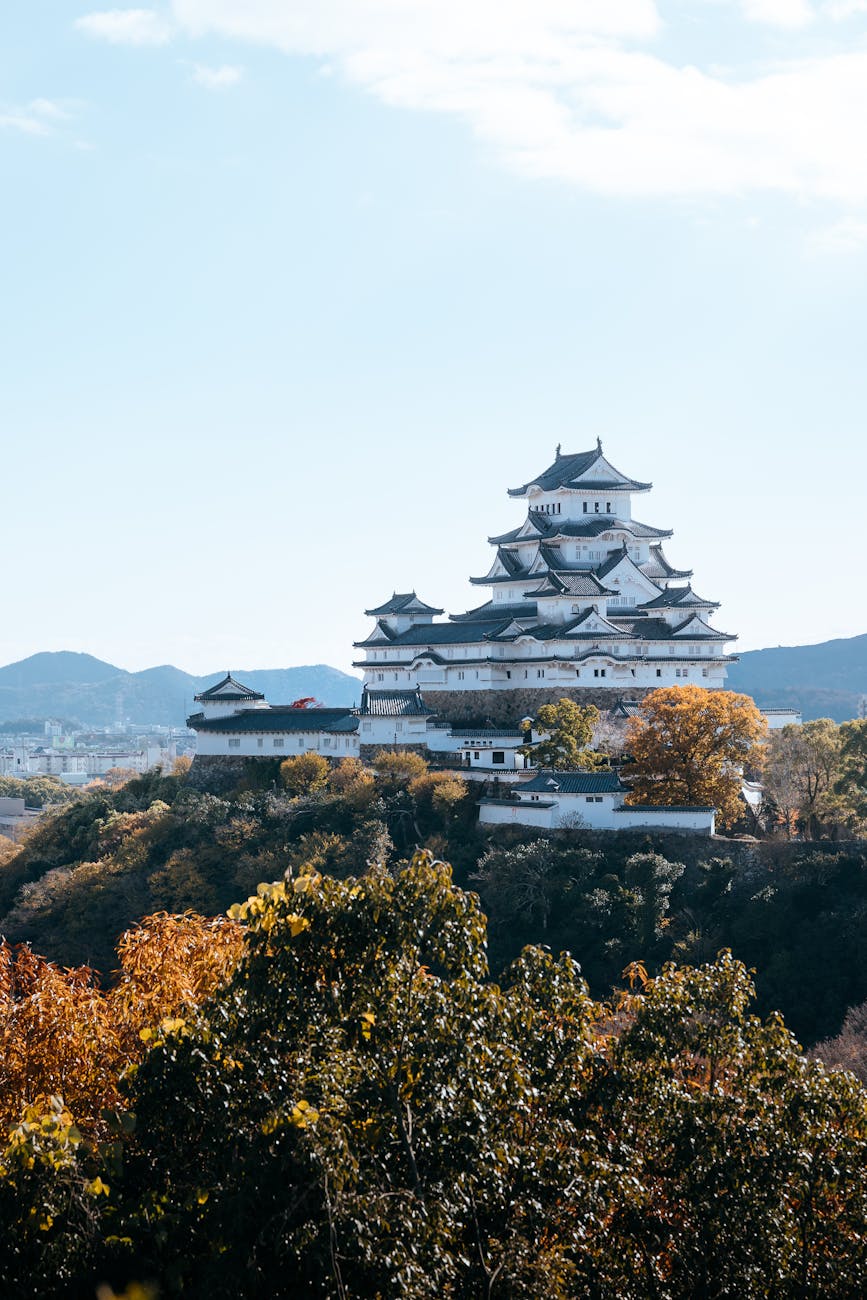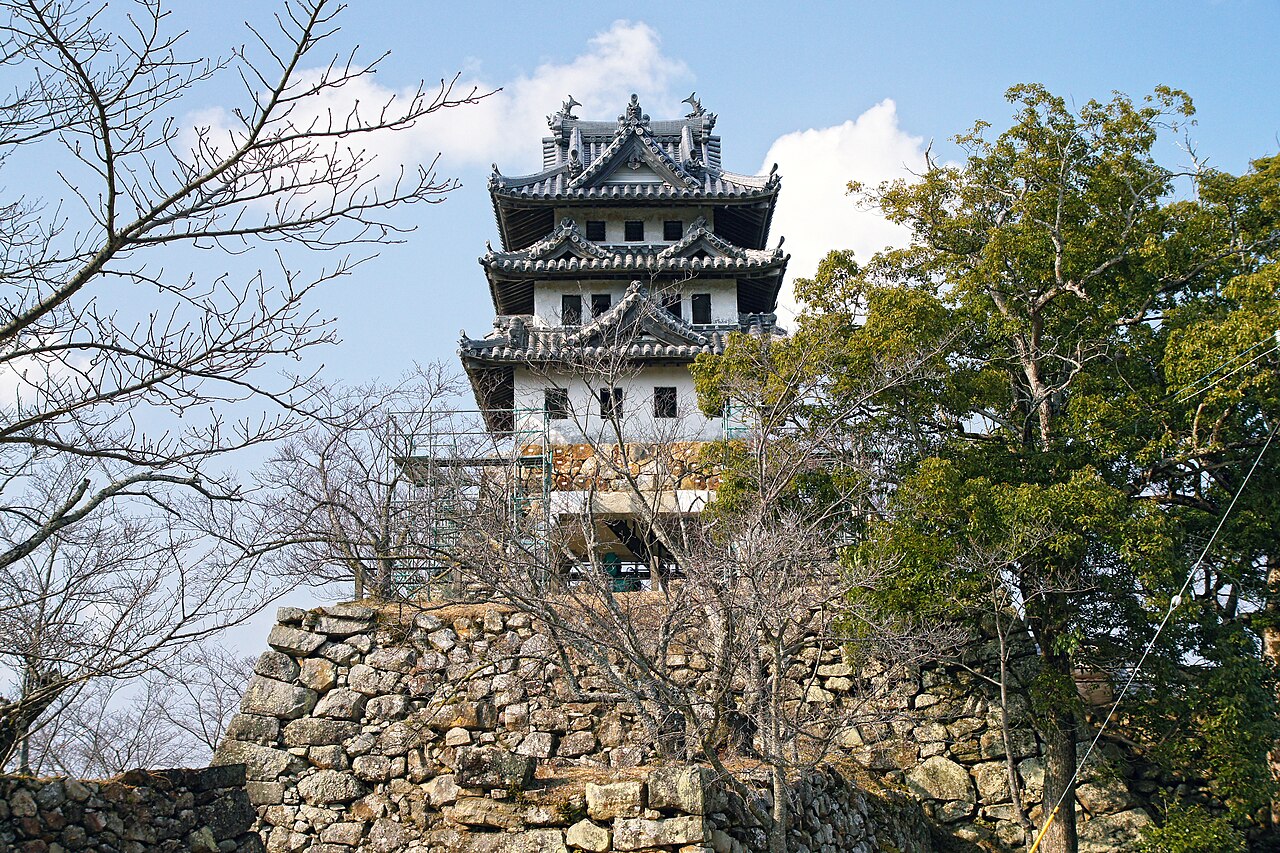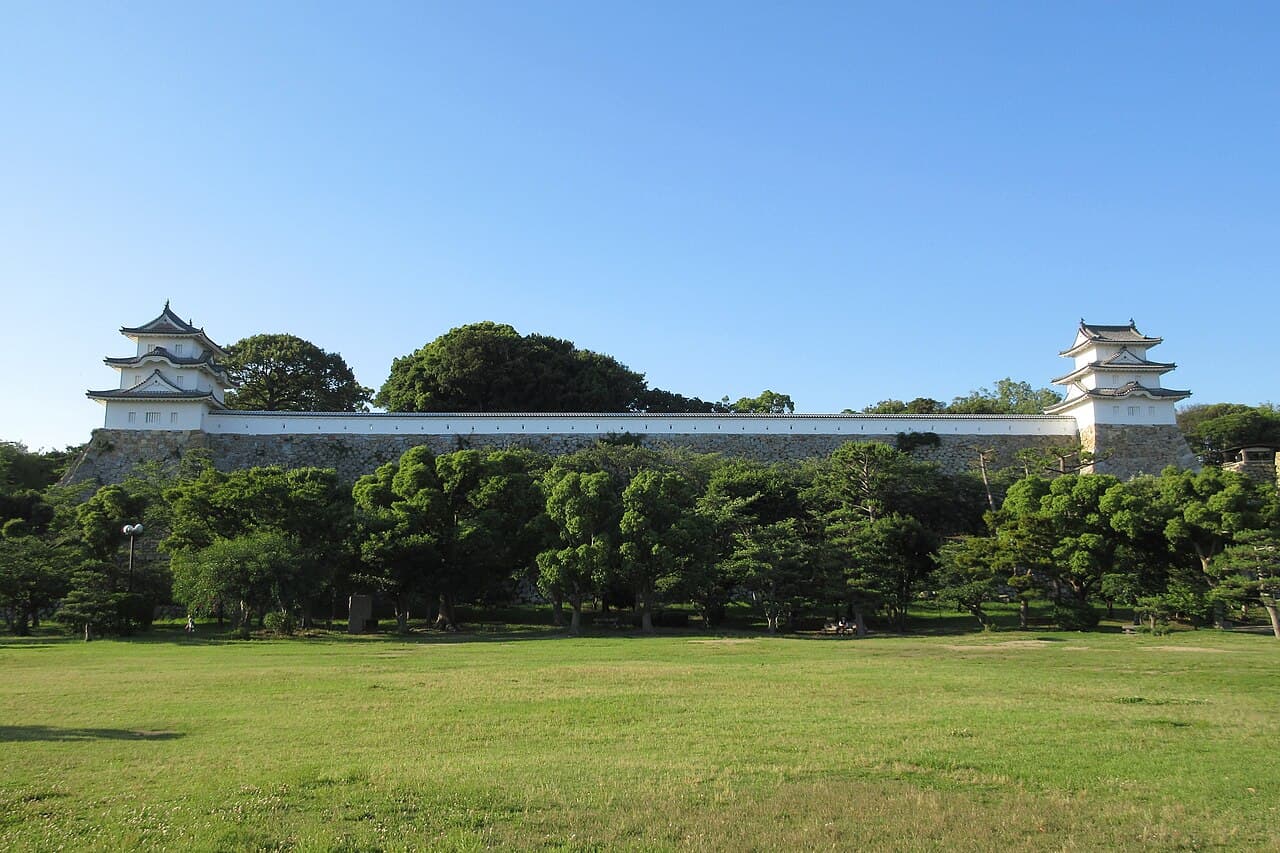
Akashi Castle — Japan castle

Akashi Castle

Akashi Castle: strategic hill castle of the Edo period in Hyogo, Japan
Akashi, Hyogo, Japan
Renaissance (15th–17th c.)
Partially Preserved

Akashi Castle (明石城, Akashi-jō) stands as a significant example of early Edo period Japanese castle architecture, located in Akashi, Hyōgo Prefecture, Japan. Constructed between 1617 and 1619 under the command of Tokugawa Hidetada, the castle was built rapidly in just one year by Ogasawara Tadazane, a prominent lord formerly of Matsumoto. The castle's primary purpose was to serve as a strategic defense point overseeing the western lords, particularly guarding the vital corridor between Osaka and western Japan. This location was crucial for the Tokugawa shogunate to maintain control over potentially hostile tozama daimyō domains during the early Edo period.

The swift construction of Akashi Castle was made possible by the 1615 "one castle per domain" law, which mandated the dismantling of many castles across Japan. Materials salvaged from these dismantled structures, notably Fushimi Castle and Funage Castle, were repurposed to build Akashi Castle, facilitating its rapid completion. The castle is situated on Mount Akamatsu, a hill that provided a natural defensive advantage, and its design cleverly integrates the terrain into a three-tiered castle compound.

Architectural features and layout

Akashi Castle is classified as a hill castle (yamajiro), a common type in Japan that utilizes elevated terrain for defense. Unlike many contemporaneous Japanese castles, Akashi Castle notably lacks a central main keep (tenshu). Although a large foundation was constructed to support a main keep, this structure was never completed. Instead, the castle’s honmaru (main enclosure) is fortified by four large three-story yagura (turrets), two of which remain standing today and are among the castle’s most prominent features.

The castle’s stone walls are well-preserved, showcasing the skilled masonry of the period. These walls are complemented by a system of moats and gates that controlled access and provided layered defense. The layout reflects the Renaissance period of Japanese castle design, emphasizing practical defense and efficient use of natural features rather than monumental keeps.

Yagura towers

The surviving yagura, including the Tatsumi Yagura and Hitsujisaru Yagura, are open to the public during limited seasonal periods, typically weekends and holidays. These towers offer insight into the castle’s defensive capabilities and architectural style. Visitors should note that only the first floors are generally accessible due to safety concerns, though special tours occasionally provide access to upper levels.

Historical context and significance

Akashi Castle was built during a period of political consolidation under the Tokugawa shogunate, following the tumultuous Sengoku period. Ogasawara Tadazane, entrusted with its construction, was supported by his father-in-law, Honda Tadamasa, who had notable experience in castle building, including work on the famed Himeji Castle. The involvement of Miyamoto Musashi, the legendary swordsman, as a "construction supervisor" adds a unique cultural dimension to the castle’s history.

The castle served as a military stronghold and administrative center for the region, overseeing the western daimyō and acting as a deterrent against rebellion or invasion. Over time, the lordship of Akashi Castle changed hands multiple times, with the Matsudaira clan ruling from 1682 until the end of the Meiji Restoration.

Later history and preservation

Despite its strategic importance, Akashi Castle was demolished in 1874 following the Meiji government's policy to dismantle feudal fortifications. However, significant portions of the castle, including its stone walls and yagura towers, have been preserved or restored. Today, the castle grounds form a large park that hosts various cultural events, light displays, and community activities.

Maintenance challenges persist, particularly with vegetation overgrowth threatening the integrity of the stone walls. Efforts to balance public access with preservation continue, with local authorities managing seasonal openings of the yagura and promoting the site as a cultural heritage landmark.

Visiting Akashi Castle today

Visitors to Akashi Castle can enjoy panoramic views from the nearby Akashi train station platform and the adjacent Piole Akashi Shopping Center, which offers excellent vantage points for photography. The castle park is a popular spot for locals and tourists alike, especially during seasonal events and festivals.

The castle’s partial preservation allows visitors to appreciate the Edo period military architecture and the strategic ingenuity of its builders. The limited opening times of the yagura require planning, with the Tatsumi Yagura accessible from March through May and the Hitsujisaru Yagura from September through November, typically on weekends and holidays. Weather conditions can affect access, so checking local information before visiting is advisable.

Access and facilities

The castle is located within easy reach of Akashi city center, making it accessible for day trips. The surrounding park offers walking paths and open spaces, though some trails may be overgrown or temporarily closed due to maintenance. Visitors are encouraged to respect the site’s historical significance and support preservation efforts.

Frequently asked questions (FAQ)

How do I get to Akashi Castle?
To reach Akashi Castle, you can take a train to Akashi Station, which is conveniently located just a short walk from the castle grounds. The station is accessible from major cities like Kobe and Osaka, making it easy for visitors to explore the area.
What is the historical significance of Akashi Castle?
Akashi Castle, built in the early 17th century, played a crucial role in the defense of the region during the Edo period. It is known for its unique architectural style and was strategically important due to its location near the Seto Inland Sea.
When was Akashi Castle built?
Construction of Akashi Castle began in 1601 and was completed in 1619. It was established by the Ikeda clan and has since been a symbol of the city's rich history.
Can I enter the castle tower?
Yes, visitors can enter the castle tower, which has been restored to provide insight into its historical significance. The tower offers a beautiful view of the surrounding area, making it a popular spot for photography.
Why is Akashi Castle a popular tourist attraction?
Akashi Castle is popular due to its stunning architecture, rich history, and beautiful surrounding gardens. Visitors are drawn to its picturesque setting, especially during cherry blossom season, which enhances the castle's charm.
Is it possible to visit Akashi Castle year-round?
Yes, Akashi Castle is open to visitors throughout the year, although opening hours may vary by season. It's advisable to check the official website for any seasonal events or maintenance closures before planning your visit.
What are the opening hours of Akashi Castle?
Akashi Castle is typically open from 9:00 AM to 5:00 PM, with the last admission at 4:30 PM. During peak seasons, such as cherry blossom season, the hours may be extended to accommodate more visitors.
Are there any nearby attractions to visit?
Yes, nearby attractions include the Akashi Kaikyō Bridge, the longest suspension bridge in the world, and the beautiful Akashi Park. These sites offer additional cultural and historical experiences for visitors exploring the Akashi area.
What are the ticket prices for Akashi Castle?
The admission fee for Akashi Castle is usually around 200 yen for adults, with discounts available for children and seniors. It's a reasonable price considering the historical significance and the beautiful views from the castle.

Photo gallery

Akashi Castle
Click to view

Photo by KishujiRapid•CC BY-SA 4.0

1 photo • Click any image to view in full screen

Information

Hill Castle

Opening hours

Park is open any time, see notes for special exhibits.

Sources & official resources

Verify the information above using these authoritative references.

Loading map...

Visitor reviews

No reviews yet. Been here? Write the first review and help other travelers!

Write the first review

Visited this castle? Share your experience

Your review helps other travelers and adds first-hand knowledge to our encyclopedia.
Write a review

(5/5)

0/2000 characters

Your review will be visible after admin approval

Nearby castles

16.4 km
Miki Castle — Japan castle

Miki Castle

Miki, Japan

Miki Castle (三木城, Miki-jō) is a significant hill castle located in Miki city, Hyōgo Prefecture, Japan. Constructed in the 15th century during the turbulent Sengoku period, it was originally built by the warlord Bessho Nagaharu. The castle played a pivotal role in the power struggles of western Japan and is an important example of Japanese castle architecture from the late medieval period. Historical context and strategic importance During the Sengoku period (mid-15th to early 17th century), Japan was fragmented into numerous feudal domains ruled by competing daimyo. Miki Castle was strategically positioned on a hill overlooking the surrounding plains, providing a commanding view and natural defensive advantages. The castle's location in Hyōgo Prefecture placed it near key routes connecting the Seto Inland Sea with the Kansai region, making it a valuable military asset. Bessho Nagaharu, a prominent local daimyo, fortified the castle to assert control over the region. The castle became a focal point during conflicts involving the powerful Oda Nobunaga and his attempts to unify Japan. Notably, Miki Castle was the site of the Siege of Miki (1578-1580), where Bessho Nagaharu resisted the forces of Nobunaga's general Akechi Mitsuhide. Despite a prolonged siege, the castle eventually fell, marking a significant moment in Nobunaga's campaign. Architectural features and castle layout Miki Castle exemplifies the typical characteristics of a hill castle (yamajiro) of the Sengoku era. Built primarily of earthworks and wooden structures, it utilized the natural terrain for defense. The castle's design included multiple baileys (kuruwa) arranged on terraced slopes, connected by narrow paths and fortified with stone walls and dry moats. The main enclosure (honmaru) was situated at the highest point, housing the lord's residence and key defensive structures. Surrounding this were secondary enclosures that served as living quarters for retainers, storage areas, and defensive positions. The castle's fortifications included earthen ramparts, stone walls, and wooden palisades. Although no large tenshu (main keep) remains, the castle's layout reflects the Sengoku period's emphasis on practical defense over grandiose architecture. Defensive adaptations The castle's hilltop position was enhanced with a series of trenches and dry moats designed to slow and channel attacking forces. Steep slopes and narrow access routes further increased its defensibility. These features allowed the defenders to effectively repel sieges for extended periods, as seen during the famous Siege of Miki. Current condition and preservation efforts Today, Miki Castle exists primarily as a ruin, with some sections of stone walls and earthworks still visible. Partial reconstructions have been undertaken to give visitors a sense of the castle's original scale and structure. The site was designated a National Historic Site of Japan in 2013, recognizing its cultural and historical importance. Preservation efforts focus on maintaining the remaining earthworks and stone foundations, as well as providing educational materials and signage for visitors. The castle ruins are accessible to the public and offer hiking opportunities along the historic defensive lines and terraces. Visiting Miki Castle Visitors to Miki Castle can explore the extensive ruins spread across the hillside. The site features walking trails that lead through the various baileys and defensive structures. Interpretive signs explain the castle's history and architectural features, enhancing the visitor experience. The castle's location near Miki city makes it accessible for day trips from larger cities such as Kobe and Osaka. While there are no large reconstructed buildings, the natural setting and remaining fortifications provide insight into Japanese Sengoku period military architecture. Nearby attractions Hyōgo Prefecture offers numerous cultural and historical sites, including Himeji Castle, a UNESCO World Heritage Site renowned for its preservation and grandeur. Visitors to Miki Castle often combine their visit with trips to these nearby landmarks to gain a broader understanding of Japan's feudal history.

Late Medieval (14th–15th c.)
Details
34.2 km
Himeji Castle — Japan castle

Himeji Castle

Himeji, Japan

Himeji Castle, located in Himeji city within Hyogo Prefecture, Japan, stands as one of the most spectacular and well-preserved examples of traditional Japanese castle architecture. Known affectionately as Shirasagi-jo or "White Heron Castle" due to its brilliant white exterior and elegant structure resembling a heron taking flight, it is a symbol of Japan's feudal era and architectural ingenuity. The castle's origins trace back to the early 14th century when a fortification was first established on the site by Akamatsu Norimura in 1333. His son later constructed the initial Himeyama Castle in 1346. This early fortification laid the groundwork for what would become one of Japan's most iconic castles. The castle gained significant prominence during the turbulent Sengoku Period, a time marked by social upheaval and near-constant military conflict. Historical development through the Sengoku and Edo periods In 1545, the castle underwent major renovations under Kuroda Shigetaka, enhancing its defensive capabilities and structural complexity. By 1580, the powerful warlord Oda Nobunaga had taken control of Harima Province, placing Himeji Castle under the stewardship of his retainer Toyotomi Hideyoshi. Hideyoshi remodeled the castle extensively, adding a small keep and strengthening its fortifications. Elements of Hideyoshi's construction, including stone walls and gates, were later incorporated into the castle's expanded form by Ikeda Terumasa. Following the decisive Battle of Sekigahara in 1600, Ikeda Terumasa, an ally of Tokugawa Ieyasu, was rewarded with the Harima Province. Between 1601 and 1609, Ikeda Terumasa undertook a grand rebuilding project, constructing the imposing main keep (tenshu) and several smaller towers that define the castle's present-day silhouette. This reconstruction transformed Himeji Castle into a formidable fortress and an architectural masterpiece of the early Edo period. Architectural features and defensive design Himeji Castle is a prime example of a hill castle built on Himeyama hill, providing a strategic vantage point over the surrounding plains. Its complex layout includes a central main keep with five visible stories and three smaller keeps that are interconnected by a maze of defensive walls, gates, and baileys. The castle's white plastered walls not only contribute to its nickname but also serve a practical purpose in fire resistance. The castle's design incorporates multiple layers of defense, including steep stone walls, narrow pathways designed to confuse attackers, and numerous loopholes for archers and firearms. The intricate system of gates and baileys creates a labyrinthine approach that would have slowed and exposed any invading forces. This sophisticated defensive architecture showcases the military engineering skills of the period. Main keep and towers The main keep is the tallest structure within the complex, rising impressively with its elegant white facade and curved tiled roofs. It is supported by massive wooden beams and stone foundations, exemplifying the fusion of aesthetic beauty and structural resilience. The smaller towers serve both as watchtowers and secondary defensive positions, enhancing the castle's ability to withstand sieges. Interior and accessibility Unlike many castles that have been reconstructed or modernized, Himeji Castle retains much of its original wooden interior, allowing visitors to experience the authentic atmosphere of a feudal Japanese fortress. Visitors can freely explore the main keep and surrounding structures, walking through narrow corridors, staircases, and rooms that once housed samurai and lords. Preservation and cultural significance Himeji Castle is renowned for its exceptional state of preservation. It has survived natural disasters, wars, and modernization efforts largely intact, making it a rare and invaluable cultural treasure. In 1993, UNESCO designated Himeji Castle as a World Heritage Site, recognizing its outstanding universal value as an architectural and historical monument. The castle has also served as a filming location for numerous movies and television series, including the internationally acclaimed "Shogun" and Akira Kurosawa's "Kagemusha," further cementing its place in popular culture. Visiting himeji castle and surrounding attractions Today, Himeji Castle is one of Japan's most visited historical sites, attracting tourists from around the world. Visitors are encouraged to arrive early, especially on weekdays, to avoid crowds and fully appreciate the castle's grandeur. The castle grounds include multiple gates, walls, and moats to explore, as well as the nearby Koko-en gardens, a beautifully landscaped traditional Japanese garden offering a peaceful complement to the castle experience. Visitors can also enjoy walking the outer moats or taking seasonal boat rides to view the castle's massive stone walls and defensive structures from the water. The city of Himeji offers convenient accommodations and a bicycle rental system, making it easy to explore the castle and its surroundings. For those interested in deeper historical insight, volunteer English-speaking guides are available near the ticket office to provide informative tours. The castle occasionally hosts special exhibitions that open parts of the complex not usually accessible to the public, offering fresh perspectives on its history and architecture. With its blend of exquisite architecture, rich history, and excellent preservation, Himeji Castle remains a must-see destination for anyone interested in Japanese culture and medieval fortifications.

Late Medieval (14th–15th c.)
Details
35.9 km
Sumoto Castle — Japan castle

Sumoto Castle

Sumoto, Japan

Sumoto Castle (Sumoto-jō) is a notable hill castle situated in the Orodani neighborhood of Sumoto city, within Hyōgo Prefecture, Japan. Constructed in the 16th century during the turbulent Sengoku period, it served as a strategic fortification overseeing the surrounding region. The castle is also historically known by the name Mikuma Castle (Mikuma-jō), reflecting its local significance. Since 1999, the ruins of Sumoto Castle have been designated a National Historic Site, preserving its cultural heritage and archaeological value. Historical context and strategic importance Sumoto Castle was built during the late Muromachi period transitioning into the Sengoku period, a time marked by frequent military conflicts and power struggles among regional warlords. The castle's location on a hill provided a commanding view of the surrounding area, allowing its occupants to monitor and control key routes and defend against rival clans. Its position in the Seto Inland Sea region was crucial for controlling maritime and land traffic, enhancing its strategic military value. Architectural features and layout The castle exemplifies typical hill castle design, utilizing the natural topography for defense. Although much of the original structure is now in ruins, archaeological studies have revealed the presence of stone walls, earthen ramparts, and remnants of moats that encircled the castle grounds. The layout included a central honmaru (main bailey) atop the hill, surrounded by secondary baileys and defensive terraces descending the slopes. These features were intended to slow attackers and provide multiple lines of defense. Defensive structures Key defensive elements included watchtowers positioned to maximize visibility and gates designed to funnel enemies into narrow, defensible spaces. The use of stone base walls was characteristic of the period, providing durability and resistance against siege tactics. Although no large keeps or donjons remain, the castle's fortifications emphasized natural barriers combined with man-made defenses. Role during the sengoku period During the Sengoku period, Sumoto Castle was controlled by various local warlords who used it as a stronghold in their territorial disputes. Its control was vital for dominance over the Awaji Island area and the surrounding maritime routes. The castle witnessed several skirmishes and changes in ownership as clans vied for power in the region. Despite its military significance, Sumoto Castle was eventually abandoned as political unification under the Tokugawa shogunate reduced the need for such fortifications. Current condition and preservation Today, Sumoto Castle exists primarily as ruins, with some stone walls and earthworks still visible to visitors. The site has undergone preservation efforts to maintain its historical integrity and provide educational value. Interpretive signage and walking paths allow visitors to explore the castle grounds and appreciate the strategic placement and defensive ingenuity of this 16th-century Japanese hill castle. As a designated National Historic Site, it remains an important cultural asset reflecting Japan's feudal past. Visiting sumoto castle Visitors to Sumoto Castle can enjoy panoramic views of the surrounding landscape and the Seto Inland Sea. The castle ruins are accessible via hiking trails that lead up the hill, offering a moderately challenging but rewarding experience. The site is open year-round, with no admission fee, making it a popular destination for history enthusiasts and tourists exploring Hyōgo Prefecture. Nearby attractions include the city of Sumoto and other historical sites on Awaji Island. Faqs about sumoto castle When was Sumoto Castle built? Sumoto Castle was constructed in the 16th century during the Sengoku period, a time of regional conflict in Japan. What type of castle is Sumoto Castle? It is classified as a hill castle, built on elevated terrain to maximize defensive advantages. What remains of Sumoto Castle today? The site mainly consists of ruins, including stone walls and earthworks, preserved as a National Historic Site. Can visitors access Sumoto Castle ruins? Yes, the ruins are open to the public year-round with no admission fee, accessible by hiking trails. Why is Sumoto Castle historically significant? It played a key role in controlling maritime routes and regional power struggles during the Sengoku period. Are there guided tours available? While there are no regular guided tours, informational signage is provided to help visitors understand the castle's history and layout. What is the best time to visit Sumoto Castle? Spring and autumn offer pleasant weather and scenic views, ideal for hiking and exploring the ruins.

Renaissance (15th–17th c.)
Details