Ak-Saray Palace
Ak-Saray Palace is a significant archaeological site located in Shahrisabz, Uzbekistan, known for its impressive ruins that date back to the 14th century. Constructed during the early Timurid period, the palace was commissioned by the conqueror Timur (Tamerlane) between 1380 and 1404. It served as a grand royal residence and symbolized the power and cultural ambitions of Timur's empire.
Historical context and significance
The palace was built shortly after Timur established Shahrisabz as one of his main capitals. It was intended to showcase the might and artistic achievements of the Timurid dynasty, reflecting the fusion of Persian and Central Asian architectural traditions. The construction of Ak-Saray coincided with Timur's extensive military campaigns and efforts to consolidate his empire across Asia.
Though the palace was never fully completed, it was renowned in its time for its monumental scale and decorative richness. The site was a centerpiece of Timur's vision for Shahrisabz as a cultural and political hub.
Architectural features and layout
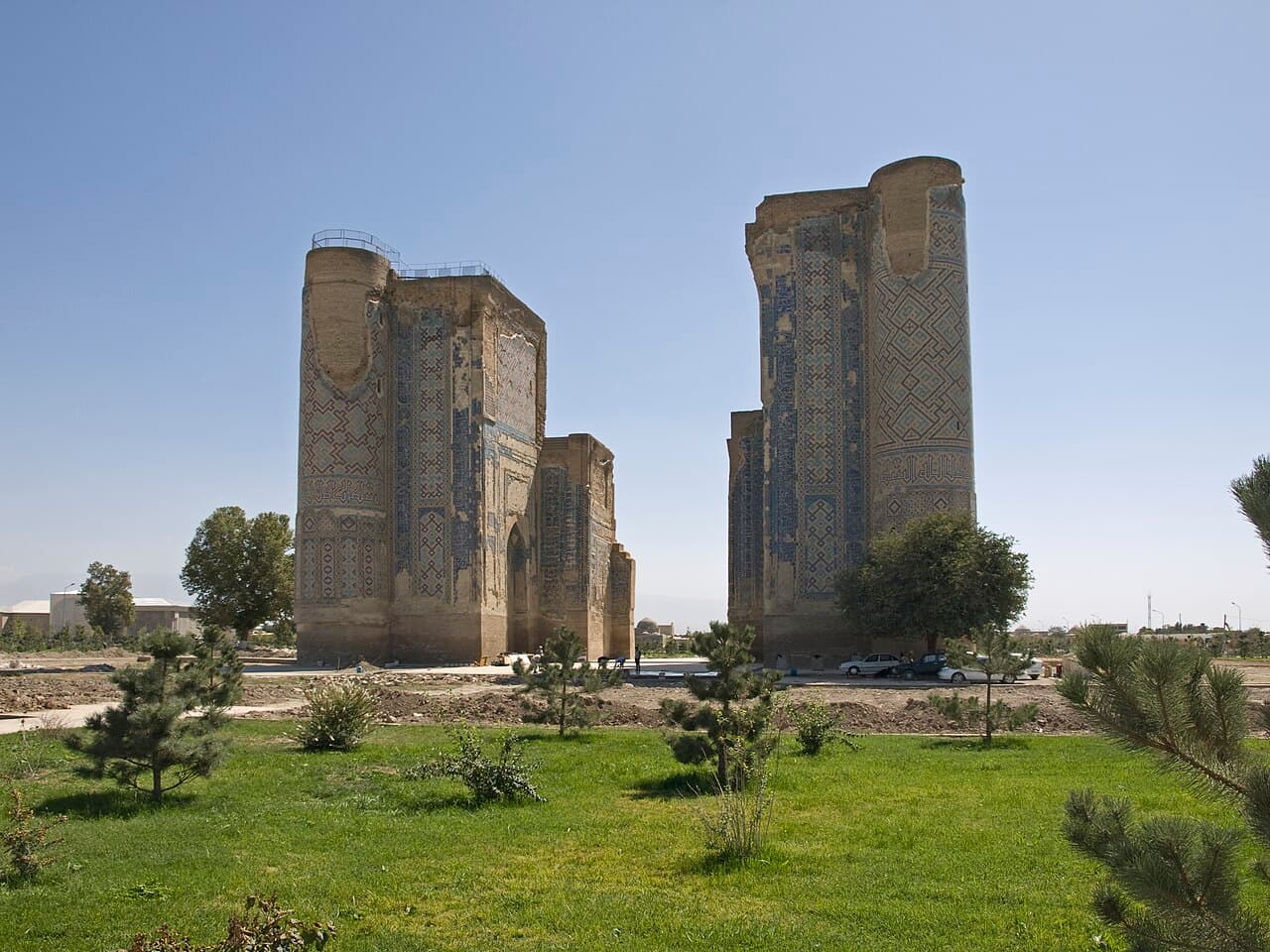
The palace complex originally covered a vast area, enclosed by high walls with massive gateways. The most famous surviving feature is the monumental entrance portal, known as the Darvazakhana, which rises dramatically with towering walls adorned with intricate blue and turquoise glazed tilework. These tiles display complex geometric patterns, calligraphy, and floral motifs characteristic of Timurid architecture.
The palace included a large central courtyard surrounded by various halls and chambers used for administrative functions, receptions, and royal living quarters. The layout emphasized symmetry and grandeur, with careful attention to the aesthetic integration of structural and decorative elements.
Many parts of the palace were constructed using baked bricks and covered with ornamental tiles, a hallmark of Timurid building techniques. The surviving ruins reveal the scale of the palace, with walls reaching heights of up to 20 meters in some sections.
Decorative artistry
The tile mosaics and reliefs at Ak-Saray are among the finest examples of Timurid decorative arts. The use of vibrant colors and intricate designs was intended to impress visitors and demonstrate the sophistication of Timur's court. Calligraphic inscriptions often included Quranic verses and praises of Timur himself.
Destruction and current condition
Despite its grandeur, Ak-Saray Palace suffered extensive damage over the centuries due to natural decay, earthquakes, and human activity. By the modern era, much of the structure had collapsed, leaving only ruins that hint at its former magnificence.
Today, the site is classified as archaeological ruins and is protected as part of the UNESCO World Heritage Site designation given to the historic center of Shahrisabz in 2000. Preservation efforts focus on stabilizing the remaining structures and conserving the distinctive tilework.
Visiting Ak-Saray Palace
Visitors to Shahrisabz can explore the ruins of Ak-Saray Palace and appreciate the scale and artistry of this Timurid monument. The site provides insight into the architectural innovations and cultural achievements of the 14th-century Central Asian empire.
Interpretive signage and guided tours help contextualize the palace within the broader history of Timur's reign and the Timurid architectural legacy, which influenced later developments across the Islamic world.
Nearby attractions
Shahrisabz also features other important Timurid monuments, including the Dorus Saodat Ensemble and the Kok-Gumbaz Mosque, making it a valuable destination for those interested in medieval Islamic architecture and history.
Frequently asked questions (FAQ)
- What is the historical significance of Ak-Saray Palace?
- Ak-Saray Palace, built in the 14th century by Timur, is a symbol of the grandeur of the Timurid Empire. This majestic structure represents the pinnacle of Islamic architecture and serves as a testament to the artistic and cultural achievements of the era.
- When was Ak-Saray Palace constructed?
- Construction of Ak-Saray Palace began in 1380 and was completed in 1400. It was designed to be a grand residence for Timur and to showcase his power and influence during his reign.
- What are the opening hours for Ak-Saray Palace?
- Ak-Saray Palace is typically open to visitors from 9 AM to 6 PM daily. However, it is advisable to check local listings for any seasonal changes or special holiday hours before planning your visit.
- Can I take photos inside Ak-Saray Palace?
- Yes, photography is generally allowed in the outdoor areas of Ak-Saray Palace. However, it is recommended to respect any restrictions that may be in place for certain indoor exhibits or sacred sites.
- Is it possible to access Ak-Saray Palace by public transportation?
- Yes, Ak-Saray Palace is accessible by public transportation, including buses and taxis from Shahrisabz. Visitors can also opt for guided tours that often include transportation to and from the palace.
- What is the best time to visit Ak-Saray Palace?
- The best time to visit Ak-Saray Palace is during spring (April to June) and autumn (September to October) when the weather is mild and pleasant. These seasons also offer beautiful scenery and fewer crowds.
- Are there any nearby attractions to visit along with Ak-Saray Palace?
- Yes, while visiting Ak-Saray Palace, you can also explore other nearby attractions such as the Dorut Tilavat Complex and the Shah-i-Zinda necropolis. These sites provide additional insight into the rich history and culture of the region.
- How much is the entrance fee for Ak-Saray Palace?
- The entrance fee for Ak-Saray Palace is quite affordable, typically around 20,000 Uzbek Som for adults. Discounts may be available for students and children, so be sure to inquire at the ticket booth.
Photo gallery

Information
Current owner
State museum
Loading map...
Visitor reviews
No reviews yet. Been here? Write the first review and help other travelers!
Write the first reviewVisited this castle? Share your experience
Your review helps other travelers and adds first-hand knowledge to our encyclopedia.