Bala Hissar
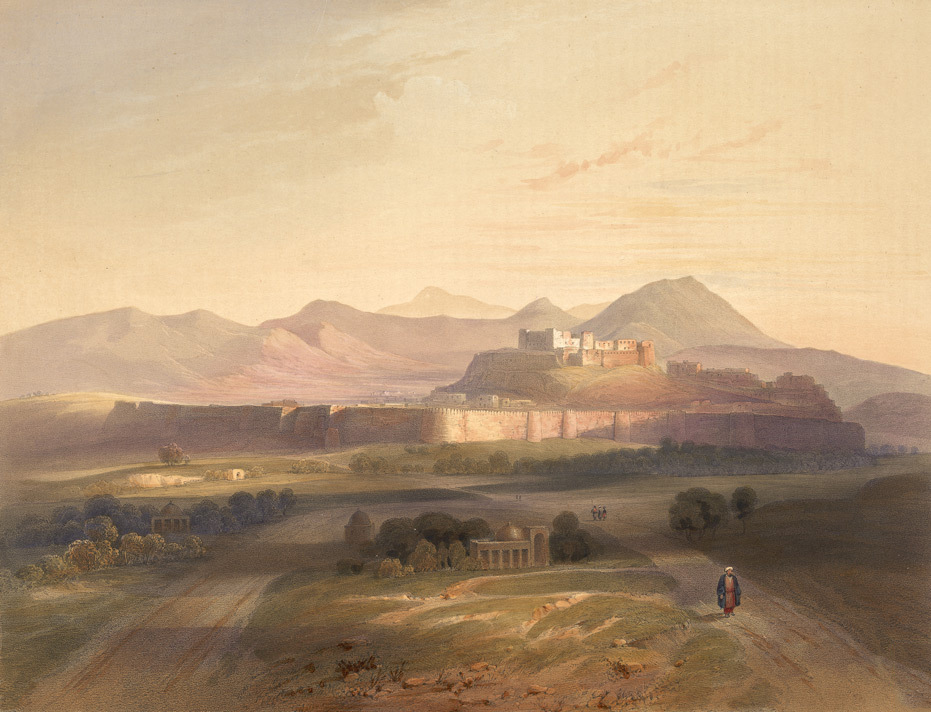
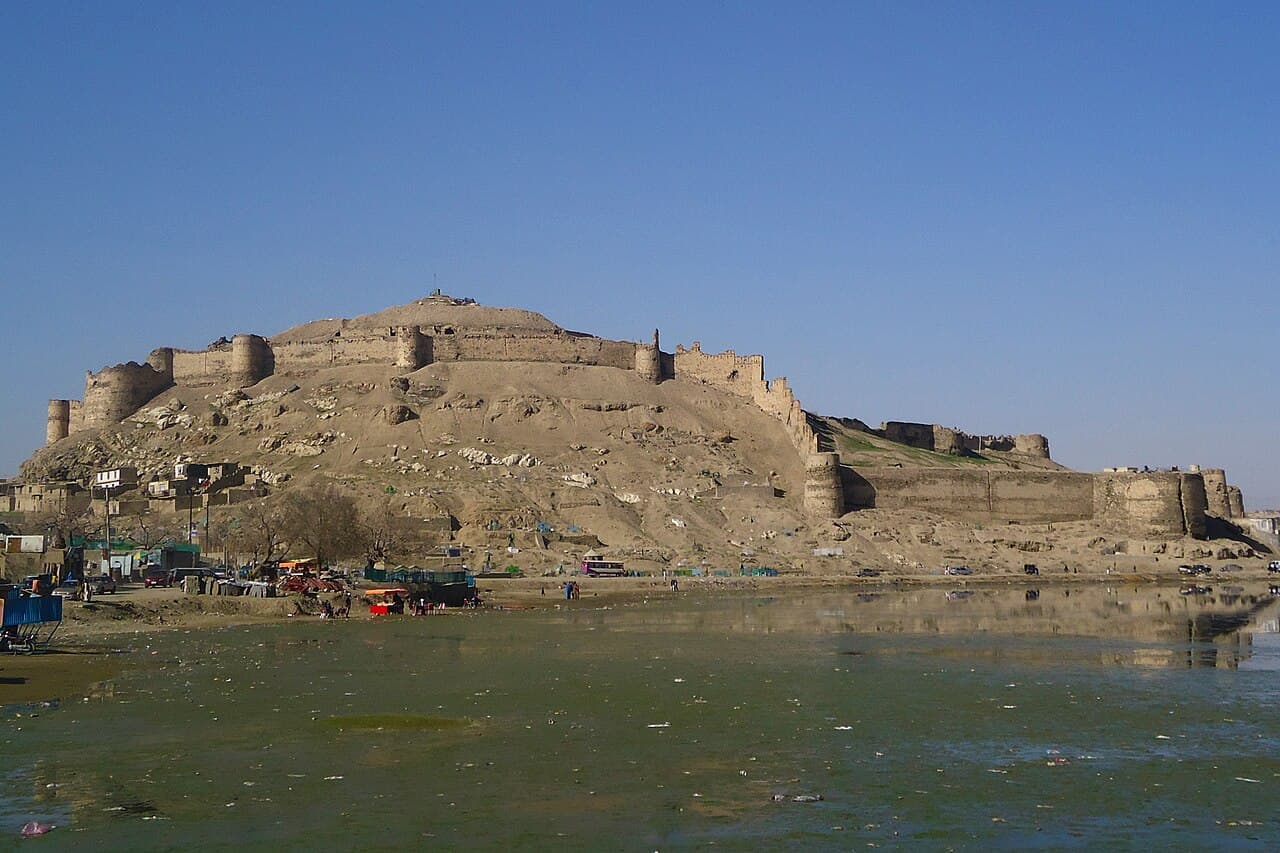
Bala Hissar, meaning 'High Fort,' is a historic fortress located in the southern part of the old city of Kabul, Afghanistan. Constructed around the 5th century AD, this fortress occupies a strategic position at the tail end of the Kuh-e-Shēr Darwāzah (lion door) mountain, overlooking the city and the surrounding landscape. The fortress is a significant archaeological site that reflects the military and political history of Kabul over many centuries.
Architectural layout and fortifications
The fortress is characterized by its imposing stone walls, which rise approximately 20 feet (6.1 meters) high and are about 12 feet (3.7 meters) thick. These walls extend from the fortress itself, following the natural curve of the mountain ridge down to a river, creating a formidable defensive barrier. Access to the fortress was controlled through a series of gates integrated into the walls, designed to regulate entry and enhance security.
The fortress was originally divided into two distinct sections: the lower fortress and the upper fortress. The lower fortress housed essential facilities such as stables, barracks, and three royal palaces. This area served as the administrative and residential quarter for the ruling elite and their retinue.
The upper fortress, which is the core of Bala Hissar and the namesake of the entire complex, contained the armory and the infamous dungeon known as the Siyah Chal or 'Black Pit'. This dungeon was historically used for imprisoning high-profile captives and criminals, underscoring the fortress's role not only as a military stronghold but also as a center of governance and control.
Historical significance and events
Bala Hissar has witnessed numerous historical events, including sieges and battles that shaped the region's history. Its strategic location made it a coveted stronghold for various rulers and empires over the centuries. The fortress was a symbol of power and authority in Kabul, serving as the seat of local rulers and a military bastion.
One of the most significant events in its history was its destruction by British forces in 1880 during the Second Anglo-Afghan War. This destruction marked a turning point in the fortress's condition, leading to its current state as ruins. Despite this, Bala Hissar remains an important cultural and historical site, attracting archaeologists and historians interested in Afghanistan's past.
Geographical context and surroundings
The fortress is situated on the southern edge of Kabul's old city, near the modern city center. It is backed by the Kōh-e Shēr Darwāzah mountain, which provides natural protection and a commanding view of the surrounding area. The location was carefully chosen for its defensive advantages, combining natural terrain with man-made fortifications.
The walls extending from Bala Hissar follow the mountain ridge, creating a sweeping curve that descends to the river, further enhancing the fortress's defensive capabilities. This integration of natural and constructed elements exemplifies the strategic military architecture of the period.
Current status and preservation
Today, Bala Hissar stands as an archaeological site in a state of ruins. The fortress's remains offer valuable insights into early medieval military architecture and the history of Kabul. Preservation efforts focus on protecting the site from further deterioration while facilitating archaeological research.
Visitors to the site can observe the remnants of the massive walls, the layout of the lower and upper fortresses, and the location of the historic gates. Although much of the original structure has been lost, the site remains a testament to the region's rich historical and cultural heritage.
Architectural features and military design
The fortress's design reflects typical early medieval military architecture, emphasizing strong defensive walls, controlled access points, and separation of functional areas within the complex. The division between the lower and upper fortress allowed for efficient management of military, administrative, and residential functions.
The armory in the upper fortress highlights the fortress's role as a military hub, storing weapons and supplies necessary for defense. The presence of the Siyah Chal dungeon indicates the fortress's function in maintaining law and order through incarceration.
Legacy and cultural importance
Bala Hissar remains an important symbol of Kabul's historical resilience and strategic significance. Its ruins continue to inspire interest in Afghanistan's medieval past and serve as a focal point for cultural identity. The fortress's location and design illustrate the adaptation of military architecture to the region's geography and political needs.
Frequently asked questions (FAQ)
- What is the historical significance of Bala Hissar?
- Bala Hissar is a historic fort that has served as a royal palace and military stronghold throughout Afghanistan's tumultuous history. It has witnessed numerous battles and changes in power, making it a vital symbol of Afghan heritage and resilience.
- When was Bala Hissar built?
- Bala Hissar's origins date back to the 5th century, although it has undergone several reconstructions over the centuries. The fort was notably expanded during the reign of the Durrani Empire in the 18th century, enhancing its strategic importance in Kabul.
- Is it possible to visit Bala Hissar?
- Yes, Bala Hissar is open to visitors, though it is advisable to check local security conditions before planning your visit. The site offers a glimpse into Afghanistan's rich history and stunning views of the surrounding area.
- What are the opening hours for Bala Hissar?
- Bala Hissar is generally open to visitors during daylight hours, but specific times may vary. It’s best to verify current hours with local authorities or tour operators before your visit.
- Can I take photographs at Bala Hissar?
- Yes, visitors are typically allowed to take photographs at Bala Hissar, but it’s important to be respectful of the site and adhere to any local guidelines. Always check if there are specific restrictions in place during your visit.
- What is the best time to visit Bala Hissar?
- The ideal time to visit Bala Hissar is during the spring (March to May) and autumn (September to November) months when the weather is mild and pleasant. These seasons provide the best conditions for exploring the fort and enjoying the surrounding scenery.
- Are there any nearby attractions to see while visiting Bala Hissar?
- Yes, while at Bala Hissar, visitors can explore nearby attractions such as the Kabul Museum and the historic gardens of Babur. These sites complement the rich cultural experience of the region.
- What are the ticket prices for entering Bala Hissar?
- Entry to Bala Hissar is often free, but there may be fees for guided tours or specific areas within the site. It's advisable to confirm any costs beforehand to ensure a smooth visit.
- How do I get to Bala Hissar?
- Bala Hissar is located in Kabul and can be reached by car or taxi from various parts of the city. Local guides and tours often provide transportation, which can enhance your experience by offering insights into the history of the fort during your journey.
Photo gallery

Information
Loading map...
Visitor reviews
No reviews yet. Been here? Write the first review and help other travelers!
Write the first reviewVisited this castle? Share your experience
Your review helps other travelers and adds first-hand knowledge to our encyclopedia.