Agios Georgios Castle
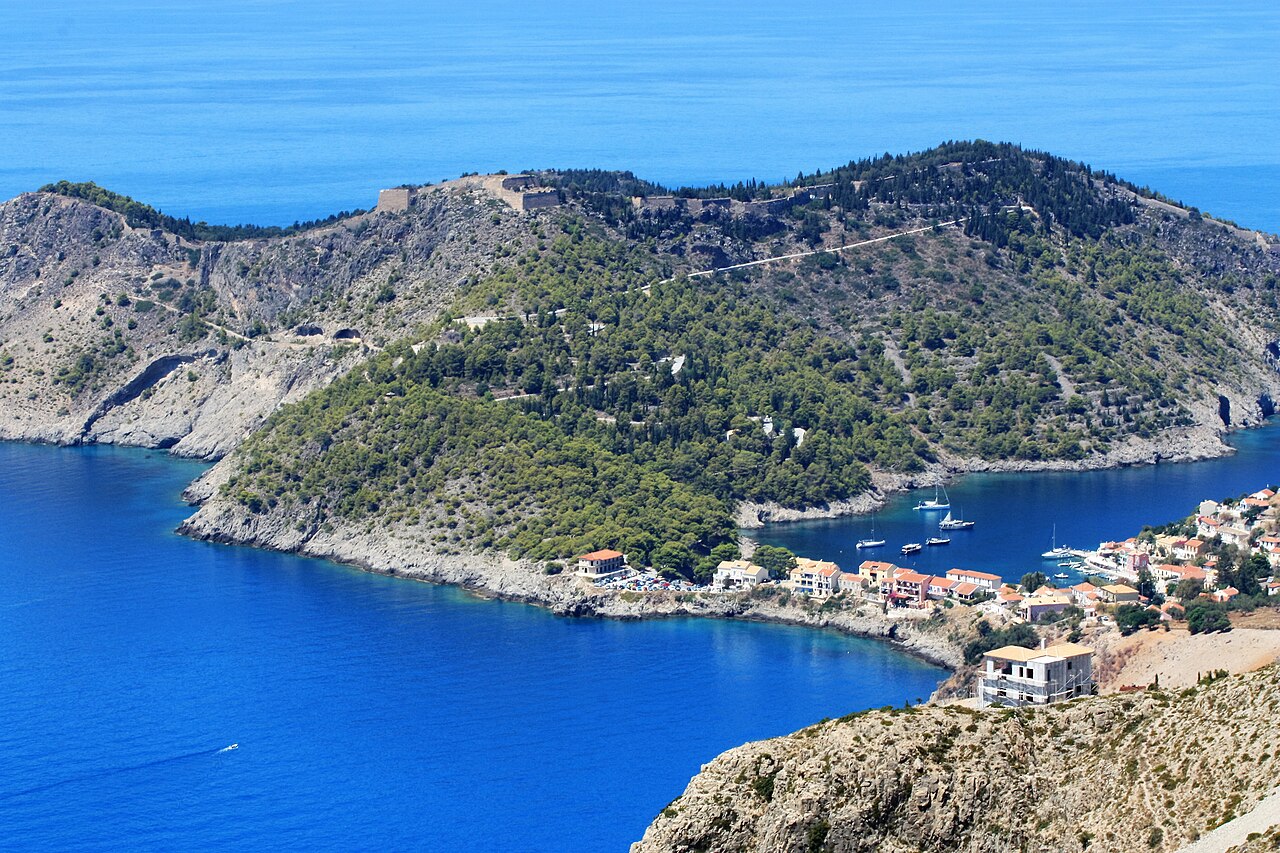
The Agios Georgios Castle, also known as the Castle of Saint George or simply Kastro, is a significant medieval fortress located on the island of Kefalonia, Greece. Situated approximately 7 kilometers southeast of Argostoli, above the village of Peratata, this castle occupies a commanding position overlooking the surrounding landscape and the Ionian Sea. It covers an extensive area of about 16,000 square meters and exhibits a distinctive polygonal bastioned fortress layout, reflecting its military importance through the centuries.
Historical background and strategic significance
The origins of Agios Georgios Castle date back to the 12th century, when it was initially constructed by the Byzantines. Its primary purpose was to serve as a defensive stronghold protecting the island and controlling maritime routes in the Ionian Sea. However, the castle underwent significant transformation and expansion under the Venetian Republic, who controlled Kefalonia from the late medieval period until the 18th century. The Venetians fortified the castle extensively, building the imposing external walls in 1504 that gave the fortress much of its present-day form.
During its peak, the castle functioned not only as a military bastion but also as a thriving fortified town. It was the capital of Kefalonia until 1757, when the administrative center was moved to Argostoli. Inside the castle walls, there was a well-organized settlement featuring residences, public buildings, churches, hospitals, prisons, storehouses for food and weapons, and cisterns for water supply. This made it a self-sufficient community capable of withstanding sieges and attacks.
Architectural features and layout
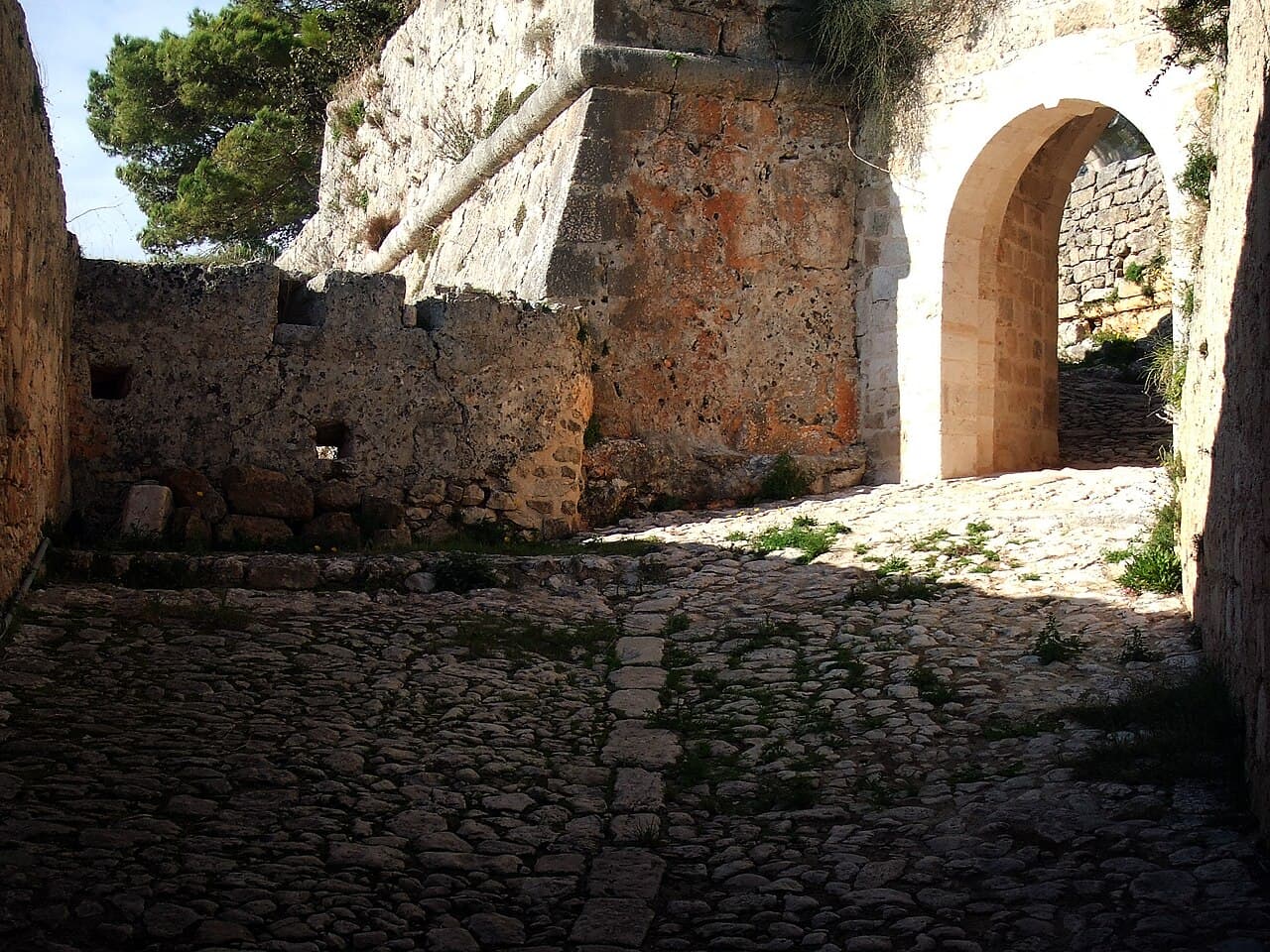
The castle's polygonal bastioned design is characteristic of Venetian military architecture, adapted to the needs of artillery defense. The bastions provided overlapping fields of fire, enhancing the fortress's defensive capabilities against cannon and musket fire. The walls are thick and robust, constructed to resist prolonged assaults.
Within the fortress, the remains of various structures still testify to its former complexity. Among these are the ruins of the Catholic Church of Saint Nicholas, located near a small square inside the castle. The presence of this church reflects the Venetian influence and the coexistence of Catholic and Orthodox Christian communities on the island.
Despite the damage sustained over centuries, including from warfare and natural disasters, the castle's layout remains discernible. The walls, gates, battlements, and some internal buildings survive partially, offering valuable insights into the defensive strategies and urban planning of a medieval fortified settlement.
Damage, decline, and preservation status
The castle has suffered considerable damage over time. Apart from the wear caused by wars and sieges, the fortress was heavily affected by the 1953 Ionian earthquake, which caused widespread destruction across Kefalonia. This natural disaster contributed significantly to the ruinous state of the castle today.
Currently, Agios Georgios Castle is classified as a ruined bastioned fortress. Only a few buildings and sections of the walls remain standing. Despite its ruined condition, the site remains an important cultural and historical landmark, attracting visitors interested in medieval military architecture and the history of Kefalonia.
Cultural and historical importance
The castle's role as the medieval capital of Kefalonia underscores its importance in the island's history. It was a center of administration, defense, and community life for several centuries. The Venetian architectural elements highlight the island's integration into the maritime empire of Venice, which shaped much of the Ionian region's cultural and political landscape during the late medieval and early modern periods.
Today, the castle offers a glimpse into the past, illustrating the evolution of fortification techniques from Byzantine to Venetian times. Its ruins serve as a testament to the island's strategic significance and the complex history of the Ionian Sea region.
Visiting information and accessibility
The castle is accessible to visitors who wish to explore its historical remains and enjoy panoramic views of Kefalonia. While the site is largely in ruins, it provides an evocative atmosphere for those interested in medieval fortifications and Greek history. Visitors can walk along parts of the surviving walls and explore the ruins of the internal structures, including the church remains.
Due to its elevated location, the castle offers excellent vantage points for photography and sightseeing. It is advisable to wear sturdy footwear and be cautious when navigating uneven terrain within the site. There are no extensive visitor facilities on-site, so planning ahead is recommended.
Frequently asked questions (FAQ)
- How do I get to Agios Georgios Castle?
- Agios Georgios Castle is located on the island of Kefalonia, Greece. You can reach the castle by car or local transport, as it is situated near the village of Agios Georgios. There are signs along the route that will guide you to the castle's entrance.
- What is the historical significance of Agios Georgios Castle?
- Agios Georgios Castle dates back to the 16th century and played a crucial role in the defense of Kefalonia against invasions. The castle was built by the Venetians and showcases the strategic military architecture of its time. It also served as a refuge for local inhabitants during conflicts.
- When was Agios Georgios Castle built?
- The construction of Agios Georgios Castle began in the late 16th century, specifically around 1580. It was completed to strengthen the island's defenses against potential attacks, particularly from the Ottoman Empire. The castle has since become a symbol of the island's rich history.
- Can I visit Agios Georgios Castle year-round?
- Yes, Agios Georgios Castle is open to visitors throughout the year. However, the best time to visit is during the spring and fall when the weather is mild and pleasant. Summer months can be quite hot, making exploration less comfortable.
- Why is Agios Georgios Castle considered an architectural marvel?
- Agios Georgios Castle is renowned for its impressive fortifications and strategic design, which was typical of Venetian military architecture. The castle features thick stone walls, watchtowers, and panoramic views of the surrounding landscape. Its design not only served defensive purposes but also integrated well with the natural terrain.
- Is it possible to take guided tours of Agios Georgios Castle?
- Yes, guided tours are available for visitors interested in delving deeper into the history and architecture of Agios Georgios Castle. These tours often provide valuable insights and stories about the castle's past. Check local tourism offices for tour schedules and availability.
- What are the opening hours for Agios Georgios Castle?
- Agios Georgios Castle typically opens to visitors from 9 AM to 7 PM during the summer months. In the off-season, opening hours may vary, so it's advisable to check ahead before planning your visit. It's always a good idea to arrive early to enjoy the site with fewer crowds.
- Are there any nearby attractions to visit after Agios Georgios Castle?
- Yes, there are several nearby attractions worth exploring after visiting Agios Georgios Castle. You can visit the beautiful beaches of Agios Georgios or explore nearby villages that offer local cuisine and culture. Additionally, the stunning landscapes of Kefalonia, including the Melissani Cave, are just a short drive away.
- What are the ticket prices for Agios Georgios Castle?
- Ticket prices for Agios Georgios Castle are generally affordable, with discounts available for students and seniors. Admission fees can vary, so it's best to check the official website or local tourist information for the most current pricing. Children often enter for free, making it a great destination for families.
Photo gallery

Photo by No machine-readable author provided. Christos Vittoratos assumed (based on copyright claims).•CC BY-SA 2.5
Information
Loading map...
Visitor reviews
No reviews yet. Been here? Write the first review and help other travelers!
Write the first reviewVisited this castle? Share your experience
Your review helps other travelers and adds first-hand knowledge to our encyclopedia.