Afyonkarahisar Castle
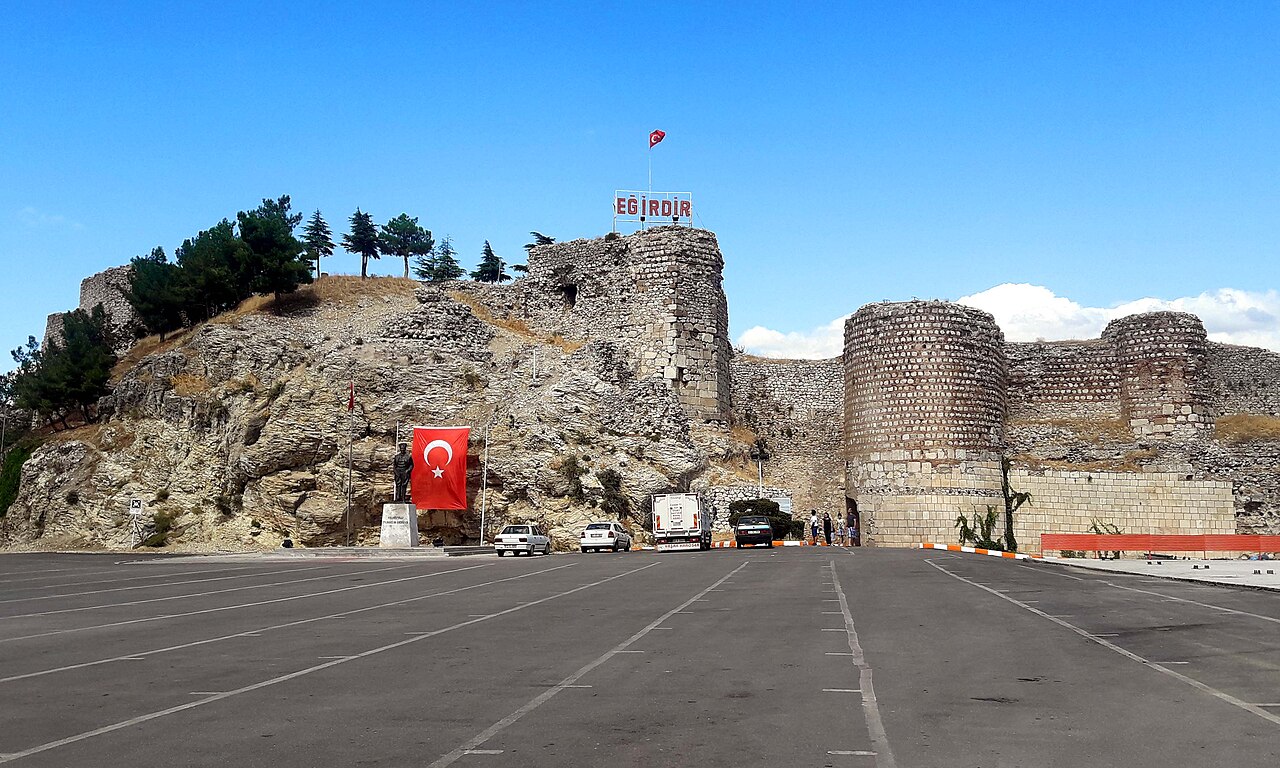
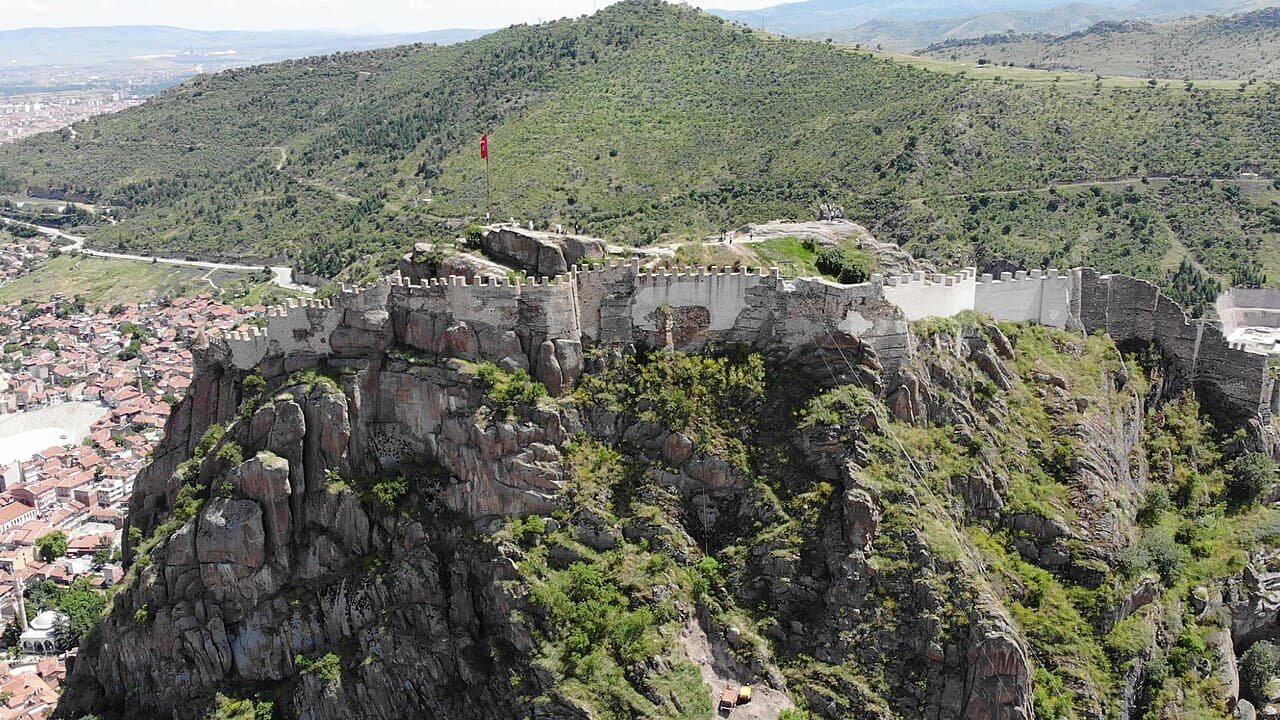
Afyonkarahisar Castle, also known locally as Afyonkarahisar Kalesi, is a prominent historic fortress located in the city of Afyonkarahisar in western Turkey. Towering atop a volcanic rock approximately 220 meters (740 feet) high, this castle has a rich and complex history spanning over three millennia. It stands as a testament to the strategic importance of this site through various civilizations and empires, from the ancient Hittites to the Ottoman Empire.
Early history and strategic significance
The castle's origins trace back to around 1350 BC, when the Hittites first fortified the volcanic rock. This early fortification is believed to have been commissioned by the Hittite king Mursili II to protect the town then known as Hapanuwa. The location's natural elevation and volcanic rock made it an ideal defensive position, commanding views over the surrounding plains and trade routes.
Following the Hittites, the site was successively occupied by the Phrygians, Lydians, and the Achaemenid Persian Empire. Each of these cultures contributed to the site's development and fortification, adapting the castle to their defensive needs.
Classical and Byzantine periods
In 333 BC, the area was conquered by Alexander the Great, who renamed the town Akroinon or Akronium. The name persisted through the rule of the Seleucid Empire, the kingdom of Pergamon, and the Roman Empire. The castle and town remained strategically important throughout these periods, serving as a military and administrative center.
The Byzantine Empire inherited the fortress and the surrounding city, which gained renewed significance after the Battle of Akroinon in 740 AD. This battle marked a decisive Byzantine victory over an invading Umayyad Arab army. In honor of this victory, the city was renamed Nicopolis, meaning "city of victory" in Greek. The Byzantine fortifications were strengthened during this time, reflecting the ongoing military threats in the region.
Seljuk and Ottoman periods
The castle entered a new phase in 1071 when the Seljuks conquered the region. They renamed the fortress Kara Hisar, meaning "Black Fortress" in Turkish, a name that highlighted the dark volcanic rock on which the castle stands. The Seljuk period saw further modifications to the castle's defenses, adapting it to the changing warfare technologies of the medieval period.
During the Crusades, the castle was a contested stronghold due to its strategic location. It was finally conquered by the Ottoman Empire in 1392. However, the castle was briefly lost after the invasion of Timur Lenk (Tamerlane) in 1402, only to be recaptured by the Ottomans in 1428–1429. Under Ottoman rule, the fortress continued to serve as a military bastion and administrative center.
The town itself became known as Afyon, Turkish for "opium," reflecting the region's status as a major producer of raw opium until the late 1960s. The official name was changed to Afyonkarahisar in 2004, combining the words for "opium" and "black fortress," acknowledging both the agricultural heritage and the iconic castle.
Architectural features and layout
Afyonkarahisar Castle is classified as a bastioned fortress due to its defensive structures adapted over centuries. The castle's plan is notably irregular, as its curtain walls follow the natural contours of the volcanic rock on which it stands. This irregularity is a direct response to the topography, maximizing defensive capabilities by integrating the natural landscape.
The fortress includes several cisterns carved into the rock, which provided essential water storage for the garrison during sieges. There are also rock-cut stairs that connect different levels of the castle, facilitating movement within the complex despite the steep terrain. Additionally, rock-cut graves have been found within the castle precincts, indicating the site's long-term habitation and cultural significance.
Recent archaeological excavations, particularly in the western corner of the castle, have uncovered foundations of various buildings. These findings suggest that the castle complex included residential, administrative, and military structures that evolved over time.
Visiting Afyonkarahisar Castle today
The castle is freely accessible to visitors, although reaching the summit requires climbing a strenuous set of stairs located on the south side of the rock. The climb rewards visitors with panoramic views over the city of Afyonkarahisar and the surrounding landscape.
Today, the castle remains a significant cultural and historical landmark in Turkey. It is primarily of Byzantine and Ottoman origin, with modern repairs preserving its structure. Visitors can explore the ruins, including the defensive walls, cisterns, and archaeological sites, gaining insight into the castle's layered history and architectural evolution.
Historical significance and cultural heritage
Afyonkarahisar Castle stands as a symbol of the region's turbulent history and strategic importance. Its continuous occupation and adaptation by various civilizations reflect the broader historical currents of Anatolia and the eastern Mediterranean.
The castle's prominent position and enduring presence have made it a cultural icon, representing both the ancient heritage and the Ottoman legacy of the city. Its name, combining "Afyon" (opium) and "karahisar" (black fortress), encapsulates the intertwined agricultural and military history of the area.
Preservation and ongoing research
Archaeological work continues at the site, uncovering new insights into the castle's construction phases and the daily lives of its inhabitants. Preservation efforts aim to maintain the castle as a well-preserved monument, highlighting its architectural and historical significance for future generations.
Frequently asked questions (FAQ)
- How do I access Afyonkarahisar Castle?
- Afyonkarahisar Castle is accessible via a set of stairs on the south side of the volcanic rock. The climb is strenuous but offers rewarding views of the city and surrounding landscape.
- What is the historical significance of Afyonkarahisar Castle?
- The castle has been a strategic fortress since 1350 BC, occupied by various civilizations including the Hittites, Byzantines, Seljuks, and Ottomans, reflecting the region's complex history.
- Can visitors explore the archaeological excavations at the castle?
- Yes, ongoing archaeological excavations in the western corner of the castle are sometimes accessible to visitors, revealing foundations of ancient buildings and offering insights into the castle's past.
- What architectural features make Afyonkarahisar Castle unique?
- Its irregular bastioned fortress design follows the contours of the volcanic rock, featuring rock-cut stairs, cisterns, and graves that highlight its adaptation to the natural landscape.
- When was the castle renamed Nicopolis and why?
- The castle and town were renamed Nicopolis after the Byzantine victory over the Umayyad Arabs in the Battle of Akroinon in 740 AD, meaning 'city of victory' in Greek.
Photo gallery

Information
Address
Kale Mah., Afyonkarahisar, Turkey
Loading map...
Visitor reviews
No reviews yet. Been here? Write the first review and help other travelers!
Write the first reviewVisited this castle? Share your experience
Your review helps other travelers and adds first-hand knowledge to our encyclopedia.