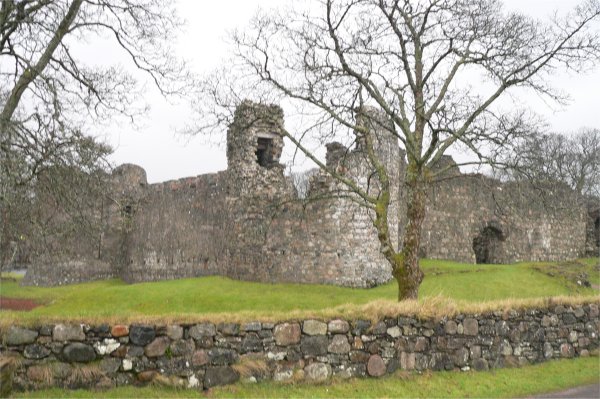
Achnacarry Castle
Achnacarry Castle stands as the historic ancestral home of the Chiefs of Clan Cameron, located strategically on the isthmus between Loch Lochy and Loch Arkaig in the Scottish Highlands. Its origins trace back to the early 16th century with the construction of Tor Castle by Ewen 'Eoghainn MacAilein' Cameron, the XIII Chief of Clan Cameron. Tor Castle served as the clan's seat for over a century before being replaced in the mid-17th century by the current Achnacarry Castle, built by Sir Ewen 'Dubh' Cameron, XVII Chief, around 1655.
The origins and strategic location of Achnacarry Castle
The decision to build Achnacarry Castle was influenced by the need for a residence that offered greater security and convenience. Sir Ewen Cameron sought to distance the clan's seat from rival clans such as the Clan Mackintosh and Clan Campbell, as well as from the garrison of Oliver Cromwell stationed at nearby Inverlochy Castle. The castle's position on the narrow land between two lochs provided natural defenses and control over the surrounding region.
Architectural features and early history
The original Achnacarry Castle, often referred to as the 'Old Achnacarry,' was a substantial fir-planked structure. Although detailed architectural records are limited, it was designed as a fortified residence typical of the Scottish baronial style prevalent in the 17th century. The castle included defensive walls and living quarters suitable for a clan chief and his retainers.
Clan Cameron and the Jacobite uprisings
Following the death of Sir Ewen Cameron in the early 18th century, his son John Cameron became the clan chief, succeeded later by his son Donald Cameron. During the turbulent period of the Jacobite uprisings, particularly after the defeat at the Battle of Culloden in 1746, Achnacarry Castle played a significant role as a rallying point for the clan. Donald Cameron led efforts to regroup the clan in the Highlands after the Jacobite army's defeat.
However, on May 28, 1746, the castle was deliberately burned to the ground by government forces. Troops from Bligh's Regiment under Lt-Col Edward Cornwallis and an Independent Company of Munros commanded by George Munro, 1st of Culcairn, destroyed the castle to prevent its use as a rebel stronghold. Many valuable clan relics and possessions had been removed prior to the burning, but the castle itself was left in ruins.
Reconstruction and 19th-century developments
After remaining in ruins for about fifty years, Achnacarry Castle was rebuilt in 1802 by Donald Cameron, XXII Chief of Clan Cameron. The reconstruction embraced the Scottish baronial style, a revivalist architectural movement that sought to evoke medieval Scottish castles with turrets, battlements, and ornamental stonework. The architect James Gillespie was engaged by Donald Cameron's wife, Anne née Abercromby, to oversee the design and construction of the new castle.
This 'New Achnacarry' retained the castle designation despite its more domestic and comfortable design, reflecting the transition from purely defensive structures to stately homes symbolizing clan prestige.
Achnacarry Castle during World War II
The castle and its extensive estate gained international importance during World War II as the site of the Commando Training Depot from March 1942 to 1945. The rugged Highland terrain provided an ideal environment for training elite forces. British Commandos, United States Army Rangers, and commandos from allied nations including France, the Netherlands, Norway, Czechoslovakia, Poland, and Belgium underwent rigorous training here.
The training courses culminated in 'opposed landing' exercises around nearby Bunarkaig on Loch Lochy, often involving live ammunition, which resulted in some casualties. Over 25,000 commandos completed their training at Achnacarry during the war years, according to contemporary reports.
Despite the castle suffering some damage due to fire during this period, it remained a central hub for commando preparation. The legacy of this era is commemorated by annual or occasional commando marches, including a timed seven-mile march in full battle gear from Spean Bridge—the site of the Commando Memorial—to Achnacarry.
Clan Cameron museum and cultural heritage
Today, the Clan Cameron Museum is housed in a cottage on the castle grounds. The museum offers extensive displays on the clan's history, including legends, chiefs, slogans, and their traditional lands in Lochaber. Exhibits also cover the castle and estate's history, the Queen's Own Cameron Highlanders, and notable figures such as Prince Charles Edward Stuart, known as 'Bonnie Prince Charlie.'
The museum serves as a cultural center preserving the heritage of the clan and educating visitors about the significant role Achnacarry Castle has played in Scottish history.
Architectural and historical significance
Achnacarry Castle exemplifies the evolution of Scottish clan residences from fortified strongholds to comfortable baronial homes. Its history is intertwined with Scotland's turbulent clan conflicts, the Jacobite rebellions, and the modern military history of World War II. The castle's location, architecture, and role in military training underscore its unique place in Scottish heritage.
The castle remains under private ownership, preserving its status as a symbol of Clan Cameron's enduring legacy and the Highland cultural landscape.
Frequently asked questions (FAQ)
- What is the historical significance of Achnacarry Castle?
- Achnacarry Castle is renowned as the ancestral home of the Clan Cameron and has significant historical ties to Scotland's Highland culture. Built in the early 19th century, the castle has served as a gathering place for the clan and played a notable role during the Jacobite risings.
- When was Achnacarry Castle built?
- Achnacarry Castle was constructed between 1802 and 1807. It was designed by architect William Burn, reflecting the romantic style of the time and showcasing the grandeur typical of Scottish baronial architecture.
- Can I visit Achnacarry Castle?
- Yes, Achnacarry Castle is open to visitors during the summer months, typically from May to September. It is advisable to check the official website for specific opening hours and any special events that may affect accessibility.
- What are the opening hours for Achnacarry Castle?
- The castle usually operates from 10 AM to 5 PM during the visitor season. However, hours may vary based on events or weather conditions, so it's best to verify before planning your visit.
- Is Achnacarry Castle accessible for visitors with mobility challenges?
- Achnacarry Castle is situated in a picturesque but hilly area, which may pose challenges for those with mobility issues. While some areas may be accessible, it is recommended to contact the castle's staff ahead of your visit to discuss specific accessibility options.
- What is the best time to visit Achnacarry Castle?
- The best time to visit Achnacarry Castle is during the summer months when the surrounding gardens are in full bloom and guided tours are frequently available. Spring and early fall also offer pleasant weather and fewer crowds.
- Are there any nearby attractions to Achnacarry Castle?
- Yes, there are several attractions near Achnacarry Castle, including the scenic Loch Lochy and the Great Glen Way, perfect for hiking enthusiasts. Additionally, the historic town of Fort William is just a short drive away, offering further exploration opportunities.
- What are the ticket prices for Achnacarry Castle?
- Ticket prices for Achnacarry Castle vary depending on the type of tour and age of visitors. Generally, adult tickets are around £10, while discounts may be available for children and seniors, so it's recommended to check the official site for the most accurate pricing.
Information
Website
Visit websiteSources & official resources
Verify the information above using these authoritative references.
Loading map...
Visitor reviews
No reviews yet. Been here? Write the first review and help other travelers!
Write the first reviewVisited this castle? Share your experience
Your review helps other travelers and adds first-hand knowledge to our encyclopedia.